Under the Radar Rolex Models Worth Watching in 2026

Not every high flying Rolex on the secondary market is the one dominating social media. In fact some of the best long term performers are quietly appreciated by savvy collectors while staying out of the hype spotlight. These “unsung” Rolex models offer fantastic wearability and investment potential without the frenzy that follows icons like the Daytona or Submariner. At Kettle Club we’ve observed certain references consistently punching above their weight, delivering value and enjoyment to collectors who prefer substance over speculation.

Below we highlight the Rolex models we believe deserve more attention in 2026, along with tips on what to look for in each.

Rolex Air-King

What to Look For

  • Crisp dial and original parts: Ensure the dial printing and hands are original and clean (no replacements or fading).
  • Strong bracelet condition: A complete Oyster bracelet with minimal stretch indicates gentle use and better value.
  • Upgraded movements: Newer Air-King references (e.g. ref. 126900) have improved calibers, so note the movement generation when comparing options.

The Air-King has always been something of an outlier in the Rolex catalog. Originally born from aviation heritage, it sports a simple, unpretentious design that has remained refreshingly consistent over the years. Modern Air-King models like the 40mm ref. 126900 introduced in 2022 combine that legacy charm with a bolder look and a chronometer certified movement for everyday reliability. Historically one of the more affordable Rolex sports watches, the Air-King is starting to gain popularity while still trading at approachable prices. That relative affordability, especially compared to the big names, makes it a sensible entry point for collectors in 2026 who want a robust, iconic Rolex without the hefty premium.

In our experience the Air-King offers fantastic value for money. It’s a Rolex you can wear daily thanks to its comfortable 40mm case and 100m water resistance, yet it flies under the radar (no pun intended) when it comes to speculation. We currently have a 2023 Air-King (ref. 126900) in stock for around £6,250, a price that’s hard to beat for a recent model Rolex with box and papers. For 2026 this model stands out as a smart choice for collectors looking for a modern Rolex sports watch that hasn’t been overhyped.

Rolex Milgauss

What to Look For

  • Lightning bolt second hand: This quirky orange hand is the Milgauss’s signature – make sure any example has the correct lightning bolt seconds hand intact.
  • Pristine crystal (especially GV models): Many Milgauss pieces feature a green-tinted sapphire crystal; check that the glass is clean with no cracks or clouding.
  • Full set if possible: Box and papers add value, a complete set is ideal, as they’ve become harder to find after discontinuation.

The Rolex Milgauss has always marched to the beat of its own drum. Designed in the 1950s for scientists and engineers, it was built to resist magnetic fields up to 1,000 gauss, an impressive technical feat. For years it remained a niche model, beloved by a small cult of enthusiasts for its character and clear backstory. With its distinctive lightning bolt seconds hand and pops of colour (especially the Glace Verte green crystal variant), the Milgauss stood apart from every other Rolex offering.

In March 2023 Rolex quietly discontinued the Milgauss, retiring this “mad scientist” watch from the lineup. The news caused an immediate spike in interest, Google searches for “Milgauss” shot up overnight and collectors rushed to scoop up the remaining pieces. Not long ago the Milgauss was so overlooked that it was one of the few stainless steel Rolex models often selling below its retail price on the secondary market. That has swiftly changed. Prices have climbed (some dealers relisted Milgauss watches for well above original MSRP right after discontinuation), yet by historical Rolex standards the Milgauss is still reasonably priced and likely has more room to grow. With its unique legacy and now finite supply, this model has transitioned from under-the-radar to a must-have for collectors who want something truly different from a Sub or GMT.

Collectors’ Tip: If you’re eyeing a Milgauss, pay attention to condition and completeness. An unworn Milgauss 116400GV (green crystal) with full set is especially prized. While Rolex could always surprise us with a revival in the future, for now the only way to own this eccentric piece of Rolex history is to find a pre-owned example. 2026 might be an opportune time to grab one before prices potentially climb further due to its newfound “discontinued legend” status.

Early Oyster Perpetual “Stella” Dials

What to Look For

  • Vibrant original dial colour: Seek examples with strong, unfaded dial hues, the charm of these models is their bright colour, so avoid ones that have discolouration.
  • Unpolished case: Many Oyster Perpetuals were everyday watches, favor cases with sharp edges and minimal over-polishing to preserve collector value.
  • Price sanity: Make sure the asking price reflects the current stable market, not the peak of the hype bubble – as values for these have cooled and normalized.

A few years ago Rolex did something unexpected, they added bright lacquer dials in an array of candy colours to the humble Oyster Perpetual line. In 2020 enthusiasts were treated to OP dials in turquoise blue, coral red, bright yellow and candy pink, inspired by vintage enamel “Stella” Rolex dials of the 1970s. The reaction was immediate and intense, these playful colours turned the understated Oyster Perpetual into one of the hottest tickets in town. In fact at the height of the frenzy, a turquoise OP 41mm (nicknamed the “Tiffany” dial) even sold for over £69,000, a staggering premium over its retail price. Rolex ended up producing these vivid dials for only a short run, discontinuing most of the hottest colours by 2022. This sudden scarcity only fueled the fire sending secondary prices skyrocketing in 2021–2022.

Fast forward to 2026 and the dust has settled. The initial hype around the brightly coloured Oyster Perpetuals has cooled off, bringing prices back down to more rational levels. This is precisely why they’re interesting again. Collectors are now reassessing these pieces with clearer eyes, they offer a simple, classic Rolex package with a punch of personality and a dash of modern history. The short production window (some colours were made for barely two years) means these references are likely to be considered modern classics in the future. Yet today you can find many of them at fair prices compared to their peak, essentially buying the dip on a fun and iconic watch. For example the Rolex Oyster Perpetual 41 ref. 124300 in Coral Red or Turquoise Blue encapsulates that era of exuberant design and now trades at a fraction of its once sky high premium. For those who love a pop of colour and a good story to go with their watch, the early OP “Stella” dials are a compelling choice in 2026.

Side note: Rolex has since shifted to more muted pastel OP dials and even did a quirky multicolour “Celebration” bubble dial in 2023. But it’s those original solid bright dials from 2020 – now gone – that remain the most talked about. Keep an eye out for one in excellent condition, as they’re poised to be future collectibles.

Rolex Datejust 36mm

What to Look For

  • Original dial variants: Look for distinctive dials that are no longer produced (e.g. certain vintage linen textures, unique colours or rare marker styles) to add character and value.
  • Healthy bracelet: For classic Datejusts on a Jubilee bracelet, check that the links have minimal stretch, a tight bracelet is a good sign of careful use.
  • Smooth date mechanism: Test that the date wheel snaps crisply at midnight and the quick set works properly, indicating a well maintained movement.

The 36mm Rolex Datejust is the definition of a timeless classic. For decades it was the go to luxury watch, equally at home peeking from a shirt cuff at the office or worn casually on the weekend. In recent years however, the spotlight drifted toward larger sports models and even the Datejust 41mm, leaving the traditional 36mm somewhat in the shadows. But guess what? Tastes are shifting yet again. Collectors are rediscovering the appeal of classic proportions and industry experts note a rising trend towards 36mm watches for both men and women. This puts Datejust 36 in a very favorable position heading into 2026.

From a collector’s standpoint the 36mm Datejust offers tremendous variety and value. There are countless references and configurations, whether you fancy a steel model with a smooth bezel and Oyster bracelet for a modern look or a two tone gold with a fluted bezel and Jubilee bracelet for that quintessential vintage vibe. Many great examples from the 1980s–2000s era can still be found at accessible prices, especially compared to Submariners or GMTs. Vintage references like the Datejust ref. 1601, 1960s pie-pan dial or a two-tone ref. 116233 from the 2000s often provide fantastic value under the radar. These watches have the pedigree of the Rolex name, the practicality of the date complication and automatic movement and a design that quite frankly never goes out of style.

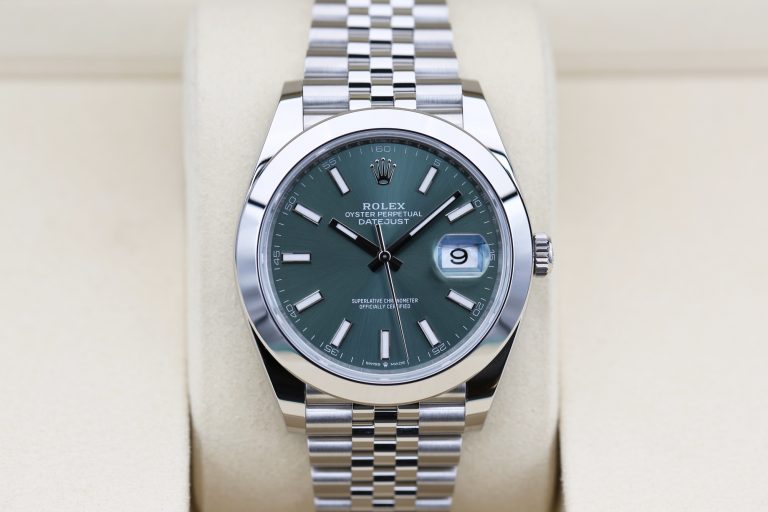
We’ve noticed renewed interest in the Datejust 36, especially unique dial variants. Collectors who already have the “hyped” sports models are coming back to appreciate the subtle sophistication of a classic Datejust. Whether it’s a champagne dial 16233 from the ’90s or a modern ref. 126234 with a mint green dial, the 36mm Datejust proves that true style is enduring. It’s hard to call such a famous model “underrated,” but in the current market context, the Datejust 36 offers one of the most reliable buys in the Rolex lineup, a watch that gives you flagship Rolex quality and heritage without chasing the latest fad.

Older Rolex Explorer II (40mm Models)

What to Look For

  • Crisp bezel engravings: The Explorer II’s fixed 24-hour steel bezel should have sharp, legible numbers – avoid heavily polished examples where the engravings have faded.
  • Matching patina: On tritium-dial models (1980s–90s), look for consistent lume patina on hands and hour markers (both creamy, not one stark white and one yellowed). Uniform aging often indicates original parts.
  • Smooth GMT hand function: Test the 24-hour hand and date quickset – they should adjust smoothly without excessive play or resistance, ensuring the GMT complication is in good shape.

The Rolex Explorer II ref. 16570 (40mm) in its classic form. Whether in the white “Polar” dial or black dial variant (shown here), these models stay true to Rolex’s tool watch heritage and offer great value for collectors.

For those who love a proper tool watch, the Explorer II has a special allure. The older references, notably the 40mm Explorer II ref. 16570 produced from the late 1980s through 2000s embody a rugged, purpose built spirit that harks back to Rolex’s adventurous roots. These watches were meant for spelunkers, adventurers and globetrotters. They feature a second time zone hand (originally intended to distinguish day from night in dark caves) and a fixed engraved bezel marking 24 hours. Unlike the flashy rotating bezels of the GMT-Master, the Explorer II’s bezel is subtle brushed steel. The result? A stealthier look that many casual observers won’t immediately peg as a Rolex and that’s exactly the appeal for some.

For years the 16570 Explorer II lived in the shadow of its more famous siblings. It lacked the rotating bezel of the GMT and the glamour of the Submariner’s diving lore. But gradually collectors have started to appreciate the Explorer II for what it is, an honest, no-frills Rolex sports watch that still flies under the radar. Prices in the pre-owned market have historically been kinder on the wallet for these models, you could (and still can) find nice examples for far less than an equivalent age Submariner or GMT-Master II. In fact some experts have pointed out that a clean black dial Explorer II 16570 can often be found under £7,000, making it arguably one of the most undervalued Rolex sports watches for what it offers.

As we approach 2026 interest in these 40mm Explorer IIs is ticking upward. The combination of vintage charm, tritium patina on older ones, lug holes in the case, etc, wearable 40mm size and relatively limited fanfare makes them a sweet spot for collectors who want to get a genuine Rolex tool watch without paying a premium for hype. We’ve seen increased inquiries for models like the 2000s era Explorer II “Polar” (white dial) we have in stock, as well as the classic black dial version. They represent one of the few remaining “bargains” in the Rolex sports range. Don’t be surprised if in a few years we’re talking about how we should have grabbed a 16570 when they were still undervalued, because the secret is getting out that these Explorer IIs are fantastic watches in their own right.

Why These Models Matter in 2026

Across all these examples, Air-King, Milgauss, colourful Oyster Perpetuals, Datejust 36s and older Explorer IIs, a common theme emerges. Each offers Rolex quality and heritage without being the center of speculative mania. These references have loyal followings and strong fundamentals, whether it’s a unique history or a rock-solid movement, yet they aren’t the ones splashed across every Instagram post or commanding six figure auction results. In the nuanced 2026 market, that’s exactly what makes them interesting.

For collectors who prefer to stay ahead of the curve rather than chasing last year’s hottest release, these under the radar Rolex models present opportunities. They allow you to acquire a timepiece that you truly connect with, one that you’ll enjoy wearing while also positioning yourself wisely should the broader market eventually catch on. The upside potential on many of these pieces remains healthy precisely because they haven’t been overhyped. We’ve observed that demand for such models often comes from seasoned enthusiasts who value authenticity and story over flash. As more collectors “graduate” to that mindset, the gap between these underrated gems and their more famous counterparts could begin to close.

These models matter in 2026 because they represent real substance in a sea of speculation. They remind us that at its core, Rolex’s reputation was built not just on status symbol Daytonas, but also on the workhorse Air-Kings and Explorers that quietly did their job for decades. Paying attention to these pieces now could reward you with both a wonderful watch to enjoy immediately and a savvy long term addition to your collection.

Why Choose Kettle Club for Your Next Rolex

As one of London’s emerging specialists in pre-owned luxury watches, Kettle Club prides itself on offering a trusted route to finding Rolex models with genuine long term potential. We have a keen eye for the kind of underappreciated references discussed above and we curate our selection to include watches that align value with quality. Every Rolex that passes through our hands is fully authenticated, inspected and serviced by our in-house experts. We stand by the timepieces we sell, each purchase is supported by a comprehensive warranty for your peace of mind.

Whether you’re just beginning your Rolex journey or you’re looking to refine an established collection, our team is here to provide clear, honest guidance. We’re passionate about matching enthusiasts with the right watch for their tastes and investment goals, be it an iconic Submariner or an underrated gem like an Air-King or Explorer II. At Kettle Club you’ll find a carefully curated inventory including several of the models mentioned above chosen for their condition and provenance.

Sources:


Kettle Clubs Best Selling Rolex Watches of 2025.

2025 was a banner year for Rolex in the secondary market. Certain models flew off the shelves, both new and pre owned, thanks to their blend of iconic design, modern upgrades and sheer demand. Industry data even showed one reference, the GMT Master II 126710  claiming the #1 spot as the year’s most traded Rolex, overtaking stalwarts like the Datejust. Below we highlight the six best selling Rolex references of 2025, breaking down their key features and explaining why each proved so popular.

The Six Best Selling Rolex Models of 2025

Below is a breakdown of the top six Rolex models by reference number that dominated sales for us in 2025. We include each reference, its model name, key features, case size, materials, notable elements and why it sold so well during the year:

Reference Model Name Key Features Why It Sold Well, 2025
126334 Datejust 41, Steel 41 mm – Stainless steel case with 18kt white gold fluted bezel

– 41 mm Oyster case, Cyclops date magnifier

– Rolex Caliber 3235, 70‑hour power reserve with chronometer accuracy

– Versatile dial/bracelet options, e.g. Jubilee or Oyster bracelet

A quintessential modern Rolex dress watch that balances luxury and everyday wear. The white gold fluted bezel adds classic prestige while the steel construction makes it durable for daily use. Its versatility, multiple dials from classic silver to the green “Wimbledon” dial appealed to a broad audience. Demand for the Datejust 41 surged ~14% year over year, reflecting its status as an extremely popular all rounder in 2025.
126710 GMT Master II “Pepsi/Batman”, Steel 40 mm – 40 mm Oyster case in 904L steel

– Bi color Cerachrom ceramic 24h bezel, Pepsi red/blue or Batman blue/black

– Rolex Caliber 3285 GMT movement, 70‑hour power, independent 24h hand

– Jubilee bracelet, 5 link with Oysterlock clasp, Oyster bracelet optional

The #1 best seller of 2025, this GMT Master II is the king of Rolex sports watches. Collectors coveted its iconic looks, whether the classic “Pepsi” red/blue bezel or the black/blue “Batman”, combined with Rolex’s latest GMT tech. Severe retail scarcity drove buyers to the secondary market, making this reference one of the most transacted. It’s seen as both a functional travel watch and an investment piece, blending modern engineering with an instantly recognizable design.
116710 GMT Master II “Batman”, Steel 40 mm – 40 mm steel case, scratchproof Cerachrom bezel

– Blue & black two tone bezel, first dual tone ceramic GMT

– Rolex Caliber 3186 GMT movement, 48h power reserve

– Oyster bracelet, 3 link; later units offered Jubilee option

– Nicknamed “Batman” for its bezel colors

A modern classic introduced in 2013, the 116710 BLNR launched the era of bi color ceramic GMT bezels. It quickly became highly sought after for its “Batman” blue black bezel and robust Oyster bracelet. In 2025, this reference remained extremely liquid on the pre owned market: its discontinued status, Rolex phased it out by 2019 only heightened demand, as collectors rushed to grab the original Batman variant. The combination of collectible status and iconic styling kept it among the top sellers of the year.
126610 Submariner Date, Steel 41 mm – 41 mm Oyster case in 904L steel, redesigned slim lugs

– Cerachrom ceramic dive bezel, black “LN” or green “Starbucks” LV

– Rolex Caliber 3235 with 70‑hour power reserve

– 100 m water resistance, screw down crown, dive Glidelock clasp extension

The current generation Submariner Date, launched 2020 is the flagship Rolex dive watch. It ranked among 2025’s top sellers by pairing the Sub’s timeless reputation with subtle modern upgrades, slightly larger 41 mm case, updated movement. Both the classic black dial version and the green bezel “Starbucks” variant saw consistent global demand. In short, it’s the latest evolution of a legend, instantly recognizable, technically improved and perennially in demand as a go anywhere sports watch.
116610 Submariner Date, Steel 40 mm, 2010–2020 – 40 mm steel case, Maxi “Super Case”, broader lugs

– Cerachrom ceramic bezel, black “LN” or green “Hulk” LV

– Rolex Caliber 3135 movement, 48h power reserve

– 100 m water resistant, dive extension clasp, Glidelock

– Larger lume plots, Maxi dial for high legibility

The previous Submariner generation, 2010–2020 remained a hot seller in 2025, underscoring how desirable modern Subs are even after being replaced. This reference introduced Rolex’s ceramic bezel and bulkier case design, setting the template for the modern dive watch. It maintains extremely high liquidity in the pre owned market because it offers up to date specs with a decade of proven reliability. Enthusiasts chased both the standard black dial 116610LN and the famous “Hulk” green dial 116610LV, the latter’s cult status further drove up transactions.
116520 Daytona, Cosmograph, Steel 40 mm – 40 mm steel case, engraved steel tachymeter bezel, last Daytona with metal bezel

– Rolex Caliber 4130 in house chronograph movement, 72h power

– 3 dial chronograph layout, black or white dial with matching subdials

– Screw down pushers, 100 m water resistance, Oyster bracelet

The stainless steel Cosmograph Daytona 116520 is an icon that saw vigorous sales in 2025 despite being out of production. Made from 2000–2016, it was the first Daytona with Rolex’s own caliber 4130 and the last to feature a traditional steel bezel. Collectors consider it highly collectible and the best value among steel Daytonas, since newer models with ceramic bezels trade at hefty premiums. In 2025, many buyers gravitated to this reference as their chance to own a legendary Rolex chronograph, one with classic looks, proven engineering and strong investment potential, values have remained very robust.

Note: All prices and growth figures referenced are relative to 2025 secondary market data. “LN” denotes Lunette Noir, black bezel and “LV” Lunette Verte, green bezel in Rolex reference parlance.

Looking to 2026 Likely Top Rolex Sellers

What Rolex models are looking to lead the pack in 2026? Market trends and collector behavior suggest a few key contenders:

  • Steel Sports Models Remain King, Expect stainless steel professional models like the GMT Master II and Submariner to continue dominating sales. These pieces combine utility, prestige and scarcity which is a recipe for sustained demand. The GMT Master II, especially popular “Pepsi” and “Batman” variants and Submariner Date are likely to stay atop the charts given their strong value retention and global recognition.
  • Daytona’s Ongoing Allure, The Rolex Daytona will remain a hot ticket in 2026. The newest Daytona generation, released in late 2023 for the model’s 60th anniversary has refined case proportions and even an exhibition caseback in some versions. Those will draw intense interest, though extremely limited supply means transactions may be constrained. In practice, that means older Daytona references like the 116520 above or the ceramic bezel 116500 will continue to trade briskly as enthusiasts vie to get any steel Daytona they can.
  • Datejust & Diverse Sizes, Rolex’s Datejust lineup showed exceptional strength in 2025, the entire collection saw double digit growth in sales volume. That momentum should carry forward. The Datejust 41 will keep selling well thanks to its versatility, new dial colors like mint green, blue fluted motifs, etc., keep it fresh and even the classic Datejust 36 is seeing a renaissance, especially in two tone configurations. Notably, women’s and midsize models are on the rise: 2025 saw a 41% surge in Rolex sales for cases under 34 mm, with a Lady Datejust even ranking #2 overall. In 2026, increased interest in smaller, vintage sized pieces, for both women and men is likely to continue, as buyers seek more variety beyond the big sports watches.
  • Revived Classics and New Releases, Discontinued models and surprise releases could shake up the 2026 rankings. For example, the Rolex Milgauss, an anti magnetic model was discontinued in 2023, which spiked collector demand for remaining pieces. That scarcity driven interest pushed the Milgauss into the top 15 in 2025 and if Rolex introduces a modern successor, or even if they don’t, the Milgauss name could continue to trend upward. Likewise, Rolex’s brand new Land Dweller, launched late 2025 shows the brand is willing to innovate with designs outside the usual catalog. This 36/40 mm model, featuring a unique honeycomb dial, integrated bracelet and even an exhibition caseback, received a lot of buzz as a “modern classic” in the making. If Rolex delivers it in significant numbers, the Land Dweller might become a surprise hit in 2026 among collectors who want the latest and rarest Rolex offering.

The Rolex market is expected to remain robust and collector driven in 2026. The models that excel will likely be those that combine heritage design with modern reliability, whether it’s a timeless Submariner, a GMT with a storied bezel or an evergreen Datejust that suits any occasion. At the same time savvy buyers are also appreciating watches beyond the obvious icons, from smaller vintage pieces to newly discontinued references that offer unique character. If 2025 taught us anything it’s that Rolex’s appeal spans both the classic and the novel. 2026 should see that dynamic continue with the usual suspects, Sub, GMT, Daytona, Datejust leading the sales charts, joined perhaps by a few rising stars that capture collectors’ imaginations. One thing is certain, Rolex’s blend of lasting style, quality and reputation for holding value ensures its top models will remain in high demand, whatever the calendar says.


Guide to Choosing Your First Rolex

The First Rolex Dilemma

Buying your first Rolex is an exciting milestone, but it can also raise a lot of questions. With so many iconic models and styles, how do you choose the one that fits you best? One of the biggest considerations is how the watch fits into your everyday lifestyle – especially if you plan to wear it daily, including at the office. You want a timepiece you love, but you might also wonder how flashy or subtle it should be. We recently encountered a customer facing this exact dilemma, and their story offers some valuable insights for any first-time luxury watch buyer.

A Customer’s Story – Keeping It Under the Radar

Recently a customer came into our store to purchase their very first Rolex. Naturally they were drawn to Rolex’s renowned sports models, particularly the GMT-Master II and the Submariner. These “Professional” models are popular choices for first time buyers because of their robust build and iconic status. We got chatting about what they wanted from a watch and they mentioned they intended to wear it every day, including at the office with business attire. This raised an important point… iif you’re going to wear your Rolex daily, especially in a professional setting, you might prefer something understated rather than overtly flashy.

We asked a bit more about their work environment and style and a clear concern emerged. We recommended a watch that doesn’t stand out too much in the office. They don’t want their boss to notice a sparkling new Rolex and think, “Oh, looks like you’re doing well for yourself, maybe I’ll ‘forget’ about you come bonus time.”. There’s some truth to that sentiment. In some workplaces a very conspicuous luxury watch can draw unwanted attention or send the wrong signal. One recent anecdote even involved a manager deeming a Rolex “inappropriate and insensitive” during budget cuts, noting that senior staff “avoid wearing expensive, flashy items to work”.

So how do you balance getting the Rolex you love with keeping things low-key for daily wear? Let’s break down the advice we shared with our customer.

Fluted Bezel or Smooth? Flash vs. Subtlety

A classic Rolex Datejust with a fluted bezel and two-tone bracelet can sparkle brilliantly,  beautiful, but not exactly low profile for a first daily watch.

One of the first things we discussed was the style of the bezel, specifically fluted vs. smooth bezels. The Rolex Datejust the customer was considering had a fluted bezel (the grooved, ridged bezel style that Rolex is famous for), which is undeniably elegant but also quite eye catching. The fluted bezel is designed to catch and reflect light, giving the watch a noticeable sparkle. In other words a fluted bezel glitters every time it hits the light, telegraphing a bit of that “Rolex shine” from across the room. That dazzling effect is a signature of Rolex’s dressier models and is often associated with success and luxury, great for a statement, but maybe not ideal if you’re trying to fly under the radar.

By contrast many of Rolex’s sport models like the Submariner or Oyster Perpetual feature smooth or matte-finish bezels that don’t reflect light as much. A smooth bezel or a dark, non-reflective bezel insert won’t gleam in the office lights the way a fluted one does. Rolex’s smooth bezels are known for their understated elegance and modern simplicity. They tend to draw less attention, which can be preferable for daily wear in conservative settings. In our customer’s case, we suggested that opting for a model without a fluted bezel could help the watch look more subtle on the wrist. After all if you’re aware of your watch sparkling from across a conference table, chances are your colleagues (or boss) might notice it too.

It’s worth noting that material and finish play a role here as well. Fluted bezels are usually made of precious metals, white gold in the case of a steel Datejust and are highly polished. In contrast Rolex sports watches in stainless steel often have brushed metal finishes on the bracelet and case that are less reflective. For example the center links of the Oyster bracelet on many professional models are brushed to a satin finish, whereas dressier models may have polished center links that catch the light. These small design choices can make a big difference in how much a watch stands out. The bottom line is that a high-polish, jeweled look (think fluted bezels, Jubilee bracelets, gold accents) will turn more heads than a monochromatic, brushed steel watch.

Sport Models: Everyday Icons That Blend In

After considering the customer’s desire for a low key look, we found ourselves steering towards Rolex’s sports models, particularly the Submariner. The Submariner is one of Rolex’s most iconic watches, yet in its classic form it’s surprisingly subtle. Why? The modern Submariner in stainless steel has a black dial with a matching black bezel insert, giving it a sleek, monochrome palette. There’s no bright flash of gold or diamonds, from a few steps away, it’s just a stainless steel watch with a dark face. In fact the Submariner’s design is so timeless and versatile that it “offers a sporty yet refined aesthetic that transitions seamlessly from the office to weekend adventures”. In other words it’s bold enough to be interesting, but not so flashy as to be distracting.

We pointed out to our customer that a black Submariner Date with its brushed Oystersteel bracelet and classic dive bezel would likely go unnoticed in a boardroom far more than a gold or two-tone dress watch. The Sub’s 40mm case (now 41mm in the latest models) is slim enough to slide under a shirt cuff easily, and its stainless steel construction doesn’t scream for attention. Yes, watch enthusiasts will instantly recognise it, but the average person might just see “a nice watch” without immediately guessing it’s a Rolex, especially since the Submariner lacks the tell-tale fluted bezel and Jubilee bracelet that many associate with the Rolex look. Importantly for a daily wearer, the Submariner is built like a tank, it’s robust and water resistant, so it can handle day-to-day knocks, a sudden rain shower or even an impromptu dive trip, all without breaking a sweat.

A stainless steel Rolex Submariner with black dial/bezel is iconic yet understated – perfect for daily wear from the office to the weekend.

Another model we considered was the GMT-Master II, since the customer initially mentioned it. The GMT is also a sports Rolex and similarly durable. In steel certain GMT-Master versions like the all-black bezel variant can be quite understated too. However we noted two things, many popular GMT-Master II models have bi-color bezels (the famous “Pepsi” red-and-blue, “Batman” blue-and-black, etc.), which are a bit more eye catching and playful in appearance. The GMT-Master II’s steel bracelet in recent generations features polished center links, which add a bit of shine compared to the Submariner’s all-brushed links. Between the two, the classic black Submariner felt a touch more subdued for an everyday office watch. The customer agreed, the matte black dial and the darker, glare-resistant ceramic bezel on the current Submariner really give it a low profile vibe. It’s the kind of watch that looks just as appropriate with a suit as it does with a t-shirt and jeans.

Matching Your Watch to Your Life

The key takeaway from this experience is that when choosing your first luxury watch (Rolex or otherwise), you should think about how it will fit into your lifestyle and wardrobe. Our customer’s story highlights a scenario that many first-time buyers might overlook at first: the social and workplace context. It’s fun to get the most dazzling, prestigious model you can, but not if it’s going to sit in a drawer because you feel awkward wearing it to work. As one watch columnist wisely noted, there really isn’t a single “best first Rolex” for everyone, it depends on your tastes and where you’ll be wearing it. Here are a few general factors to consider when picking that first watch:

  • Everyday Wear vs. Special Occasions: Do you intend to wear the watch every single day, or mostly for evenings out and events? If it’s for everyday use, lean toward versatile and comfortable models that go with anything. If it’s more of a dress piece for special occasions, you can consider more elaborate or precious-metal designs.
  • Work Environment: Consider your workplace culture. Is it casual, conservative, fashion forward or modest? In a conservative office, a classic steel watch (smooth bezel, neutral dial) might be more appropriate, whereas creative fields might welcome more flamboyant pieces. Remember, in some environments overt luxury items might draw comments, positive or negative. (Most people won’t recognise a subtle watch, and a steel Rolex typically flies under the radar, but a gold or diamond-encrusted piece will be noticed for sure.)
  • Design and Flashiness: Think about the watch’s design elements: Size, material, and dial/bracket style. Larger watches or those in yellow gold/rose gold stand out more. So do bracelets like the five link Jubilee or a polished center-link Oyster which catch light. Smaller sizes, steel or white metals, and brushed finishes are more low-key. For example, a Rolex Datejust 36mm in steel with a smooth bezel will appear far more modest than a 41mm two-tone Datejust with a fluted bezel that sparkles. Both are great watches, they just project a different image.
  • Personal Style and Comfort: Ultimately you should love the watch you buy. Don’t get so caught up in worrying about others that you choose something you find boring. There’s a balance to strike between personal enjoyment and practicality. If you absolutely love the look of the fluted bezel and Jubilee bracelet (many do, as it’s a classic Rolex aesthetic), that might outweigh the concern of it standing out. After all, part of owning a Rolex is enjoying its beauty and heritage! On the other hand, if you prefer to keep things low-profile, Rolex has plenty of options for that too.

In the end our customer decided that subtlety and versatility were top priorities for their first Rolex. They went with the Rolex Submariner Date in black, and walked out of the store with a huge smile and a watch they could confidently wear anywhere. The relief on their face was clear, they knew they’d be comfortable wearing it to work without second thoughts. It’s a watch that transitions seamlessly from a client meeting to a casual weekend outing, which is exactly what a first Rolex should do.

The Right First Rolex for You

Woven into this customer’s story is a broader lesson for anyone searching for their first serious watch, think about how it will fit into your life, not just how it looks in the display case. If you work in a buttoned up office and worry a flamboyant watch could send the wrong message, it might be wise to start with a more classic, understated model. As watch experts often suggest, steel Rolex sports models (Submariner, Explorer, Oyster Perpetual, etc.) make fantastic “first Rolex” choices because they are durable, versatile and not overly ostentatious. On the flip side if you have a more relaxed environment or you want your watch to make a statement, there’s nothing wrong with choosing a model that has a bit of flash, maybe that Datejust with the fluted bezel you’ve been eyeing, or a two-tone GMT-Master II.

Ultimately the best first Rolex (or first luxury watch) is the one that balances what makes your heart sing with what makes sense for your daily reality. Our advice is to be honest about your lifestyle and how you plan to wear the watch. In our customer’s case, considering his daily office life led him to a timepiece that gives him joy without any awkwardness or worry. Your own considerations might lead you to a different model and that’s perfectly fine. Whether it’s a subdued Submariner or a sparkling Datejust, what matters is that you feel great wearing it. After all, a Rolex is meant to be worn and enjoyed. Choose the one that you’ll be thrilled to put on every morning and that will seamlessly accompany you through all the facets of your life, without compromise. Happy watch hunting!

Sources consulted

Rolex’s January Price List: The Official Update

What Changed on 1 January 2026

Rolex did what Rolex always does. It reset the retail baseline on 1 January 2026. The new January price list is now the reference point for every authorised retailer in the UK.

The scale matters this year. Oracle Time puts the average UK price rise at 5%. The same piece flags expected UK inflation of around 2.5% for 2026. Late 2025 inflation is cited at around 3.5%.

That gap is the story. This is not a tidy inflation adjustment. This is pricing power.

Across Europe, the pattern looks similar. Monochrome Watches describes a 1% to 6% move depending on metal. Wristler frames the confirmed January changes at 2.5% to nearly 6%.

The UK price comparison table

These are UK retail prices pulled from Oracle Time. They compare 2025 with January 2026. I have kept this to widely recognised references.

Reference Model 2025 Price 2026 Price Change
124060 Submariner No Date £8,100 £8,450 +4.3%
126500LN Cosmograph Daytona steel £13,600 £14,050 +3.3%
126710BLRO GMT-Master II Pepsi on Jubilee £9,650 £10,050 +4.1%
126900 Air-King £6,600 £6,800 +3%
126300 Datejust 41 £7,200 £7,450 +3.47%
228239 Day-Date 40 white gold £40,400 £43,100 +6.7%
126067 Deepsea Challenge £23,450 £24,200 +2.8%
126655 Yacht-Master Everose gold £28,150 £29,950 +6.4%
52509 1908 £22,650 £24,050 +6.2%
224270 Explorer £6,750 £6,950 +3%
336934 Sky-Dweller £14,350 £14,950 +4.2%
126600 Sea-Dweller £11,750 £12,150 +3.4%
134300 Oyster Perpetual £5,650 £5,900 +4.4%
127334 Land-Dweller £13,050 £13,700 +5%

The spread is revealing. Tool watches moved. Precious metal moved harder. Nobody escaped.

Steel icons moved. Not gently

The lazy take is that steel stayed calm. It didn’t. The steel favourites rose just enough to be felt at the till.

The Submariner No Date is now £8,450. That’s a £350 move year on year. The percentage looks polite at 4.3%. The cash difference is not polite.

The GMT Master II Pepsi is the psychological one. It now sits at £10,050. That’s the first time this reference clears five figures at retail in the UK. Oracle Time calls that milestone out directly.

The Daytona remains the quiet bully. The steel 126500LN rose to £14,050. The percentage is 3.3%. The waiting list dynamics do the rest.

Entry points crept upward too

The Air King is often dismissed by collectors. Retail clients buy it because it’s obtainable. It’s also the reference that gets new customers into a relationship with an authorised retailer.

That “entry” piece is now £6,800. The Explorer is £6,950. Neither looks aggressive on paper at 3%. Both are noticeably higher than they were when these models were treated as walk-in stock.

Then there’s the Oyster Perpetual. It’s now £5,900 for the reference listed by Oracle Time. That’s a 4.4% rise. It sits uncomfortably close to what Datejust money used to be.

I’ve seen this exact shift across Mayfair since late December. Clients who were “nearly there” on budget suddenly had a gap again. Rolex pricing does that very well.

Precious metal pricing looks like a different conversation

If you want the real punch, look at white gold, Everose, and the dress collections. The Day Date in white gold moved to £43,100. That’s a 6.7% change. It’s also a very blunt reminder that precious metal Rolex is where the brand protects margin.

The Yacht Master Everose is now £29,950. That’s a 6.4% jump. This is not a watch you buy because you found it “good value”. You buy it because you want Everose on Oysterflex.

The 1908 rose to £24,050. That’s 6.2%. Dress Rolex is still being positioned as proper luxury. It’s also being priced away from the idea of a “first nice watch”.

The Land Dweller is the other tell. It sits at £13,700 on the reference listed by Oracle Time. A 5% move on a new line signals confidence. It also signals that Rolex expects demand to do the heavy lifting.

Why buyers felt it immediately

Rolex always points to costs. That’s the polite explanation. Raw materials have been doing their thing for years.

Monochrome Watches highlights a familiar split by metal. It cites platinum models averaging 3.5%. It also cites gold Rolex watches averaging 5% to 6%.

It also adds useful context on last year. It says January 2025 hit two-tone models at about 8% on average. Full gold is quoted at about 12% on average. This year looks restrained beside that. I still don’t call it kind.

Wristler adds a longer view. It says older Rolex adjustments often averaged 3% to 4%. It then calls January 2026 a 2.5% to nearly 6% event depending on model. That’s not a “tiny annual tweak”.

The global picture complicates the narrative

UK buyers tend to forget that Rolex pricing is local. It’s also strategic. Different markets take different hits.

Monochrome Watches notes that the US saw much larger increases. The reason cited is tariffs. This matters because it shows Rolex will move pricing fast when politics interferes.

WatchMaestro also leans on that US story. It reports an expected US average of around 7%. It cites steel at roughly 5.6% with gold at roughly 8.7%. That’s a different world to the UK table above.

This is where my scepticism kicks in. Rolex can blame costs all day. It’s also tuning willingness to pay. January is when it gets to test the room.

The secondary market is not dead. It’s just choosy

Retail pricing is only half the market. Pre-owned behaviour tells you what buyers truly accept. The past few years have been a reality check for anyone who treated Rolex like a savings bond.

WatchCharts tracks market performance by brand. On its Rolex brand page, the Market Index sits at 22,631. It lists Value Retention at +11.3%. That tells you resale strength is still present.

The scale of trading is the other point. WatchCharts says it aggregates more than 176,000 Rolex listings in the past year. It also shows marketplace volume examples like 49,018 listings on eBay in the past 12 months. That’s a serious river of supply.

WatchCharts also states that new Rolex can trade above retail by 5% to 109% depending on reference. That wide range is the honest bit. Some pieces still carry a premium. Others don’t. Gold can be brutal for this.

How I would approach buying in 2026

If you’re buying for love, the new list is just the new list. If you’re buying for “value retention”, stop pretending you can outsmart the brand. You’re playing on their pitch.

My advice is boring. It also tends to work.

  • Get the call first, then worry about colour
  • Prefer steel for liquidity. Prefer gold for pleasure
  • Check pre-owned pricing before you celebrate a retail allocation
  • Budget for insurance valuations after the January reset

If you were already on an authorised dealer list, keep the relationship steady. Don’t posture about the price rise. Everybody got the same email.

If you’re coming in cold, consider the less obvious references. A Datejust 41 at £7,450 still reads like a Rolex in any room. It also avoids the worst of the hype theatre.

The bigger point is simple. Rolex has moved the line again. The market will now reorganise itself around that new line. Give it a few weeks.

Exploring the Buzz: The Rumoured Tridor Le Mans Daytona

A tease that looked too tidy to be accidental

Rolex rarely loses control of its own imagery. Collectors therefore noticed the Michael Bublé documentary teaser for a simple reason. The watch looked unfamiliar.

Everest Bands framed the moment as an intentional signal from Rolex. It pointed to three metals across an Oyster bracelet with the familiar cues of the Le Mans Daytona.

WatchGuys took a cooler line. It suggested the footage likely misled viewers due to lighting, color grading, plus the reflective character of polished gold.

Either way, the rumor acquired a name. The market started calling it the “Tridor Le Mans Daytona”.

What collectors think they saw

  • Three precious metal tones on one bracelet
  • Black dial, ceramic bezel, red “100” cue
  • Rolex controlled footage, not a street photo
  • A model missing from the public catalogue

Why the word “Tridor” still causes an overreaction

Rolex used “Tridor” for far more than color. The name described a specific bracelet construction. Rolex fused three colors of gold into a single center link.

The strongest historical reference remains the Day-Date. Auction houses still treat genuine Tridor examples as specialist pieces, not just another two-tone variant.

WatchGuys described Tridor bracelets as rare 1980s production. It also placed typical vintage pricing around £11,100 to £18,600 using today’s conversion rate.

Rolex itself now benefits from the language. The rumor borrows Tridor prestige, even if the bracelet construction differs.

One real-world Tridor benchmark in early 2026

A Rolex Certified Pre-Owned dealer currently lists a Tridor Day-Date from 1995 at about £16,270 after conversion. The listing sits at James & Sons.

This comparison matters because the rumored Daytona sits several price tiers above that level. The word “Tridor” therefore functions more like narrative than valuation.

The Le Mans Daytona matters more than the bracelet

Rolex built the modern Le Mans Daytona as an insider’s chronograph. Everest Bands called it Rolex’s most restricted modern chronograph. That language fits what London retailers see.

The appeal comes from visible signals. The red “100” on the bezel gives instant recognition. The sapphire caseback matters because Rolex rarely offers one on a production sports watch.

The watch also departs from the standard Daytona timing display. Everest Bands highlighted a 24-hour chronograph totalizer that nods to endurance racing. Collectors understand that detail without needing a lecture.

Rolex also keeps the watch “off-catalog”. That means Rolex doesn’t show it in the standard public range. Buyers typically need an allocation through an authorized dealer.

How the Bublé clip turned into a “Tridor” story

Rolex published the footage through official channels. That single fact pushed collectors towards certainty. People trust controlled brand media more than a paparazzi shot.

Everest Bands argued Rolex has teased product before, including pre-event previews. That view feels credible given how often Rolex rewards close attention.

WatchGuys then pulled the handbrake. It said later evidence suggested a standard reference 126529LN with a black dial. It blamed stage lighting for the tricolor effect.

This desk shares the skepticism. The simplest explanation still wins in watch retail, especially when a grainy screen capture drives the entire claim.

Where Instagram amplified the rumor

Collectors also circulated the clip through Instagram. The discussion often referenced a post at this link plus a reel at this link.

Social platforms accelerate certainty. They also remove context, especially when accounts crop footage for drama.

Pricing reality in January 2026, in pounds

Rolex price talk matters because the Le Mans Daytona behaves like a separate category. It trades more like a scarce asset than a normal luxury watch. The spread between retail expectation plus market reality looks aggressive.

WatchCharts provides useful market structure. It lists market volatility at 7.0%. It also shows 34 sales over one year with a median 32 days on market.

WatchCharts also lists a retail benchmark for 2024. Using the Wise mid-market conversion of £0.7429 per US dollar on 3 January 2026, that retail figure converts to about £38,185. The same method converts its September 2025 market estimate to about £158,940. Wise publishes the rate history.

That implies a multiple of roughly 4.2 times over the retail benchmark. The demand story therefore sits in the numbers, not just in celebrity photos.

Live asking prices from UK-facing sellers

Chrono24 currently shows 46 listings for reference 126529LN. That level of visible supply still fails to cool pricing, which says plenty about buyer appetite.

  • £150,292 for a 2023 example on Chrono24
  • £194,022 for a 2024 full set listing on Chrono24
  • £164,950 for a 2024 listing at Watchtrader
  • £169,995 to £174,995 at UK grey dealers for unworn stock

Those figures come directly from Chrono24, Chrono24, Watchtrader, plus dealer listings at Luxe Watches and GMG.

Buyer attention also looks measurable. One Chrono24 listing recorded 132 views in 48 hours. Another recorded 330 views in 48 hours. Those counters sit on the individual listings themselves.

Celebrity traction, allocation reality, plus why Rolex benefits

Rolex has always used public figures to shape demand. The Le Mans Daytona sits at the sharp end of that approach because Rolex keeps supply constrained. It also benefits from recognizable design cues.

Bob’s Watches listed a long run of celebrity owners. The examples included Leonardo DiCaprio, Roger Federer, Michael Jordan, Tom Brady, plus Mark Zuckerberg.

Retailers should read that list carefully. It doesn’t prove availability. It proves Rolex controls distribution, then watches culture do the marketing.

Bob’s also reminded readers that Rolex has sponsored Le Mans since 2001. Rolex released the first modern Le Mans Daytona in 2023 for the race’s 100th anniversary. That date sits in the public record, even if Rolex avoids loud messaging.

Three modern references, one pattern

Bob’s described a sequence that matters for the rumor. Rolex launched the white gold 126529LN in 2023. Rolex then replaced it with a yellow gold reference in 2024, then introduced a rose gold reference in 2025.

That cadence supports the idea of an annual twist. It also supports the idea that Rolex could add a tricolor bracelet variant for 2026, even if nobody can prove it today.

Why 2026 sits at the center of the speculation

January 2026 carries one unavoidable milestone. Bob’s pointed to Rolex’s 25th year as chief sponsor of Le Mans. That anniversary lands during 2026, not 2025.

A tricolor bracelet fits the moment. Rolex could deliver it as a quiet reward piece, not a public launch. Rolex already treats the Le Mans Daytona line as a private channel.

This desk still doubts the Bublé clip proves anything on its own. The clip provides a spark, not a specification sheet. It does however align neatly with Rolex’s habit of controlled ambiguity.

Retailers should expect more teases close to Watches and Wonders season. Rolex tends to control anticipation rather than fight it.

What buyers at Kettle Club should do with the rumour

Kettle Club clients have asked the same question since late December 2025. They want to know whether they should pay now, then trade later. They also want to know whether Rolex will confirm anything.

No buyer should pay a premium solely for a rumoured bracelet. The safer approach focuses on what the market can authenticate today, especially in the pre-owned channel.

Practical steps help, even at this price level. A buyer who keeps discipline often gets a better watch, then a better story later.

  • Buy the reference, not the screenshot
  • Demand box, papers, plus traceable service history
  • Prefer a dealer who stocks comparable pieces
  • Budget for liquidity, not just ownership

A short note on model context, including the GMT Master II

Collectors love to compare Rolex icon lines. The GMT Master II often leads those chats because Rolex makes the function easy to understand, then keeps colors culturally loaded. Rolex explains the dual time display on its own site. The reference page sits here.

That context matters because Rolex applies the same playbook to the Daytona. Rolex chooses one visual cue, then lets the market do the rest.

Where the rumor leaves the pre-owned market

The pre-owned market already treats the Le Mans Daytona as a category leader. Price discovery therefore happens daily, not quarterly. Public listing data makes that clear.

The “Tridor Le Mans Daytona” rumor will not vanish quickly. It offers a rare mix of plausible detail plus official footage. It also offers collectors a new story to buy.

Rolex will confirm nothing until it wants to confirm everything. Until then, the smartest money buys what it can verify, then watches the next release cycle closely.

Christmas Rolex Gift Guide 2026: Top Pre-Owned Watches Under £15,000

A watch is one of the few Christmas presents that gets worn every day for years, and £15,000 still buys a great deal of Rolex. Below are our picks from the Kettle Club case for Christmas 2026, grouped by budget, with a few Cartier, Omega and Tudor options for anyone who wants something a little different. Every watch listed comes with its box and papers and links straight to its page.

Each watch in this guide is one of one: once it sells, it is gone. Prices and availability can change at any time, so the product page always shows the current price and whether the watch is still available.

Under £7,500

A strong place to start: two modern tool watches from Tudor and Omega, a Cartier Santos, and two Rolex models, one of them a 1991 two-tone Datejust.

£7,500 to £12,000

This is where modern Rolex comes in, including two unworn Datejusts and a 2025 Submariner.

£12,000 to £15,000

The top of the budget opens up the colourful sports models and the Sky-Dweller.

Matching the Watch to the Person

If you know how they live, the choice gets easier.

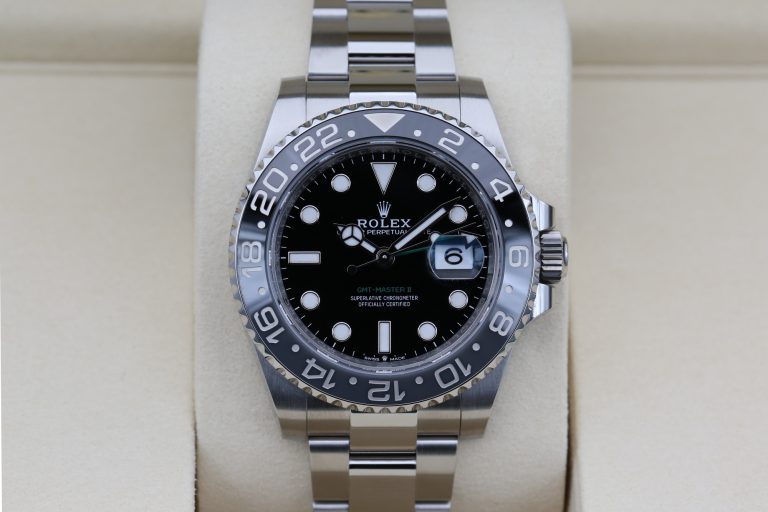
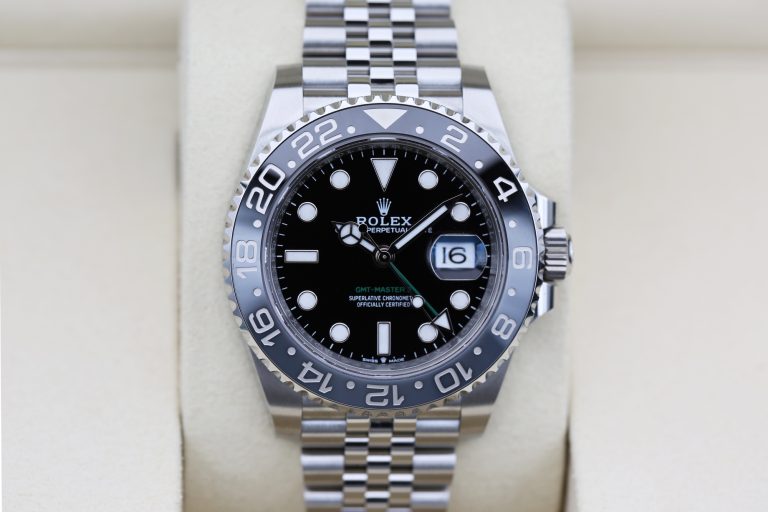
  • The traveller. The GMT-Master II shows two time zones at once, so home time and local time are always a glance away. See the Sprite above, or browse the GMT-Master II collection.
  • The adventurer. The Explorer II’s 24-hour hand and fixed bezel tell day from night when the light gives no clues. See the Explorer II collection.
  • The everyday wearer. The Datejust works with a suit on Monday and jeans on Saturday. Browse the Datejust 41, Datejust 36 and Datejust collections.
  • The swimmer or diver. A Submariner, Pelagos or Seamaster. See the Submariner and Seamaster collections, or everything from Tudor.
  • A smaller wrist. The 26 mm and 31 mm Datejusts keep the full Rolex build in a more petite size. See our ladies’ watches.
  • Someone who wants something different. The square Santos is a design classic and a change from round sports watches. See the Cartier Santos collection.

Vintage Treasures (Collector’s Picks)

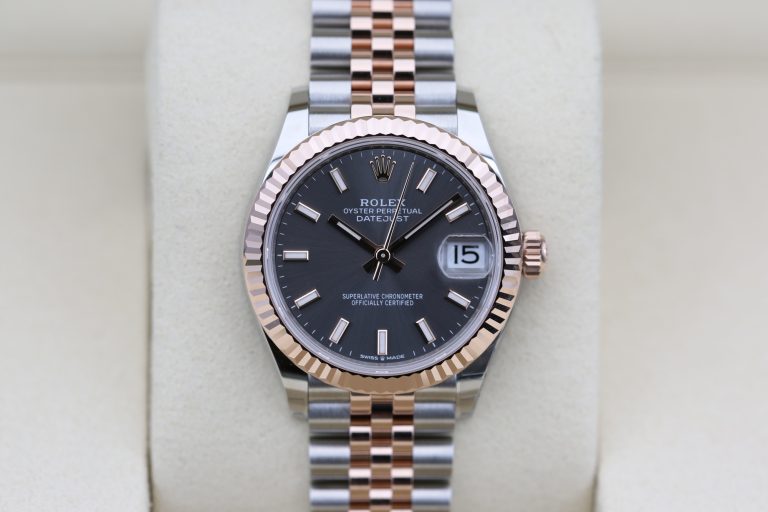
Genuine vintage Rolex can still fit comfortably under £15,000, particularly two-tone Datejusts from the 1980s and early 1990s, like the 1991 Datejust 26 above. A watch that has been worn for thirty years carries its history on the dial and case, so condition matters more than it does on a modern piece. Buy from a dealer who authenticates every watch and tells you plainly what comes with it. Every watch we sell is authenticated in-house before it is listed, and each listing states its condition and its box and papers status. Browse our current Rolex Datejust stock.

Buying a Watch as a Gift: What to Check

  • Size. 36 mm and 41 mm wear very differently, and even 40 mm and 41 mm feel different on the wrist. If you can, check the size of a watch they already wear.
  • Bracelet. The Oyster bracelet is sportier, the Jubilee dressier. The same reference can look quite different on each.
  • Box and papers. Every watch in this guide comes with both. Our box and papers guide explains what that means.
  • Unworn or pre-owned. Each listing says which, so you know exactly what you are buying.
  • Warranty. Every watch comes with a 12-month Kettle Club warranty. See warranty and insurance for the details.

Christmas Delivery, Returns and Gifting

  • Delivery. UK delivery is free, by Royal Mail Special Delivery, and fully insured in transit. An adult (18 or over) must sign for it.
  • Dispatch. Weekday orders placed before 1pm are posted for next-day delivery. Weekend orders are posted on the next working day.
  • Last order date. Message us on WhatsApp for the last day we can get a watch to you before Christmas.
  • Delivery address. If you pay by card, we dispatch to the cardholder’s billing address. If you would rather it went to your work address, add that when you order.
  • Returns. Online orders come with 14-day returns from the date of delivery, for a full refund or exchange, as long as the watch is unused and returned in its original packaging with its certificates and accessories. The 14 days run from delivery, not from Christmas Day, so keep that in mind if you order early. In-store purchases are covered by a different policy; see Deliveries & Returns.
  • Showroom over Christmas. Opening times can change over the holidays, so message us before you travel.

Talk to Us

Not sure which one? Tell us who it is for and your budget, and we will point you to the right few watches.

Kettle Club is an independent dealer and is not affiliated with Rolex, Tudor, Omega or Cartier. Brand and model names are used only to describe the watches we sell.

Buying Polished Luxury Watches: What Collectors Need to Know

Professional polishing of luxury watches polishing is a precise, multi-step process. Technicians first remove bracelets and sometimes the movement, then clean the case, often ultrasonically to remove dirt. Small scratches are gradually buffed away using progressively finer abrasives, for example, sanding sticks followed by buffing wheels with polishing compounds (rouge or diamond paste) and brushed finishes are restored with fine-wire brushes. Authorised service centers use specialised equipment and trained polishers to control this process. Rolex for instance requires apprentices to train for years before polishing on the job. As one expert notes, “a single polishing operation is high stakes: a few seconds too long and you take the watch too far, too short and you leave scratches”. By contrast independent polishers may lack brand specific lathes or data, so it’s critical they also have extensive experience. Reputable watchmakers (authorised or qualified independents) know the precise angles, mixes of brushed vs. polished surfaces and correct pressure to use. In practice a professional polishing service will usually disassemble the case, then use high-precision lathes and rotating wheels with successively finer abrasives, finishing with a jeweller’s buffing cloth.

Authorised centers vs. independent polishers often differ in tools and guarantees. Brand service centers (Rolex, Omega, etc.) use factory approved machines and procedures and trained in-house specialists. For example Rolex’s official polishers are taught to “carefully maintain the watch’s original proportions, edges and factory finishes” even as they remove scratches. Omega similarly suggests trusting only certified experts: an authorised Omega service is recommended to “maintain its luster without compromising the integrity of the metal”. Independent watchmakers can also polish expertly, but buyers should ask questions: do they disassemble the watch and remove the movement before polishing? They should, to avoid damage. In general professionals, whether brand authorised or master craftspersons, will use high-precision polishing lathes and inspection tools. Non professionals or amateurs risk uneven surfaces, distorted bevels or even permanently rounded edges. As one guide warns, DIY polishing is risky and irreversible, without proper tools you can “create uneven finishes, round edges or damage the metal”.

Brand Finishes: Rolex, Audemars Piguet, Omega, Patek

Each luxury brand has signature case finishes that demand care. Rolex cases combine polished and brushed surfaces with very crisp bevels. Owners prise the factory sharp lugs and edges. Rolex’s own guidelines emphasise preserving these lines, in-house polishers are trained to “ensure the watch keeps its sharp lines and signature design while removing scratches”. Polishing too aggressively can soften those edges, so Rolex trained technicians polish carefully. In contrast a poorly done polish on an Oyster case will leave the lugs thinner and rounder. Collectors often say “originality always trumps shine” on a Rolex, scratches and factory bevels add character.

Audemars Piguet (AP) cases, especially the Royal Oak and Offshore, rely on alternating mirror and satin surfaces on complex facets. Over polishing can blur the crisp angles of the iconic octagonal bezel. Watch guides note that polishing tends to “soften sharp edges and alter intricate designs” like the Royal Oak’s finishes. In practice any polishing must be extremely precise to avoid ruining AP’s flat polished facets and brushed sides. Unpolished or lightly polished AP Royal Oaks often command the highest prices, one analysis notes that “unpolished AP Royal Oak and Patek Calatrava models often sell for higher prices” than their polished counterparts.

Omega generally uses standard polished steel cases and some ceramic or precious metal models. Omega’s service centers will polish watches as part of servicing, even suggesting owners of precious metal Constellations “have it professionally polished by an authorised OMEGA service center to maintain its luster”. However Omega care guides warn against DIY: improper polishing “can slowly degrade metal layers and erode elegant case profiles over time”. In other words, routine gentle buffing with a cloth is fine, but any heavy polishing is best left to certified technicians.

Patek Philippe watches are finished entirely by hand with extreme care. Cases are meant to age gracefully with a soft patina. Patek emphasises preserving original finishes, for example a rare steel Patek 1518 with untouched edges sold at auction for a record price. Heavy polishing on a Patek Nautilus or Calatrava will round off delicate chamfers and degrade value. In a notable case a vintage Patek ref. 2497 was lightly polished at service so its stepped lugs remained sharp, it sold for $1M at auction. However the same report observes that “heavily polished vintage watches often sell for much less”. Rolex, Omega and similar sports models can accept periodic polishing without massive value loss, especially if performed by the brand, whereas haute horlogerie pieces like Patek and AP lose significant allure when over polished.

Auction Case Studies

Auctions illustrate how condition drives value. The standout lesson is that, all else equal original (unpolished) examples nearly always attract higher bids. For example Phillips sold an unpolished Rolex triple-calendar (ref. 6062) for CHF 2,117,000 in 2023, a world record price, noting it was an “exceptional specimen preserved in unpolished condition”. By contrast Phillips experts pointed out that a similar Daytona chronograph (ref. 6263) failed to sell in 2019 because “the case is a bit polished” and not original.

Even the most famous watches demonstrate this gap. The Rolex “Paul Newman” Daytona (ref. 6239) was sold by Phillips in 2017, famously still unpolished, for $17.75 million, the highest price ever paid for a wristwatch. Its pristine originality, tropical dial and untouched case was a major factor. In contrast a similar Daytonas with rounded lugs or refinished dial would command far less. A Hodinkee panel notes that “a polished Submariner or GMT-Master might come down more than an unpolished, very mint example”, reflecting the premium on untouched condition.

Other brands show the same trend. Patek’s record breaking sales have been mostly originals, a steel Patek ref. 1518 (perpetual chronograph) remained unpolished and netted over $16.6 million. Christie’s reports echo this, many early Rolexes “had been polished over the years, making the lugs a bit thinner,” whereas the rare unpolished examples (with patina) drew fierce bidding. Auction houses and collectors consistently note that original patina and sharp case lines add value, while excessive polishing erodes it. These examples underline a key point, polishing may revive appearance, but it permanently alters the case. Collectors reward mint originality every time.

Tips and Red Flags

Scrutinise the Case Details. In photos, pay close attention to the lugs, edges and overall symmetry. Over polishing rounds off normally crisp angles, for instance the bevels on a GMT-Master or Royal Oak should look sharp on an unpolished piece. If the lugs appear overly thin or have no distinct chamfers it’s a red flag. Likewise the lug holes should retain crisp edges, unusually smooth or enlarged holes often indicate past polishing. Look for fine scratches or tiny dents. A 40-year-old watch “shouldn’t gleam like it just came out of the factory”. Uniform glossiness on an older vintage watch usually means it has been refreshed.

Examine the Finish Pattern. Many watches mix satin brushed and mirror polished surfaces. Check that the brushing, e.g. on the case sides or bracelet center links remains consistent. Imperfect polishing jobs often leave uneven grain or inconsistent contrast between brushed and polished areas. Ask the seller for high resolution photos under bright light, ideally from multiple angles to spot any irregularities or warped surfaces.

Ask Probing Questions. A reputable seller or polisher should welcome detailed questions. For example, inquire “Was the watch fully disassembled before polishing?” A professional service will remove the movement and crown to avoid damage. Ask “What techniques were used to preserve the original shape?” or if there is any warranty on the polishing work. If possible request documentation of service history, official service records often note whether polishing was performed. Watch experts also suggest checking reviews or references for any independent polisher involved, looking specifically for praise about retaining sharp edges on brands like Patek or AP.

Watch Out for Red Flags. Be skeptical of photos that look “too perfect.” If a supposedly vintage watch looks brand-new or if all surfaces reflect the same even sheen, it may have been over polished. A few small scratches are not necessarily bad, they can actually confirm the watch has not been freshly refinished. A truly unpolished watch will always have some wear marks. Also watch for engraving and serial numbers, polishing can make them shallow or blurry. Lastly be cautious of listings that hide details: e.g. no photos of lug holes or asking too few questions. Demand clear images of the case sides and between the lugs.

When buying online look closely, ask about polishing history and prefer transparency. A minor polish done by a pro is fine, but any hint that a watch has been aggressively refinished should give buyers pause. As one expert advises instead of chasing an impossible “untouched” condition, focus on whether any polishing was done properly, with care to keep the original lines.

Everyday Wear: Pros & Cons

The choice between a polished or untouched watch often comes down to personal taste and priorities. Pros of Polishing: A freshly polished watch looks sleek and new, hiding most surface scratches and giving a mirror like shine. For modern daily wearers this can be very appealing. One guide notes that polishing “restores the original shine and elegance” so that a Rolex Datejust or Omega Seamaster “look as stunning as the day you got them”. Some owners simply prefer a flawless case and feel more confident with a shiny watch on their wrist. Polishing also smooths rough nicks, which can make wearing the watch more comfortable if you dislike sharp burrs.

Cons of Polishing: Every polish removes a microscopic layer of metal, permanently altering the watch’s dimensions and finish. For collectors this is a major drawback, “originality matters” and visible patina or scratches are prized. Polishing cannot be undone without complex and costly metalwork. Repeated polishing gradually rounds edges and can distort the case over time. As one source warns, improper or excessive polishing can “soften sharp edges” and ruin the intricate design of a Patek Nautilus or Rolex Submariner. From a value standpoint, polishing a vintage or collectible watch usually reduces its resale price. Auction results show that unpolished originals often fetch far more, one example being the Rolex Daytona above, while polished peers lag behind.

Aesthetic Considerations: Some buyers prefer the “character” of an unpolished watch. Tiny scratches and a warm patina tell a story of the watch’s life. Others prefer a polished look, equating it with a well maintained appearance. Omega suggests treating case care like “fine furniture polish”, i.e. occasional gentle buffing, rather than a full factory rework. That middle ground approach can keep a watch looking good without erasing all personality.

Comfort and Wearability: Properly polished cases have smoother surfaces that may feel nicer next to the skin or fabric. Sharp factory edges on an unpolished watch can sometimes catch on clothing. However major brands design their edges to be comfortable as manufactured. In practice comfort differences are minor and subjective.

Value Retention: This is often the decisive factor. If you plan to resell a watch someday or simply like owning something original, keeping it unpolished or lightly polished is safer. Even watchmakers acknowledge this: many note that excessive polishing on vintage models is a value killer. As one expert bluntly puts it, “if you own a vintage watch, don’t polish it, period”. On the other hand, if you view a watch purely as a tool for daily use, a professional polish can maintain its appearance without hurting you much, especially on modern pieces.

In the end the choice reflects personal preference. A polished modern watch presents a flawless showpiece every day, whereas an unpolished piece shows its journey and may retain more value. Regardless of your decision the most important rule is to have any polishing done correctly by a pro. Improper polishing is always worse than skipping it entirely. When done carefully a fresh polish can refresh a watch, but when overdone even the sharpest edge or rarest patina is lost forever.

Sources: Advice and examples in this guide draw on industry experts and auction records. Notable references include Bob’s Watches (Rolex specialist)bobswatches.combobswatches.com, Omega and WatchSkins care guidesbobswatches.comwatchskins.sg, the watch-pro site Watchlabwatchlab.sgwatchlab.sg and major auction house results (Phillips, Christie’s)phillips.comwatchlab.sg. These illustrate how polishing is done and valued in the world of luxury watches.


Is the Improved Rolex Milgauss Back in 2026?

As 2026 approaches and the watch community is abuzz with speculation about Rolex’s upcoming releases. In typical fashion the famously secretive brand hasn’t confirmed anything… but history, anniversaries and recent innovations give us some strong clues. Notably 2026 marks the 70th anniversary of the Rolex Milgauss, the scientist’s anti-magnetic watch first introduced in 1956. Will Rolex commemorate this milestone with a revived Milgauss sporting cutting-edge technology? What other new Rolex models or updates might be on the horizon? In this deep dive we’ll explore the possibilities from a next-generation Milgauss to other Rolex 2026 predictions grounded in historical patterns and the latest industry chatter.

70 Years of the Rolex Milgauss: A Legacy of Anti‑Magnetism

The Rolex Milgauss has always been a bit of an oddball in the Professional line. Named for its ability to withstand mille 1000 gauss of magnetism, the original Milgauss was built in the 1950s for scientists and engineers working around strong electromagnetic fields. Early references like the 6541 even featured a rotating timing bezel, a feature borrowed from the Submariner, underscoring the model’s tool watch intent. The Milgauss achieved its anti-magnetic feat by enclosing the movement in a soft iron “Faraday cage”.

After being discontinued in 1988 the Milgauss made a comeback in 2007, just around its 50th anniversary. with a modernised design, including the now-iconic lightning bolt seconds hand and a green tinted sapphire crystal. That 2007 reissue stayed in production for 15 years until Rolex quietly discontinued the Milgauss again in 2023. This recent discontinuation, coupled with the fast approaching 70th anniversary in 2026, has fueled speculation that Rolex might be preparing the next chapter for the Rolex Milgauss.

Will They Revive the Rolex Milgauss in 2026?

Many in the watch community believe Rolex has something special up its sleeve for the Milgauss’s 70th birthday. After all Rolex has a habit of marking anniversaries with special releases or subtle tributes. For example the GMT-Master’s 50th anniversary saw a commemorative model and the Submariner’s 50th famously introduced a green bezel. Given this pattern, a Milgauss revival in 2026 would be a fitting celebration. In fact rumors swirled that Rolex themselves bid on a vintage Rolex Milgauss 6541 that fetched a record price at auction in 2023, possibly to use as inspiration. Whether or not that’s true, it’s clear the Milgauss holds a special place in Rolex lore and a modern reinterpretation could be on the horizon.

Industry observers are divided on the likelihood of an immediate comeback. Some point out that Rolex rarely leaves an iconic model shelved for long, a new Milgauss feels “inevitable”, even if timing is uncertain. Others note that Rolex’s current lineup already has multiple time only sports watches, the Oyster Perpetual, Explorer, Air-King, etc.. and all modern Rolex movements are already highly anti-magnetic, potentially reducing the functional need for a dedicated Milgauss. In other words any new Rolex Milgauss would be less about solving a problem and more about celebrating a distinctive design. Given the Milgauss’s cult following and unique legacy that might be reason enough for Rolex to bring it back. Don’t be surprised if 2026 delivers a new Milgauss, but I would expect it to offer more in design and storytelling than in necessity.

Modern Magnetism: Rolex vs. Omega

One big question is how a future Milgauss would stack up against today’s anti-magnetic standards. Back in the 1950s, resisting 1,000 gauss was remarkable, hence the Milgauss name. But times have changed. In 2013 Omega unveiled a movement that could withstand over 15,000 gauss, far eclipsing the Milgauss’s original spec. Omega achieved this not with inner cages, but by using non-ferrous materials for critical components. Today Omega’s Master Chronometer watches and even Tudor’s anti-magnetic models boast resistance orders of magnitude beyond 1,000 gauss.

Rolex hasn’t been standing still. Over the past two decades Rolex gradually made its movements more magnetism-proof by design. The Parachrom hairspring introduced 2000. is a niobium-zirconium alloy that is largely unaffected by magnetic fields. In 2015 Rolex’s new Chronergy escapement in nickel-phosphorous also brought greater magnetic resilience. Some Rolex models even use Syloxi silicon hairsprings, which are entirely amagnetic. Thanks to these advances, “today, nearly every Rolex movement offers strong resistance to magnetism without needing a bulky Faraday cage”. In fact modern Rolex sports models can reportedly withstand up to about 22,500 gauss in tests, well above any real-world exposure a watch might encounter.

That said Omega’s highly publicized 15,000 gauss benchmark and beyond. has set a new bar for bragging rights. A revived Milgauss would be the perfect platform for Rolex to one-up the competition in this arena. Rolex has filed patents hinting at new anti-magnetic tech, notably a 2023 patent for a novel “Eco-brass” balance wheel that showed resistance up to 40,000 gauss in experiments If Rolex is ready to roll out such technology, the Milgauss anniversary edition could be its showcase. In short any 2026 Milgauss would likely aim to better compete with Omega’s anti-magnetic credentials, ensuring Rolex doesn’t cede that high-tech mantle. As one commentator put it, “1,000 gauss just doesn’t cut it these days when METAS-certified watches from Omega…can withstand fields 15 times stronger.” Expect Rolex to respond in kind.

Next-Gen Movements: Dynapulse Escapement and Beyond

If Rolex does reintroduce the Milgauss we anticipate it will feature an updated movement, possibly leveraging the brand’s latest horological innovations. A big clue is the Dynapulse escapement, a revolutionary mechanism Rolex debuted in 2025’s new Land-Dweller model. The Dynapulse escapement is a proprietary design that transmits energy through rolling contact instead of sliding, using dual silicon escape wheels. Why does that matter? Because it makes the movement more efficient, allows a higher 5Hz beat rate and, crucially for the Milgauss context, it’s “extremely lightweight, virtually insensitive to magnetic fields”. The Land-Dweller’s calibre 7135, with Dynapulse, is Rolex’s first high-frequency, 36,000 vph. movement and a showcase of what Rolex’s R&D can achieve.

It’s very possible that a new Milgauss could incorporate elements of this Dynapulse technology, or at least the spirit of it, to maximise magnetic resistance and performance. At minimum, we’d expect Rolex to use its latest amagnetic components, Parachrom hairspring, Chronergy or even silicon parts in any future Rolex Milgauss. Given that the Land-Dweller proved Rolex can integrate silicon tech at scale, the Milgauss could follow suit. Imagine a Calibre 32xx series movement upgraded with indirect impulse escapement or new alloys specifically to combat magnetism. This would allow Rolex to market the Milgauss not just as “1,000 gauss resistant”, an outdated figure, but perhaps on par with or exceeding Omega’s 15,000 gauss guarantee. In essence Rolex now has the technical toolkit, between Dynapulse and new patented materials to re-engineer the Milgauss for the 21st century.

Design Possibilities: Honoring the Past vs. Embracing the New

Technical specs aside the Milgauss has always been about quirky charm. So what design tweaks might we see in a 70th anniversary edition? Rolex often makes subtle nods to heritage models rather than overt vintage reissues. For the Rolex Milgauss the heritage in question includes that rotating bezel of the original ref. 6541, the distinctive lightning bolt seconds hand and the unique green tint crystal from the last generation. It’s a safe bet that Rolex would retain the lightning-bolt hand and green crystal given their popularity and how they set the Milgauss apart. Rolex rarely backtracks on successful design signatures.

The more intriguing question is whether Rolex might bring back the 60-minute rotating bezel that early Milgauss models had. This feature turned the 1950s Milgauss into a dual-purpose watch capable of basic timing like a Turn-O-Graph. Some observers have speculated that a new Milgauss could revive the rotating bezel to bolster its tool-watch bona fides. This might even involve borrowing the robust case of another model for instance, using the GMT-Master II’s case and adding a bi-directional timing bezel insert, echoing the 6541’s look. However Rolex might be cautious here, a bezel could make the Rolex Milgauss feel too close to other models, would a new Milgauss encroach on the Explorer II or Air-King’s territory? Rolex tends to avoid internal overlap. Another design route floated in enthusiast circles is to give the Milgauss an integrated bracelet for a modern twist. This idea riffs off the trend of 1970s-inspired integrated steel sport watches, and Rolex just entered that arena with the integrated-bracelet Land-Dweller. While a long shot, an integrated-bracelet Milgauss would certainly signal that it’s a completely new generation.

Most likely Rolex will balance past and present, we might see an updated Milgauss that keeps its playful lightning seconds hand and vibrant dial accents, perhaps packaged in a slightly redesigned 40mm case, potentially slimmer, since modern anti-magnetic movements no longer require thick iron shields. Any vintage homage like a bezel or dial detail, would probably be done subtly. Rolex knows how to give a wink to collectors without doing “outright fan service” in Tudor fashion. For example we could imagine a new Milgauss dial with a subtle honeycomb texture, a nod to the 6541’s anti-magnetic honeycomb dial or a red arrow marker at 12 o’clock on the bezel if one is included, recalling the vintage red triangle. Expect evolution, not revolution in design. The essence of the Milgauss, a scientist’s watch that dares to be a bit funky, will likely remain intact.

Rolex’s Anniversary Playbook

Rolex isn’t typically very sentimental but it does have a pattern of acknowledging anniversaries in its own restrained way. Knowing this helps set expectations for 2026. In the past two decades we’ve seen examples like a green-bezel Submariner for its 50th anniversary, 2003, a platinum Daytona with an ice-blue dial for the Daytona’s 50th, 2013, a red-text Sea-Dweller for that model’s 50th, 2017 and so on. For the GMT-Master’s 70th anniversary in 2025 many predicted and hoped for a special edition, possibly a “Coke” bezel GMT-Master II in honor of the classic red/black combo. Rolex ended up surprising us as it often does, but the fact remains that milestone years put a spotlight on certain models.

So what can history tell us about the Milgauss at 70? Notably the Milgauss’s 50th anniversary roughly coincided with its 2007 re-release after a long hiatus which in retrospect feels like Rolex giving the model a second life. Now after discontinuing the Milgauss in 2023, Rolex has a fresh opportunity to generate buzz around this watch in 2026. The stars are aligned for an anniversary reintroduction, perhaps even marketed as a tribute to “science and innovation” to align with the Milgauss’s original mission. It wouldn’t be surprising if Rolex’s 2026 campaign for a new Milgauss references the year 1956 and highlights how far their anti-magnetic technology has come since then.

On the flip side Rolex also guards its mystique by doing the unexpected. They won’t release a new Milgauss in 2026 just because it’s an anniversary, it will happen only if the product and timing make sense commercially. The brand did skip some anniversaries, for instance there was no obvious fanfare for the Datejust’s 70th or 75th. But given the Milgauss’s recent retirement and collector interest, the 70th is a ripe moment. If a new Milgauss appears, expect Rolex to present it not merely as an anniversary edition, but as the next evolution of a legend, probably integrating all the incremental innovations since 2007, new movement, new materials, etc… In typical Rolex fashion, the approach might be understated but purposeful, a green crystal here, a commemorative detail there and most importantly a watch that can stand on its own merits beyond the anniversary year.

Beyond the Rolex Milgauss: Other Rolex 2026 Predictions

While the Milgauss is stealing the spotlight, it’s not the only Rolex model that could see action in 2026. Rolex usually introduces a handful of updates or new references each year and next year should be no exception. Based on historical cycles and current rumors, here are other Rolex watches to watch for in 2026:

  • Expanded Use of Titanium, Rolex dipped its toe into titanium recently, the RLX Titanium Yacht-Master 42 in 2023 and the Deepsea Challenge in 2022. Word on the street is that Rolex will continue this trend, possibly unveiling a popular sports model in titanium. One prevailing rumor has been a Titanium Explorer II, which would make sense, the Explorer II is due for a fresh variation and a lightweight, “industrial-grey” version could reinvigorate that line. We might also see other models get the titanium treatment, imagine a titanium Submariner or GMT-Master II, given how Rolex now has its own titanium alloy ready to go.


  • New GMT-Master II Variant, Collectors have been hoping for a GMT-Master II with the classic red/black “Coke” bezel, especially since 2025 was the GMT’s 70th birthday. If Rolex held back in 2025, they might surprise us in 2026 with this fan-favorite bezel colorway. However rather than a steel Coke GMT, Rolex might issue it in a precious metal, e.g. white gold to keep it exclusive. Another possibility floated in 2025 predictions was a “Blueberry” GMT, blue bezel or even a platinum GMT with a novel dial, these are less substantiated, but not impossible if Rolex wants to continue offering fresh GMT variants.


  • Revival of the Turn-O-Graph, The Turn-O-Graph, the rotating-bezel Datejust model from the 1950s, later known as the Thunderbird. has been absent from Rolex’s catalog since 2011. Enthusiast discussions frequently bring up the Turn-O-Graph as a candidate for revival, given the industry’s appetite for vintage names. In fact some fans half-jokingly predict the Turn-O-Graph’s return every year until it happens. If Rolex were to bring it back, 2026 could be opportune, aligning roughly with the Datejust’s 80th anniversary, 1945-2025.and adding a retro-cool sports watch to the lineup. Still this is speculative, Rolex may feel that watches like the Yacht-Master or a rotating-bezel OP cover that niche today.


  • New Dial Variations and Materials, Rolex has shown a creative streak lately with dials, think of the colorful Oyster Perpetuals and the eye-catching “Celebration” bubble dial in 2023. We might see new dial options in 2026 across models like the Datejust, Day-Date or Oyster Perpetual. Industry chatter suggests possibly the introduction of stone dials, e.g. malachite, lapis, tiger’s eye making a comeback in some collections. These were hinted as a potential trend for 2025 and Rolex could very well explore them going forward since they nod to the past while riding the wave of unique dial materials. Additionally expect some anniversary-themed dial colors on flagship models, for instance, Rolex sometimes uses green dials for anniversary editions, green being Rolex’s signature color.. A new green-dial model could appear, perhaps a green Sky-Dweller was speculated or even a “Tiffany blue” Daytona dial has been imagined.
    |
  • Refinements in Existing Lines, Rolex might also use 2026 to roll out incremental updates, for example new bracelet options on sports models, the idea of a Daytona on a Jubilee bracelet has been discussed, merging vintage style with modern models.. Or a smaller complication update, could we see something like a moonphase added to the dressy 1908 line or a new variant of the Sky-Dweller? While nothing concrete has leaked, Rolex’s pattern of evolutionary improvements means we should watch for subtle changes like improved movements in remaining models, perhaps the Explorer II or Air-King getting the latest calibers. or the phasing out of older references in favor of refreshed ones.

Aside from a potential Rolex Milgauss comeback, Rolex 2026 could bring a Coke-bezel GMT, more titanium models, possibly the return of a vintage name like the Turn-O-Graph and fresh aesthetic options across the lineup. Of course Rolex being Rolex, surprises are always in store, the brand is known for defying predictions and delivering something out of left field, remember the left-handed “Sprite” GMT in 2022? The only certainty is that when Watches & Wonders 2026 rolls around, Rolex will have the watch world eagerly watching.

While we won’t know for sure until Rolex lifts the curtain in 2026 the anticipation is already building. The Milgauss’s 70th anniversary provides a compelling narrative for Rolex to reintroduce a modern anti-magnetic marvel potentially outfitted with the latest Dynapulse escapement tech and paying homage to the original’s distinctive character. This type of release would underscore Rolex’s commitment to innovation, keeping pace with rivals like Omega in the science of magnetism, while also celebrating one of its most quirky and beloved models.

At the same time Rolex’s broader 2026 lineup is likely to continue the brand’s tradition of mixing heritage with progress, we could see everything from new material applications, titanium sports watches, to classic design comebacks, long-awaited bezel colors or models, and a few unpredictable twists that get collectors talking. Rolex has mastered the art of surprising and delighting its fans without straying too far from its core identity. If historical patterns hold true 2026 will be another exciting chapter in that story, with the Rolex Milgauss leading the charge, lightning bolt in hand.

One thing is for certain, as the new year dawns, all eyes will be on “the Crown” to see if these predictions come to fruition. Rolex might not need a new Milgauss, but watch lovers sure want one and an anniversary seems the perfect time to strike. Here’s hoping we’ll be treated to a modern Milgauss that does justice to 70 years of scientific heritage and plenty of other Rolex surprises to make 2026 a year to remember in horology.

References, Sources.

  • Rolex Official, “The Land-Dweller: Opening new horizons”, 2025., Dynapulse escapement description rolex.com


  • Monochrome Watches, “Omega Announces the First Truly Anti‑Magnetic Watch Movement”, 2013., Comparison of Omega 15,000 Gauss vs. Rolex Milgauss 1,000 Gauss monochrome-watches.com


  • Hodinkee, “The Past, Present and Future of the Rolex Milgauss”, June 2023., Insights on Rolex possibly drawing vintage inspiration, buying vintage Milgauss, subtle nods to ref. 6541. hodinkee.comhodinkee.com


  • Gear Patrol, “5 New Rolex Watches I Hope to See in 2025”, Mar 2025., Noting that 1,000 Gauss is outdated and Rolex needs to up the Milgauss’s magnetic resistance to match Omega gearpatrol.com; predicting more Rolex titanium models, e.g. Explorer II. gearpatrol.com.


  • Chrono24 Magazine, “Rolex Predictions for Watches and Wonders”, Oct 2025., Community speculation on GMT 70th anniversary modelschrono24.com and Milgauss revival skepticism right after discontinuation chrono24.com.


  • WatchCrunch Forum, “W&W 2026 Predictions”, 2025., Enthusiast views: debating a Milgauss relaunch, given current movements’ anti-magnetic properties. watchcrunch.com and hoping for a Turn-O-Graph comeback watchcrunch.comwatchcrunch.com.


The Fantastic Ladies Datejust 28mm and 31mm Models Revisited

Iconic Style in Smaller Sizes

The Rolex ladies Datejust watches are some of the most iconic luxury watches ever made. It’s a symbol of elegance, precision and timeless style. For women and those with an attraction to smaller watches, Rolex offers the Datejust in more compact case sizes. Notably 28mm, the classic “Lady Datejust” and 31mm, often dubbed mid size or unisex. These smaller Datejust models combine all the hallmark Rolex quality and design in a more refined scale, making these luxury watches ideal for a slender wrist, or a subtle everyday luxury statement. In this guide we will look into the 28mm and 31mm Rolex Datejust models, exploring their history, dial and bezel options, investment value and how they compare to larger unisex sizes. We’ll also highlight real examples from Kettle Club’s catalogue to illustrate these beautiful timepieces in action.

A Brief History of Rolex Ladies Datejust Sizes

Rolex introduced the first ladies’ Datejust, officially the “Lady Datejust” in 1957 as a dainty 26mm watch, following the men’s 36mm Datejust which debuted in 1945. That tiny 26mm size remained the standard for nearly six decades. In 2015, Rolex unveiled the Lady Datejust 28, upsizing the case to 28mm to give the classic women’s watch a slightly larger, more modern profile. Early Lady Datejust 28 models came only in precious metals or two tone Rolesor, steel and gold, but by 2017 Rolex had expanded the line to include stainless steel versions as well. The 31mm Datejust actually dates back much further, Rolex introduced a 31mm mid size Datejust in the late 1950s as a bridge between the petite ladies’ watch and the larger men’s watches. Over the years, the 31mm variant became one of the best selling Datejust sizes among women, valued for offering a bit more wrist presence than the classic Lady model while still looking elegant and proportional. Today, the 28mm and 31mm models are both part of Rolex’s current production, with the 28mm still officially labeled “Lady Datejust” and the 31mm often just called Datejust 31. Each has its own appeal and Rolex gives both sizes outstanding variety in metals, dials and bezels so every wearer can find her perfect combination.

Ladies Datejust 28mm: Timeless Petite Elegance

At 28mm, the Lady Datejust represents the quintessential ladies’ Rolex, a refined, classic dress watch that exudes subtle elegance. It retains all the signature Datejust features: the date window at 3 o’clock with Cyclops magnifier, the Oyster waterproof case, 100m water resistance and an automatic “Perpetual” movement renowned for accuracy. In 2015 when Rolex upsized from 26mm to 28mm, they also introduced the new Caliber 2236 movement with a Syloxi silicon hairspring for improved precision and a 55 hour power reserve. The result is a tiny watch that is as robust and technically advanced as larger models.

Visually, the Lady Datejust 28 maintains a delicate, feminine charm on the wrist. Many consider the 28mm size the most traditional “ladies’ watch” look, it’s petite and pairs beautifully with formal attire or as a discreet daily luxury. On smaller wrists, 28mm sits proportionally and has a jewellery like quality. As one observer noted, a 28mm can look “more feminine and dressy”, whereas a larger 31mm starts to give more standard watch presence. Rolex offers the Lady Datejust 28 in a wide range of materials and styles. You can choose from all stainless steel, two tone Rolesor in yellow or Everose, rose gold or full 18k gold, yellow, white or Everose. Bezels come in three styles, smooth, domed, fluted gold or gem set with diamonds, and dials span virtually every colour and texture imaginable. Early 28mm models were mostly in gold and notably Rolex pairs its precious metal Lady Datejust watches with the elegant President bracelet, a rounded three link design usually reserved for Day Date models, hence the nickname “Ladies’ President” for these watches. More recent steel versions of the 28mm can be found on sporty Oyster bracelets or dressy Jubilee bracelets, depending on the bezel and dial combination. In short, the Lady Datejust 28 delivers timeless Rolex style in a perfectly petite package, making it a favorite for those who prefer a classic ladies’ size. And despite its smaller size, it loses none of the quality, both the 28mm and 31mm models are built to the same Rolex standards, including robust waterproof cases and chronometer certified movements, meaning they are just as durable for daily wear.

A great illustration of the Lady Datejust’s enduring charm is the Rolex Datejust ref. 69173, 26mm from 1992, a vintage two tone model featuring a blue “vignette” dial with diamond hour markers. This predecessor to the 28mm Lady Datejust shows the classic combination of 18k yellow gold and Oystersteel, Jubilee bracelet and a fluted bezel, a style still very much alive in the modern 28mm references. Kettle Club’s example from 1992 retains its beauty and showcases how these watches hold up over time, both in style and value, this piece, with original box and papers, is offered around the mid £4,000s. Whether vintage or modern, a Lady Datejust in the 26–28mm size is a truly timeless accessory.

Datejust 31mm: Versatile Mid Size Appeal

The 31mm Datejust occupies an interesting middle ground in Rolex’s lineup, it’s larger than the traditional ladies’ watch, yet smaller than a gents’ 36mm. This makes it an extremely versatile choice. In Rolex’s words, the 31mm was designed as “a man’s watch women prefer to wear,” implying it was created for women seeking a bolder look. Indeed, many modern women gravitate to the 31mm Datejust because it offers a noticeable step up in wrist presence over the 28mm model, without venturing into oversized territory. On the wrist, 31mm has more dial real estate, which can make the watch easier to read and more of a statement piece, yet it still maintains elegance and doesn’t overpower a slimmer wrist. It’s no surprise that the Datejust 31 has in recent years become “the most popular piece in the range among women”, thanks to its highly versatile size and style options.

Rolex treats the 31mm Datejust much the same as the Lady Datejust in terms of variety, in fact, Rolex’s current catalog offers even more variations in the 31mm size than in the 28mm. The Datejust 31 is available in seven metal combinations, stainless steel, White, Yellow or Everose Rolesor and solid 18k Yellow, White or Everose gold. Like the 28mm, you have a choice of smooth, fluted or diamond set bezels, paired with Oyster, Jubilee or President bracelets, President reserved for all gold models. Dial options are especially diverse, from classic black, silver or white dials to vibrant hues like mint green, pink or rich aubergine. Rolex also offers luxurious dial materials at 31mm, including mother of pearl, malachite and full pavé diamond dials for those who want extra sparkle. In terms of functionality and build, the Datejust 31 carries the same technical excellence: the latest models use the Caliber 2236 automatic movement, the same as the 28mm with the silicon Syloxi hairspring for superb accuracy and stability and of course the watch is Oyster cased and Twinlock sealed for 100m water resistance, tough enough for daily wear despite its luxury status.

A key appeal of the 31mm is that it can easily be considered unisex. While marketed toward women, its size and design make it wearable by anyone who prefers a mid size watch. In fact, some collectors note there’s “no special lady features” on a Datejust 31, it’s essentially the same Datejust design scaled down, so men who dislike large watches or teenagers, for example, could wear a 31mm just as well. For most buyers, however, the 31mm strikes the perfect balance of elegance and presence for a modern ladies’ watch. It can be dressed up or down effortlessly, put it on a Jubilee bracelet with a fluted bezel and Roman numeral dial for a classic dress look or opt for a smooth bezel on Oyster bracelet with a bright dial for a more contemporary, casual vibe.

Our collection features some stunning Datejust 31 models that showcase the range’s versatility. For instance, the Rolex Datejust ref. 278274, 31mm in Oystersteel and white gold with a mint green dial is a current model piece from 2025, pairing the trendy new green sunray dial with a white gold fluted bezel and Jubilee bracelet. It offers a modern pop of colour while retaining that timeless Datejust style, truly the best of both worlds. We also have a two tone Rolex Datejust ref. 178273, 31mm from 2007, which features yellow Rolesor, steel with 18k yellow gold accents, a black dial and diamond hour markers. This highlights how the mid size Datejust can exude a luxurious feel, with the warmth of gold and sparkle of diamonds, yet in a wearable size. Both of these examples underline why the 31mm is so popular today, whether you favor cutting edge dial colours or classic two tone elegance, the Datejust 31 delivers a highly versatile luxury watch that appeals to a wide audience.

Dial & Bezel Options: Endless Variety and Personalisation

One of the most exciting aspects of the 28mm and 31mm Datejust models is the astonishing variety of configurations Rolex offers. These may be smaller watches, but they are by no means limited in style. Between the two sizes, Rolex’s catalog spans dozens upon dozens of references, the Datejust truly is “about the most chameleonic creation in Rolex’s entire portfolio” in terms of available combinations. Here’s an overview of the options you can consider when choosing a Ladies’ Datejust in 28mm or 31mm size:

  • Materials & Bracelets: Both sizes are offered in stainless steel, steel and gold, Rolesor or full 18k gold variants. Rolesor models can be with yellow gold or Rolex’s Everose pink gold and the steel/gold combos add a touch of luxury without the price of full gold. The bracelet can dramatically influence the watch’s character: a sporty three link Oyster bracelet gives a clean and modern look, the five link Jubilee bracelet adds dressy vintage flair, it was originally designed for the Datejust in 1945 and the President bracelet on gold models lends an unmistakably high end, sophisticated feel. Notably, Rolex only fits the President bracelet on solid gold ladies’ models, steel or two tone Datejusts come with Oyster or Jubilee options.
  • Bezels: The bezel is a defining trait of the Datejust’s style. Smooth, domed bezels offer a sleek and understated elegance, usually seen on stainless steel references. The iconic fluted bezel, always crafted in gold, even on steel watches it will be white gold, provides that classic Rolex look, it catches the light and instantly signals the watch’s heritage. For those who love sparkle, Rolex also produces factory diamond set bezels on many 28mm and 31mm references, often denoted by reference numbers ending in “3” like 279383 or 278288. A gem set bezel elevates the watch into true jewellery territory and Rolex’s craftsmanship here is on full display with perfectly matched diamonds. For example, one modern 31mm reference features 46 brilliant cut diamonds in its bezel and an aubergine, plum sunray dial with diamond Roman numeral VI, a striking blend of elegance and glamour. Whether you prefer the subtlety of a smooth bezel, the traditional fluted look or the opulence of diamonds, there’s a Datejust to match.
  • Dials: Rolex is renowned for offering a rainbow of dial choices and the ladies’ Datejust lineup is perhaps where their dial catalogue is most expansive. You’ll find classic colours like black, white, silver and champagne, feminine hues such as pink, lavender or the popular new mint green and specialty dials including Mother of Pearl, MOP, which shimmers with an iridescent effect and hard stone dials like malachite or turquoise on some high end versions. In vintage pieces, you might encounter unique finishes like the “Blue Vignette” dial, a blue to black gradient fade with diamond markers on our 1990s ref. 69173 example. Hour markers add another layer of customisation, you can have the sharp look of baton, stick indices, elegant Roman numerals, playful Arabic numerals or diamond hour markers set into the dial. Combinations are nearly endless: for instance, our Kettle Club 2025 Datejust 31 ref. 278273 in yellow Rolesor pairs a classic champagne dial with diamond markers for a touch of luxury, while another variant like the ref. 278271 in Everose Rolesor might feature a rich chocolate brown dial with Roman numerals for a warm, refined style. Rolex’s own website dedicated to the Datejust 31 runs 32 pages long because of all these permutations! Clearly, personalisation is the name of the game, whatever your taste, there’s likely a dial/bezel combo to suit it.

This breadth of choice means that two women could both own a “Datejust 31” yet have completely different looking watches, one might be a stainless model with a smooth bezel and bright coral dial, another a two tone with fluted bezel and mother of pearl diamond dial. The luxury and expressiveness of the Datejust in these sizes make it akin to fine jewellery, you can truly select the metals and colours that speak to you. And thanks to Rolex’s modular approach, within certain limits, many of these elements are transposable, e.g. a steel watch can have any colour dial with batons or Romans, a Rolesor can mix various dials with or without diamonds, ensuring that virtually no two Datejusts out there are exactly alike. This is a big part of the Datejust’s enduring appeal as a ladies’ watch: it can be as understated or as dazzling as you wish.

Comparing 28mm vs 31mm vs Unisex Options

When deciding between the 28mm and 31mm Datejust, a lot comes down to personal preference and wrist size. Here’s a quick comparison to help guide you:

  • Wrist Presence: The 28mm is subtle and traditionally feminine, it looks delicate and won’t dominate a small wrist. The 31mm, on the other hand, has a bolder presence and is more noticeable as a wristwatch. If you want your Rolex to stand out a bit more or have an easier read, the 31mm might be preferable, whereas if you favor a more discreet elegance or have a very slim wrist, the 28mm is ideal.
  • Trend & Style: In today’s fashion, there’s a clear trend of women wearing larger watches. Many women even wear the 36mm Datejust or 40mm sport models to embrace a chunky, statement look. Within this context, the 31mm can be seen as a modern choice that aligns with the move toward slightly larger watches for women. It has been described as a midsize that “appeals to a wide audience, particularly women who seek both elegance and presence”. The 28mm remains a classic choice, it never looks out of place at a formal event or with jewellery. Think of the 28mm as a timeless pearl necklace and the 31mm as a contemporary pendant, both beautiful, but with different vibes.
  • Unisex Wear: As mentioned, the 31mm can cross over to men or be considered unisex, especially for those who prefer smaller watches. The 36mm Datejust, the original men’s size is now often worn by women as well, in fact, Kettle Club lists some 36mm models in our Ladies’ collection, such as a Rolex Datejust 36 ref. 16234, 36mm from 2001 with a classic stainless steel and white gold fluted configuration. Many women enjoy the 36mm for its “bold aesthetic” and it can certainly make a confident fashion statement if you’re comfortable with a larger watch on your wrist. Conversely, some men with smaller wrists wear 31mm Datejusts or vintage 30-34mm models, it truly comes down to comfort and style preference. Rolex also historically made a 34mm Date model and currently makes 34mm Oyster Perpetuals, these could be considered “mid size” as well, though they are less common. In summary, 28mm = definitively feminine and petite, 31mm = sweet spot versatile, leaning feminine but unisex friendly and 36mm+ = traditionally men’s but increasingly unisex for those who like larger looks. There is no wrong choice, it’s all about what feels and looks right on your wrist.

Investment Value and Collectibility

When purchasing a luxury watch like a Rolex, it’s natural to consider how well it holds its value. The good news is that Rolex Datejusts, regardless of size, tend to retain value better than almost any other watch in their class. That said, the market dynamics for the smaller ladies’ models can differ a bit from the ultra sought after men’s sports models. Here are some key points on investment and value:

  • Historic Affordability: Because Rolex produced the Lady Datejust and mid size Datejust in large numbers and they were long readily available, the pre owned market is well supplied with these watches. Unlike steel sport Rolex models, which can far exceed retail price pre owned due to scarcity, many pre owned ladies’ Datejusts can be found at very attractive prices. As one industry review noted, Rolex never heavily restricted supply of Datejusts, so “there are plenty in circulation, keeping prices extremely reasonable”. For example, a previous generation Datejust 31, reference 178XXX, pre 2019 in stainless steel can be had around ~£3,800 and even two tone or gold models often under £7,600, a great value for the quality and prestige. Vintage 26mm models from the 1980s–90s can sometimes be found in the low thousands of pounds, which is quite accessible as an entry point to the Rolex world.
  • Modern Demand: In recent years, certain dial variants of the Datejust 31 have spiked in popularity, notably the mint green dial and the Wimbledon, dark rhodium with green Roman numerals on 36/41mm. A new Rolex Datejust 31 in steel with a green dial retails around £6k, but some dealers have sold pre owned pieces for as high as £6.8k due to demand. This shows that if a particular configuration is hot or short in supply, even the smaller models can appreciate or at least fetch strong resale prices. Generally, popular dial/colours, green, pink, MOP, diamond dials and anything with factory diamonds or in gold will hold value very well because of their desirability and intrinsic material value. It’s worth noting that Rolex’s annual price increases also lift the floor for pre owned prices, so a watch bought a few years ago could potentially be sold for near what you paid if kept in great condition.
  • Condition and Completeness: As with all luxury watches, the condition of the watch and presence of original box and papers can significantly impact value. Collectors will pay a premium for well preserved pieces with documentation. For ladies’ watches specifically, some vintage pieces with original diamond dials/bezels and papers are quite sought after. Kettle Club always emphasizes keeping your watch in excellent condition; for instance, diamond set ladies’ watches from top brands often hold their value well, especially if kept with original papers.
  • Long Term Outlook: While smaller gold and diamond watches were sometimes undervalued in the past, as the market chased steel sports models, there is a sense that quality and rarity will shine through in the long run. A classic Rolex Datejust, whether 28mm or 31mm, will likely always have a market of buyers due to the model’s heritage. They are also often treasured as heirlooms, passed from one generation to the next, which speaks to their lasting value beyond just price. You likely won’t see the ladies’ Datejust double in price overnight, but you can be confident that it won’t “tank” either. In fact, when you factor in years of enjoyment, a well bought pre owned Datejust can be considered a savvy investment in both style and value retention. And if you ever do decide to sell or trade, the Rolex name ensures strong liquidity, as one expert quips, you can bet you’ll get a better return with a Rolex than with virtually any other watch brand.

Finding Your Perfect Ladies Datejust

The Rolex Datejust in 28mm or 31mm proves that great things come in small packages. These watches carry forward the full legacy of Rolex, from technical excellence to design versatility, in sizes tailored for those who prefer a more refined wrist presence. Whether you lean towards the classic charm of the Lady Datejust 28 or the contemporary versatility of the Datejust 31, you’re choosing a timepiece that is both an object of beauty and a reliable instrument built to last a lifetime. At Kettle Club, we have the privilege of handling many of these models, from pristine modern pieces, like the mint green 31mm 2025 model to cherished vintage examples, like 26mm and 31mm Datejusts from the 1980s and 2000s. Each watch has a story and part of the joy is finding the one that resonates with your style and wrist.

In comparing the two sizes, there is no winner, only what suits the individual. The 28mm Datejust is an ode to tradition, perfect for those who adore its subtle elegance and historical significance as the “ladies’ Rolex.” The 31mm Datejust offers a twist of modernity and unisex appeal, ideal for those who want that extra versatility and presence. Both can be dressed up with diamonds and gold or kept sleek in steel with a pop of dial colour. Both will serve you with that legendary Rolex accuracy and durability. And importantly, both can be wise investments, retaining value as the years go by, all while you make memories wearing them.

If you’re considering a ladies’ Rolex, we invite you to explore our collection and see these stunning 28mm and 31mm models side by side. Whether it’s a gift for someone special or a treat for yourself, a Rolex Datejust, in any size is a lifelong treasure that transcends generations. We hope this deep dive has helped you understand the nuances of the 28 vs 31 models. In the end, the best one is the one that makes you smile every time you put it on, and with the Datejust, that’s almost guaranteed.

We regularly update our catalogue with fine examples of ladies’ Rolex watches and other luxury models. From the beloved Datejust to models like the sporty Yacht Master or even elegant Cartier timepieces, our ladies’ selection is curated to offer something for every taste. Feel free to reach out to our experts for personalised assistance in finding your perfect watch. After all, a luxury watch is more than a timekeeper, it’s an extension of your personality and style, ready to accompany you through life’s moments big and small. Happy watch hunting!

Sources: This guide is informed by Rolex’s historical releases and specifications, expert analyses from watch industry veterans and Kettle Club’s own experience in dealing with these models. Key references include Bob’s Watches editorial insights on the Datejust 28 and 31bobswatches.com & bobswatches.com, technical details from Rolex’s literature bobswatches.com & bobswatches.com and market perspective from industry blogsbobswatches.com & exquisitetimepieces.com, as well as examples from Kettle Club’s current catalogue kettleclub.co.uk which bring these facts to life. The Rolex Datejust, in all its sizes, truly stands as a testament to enduring style and value.


The Best Rolex Datejust Dials Ever Made

The Rolex Datejust is renowned for its versatility and enduring style but it’s often the dial that truly defines a particular model’s character. Over the decades Rolex has produced a kaleidoscope of Datejust dial designs from classic and understated to vibrant and avant garde. Some dials have become iconic fan favourites or highly collectible because of their unique aesthetics, historical significance or cultural cachet. In this post we explore the most eye catching, collectible and significant Rolex Datejust dials ever made for both men’s and women’s models. In this post we explore the most eye catching, collectible and significant Rolex Datejust dials ever made, for both men’s and women’s models. We’ll cover legendary factory original dials like the Wimbledon, rhodium grey with green Romans, the laser etched Palm motif, the latest pastel pink and mint green dials of 2025, vintage 1980s vignette gradient dials, elegant mother of pearl and diamond dials, as well as notable custom or aftermarket dials that have become culturally iconic. Along the way we’ll also highlight examples that have passed through Kettle Club’s own collection, from current inventory to previously sold pieces, illustrating these remarkable dials in real world Rolex watches.

The “Wimbledon” Dial: A Modern Classic in Green and Slate

One of the most recognisable modern Datejust dials is the so called “Wimbledon” dial, distinguished by its slate grey, rhodium background and emerald green Roman numeral hour markers. This design earned its nickname from Rolex’s long association with the Wimbledon tennis tournament, whose signature colours are green and grey. Interestingly Rolex never officially calls it “Wimbledon”, the moniker was coined by enthusiasts, but it has stuck in the watch community. The Wimbledon dial first appeared in 2009 on the Datejust II, the 41mm predecessor to the Datejust 41. It was later carried over to the modern Datejust 41 line, offered across stainless steel, two tone Rolesor and even Everose gold versions. The dial’s green outlined Romans on a rhodium sunray base create a striking contrast that pays subtle homage to the green grass of Wimbledon’s courts.

Stylistically the Wimbledon dial balances sporty flair and classic elegance. The pop of green adds just enough colour to stand out without being loud, while the Roman numerals and slate backdrop keep it traditional. It’s a versatile look equally at home on a stainless steel Datejust 41 with an Oyster bracelet or a two tone yellow Rolesor on a Jubilee strap, Rolex has promoted the two-tone version during Wimbledon events, further cementing the nickname. Collectors love that this dial was frequently seen on the wrist of champion Roger Federer, including during his record eighth Wimbledon title in 2017, adding to its lore. The Wimbledon dial is not a limited edition and remains part of the current lineup, but its unique fan given name and connection to Rolex’s sports heritage make it feel special.

From a collector’s standpoint, Wimbledon dial Datejust models have proven popular and in demand, they often command a premium on the secondary market due to that distinctive look. At Kettle Club we’ve offered multiple examples of the Datejust 41 with Wimbledon dials, such as a recent Rolex Datejust 41 ref. 126334, steel and white gold with the slate/green dial from 2025. Whether brand new or pre-owned, the Wimbledon dial variant tends to sell quickly, underscoring its status as a modern classic among Rolex enthusiasts.

Palm Motif Dials, 2021: Nature-Inspired Artistry

In 2021 Rolex surprised fans by releasing a series of Datejust dials with bold engraved patterns, injecting a dose of artistry and playfulness into the classic model. The standout from this release was the “Palm” motif dial, which quite literally brings a tropical vibe to the Datejust. This dial is decorated with an intricate pattern of overlapping palm leaves, evoking lush jungle foliage. Rolex achieved this look using cutting edge femtosecond laser engraving to etch the palm frond design onto the dial surface with extreme precision. The engraved leaves sit atop a traditional sunray brushed dial base, so you get a dynamic play of light, shadows and texture as you tilt the watch, it’s a dial you can appreciate both from afar and up close under a loupe.

The initial Palm dial collection, 2021 was offered in the Datejust 36 and featured three colour executions: olive green, champagne gold and silver. The green palm dial in stainless steel, or white Rolesor captured most headlines, as green has become Rolex’s signature colour in recent years and it looked especially fresh and “organic” in this motif. Rolex paired the green version with an Oystersteel case and bracelet for a modern look. The gold-tone palm dial came on a yellow Rolesor, steel and yellow gold Datejust and the silver palm dial on an Everose Rolesor, rose gold and steel model, demonstrating how the motif could be both fun and luxurious depending on the colour scheme. In any hue, the Palm dial is eye catching and unconventional, instantly setting the watch apart from standard Datejust dials. Yet it still maintains elegance, the pattern is subtle enough that from a distance the watch just looks like it has an interesting texture and only upon closer view do the palm leaves reveal themselves.

These Palm motif Datejusts were an immediate hit with collectors for their novelty and limited availability. They represent Rolex “loosening up” its typically conservative design language, much like the brand did with the colourful Oyster Perpetual dials in 2020. Because they were only introduced in 2021, they are still relatively rare on the secondary market and thus sought-after. Kettle Club has fielded many inquiries for the green Palm dial model specifically and we’ve managed to source examples for clients. The combination of a nature-inspired aesthetic, Rolex’s technical artistry and the underlying classic Datejust functionality makes the Palm dial models potential future classics in their own right. They capture a moment in Rolex’s evolution where the company proved it can still surprise and delight with dial creativity.

Pastel Dials of 2025: Mint Green and Pink Hues

In recent years Rolex has expanded the Datejust’s palette to include soft pastel tones, bringing a fresh, contemporary flair to this heritage model. The most notable are the mint green and pink dials that have become highlights of the mid-2020s lineup. Rolex’s affinity for green is well documented, in fact, the brand rolled out a highly anticipated mint green sunray dial for the Datejust in 2022, following the success of its Palm dial and other green offerings. Initially offered on the Datejust 36 and 41 models, the mint green dial marked a milestone as it was the first time the Datejust went full on pastel green, a colour more often seen in the casual Oyster Perpetual line. The hue is a subdued, elegant green with a sunburst finish, in certain light it’s a silvery sage tone, while in brighter light the green comes alive as a soft minty shimmer. It’s both refreshing and refined, quickly becoming one of the most in-demand dial options for the Datejust 41 in particular. At Kettle Club we’ve showcased the mint green dial Datejust 41 in both smooth bezel, ref. 126300 and fluted white gold bezel, ref. 126334 configurations, for example, a 2025 unworn Datejust 41 with the mint dial was recently offered and sold out almost immediately. This pastel green option resonates with modern buyers looking for a twist on the traditional Datejust look and it pairs beautifully with either steel or two-tone cases.

Likewise Rolex has introduced or re-emphasised pink dials in the Datejust range, especially in sizes targeting women, 28mm, 31mm but also occasionally in 36mm unisex models. We’re not talking about the older style salmon or rose “Sundust” champagne pink, the new-generation pink is a pastel rosy pink, often simply called “pink” or sometimes given playful monikers like “Candy Pink” in the OP line, though for Datejust the colouring is usually more muted than the OP’s hot pink. A great example is the 2025 Datejust 31 in Oystersteel/white gold that Rolex offers with a pink dial and Roman numerals. One variant even includes a diamond set at 9 o’clock, in place of the Roman IX as a subtle touch of sparkle. The result is a lovely powder-pink sunray dial that exudes a feminine yet sophisticated charm. Kettle Club recently listed a Rolex Datejust 31 ref. 278274, steel and white gold, 31mm with this pink dial configuration, featuring a fluted bezel, Jubilee bracelet, pink Roman dial with a diamond at the 9 position and it quickly garnered interest. The pastel pink offers a gentle pop of colour while remaining versatile for daily wear.

Both the mint green and the pink dials represent Rolex’s effort to appeal to a younger and style-conscious audience, adding a dash of personality to the Datejust without straying from its luxury roots. They also hark back to the brand’s history of exotic dials, one might even compare them to the flamboyant enamel “Stella” dials of 1970s Day-Dates, albeit in a modern metallic form. Introduced in the 2020s, these pastel dials have quickly become some of the most talked-about Datejust options and early signs indicate they may be future collectibles, especially if Rolex discontinues them after a short run. For now, they bring a welcome burst of colour to the timeless Datejust line.

Vintage Vignette Dials of the 1980s–90s: Gradient Glamour

Rewind to the 1980s and 1990s and one of the most distinctive, and extravagant dial styles to grace the Datejust was the “vignette” dial, also known as a dégradé or gradient dial. A Rolex vignette dial typically features a rich colour at the centre, such as blue, red or purple that fades to black toward the outer edge of the dial, usually complemented by diamond hour markers for extra luxury. The effect is a striking ombré look that epitomises high-80s glamour. These dials were part of Rolex’s factory offerings on certain Datejust references, especially in precious metal or two-tone configurations during the five-digit reference era. In fact, the quickset Datejust models of the late ’70s/’80s saw the debut of a whole Diamond Vignette Dial series as Rolex unveiled new dial options for the upgraded models.

One iconic example is the blue vignette dial with diamond markers, often seen on two-tone yellow gold/steel Datejust 36 references like the 16233. The center of the dial is a vibrant cobalt or royal blue that gradually darkens, turning nearly black at the perimeter, a perfect contrast to a gold fluted bezel and the glitter of diamonds at each hour. As one description puts it: “A blue vignette dial is the perfect contrast to the two-tone construction and is adorned with round diamonds in square settings,” elevating the watch’s opulence. Rolex also made vignette dials in red, a crimson-to-black fade and other colours, paired typically with 18k gold cases or two-tone cases. These were especially popular on Lady-Datejust models as well, for instance, Kettle Club’s inventory recently included a Rolex Datejust 26mm ref. 69173, 1989 with a blue vignette diamond dial, exemplifying the style on a smaller scale. With their bold colour gradient and gem-set indices, vignette dials gave the Datejust a distinctly flashy, “Miami Vice” vibe in the 1980s heyday.

While such dials went out of fashion by the late ’90s as tastes shifted back to cleaner designs, today they are cherished by vintage Rolex collectors. Authentic Rolex vignette dials in good condition are somewhat scarce, many have been refinished or swapped over time, so finding an original can be a treasure. They also nicely illustrate Rolex’s willingness in that era to experiment with luxurious dial finishes beyond the conservative norm. Now, as 1980s style enjoys a bit of a revival in the vintage market, these vignette Datejusts are appreciated for their retro glamour. If you’re looking for a statement piece that captures a chapter of Rolex history, a diamond vignette dial Datejust from the ’80s or ’90s is hard to top for sheer visual impact and collectible appeal.

Mother of pearl and Diamond Dials: Timeless Elegance

For those who favour a more classical form of luxury, Rolex has long offered Mother of pearl, MOP dials with diamond markers in the Datejust line. Mother of pearl, the iridescent layer of natural nacre from inside oyster shells, has a unique allure because no two MOP dials are exactly alike. Depending on the lighting and angle, a MOP dial can display subtle flashes of rainbow colours, giving the watch a refined yet eye-catching personality. Rolex typically pairs MOP dials with diamond hour markers, set in gold surrounds to further enhance the opulence. These dials have been especially popular in Lady-Datejust and mid size Datejust models, often in two-tone or gold versions, though Rolex has also made 36mm and even 41mm Datejusts with Mother of pearl options for men who appreciate the look.

A classic example would be a Datejust 31mm in steel and yellow gold with a white Mother of pearl, diamond-set dial, a combination that exudes elegance and is a mainstay of Rolex’s women’s collection. In recent years, Rolex introduced darker variants too, such as black or gray Mother of pearl dials, which offer a more subtle iridescence. From Kettle Club’s catalog, one noteworthy piece was a 2025 Datejust 31, ref. 278273 in two-tone yellow Rolesor equipped with a dark Mother of pearl dial and diamond hour markers. The dial’s abalone-like sheen and the sparkle of ten brilliant-cut diamonds, with Rolex crown logo at 12 and date at 3 made it a showstopper. As described in our notes: this model “features a stylish dark mother of pearl dial, diamond hour markers, date window at 3 o’clock and a gold fluted bezel”. It’s the kind of luxurious detail that can elevate a fairly straightforward watch into something truly special.

Mother of pearl dials encapsulate the quality of craftsmanship that Rolex is known for, slicing and finishing a thin piece of nacre is delicate work and Rolex’s MOP dials have a lustrous quality that cheap imitations cannot match. They have been part of the Datejust story for decades, particularly flourishing in the late 1990s and 2000s when factory diamond dials grew in popularity. While not as flashy as a vignette or as novel as a palm motif, an authentic MOP diamond dial is perennially stylish. It appeals to those who want a dressy Rolex with a touch of feminine grace, though men’s models with black MOP and diamonds exist too, offering a bold formal look. These dials remind us that sometimes the best designs are born from nature’s own materials, each Mother of pearl dial is a miniature work of art created by ocean mollusks, which Rolex then masterfully incorporates into a timepiece.

Culturally Iconic Custom Dials: Tiffany, Khanjar and More

Beyond the official Rolex catalogue dials, there’s an entire subculture of custom or co-branded dials that have achieved legendary status among collectors. Rolex has occasionally allowed outside logos or names on its dials or at least tolerated them, resulting in some highly sought-after rarities. These aren’t standard Datejust variants, but they deserve mention as some of the most iconic dials to ever appear on a Rolex.

Double-signed retailer dials are one category. In past decades, prestigious retailers like Tiffany & Co. or Cartier were permitted to stamp their name on Rolex dials they sold. A vintage Datejust with a “Tiffany & Co.” signature above the 6 o’clock position, for example, is worth considerably more than the same watch without it, simply due to rarity and the prestige of the Tiffany name. These special collaborations were extremely limited, Tiffany-signed Rolexes mostly date from the 1960s–1980s and to find one today is like finding a hidden gem. As one guide notes, only a handful of top retailers, Tiffany, Cartier, the Venezuelan jeweler Serpico y Laino, etc. had this privilege and “the rare personalised examples that occasionally come up for sale… add unmistakable prestige” to the watch. For Datejust collectors, owning a Tiffany-signed dial is a grail-level achievement, combining the heritage of two luxury icons. Kettle Club had once sourced a 1980s Datejust 36 with a Tiffany co-signed dial for a client and it remains one of the most memorable pieces we’ve handled in terms of dial rarity.

Even more exotic are the logo dials commissioned by corporations or governments. Rolex in the 1950s–70s produced special-order watches with custom dials bearing logos of Middle Eastern royalty, military units or companies. Among these, the most famous are likely the “Oman Khanjar” dials. These feature the red Khanjar dagger emblem of the Sultanate of Oman, often printed at 6 o’clock. They were given as gifts by Sultan Qaboos of Oman in the 1970s, usually on Day-Date models but also on some Datejusts. The Omani Khanjar Rolexes were created in collaboration with Asprey of London, Rolex supplied “clean” dials without text and Asprey added the Khanjar emblem with Rolex’s blessing. Today, any Rolex with an authentic Khanjar crest dial is incredibly valuable and collectible, since only a limited number were ever made. For instance, an 1980s Datejust 36 ref. 16238 with a silver Khanjar dial is a six-figure watch in today’s market, as it combines the appeal of a vintage Rolex with the mystique of royal provenance. Other logo dials included things like Middle Eastern airline logos, oil company logos or even the famous Domino’s Pizza logo, though those were usually on Air-King models given to franchisees as awards. While many logo dials were once considered oddities, even selling for less than standard models decades ago, tastes have changed and now these quirky pieces of history are hotly pursued by collectors. They represent a time when Rolex was more willing to personalise watches for clients, a practice mostly discontinued today.

It’s important to note that with any custom dial, authenticity is key, the market has flooded with aftermarket or fake logo dials trying to capitalise on the trend. True factory sanctioned special dials, like Tiffany or Khanjar will command a premium, whereas crudely modified dials diminish value. But when authentic, these dials are culturally iconic. They tell stories far beyond watchmaking, tales of luxury retailers, international diplomacy or corporate incentives, all on the canvas of a Rolex dial. In the context of the Datejust, a model known as the consummate everyday watch, such rare dials turn an already great watch into a unique piece of history on the wrist.

Table: Iconic Rolex Datejust Dials, Key Variants and Features

Below is a summary of some of the most celebrated Rolex Datejust dial variants discussed, including reference examples, approximate introduction years and their key distinguishing features:

Dial Variant Reference, Example Introduced Key Features
“Wimbledon” Dial, Slate Grey with Green Romans DJ II ref. 116333, two-tone, later DJ41 ref. 126334 2009, DJ II; adopted in DJ41 c.2016 Rhodium grey sunburst dial with green-outlined Roman numerals, nickname “Wimbledon”; fan-named tribute to Rolex’s Wimbledon partnership. A modern classic in steel or Rolesor configurations.
Palm Motif Dial, Nature Engraved Datejust 36 ref. 126200, Oystersteel olive green version 2021 Laser-engraved palm leaf pattern on sunray dial. Comes in Olive Green, steel or white Rolesor, Gold, yellow Rolesor or Silver, Everose Rolesor variants. Unique textured look symbolising tropical forests
Pastel Mint Green Dial Datejust 41 ref. 126334, White Rolesor, fluted bezel 2022 Soft mint-green sunray finish dial, introduced amid high demand for green Rolexes. Adds a fresh pastel touch to the lineup. Highly popular in 36mm and 41mm; often waitlisted.
Pastel Pink Dial Datejust 31 ref. 278274, Steel/White Gold ~2023–2025 Powder pink sunburst dial, often with Roman numerals; some configs include a diamond at 6 or 9 o’clock for accent. Aimed at ladies’ models, 28–31mm but also seen in some 36mm. Modern feminine elegance reminiscent of vintage Rolex “pink” dials.
Vignette Gradient Dial, Blue/Red Ombre with Diamonds Datejust 36 ref. 16233, Two-Tone Yellow Rolesor 1980s, five-digit era colour-fade “ombré” dial that transitions from a vibrant hue at center to black at edges. Typically factory diamond hour markers. Available in blue, red, purple etc., mostly on two-tone or gold 1980s–90s models. Bold 80s glamour, now collectible vintage style.
Mother of pearl & Diamond Dial Datejust 31 ref. 278273, Yellow Rolesor or DJ36 ref. 116234 1990s onward Natural Mother of pearl dial, white or coloured MOP with diamond hour markers set in gold. Each dial is unique in iridescence. Exudes classic luxury; popular in ladies’ Datejust, also seen in men’s sizes. Still offered in current Datejust lineup.
Tiffany/Cartier Co-Signed Dial, Custom e.g. Datejust 36 ref. 1601 “Tiffany & Co.” 1960s–1980s, discontinued Double-signed dial with retailer name, e.g., “Tiffany & Co.” printed above 6 o’clock. Rare special-order pieces from select ADs; highly prized by collectors. Adds extra prestige and value due to the famous name on the dial.
Oman “Khanjar” Dial, Custom e.g. Datejust 36 ref. 16238 Khanjar, 1980s 1970s, special issue Features the red Khanjar dagger emblem of Oman on the dial Commissioned by Sultan Qaboos as gifts, often via Asprey. Extremely rare and collectible; a symbol of royal exclusivity. Often found on Day-Dates, but a few Datejust examples exist.

Note: Reference numbers given are representative examples; many of these dials span multiple references and configurations. Custom dials, last two rows were not part of standard Rolex catalogs.

From the verdant Wimbledon and Palm dials of the modern era to the enchanting gradients and jewel accents of vintage vignette and Mother of pearl dials, the Rolex Datejust has been a canvas for some of the most remarkable dial designs in watchmaking. These dials do more than tell the time, they tell stories. They speak of Rolex’s evolving design philosophy, from the conservative elegance of mid-century silver dials to the adventurous spirit of laser-etched motifs and vibrant pastels in the 2020s. They also reflect cultural moments: a Wimbledon dial tying a luxury watch to the world of sport, a flamboyant vignette dial capturing the opulence of the 1980s or a Tiffany-signed piece harkening back to a golden age of retail partnership.

For collectors and enthusiasts, the dial can be the single most important factor in a Datejust’s desirability. A rare or unusual dial transforms a familiar reference into a treasured conversation piece, as we’ve seen with examples offered through Kettle Club, these special dials often find new owners quickly, buoyed by demand from savvy buyers who recognise their significance. Yet, whether one is hunting for an iconic dial variant or simply appreciating the aesthetics, every Datejust dial carries that enduring Rolex DNA of quality and style. The beauty of the Datejust collection is that there’s truly something for every taste: understated or bold, vintage or modern, factory or custom, the myriad of dial choices ensures this legendary model remains as relevant and personalised as ever.

As Rolex continues to innovate, who knows what dial masterpiece might come next year?, we can be sure the Datejust will keep reinventing itself while honouring the great dial designs of its past. The examples we’ve highlighted, Wimbledon, Palm, pastel mint/pink, vignette, MOP and those culturally iconic custom dials, represent the very best of the Datejust dial spectrum. They remind us why the Datejust has stayed on top for over 75 years: it melds timeless watchmaking with the perfect touch of creativity on the dial, resulting in a watch that can truly be your own. And in the end, that personal connection, glancing at a dial that speaks to you, is what makes a watch truly special.

Sources:
Rolex Official Newsroom:
newsroom.rolex.com, newsroom.rolex.com.
SwissWatchExpo Blog:
swisswatchexpo.com, swisswatchexpo.com.
Kettle Club Listings and Archive: kettleclub.co.uk, kettleclub.co.uk, kettleclub.co.uk, kettleclub.co.uk.
Bob’s Watches & Other Watch Guides: oliverandclarke.com bobswatches.com.

Each cited source provides additional context and confirmation of the historical and technical details discussed above. Enjoy exploring these dials, whether in images or in person and discovering which Datejust dial is your favorite.