Rolex Price Outlook: January 2026 Hikes and Market Predictions

As Rolex prepares its annual price review, collectors are bracing for the customary January increases. In recent years Rolex has raised UK retail prices every January and even mid-year in 2025, with steel models up only modestly while two tone and gold models jumped sharply. For example in the official 2025 UK price list stainless sports watches were virtually flat, roughly +1%, whereas solid gold models climbed by around 11–18%. In late 2025 the Rolex UK catalogue shows the Submariner No-Date (ref. 124060) at about £8,100 and a steel Daytona (ref. 126500LN) at ~£13,600. These official prices provide the basis for comparison with our Kettle Club inventory and secondary market values (see table below).

Rolex Pricing Trends Since 2020

The UK Rolex price trends since 2020 have shown remarkable growth, especially for popular sports models. From the surge of 2021–2022 to a slight correction in 2023, Rolex resale values remain well above their early 2020 levels. For example, a stainless steel Cosmograph Daytona 116500LN traded around £15,000 in 2020 but stabilised near £19,000 by late 2024, roughly 60% higher than its original retail of ~£12,000. Similarly a Submariner 124060 (No-Date) that was about £8,500–£9,000 on the secondary market in 2020 now sells for around £10,000–£10,500 as of 2025. Even after a mid-2022 dip in grey market prices, most coveted Rolex models have maintained an upward trajectory. In short, anyone who bought a sought after Rolex in 2020 has likely seen its value appreciate substantially by 2025, good news for collectors and investors tracking Rolex resale values.

Rolex’s own pricing adjustments have contributed to this trend. The brand typically issues annual price updates every January. In 2023 amid high inflation Rolex raised recommended retail prices (RRP) by about 7-8% on most models with two-tone pieces up around 11%. The January 2024 increase was more modest, roughly 4% on average, reflecting a stabilising global economy. By January 2025 however, Rolex again made notable tweaks, steel models saw only minimal rises at ~1%, while gold and two-tone watches jumped dramatically, often 8–11%+ higher. In other words, whether you were shopping new or pre-owned, Rolex prices in 2025 were generally higher than the year before, with material choice playing a big role in the size of the increase.

Steel vs. Precious Metal Rolex Watches

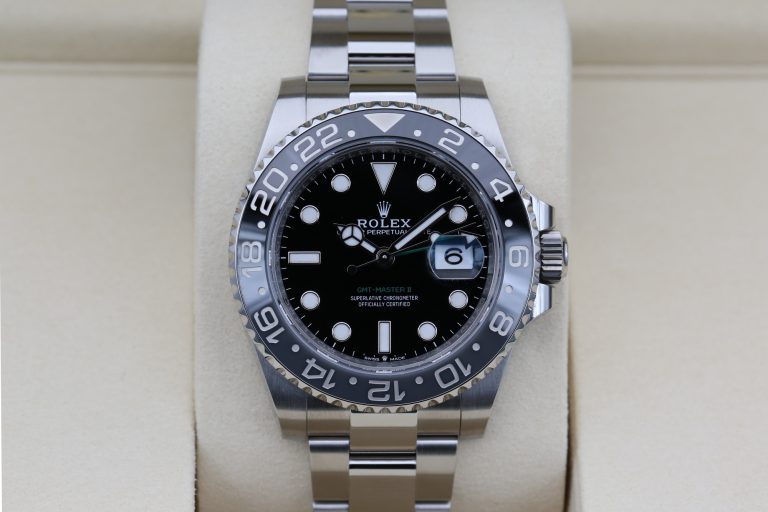
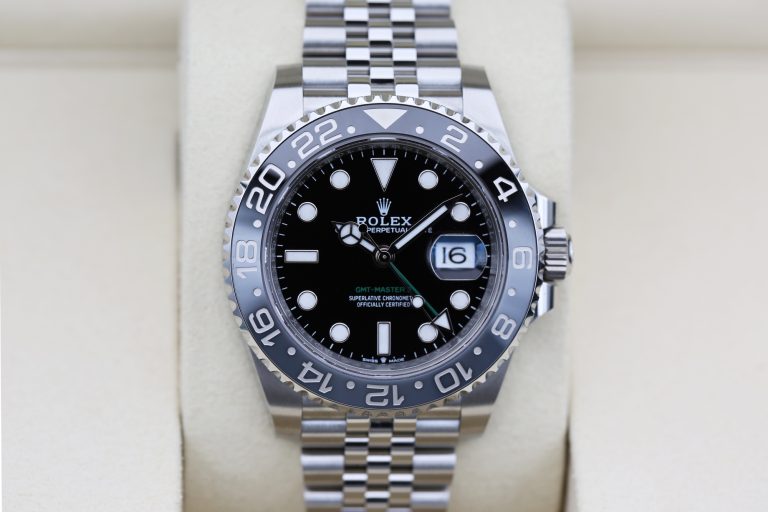
One clear pattern in recent years is the divergence between stainless steel models and precious metal Rolex watches. Stainless steel Rolexes such as the Submariner, GMT-Master II or Daytona in steel have long commanded hefty premiums due to demand. They did see price increases, but these were relatively moderate in the past year, often only ~1–2% in RRP. In contrast Rolex models containing precious metals such as yellow gold, white gold, Everose gold or platinum have spiked more significantly. In the 2025 price list gold models rose by as much as 11–14% in price year-on-year, far outpacing steel variants. This was a strategic move by Rolex and one largely driven by the underlying cost of materials. The price of gold surged about 14% in 2024, hitting record highs around £1,857/oz. Rolex responded by reflecting these higher raw material costs in its watch prices, which meant gold Rolex watches saw some of the largest jumps. Notably one report showed solid gold Daytona models jumped 14% in 2025, whereas platinum models only rose ~1%.

From a collector’s perspective this trend has narrowed the gap between steel and gold model prices. Historically many steel sports Rolexes in the secondary market could rival or exceed the price of two-tone or even some solid gold models. For instance the stainless Daytona 116500LN “Panda” has at times sold for more than a gold Daytona, simply due to higher demand. But as Rolex’s precious metal models became ~14% more expensive at retail in the past year, their resale values have climbed as well. Our data at Kettle Club shows for example, that a two-tone Submariner ‘Bluesy’ (steel & 18k gold) from 2020 was listed around £11,000, while the current model 126613LB (41mm two-tone Submariner) commands roughly £14,000+ in 2023, a jump of about 30%. Likewise an all-gold Submariner 116618LB was about £26,500 in 2020, versus ~£28,500+ for the newer 126618LB in 2023. Meanwhile a steel Submariner like the 124060 might have risen ~20% in the same period, still significant but less in absolute terms than its gold counterparts. In short precious metal models now carry an even stronger premium over stainless steel and their price appreciation has accelerated, closing what was once a larger disparity.

It’s also worth noting that two-tone models which combine steel with gold split the difference. These saw intermediate increases, e.g. ~6–8% in many cases for 2025. For instance a GMT-Master II “Root Beer” in Everose Rolesor (ref. 126711CHNR) hovered around £15k in 2020–21 and remains in the mid-£15k range in 2025, whereas the full Everose gold version (ref. 126715CHNR) climbed from the low £30k range to well over £35k. Overall if you’re tracking UK Rolex price trends, pay special attention to the material, gold and bi-metal Rolex watches have seen sharper price hikes lately than their steel counterparts.


Rolex Price Comparison Table (2020–2025)

To illustrate the pricing changes since 2020, below is a comparison of select Rolex models, showing their reference number, production year, Kettle Club’s selling price and an approximate average UK market price (from Google Shopping and dealer listings) in GBP. We also note whether each model contains precious metal. This gives a snapshot of how values have shifted over time for different models and materials:

Model (Reference) Year Kettle Club Price (GBP) UK Avg Price (GBP) Precious Metal?
Submariner 124060 (No-Date, Steel) 2020 £9,250 ~£9,500 No
Submariner 124060 (No-Date, Steel) 2025 £10,250 ~£9,500-£10,500 No
Submariner 116613LB “Bluesy” (Two-Tone) 2020 £10,995 ~£11,500 Yes (Steel & 18k)
Submariner 126613LB “Bluesy” (Two-Tone) 2023 £14,350 ~£14,000 Yes (Steel & 18k)
Submariner 116618LB (Full Gold) 2020 £26,500 ~£27,000 Yes (18k Gold)
Submariner 126618LB (Full Gold) 2023 £28,995 ~£29,000 Yes (18k Gold)
Daytona 116500LN (Steel), Black Dial 2020 £17,750 ~£18,000 No
Daytona 116500LN (Steel), White Dial 2023 £23,995 ~£23,000-£24,000 No
Daytona 116508 (Yellow Gold) 2020 £36,500 ~£35,000 Yes (18k Gold)
Daytona 116508 (Yellow Gold, Green Dial) 2023 £57,500 ~£50,000+ Yes (18k Gold)
GMT-Master II 126710BLRO “Pepsi” (Steel) 2020 £15,750 ~£16,000 No
GMT-Master II 126710BLRO “Pepsi” (Steel) 2025 £16,995 ~£17,000 No
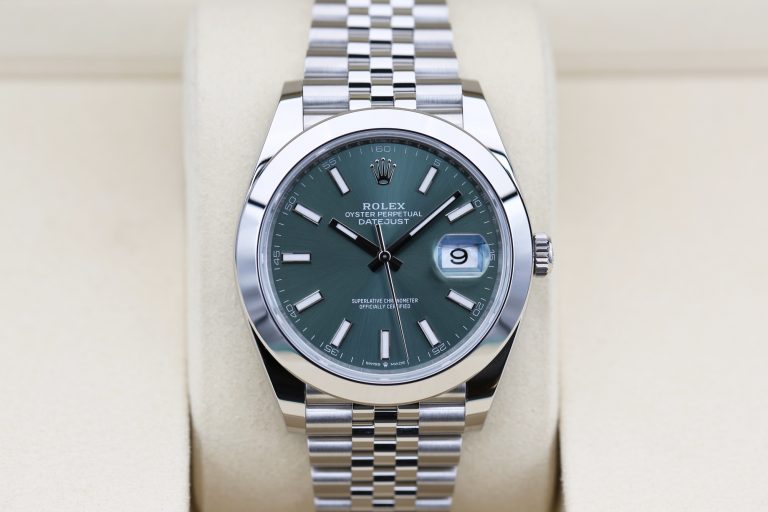
Datejust 41 126300 (Mint Dial, Steel) 2024 £8,995 ~£9,000 No
Datejust 41 126334 (Mint Dial, WG Bezel) 2024 £12,500 ~£12,000-£13,000 Yes (White Gold bezel)

Table: Pricing data from Kettle Club listings and UK online marketplaces (2020–2025).

As the table shows almost every model has risen in value since 2020. A steel Submariner 124060 that was ~£9k in 2020 is over £10k by 2025. The Rolex GMT-Master II “Pepsi” 126710BLRO in stainless steel, one of the most popular sports models, moved from ~£15.8k in 2020 to ~£17k in 2025. Its price actually dipped in 2022, closer to £15k at one point, before climbing back up, reflecting how the Rolex secondary market cooled in 2022 and rebounded. In contrast models with gold have jumped more steeply. The two-tone Submariner Bluesy increased by ~30% in asking price between 2020 and 2023. The Daytona 116508 in 18k yellow gold shows an even more dramatic rise, particularly the version with a green dial, nicknamed the “John Mayer” Daytona by collectors. In 2020 a standard yellow gold Daytona was mid-£30k by 2023, the sought-after green dial variant was selling for well above £50k. This exemplifies how a combination of precious metal content and collector demand can turbo-charge a watch’s value. Meanwhile the Datejust 41 example underscores a more subtle point, even a hint of precious metal, the white gold fluted bezel on ref. 126334 adds about £3,500 over the all-steel variant with the same dial. Clearly precious metal comes at a premium, one that has only grown in recent years.


Historical Trends & January Price Increases

Rolex traditionally uses January and occasionally mid-year to adjust its prices. Bloomberg notes that at the start of 2025 Rolex hiked some models up to 8% to reflect soaring gold prices. Industry reporting (Men’s Journal via Economic Times) confirms that January 2025 increases were mild overall, about 1% on steel models and ~5% on two-tone watches. A second mini-hike in May 2025 added roughly 3% across the board. Analysts now speculate that 2026’s adjustments could be influenced by external factors, with new Swiss watch tariffs looming, some foresee another 10–15% bump if costs are passed on.

Historically Rolex’s controlled supply has kept demand and resale values high. Over the past decade each January has seen modest retail increases, typically 3–5%, with bigger jumps when raw material costs rose. For example the Oyster Perpetual entry-level range jumped 11% in 2023 then 3.5% in 2024. In 2025 Rolex minimised steel price changes (~+1%) but still imposed the largest hikes on gold models.

Given this pattern we expect January 2026 to bring another round of increases. Traditionally steel sports models see only light hikes, but Rolex’s boutiques may raise two-tone and gold prices more aggressively if metal costs remain high. Pre-owned markets often anticipate these moves, our March 2025 review noted a slight uptick (+0.2%) in Rolex average prices as collectors braced for the Watches & Wonders season.

Popular Collections and Predictions

  • Submariner & GMT-Master II (Steel), These perennial favourites remain in tight supply. Officially their prices in 2025 barely moved, +£100 in January. We expect a similar modest retail rise, perhaps ~1–3% in 2026. However strong demand, especially for the green Submariner “Hulk” and new green-bezel models means secondary prices may outpace retail. For instance the no-date Submariner (124060) often sells above £9k even though it lists at £8,100. Newer releases, e.g. Land-Dweller in Oystersteel could also command a premium if allocations are tight.
  • Cosmograph Daytona (Steel and Gold), The Daytona is critically oversubscribed. We already see Kettle Club’s steel Daytonas trading well above list. Officially the current steel 126500LN was ~£13.6k in 2025. Expect any 2026 steel increase to be minimal, the upside is mostly in resale. Gold Daytonas e.g. yellow or Everose gold will likely face higher retail hikes. Given the run up after Rolex’s 2023 redesign and the fact that some gold Daytonas increased by ~19% in 2025, we advise investors to watch those closely, a January rise of 5–10% on precious-metal Daytonas is plausible.
  • Datejust & Oyster Perpetual (Classics), The all-purpose Datejust line saw only small hikes for steel models 1–2% in 2025. Expect more of the same in 2026. Rolesor versions with gold will tick higher due to metal costs. Our inventory examples, various 126334 and 126300, currently hover around retail or slightly above. The Oyster Perpetual is similarly stable, after big bumps in 2023, the 2025 increase was minimal. Limited edition dials such as vibrant “candy” or Pastel colors may hold extra value, but standard OPs will see only minor price adjustments.
  • Day-Date (President) & Yacht-Master (Gold/Rolesor), These luxury models took the brunt of the 2025 increases. The all gold Day-Date 40 models jumped ~11% in 2025. We expect another significant hike on solid gold Day-Dates in 2026, possibly +8–12% given continued high gold prices. Kettle Club currently lists Day-Dates well below retail, e.g. our ref. 228238 Sundust at £32,500 vs. official £37,600. Yacht-Master prices (Rolesium and gold) are also climbing, 2025 saw up to +11% on gold variants. With the Yacht-Master II discontinued in 2024, even the Yacht-Master I series such as 42mm Everose, etc. may see extra demand. In short gold and two-tone Rolexes remain a hedge against inflation and we expect their premiums to grow.
  • Explorer, Sky‑Dweller, Others, Core professional models like the Explorer II were raised only slightly, 1–2% in 2025. We foresee similar ~1–3% bumps for them. The Sky-Dweller complex annual calendar saw modest steel increases (+3%) last year, any 2026 update will likely follow suit. Newer lines like the Land-Dweller which have just been introduced are harder to predict, but initial scarcity suggests collectors will eagerly pay above list. Dress models such as Cellini 1908 etc… have low demand and typically see minimal changes.

Outlook for 2026: Impact of Gold Prices and Market Dynamics

Looking ahead to January 2026, what can we expect for Rolex prices? Based on recent patterns further price increases are likely, especially for watches in gold. Gold prices remain a key factor. After a banner 2024 where gold gained roughly 27% year-over-year, 2025 saw Rolex charging considerably more for gold models, roughly +11% in the UK and Europe. If gold and other precious metals continue to trade high going into 2026, Rolex may once again hike the prices of solid gold and two-tone pieces by a substantial margin, perhaps high single digits to low double digits. We’ve seen that trend two years in a row now. For instance the Day-Date which is only made in gold or platinum was among the hardest hit in 2025 with around an 11% jump and could see a similar uplift in 2026 if bullion prices stay elevated. This means new precious metal Rolex watches will likely cost more in 2026 and by extension their grey market and second-hand values should rise in tandem. Buyers interested in gold Rolex references, be it a Day-Date 40, a gold GMT-Master “Root Beer” or an Everose Daytona might consider acting sooner rather than later, as these could be notably pricier after the new year.

On the other hand stainless steel model price increases will probably be modest. Rolex knows that many steel sports watches already trade at 10–50% above retail on the open market, so they’ve been cautious with MSRP increases there, e.g. only +£100 on a Submariner Date in 2025, ~1%. For 2026 we anticipate a similar minimal uptick for steel pieces, perhaps on the order of 1–2%, basically an inflationary adjustment. That means the Submariner 124060, GMT-Master II 126710BLRO, Daytona 116500LN/126500LN and other steel icons might only creep up slightly in official price. Any retail rise of course could still boost second hand prices a bit, but the effect may be muted since these models already carry such hefty premiums. The wild card will be demand, if the market in early 2026 sees a surge of interest, say due to a new model release or economic factors driving investors toward hard assets, even steel Rolex values could climb more aggressively. Conversely if the luxury market softens or Rolex significantly increases production we might see prices level off for a time. As of now however, all signs point to Rolex prices in 2026 continuing their gradual climb in the UK.


Advice for Buyers and Investors

  • Buy before the January hike. If you’ve been eyeing a steel sports Rolex, now is the time. After the new prices take effect retailers will pass along increases immediately. Even a 2–3% hike means hundreds of pounds extra on base models. By acting ahead of the change you lock in today’s prices and avoid the surge.
  • Consider authorised retail vs pre-owned. Our data show that many models trade above retail on the secondary market. For a new model you can’t order, Kettle Club’s pre-owned (mint) examples may still cost less than chasing a grey-market watch overseas. For example our Black Submariner (124060) at £10,250 was cheaper than the typical used price (~£11,000) even after retail rises. Similarly an unworn Daytona or GMT might be closer to official levels if purchased from us now.
  • Watch for tariffs and currency effects. International factors could drive unusual moves. The recent U.S. tariff news has analysts predicting double-digit price increases in 2026 if costs are passed on. At the same time a weak pound or strong dollar could push UK prices even higher. If you’re buying in GBP any currency shift could make watches more expensive later in the year.
  • Focus on long-term holds. If you’re an investor, prioritise models with strong historical resale. Today’s desirable pieces, steel sports, platinum Day-Dates, discontinued lines etc… tend to hold value best. We’ve noted steady demand for references like Submariner 124060, GMT-Master 126710/126720 and two-tone Datejusts. Buying these now and holding through a correction or waiting for the market to recover has often paid off.
  • Stay informed with Kettle Club. We continuously track Rolex market data and inventory levels. Follow our updates and reviews and feel free to contact us for price comparisons or valuations. We aim to help you navigate the fluctuations and make smart purchase decisions.

The Rolex market in the UK has been robust and looks set to continue growing into 2026. Prices since 2020 have climbed significantly and factors like precious metal costs and sustained demand mean that trend is likely to carry on. Precious metal Rolex watches, from two-tone Datejusts to full gold sports models, saw roughly 10–14% price jumps in the past year alone and we anticipate further gains as gold prices remain high. Stainless steel favorites should keep their value or appreciate modestly, fueled by Rolex’s own small list price rises and the ever-present shortage in authorised boutiques. For both collectors and investors, understanding these dynamics is key, steel Rolex’s offer stability and liquidity, while gold models might offer larger upside if current trends persist.

If you’re looking to navigate these Rolex price movements or add a timepiece to your collection, now is a great time to do so. Be sure to browse the current Kettle Club Rolex collection to see live pricing and availability of various models. Our team at Kettle Club is here to help, whether you’re seeking a specific Rolex for 2026 or considering selling/trading your watch. Feel free to contact us for personalised sourcing or a competitive resale quote. With the market on the rise, our experts can guide you to make the most of these trends. Don’t miss out on the next chapter of Rolex’s exciting journey, let Kettle Club assist you in finding the perfect Rolex, at the right price, as we head into the new year.


Sources: Official Rolex price lists via industry analyses and market data
monochrome-watches.com
theluxuryhut.com
kettleclub.co.uk
bloomberg.com
economictimes.indiatimes.com along with Kettle Club inventory and resale observations.
Diamonds or Dials? Choosing the Perfect Ladies Luxury Watch

Choosing a ladies luxury watch often comes down to a key style decision, do you want the sparkle of diamonds or the understated elegance of a classic dial? For many women this means considering gem set models, watches with diamonds or other precious stones, against those with traditional steel, gold or coloured dials without gems. Both options have their own allure and practical advantages.

The Allure of Gem Set Watches, Diamonds and More

Luxury watches embellished with diamonds or gemstones ooze an undeniable glamour. Historically gem set watches were largely reserved for women’s cocktail pieces, in the early 20th century men’s wristwatches were typically utilitarian, leaving jewel encrusted designs to the ladies models for formal occasions. Even today many womens watch collections feature diamond accents as a nod to that heritage of elegance. A touch of sparkle can transform a watch into something that doubles as high end jewelry. As one expert notes, even a few diamonds marking the hours or a subtle diamond bezel can elevate a timepiece from a simple utilitarian object to an iconic accessory.

Why choose a gem set watch? Here are some factual points to consider…

  • Dazzling Aesthetics
    Diamonds and gemstones catch the light, adding a brilliant sparkle that draws the eye. This can make a watch feel more like a piece of fine jewellery on the wrist. For instance Rolex often uses factory set diamonds on ladies’ dials or bezels, such as a Rolex Datejust 31 reference 278271 with a chocolate, diamond set dial on a Jubilee bracelet. The added diamonds at the hour markers and sometimes on the bezel, instantly impart a sense of luxury and glamour.
  • Statement for Special Occasions
    A gem set watch is an ideal statement piece for formal events, galas or dinners. The extra sparkle complements evening attire. Many women enjoy having at least one “cocktail” watch adorned with diamonds for those dressier moments. Vintage examples like a Rolex Datejust 26mm “Blue Vignette”, ref. 69173 from 1992, illustrate this classic cocktail style, its deep blue gradient dial with diamond hour markers was designed to stand out elegantly in social settings. Even in a petite size the diamonds on such a dial make it eye-catching and special.
  • Luxurious Craftsmanship
    Incorporating gemstones in a watch showcases the high level of craftsmanship and adds to the prestige of the piece. Setting tiny diamonds into a dial or bezel is an art in itself, part of the haute joaillerie tradition of watchmaking. Brands like Rolex take gem setting very seriously, Rolex even has an in-house gemology department to select and set stones of the highest quality. This means a factory gem set model will have perfectly matched stones and secure settings, designed to last. The Rolex Day Date “President” is a great example, while the Day Date is luxurious even in its plain form, Rolex has produced special editions festooned with diamonds, rubies and sapphires to create ultimate showpieces. These jeweled Day Date models demonstrate the brand’s gem setting prowess and cater to those who want the maximum level of sparkle.
  • Value and Heirloom Potential
    Watches with natural diamonds can hold value well and even become treasured heirlooms. High quality diamonds are rare and timeless, which can make a diamond watch a wise investment in addition to a fashion statement. It’s not just about the initial wow factor, decades down the line, a classic design with genuine gemstones can be passed down as a family treasure.  Of course, the exact value retention will depend on the brand, model and whether the gems are factory original.  There are also practical value considerations, while gem set models are often pricier than their non gem counterparts, many luxury brands offer subtle diamond watches at approachable price points, especially on the pre owned market. For example, a few diamond markers on a ladies Rolex Datejust or a bezel set with small diamonds on a Cartier watch might only add moderately to the cost, but significantly to the visual impact. And importantly, a well made diamond watch rarely loses its value, the combination of respected Swiss craftsmanship and natural diamonds means these pieces often retain 80–100% of their value and certain rare models even appreciate, over time.
  • Variety of Gem Set Styles
    Gem set doesn’t always mean completely covered in stones. There is a broad range. On the subtle end you have watches with just diamond hour markers or a single diamond at 12 o’clock, which add a hint of luxury while remaining understated. On the other extreme, there are fully pavé dials and bezels where dozens of diamonds create an all over sparkle, the “iced out” look. You can choose a level of embellishment that fits your style. Rolex’s catalog, for instance, offers everything from a Datejust with a few diamonds on a mother of pearl dial to the extravagant Pearlmaster line. The Rolex Pearlmaster is an all gold, gem encrusted variant of the Datejust that represents Rolex’s high jewelry watch, every Pearlmaster is adorned with diamonds or coloured gems, truly the pinnacle of decorative watchmaking in their lineup. Between these extremes lie popular choices like a two tone Lady Datejust with a diamond dial, steel and gold with diamond hour markers, which many find perfect for daily wear with a dash of sparkle.

Examples of Gem Set Models: Consider these pieces from our collection,

  • Rolex Datejust 31mm “Chocolate Diamond”, ref. 278271, 2025,  A modern ladies Rolex that pairs Oystersteel and Everose gold, Rolex’s rose gold, in a 31mm case. Its chocolate brown dial is factory set with diamonds at the hour markers, including a stylish diamond set Roman numeral VI. The result is a watch that balances everyday functionality with a touch of glamour, the warm hue of the dial and rose gold, punctuated by diamond sparkle, makes it versatile for day to night wear. You get the reliability of a Rolex Datejust with the added luxury of gemstones.
  • Rolex Datejust 26mm “Blue Vignette Diamond”, ref. 69173, 1992,  A vintage gem that shows off 1990s Rolex style. This 26mm Lady Datejust is in two tone steel and 18k yellow gold, featuring a blue vignette dial, a dial that fades from blue to black towards the edges, set with diamond hour markers. The combination of the vivid blue gradient and the golden sparkle of diamonds creates a striking look in a small package. It’s a classic cocktail watch aesthetic, distinctive, elegant and rich in detail, proving that even a decades old design can captivate with its gemstone elegance.  Fun fact, such blue vignette diamond dials were a bit of a signature look for Rolex in the ’80s and ’90s and they remain highly collectible among vintage enthusiasts.
  • Rolex Day Date 36mm President, ref. 18238, 1995,  with Diamond Markers, The Day Date, often called the “President,” is famed for being all 18k gold and indicating both day and date. Many Day Date 36 models, including some from the mid 1990s, were offered with diamond hour markers on a champagne or coloured dial. If you find one like our 1995 example, you’ll see how a few diamonds on a classic champagne dial elevate the watch’s appearance. The Day Date is already an opulent watch, solid gold case and bracelet,  but adding diamonds to the dial takes it to another level of prestige, it’s the kind of watch that makes a quiet but confident statement of success.  And if you prefer even more sparkle, the Day Date line also has variants with diamond bezels or full pavé dials, especially in later or special editions.
  • Modern Gem Set Cartier, While Rolex is well known for gem set options, Cartier also offers diamond set luxury for women. Consider the Cartier Panthère or certain Cartier Tank models that come with diamond bezels. For example, Cartier’s Panthère line, a jewelry inspired watch design, often has high jewelry versions, full pavé diamond cases or bracelets. Even though our focus is on factory gem set models, it’s worth noting Cartier’s design philosophy, Cartier integrates diamonds in a very refined way, often using brilliant cut diamonds on the bezel of a small watch to accent its shape. A model like the Cartier Panthère de Cartier W25033P5, 2002, in its deluxe versions could feature diamonds, but even without them, more on the non diamond Panthère later,  Cartier’s gem set pieces are famous for their elegance. Another Cartier example is the Cartier Ballon Bleu in a midsize ladies reference, some editions have a single row of diamonds on the bezel or diamond hour markers that enrich the Ballon Bleu’s classic Roman numeral dial. In short, if you love diamonds, brands like Cartier and Rolex provide plenty of choices to get that sparkle on your wrist.

It’s clear that gem set watches offer beauty and brilliance, but what if your style leans more towards subtlety? That’s where the classic, non gem dials shine, literally and figuratively, in their own way.

Classic Steel or Gold Dials, Timeless Elegance Without Gems

Not every luxury watch needs diamonds to make an impression. In fact there is a strong appeal to the clean, classic dial, whether it’s a simple white, a rich black, a vibrant colour or a luxurious metal tone, unadorned by gemstones. These watches place emphasis on design, craftsmanship and versatility.

Historically, many iconic watches, especially men’s models, were produced without any gems, focusing on functional elegance. Today, women have embraced these classic styles as well, expanding the range of choices beyond the traditionally “blingy” ladies watches. The industry has taken note, many brands now offer smaller case sizes or unisex designs that cater to women who prefer a gem free look. The result is that a refined dial in steel or gold can be just as luxurious and desirable as a diamond studded piece, depending on your personal taste.

Why choose a watch with a classic, non gem, dial? Consider the following points,

  • Understated Versatility, A watch without diamonds is often more neutral and versatile for daily wear. You can effortlessly pair it with casual outfits, business attire or even formal wear. The absence of jewels means the watch won’t scream for attention, instead, it complements your style more subtly. For example, a Rolex Datejust 36mm in stainless steel with a simple black dial, ref. 16234, circa 2001, is a masterclass in versatility, the monochromatic dial and silvery case go with any colour outfit and it can transition from the office to a dinner out without missing a beat. Many watch enthusiasts also feel that a simpler dial is easier to dress up or down, making it a practical choice if you want one watch for all occasions.  As one observer noted in a watch forum discussion, a watch can be even more versatile without diamonds, since it never risks being “too dressy” for a casual setting, though of course, it ultimately comes down to the wearer’s personal style.
  • Classic, Timeless Look, There is a certain timeless elegance in a plain dial. Think of a champagne gold dial on an all gold watch or the signature crisp white dial with Roman numerals on a Cartier Tank. These designs have endured for decades, even centuries, because of their simplicity and balance. A classic dial doesn’t age or follow trend cycles the way some embellished designs might. For instance, a Rolex Lady Datejust with a champagne dial and no diamonds, like ref. 69173 in 26mm, circa 1989, looks as elegant today as it did 30+ years ago, the clean dial showcases the watch’s iconic features, fluted bezel, date magnifier, Jubilee bracelet, without additional ornamentation. It’s the kind of watch that you can wear now and still pass on to the next generation, confident that its style endures.
  • Focus on Materials and Finish, Without gemstones, the craftsmanship of the dial and case takes center stage. You start to appreciate the sunburst brushing on a dial, the depth of a lacquered colour or the gleam of polished gold or steel. Brands often use special dial materials to add interest without gems. Rolex, for example, has offered exotic dials made of materials like mother of pearl, malachite or even meteorite on some models. These materials have their own natural beauty. A white mother of pearl dial can display subtle iridescent rainbows as it catches the light, giving a watch a feminine touch without a single diamond.  One of our pieces, the Cartier Tank Française 25mm ref. 2384, features a white mother of pearl dial, combining Cartier’s classic Roman numeral design with the gentle sheen of MOP, it’s a wonderful example of how a special dial material can elevate a watch’s elegance.  Similarly, rich enamel or colourful lacquer dials can provide a pop of personality. In 2025, Rolex introduced new dial colours like mint green and pink on the Datejust models, which became incredibly popular for their fresh look. The Rolex Datejust 36 ref. 126234, 2025, with a mint green dial is one such hit, the pastel green dial is eye catching and modern, yet there are no diamonds, the watch relies solely on colour and Rolex’s signature design elements, like the white gold fluted bezel, for its charm. The same goes for the smaller Rolex Datejust 31 ref. 278274, which can be found with a mint green or pastel pink dial on a classic Jubilee bracelet, these watches prove that colour can be as expressive as gemstones in making a statement.
  • Practical and Everyday Friendly, A watch without diamonds can sometimes be the more practical choice, especially for daily wear or active use. You might feel more comfortable wearing it in a variety of settings without worrying about drawing unwanted attention. Additionally, you don’t have to be as concerned about knocking out a stone during everyday activities, though well set diamonds in luxury watches are quite secure, it’s one less worry. For example, the Rolex Oyster Perpetual 36 “Pistachio”, ref. 126000, 2025,  a stainless steel watch with a smooth bezel and a vibrant pale green dial, is designed as a casual, robust daily watch. It has no gemstones, just luminous hour markers and a bold colour, making it ideal for someone who wants a carefree yet classy piece. You can wear it to the office, to the gym or on the weekend without feeling it’s too precious or delicate. The Oyster Perpetual line is all about smooth, comfortable simplicity and many women and men alike love it for that reason.
  • Clean Aesthetic & Modern Trends, There has been a modern trend toward minimalism and unisex styling in watches. Many women today happily wear watches that traditionally were marketed to men, simply because they like the style or larger size. These watches typically have no diamonds, think of a classic Rolex Submariner, GMT Master II or a chronograph and women pair them with both casual and chic outfits for a bold look. While our focus here is on ladies models, it’s worth noting this trend because it underscores a key point, a great watch design stands on its own without requiring jewels to appeal to a broad audience. A 36–40mm steel sports watch with a plain dial can look just as fashionable on a woman’s wrist, exemplifying how far personal style has come, beyond old gender norms in watch design. Even within dedicated ladies lines, the availability of non diamond options has grown. Rolex’s ladies watches like the Datejust now often come with stick or Roman numeral dials, no diamonds, as alternatives to the diamond indexes, acknowledging that not every woman wants the gem set version. Personal preference is king or rather, queen and choosing a plain dial watch can be a very deliberate style statement of “less is more.”

To sum up, a classic dial watch offers versatility, timeless style and a focus on pure watchmaking design. It might be the preferred choice if you value subtlety, plan to wear the watch in many settings or if you simply love a particular dial colour/texture that doesn’t need any extra adornment.

Examples of Classic Dial, Non Gem, Watches, Let’s highlight some standout examples that show the beauty of gem free designs,

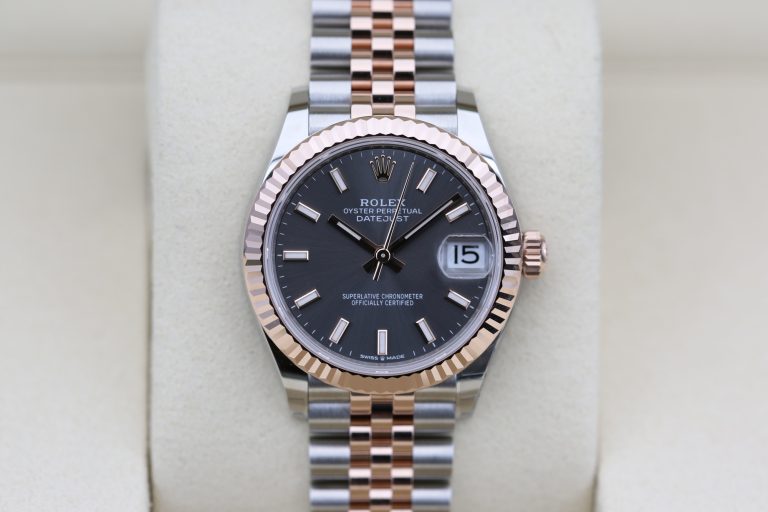
  • Rolex Datejust 36mm Two Tone, Rhodium Dial, ref. 126231, 2023,  This model combines stainless steel and Everose gold, Rolex’s rose gold, in what they call a Rolesor case and features a slate rhodium grey dial with a sunray finish. It has no diamonds, using simple applied hour markers or Roman numerals. One popular variant of this watch is nicknamed the “Wimbledon” dial, ref. 126231 with Wimbledon dial, 2025,  which sports dark rhodium grey with green outlined Roman numerals, a colour scheme inspired by Rolex’s partnership with tennis. Both the plain rhodium and the Wimbledon dial versions are striking without any gems, the contrast of rose gold and steel, the texture of the sunburst dial and the distinctive green XIV on the Wimbledon edition are enough to catch attention. These watches show how Rolex plays with colour and metallic sheen to create beauty. They’re perfect for someone who wants a modern yet classic look without tipping into jewelry territory.
  • Rolex Datejust 31mm, Pink Dial, ref. 278274, 2025,  A ladies 31mm Datejust in stainless steel with a white gold fluted bezel, featuring a pastel pink dial. This watch is all about softness and elegance. The pink dial has a delicate sunburst effect and the fluted bezel in 18k white gold adds a luxurious gleam around it. With no diamonds on the dial, the focus is on the lovely colour and the interplay of steel and white gold. Pink dials have become very popular in recent years for women’s watches, offering a feminine touch that’s still versatile. You can wear a pink dial watch as an everyday piece, it adds a bit of personality and colour to neutral outfits and complements many skin tones. The ref. 278274 Datejust 31 is a superb example of a ladies watch that is undeniably pretty and refined, without needing any gemstones to shine.
  • Rolex Oyster Perpetual 36mm, Green “Pistachio” Dial, ref. 126000, 2025,  We mentioned this briefly above, but it deserves emphasis. The Oyster Perpetual line is Rolex in one of its purest forms, just hours, minutes, seconds, no date,  a smooth bezel and a vibrant dial. The Pistachio green dial OP36 has become a coveted model because of its uncommon dial colour, a pale, minty green that looks modern and stylish. There are no gem set markers, the hour markers are simple white gold indices with luminescence. Despite the lack of ornamentation, this watch stands out strongly, proving that a strong colour choice and clean design can be as captivating as diamonds. It’s also a unisex model, which underlines how a great simple design appeals widely. If your style is fun, contemporary or you love colour coordinating outfits, a piece like this OP36 could be your signature watch that goes everywhere with you.
  • Cartier Santos de Cartier Large, ref. WSSA0047, 40mm,  Cartier’s Santos is an icon of classic design. The large modern Santos, WSSA0047, is done in stainless steel with a twist, it features a blue PVD bezel framing a silvery white dial. It’s sometimes referred to as having a “white” dial, but really it’s a finely brushed silver tone with Cartier’s trademark Roman numerals in black. There are zero diamonds, instead, the Santos showcases industrial chic details like exposed screws on the bezel and bracelet, a hallmark of the Santos design since the 1900s. The combination of the clean dial, bold roman numerals and the contrast of the blue bezel gives it a lot of character without any gems. This watch exemplifies the “form follows function” elegance, it was originally a pilot watch design, so everything is about clarity and sturdiness, yet Cartier managed to make it look refined. Women who opt for the Santos large often do so because they want a bold wrist presence with a fresh, sporty vibe. It’s proof that you can have impact and style with just steel, design and paint, no diamonds needed.
  • Cartier Santos Galbée, 29mm, ref. 187901, c.2000s,  For those who prefer a smaller case, the Santos Galbée in 29mm, a mid size that can serve as a ladies watch, is another classic. Ref. 187901 is typically a two tone steel and 18k yellow gold Santos with a white dial. It carries the same DNA, Roman numerals, visible screw decor and a mix of brushed and polished surfaces. Despite being a dressy looking watch, it normally does not have diamonds in this configuration. The two tone metal itself provides contrast and a bit of flash, the gold links and bezel screws stand out against the steel,  achieving a dressy jewelry effect without any stones. This watch underscores a key point, precious metals can be as alluring as precious gems. A watch with segments of 18k gold, like the bezel or center bracelet links, already conveys luxury and often satisfies the desire for something shiny. When you have gold, you may not feel you need diamonds as well. A watch like the Santos Galbée is ideal for someone who loves the vintage Cartier look and a touch of gold bling, but in a tasteful, gemstone free way.
  • Cartier Tank Française, MOP Dial, ref. 2384, 25mm,  The Cartier Tank is the epitome of classic ladies watches. The ref. 2384 from 2006 in our collection comes with a Mother of Pearl dial. Let’s paint the picture, a petite 25mm stainless steel case with the elegant rectangular Tank design, blue sword shaped hands, Roman numeral indices and that mother of pearl face that shimmers gently. Cartier chose mother of pearl, a natural material, to give this model a refined glow instead of using any diamonds. The result is a watch that’s feminine and graceful. It has a bit of iridescence, changing colour tones under different light, which keeps it interesting and dressy enough for an evening out, yet it’s subtle. No single part of it screams for attention, but the overall impression is undeniably luxurious. This is a great example of how brands use creative dial materials to add luxury to women’s watches without defaulting to diamonds. If you love vintage inspired, subtle jewelry pieces, a Tank with a MOP dial is a compelling choice.
  • Cartier Santos Dumont “Le 14 Bis” Limited Edition, ref. W2SA0015, 31mm,  This is a special mention. The Santos Dumont is another variant of the Santos family, it’s a dressier, ultra thin model, often on a leather strap, with a classic piloting heritage. The “Le 14 Bis” edition from 2021 is a limited release of 500 pieces, named after Alberto Santos Dumont’s early airplane. Importantly for our theme, it has no diamonds, but it does something very creative with the dial. The dial is an anthracite grey with a subtle motif, there’s an engraving or printed pattern that pays homage to the aircraft, if you look closely. The case is two tone, steel with an 18k yellow gold bezel and it has a sleek black alligator strap. This limited Santos Dumont shows that a watch can be rich in character and storytelling without any gem setting. It appeals to collectors and style aficionados not because of sparkles, but because of its design narrative and rarity. Wearing a piece like this is a conversation starter, it’s about appreciating watch history and design. It’s also quite elegant in size, 31mm across, though rectangular and could easily be a unisex dress watch. For a woman who is a watch enthusiast, something like the “Le 14 Bis” offers distinction and a bit of exclusivity, proving that the absence of diamonds does not equate to the absence of luxury.
  • Cartier Panthère, ref. W25033P5, 2002,  The Cartier Panthère is noteworthy because it’s designed to be both a watch and a piece of jewelry. It has a very fluid, bracelet like construction and a petite square case. Many Panthère models aimed at women might include diamonds on the bezel or dial in their high end versions, but let’s talk about the plain steel Panthère like our ref. W25033P5. In this 2002 model, you get the gorgeous Panthère link bracelet in polished steel, a creamy white dial with Cartier’s numerals and blued hands and no diamonds at all. Yet, when you wear it, it feels like a chic bracelet that just happens to tell time. The Panthère design is inherently jewelry esque due to its link style and proportions. So even without any gems, it fulfills the role of a dressy accessory. This is a fantastic choice if you want a slimmer, jewelry oriented watch but prefer a sleek look. It’s also on the more understated side of Cartier’s offerings, ideal for daily wear or professional settings where you want luxury in a low key way. The Panthère demonstrates that good design can substitute for gemstones, its form and shine are enough. Of course, knowing Cartier, if you ever did want to add sparkle, the Panthère line has variants with diamond bezels, but the fact that the design works so well without them speaks volumes.

As seen from these examples, classic dial watches come in all flavors, steel, two tone, full gold, various colours and materials, but what they share is a reliance on form, colour and material rather than jewels to create their appeal. They tend to be timeless, adaptable and exude a quiet confidence on the wrist.

Making Your Choice, What’s Right for You?

Now that we’ve explored both sides, gem set glamour vs. classic simplicity, how do you decide which is the perfect style for your luxury watch? The truth is, there’s no one size fits all answer. Your ideal watch will depend on your personal style, your lifestyle and what occasion you’re shopping for. Here are some final guidance points to consider as you make your decision,

  • Consider Your Personal Aesthetic, Take a look at your existing jewelry and wardrobe. Do you gravitate towards sparkle and bold accessories or do you prefer minimalist, clean designs? If you love wearing diamond earrings, gemstone rings or glittery fashion pieces, you might adore a diamond watch that complements that sparkle. On the other hand, if your style is more about subtle luxury, say, you favor simple gold studs and solid colour clothing, a classic dial watch will likely feel more “you.” Remember, your watch will be part of your overall style expression. As the saying goes, the best watch for you is one that feels like “you” the moment you put it on.
  • Daily Wear vs. Special Occasions, Think about when and where you plan to wear the watch most. For a daily wear watch that goes to the office, runs errands and travels with you, you might lean towards a versatile piece without diamonds, one that doesn’t attract too much attention and can handle casual settings. Many professional women choose a classic steel or two tone watch because it looks refined but not ostentatious in meetings. Conversely, if you’re selecting a watch primarily for evenings out, celebrations or as a showpiece, a diamond bezel or dial could perfectly fit that purpose by adding that extra wow factor under cocktail party lighting. Of course, these aren’t hard rules, plenty of women wear diamond watches with jeans or wear plain watches with evening gowns, but matching the watch’s vibe to your most common use case can guide you. Some collectors even decide that both styles are essential, one watch for everyday, understated and one for occasions, glamorous.
  • Maintenance and Practicality, Both gem set and non gem watches from reputable brands are built to high standards, but be aware of a few practical differences. A diamond set watch, especially with many stones, might require a bit of extra mindfulness. For instance, dirt can accumulate around the settings, so occasional gentle cleaning may be needed to keep it shining. Insurance might be wise for very high value jeweled pieces. However, gems in watches, especially factory set ones, are usually very secure, brands subject them to rigorous testing, Rolex, for example, shock tests their gem set watches to ensure stones remain in place. On the other hand, a plain metal watch is generally very carefree, you can polish out scratches on a gold bezel or steel bracelet easily, whereas you obviously can’t “polish” a diamond! If you work with your hands a lot or are into sports and plan to wear your watch during those activities, a simpler watch might give you peace of mind. Some women choose a robust plain watch, like a Rolex Oyster Perpetual or an Omega Seamaster, for active/daily use and reserve the delicate diamond piece for times when they’re mainly socialising.
  • Budget and Value, It’s no secret that diamonds and gemstones will add to the cost of a watch. If you’re budget conscious, you often get a bit more “bang for your buck” in terms of mechanics or complications by opting for a non gem model. For instance, the price difference between a Datejust with diamond markers and one with standard markers can be significant when new. However, on the pre owned market, that gap sometimes narrows and occasionally, a gem set version can be a great deal if the demand is similar. Also, consider that a watch’s long term value is influenced by rarity and desirability, certain limited gem set editions can be incredibly valuable, like Rolex “Rainbow” Daytonas with sapphires, etc.   whereas routine diamond dials might not add much resale value. Meanwhile, classic models are often produced in larger numbers. If value retention is important to you, research specific models or consult an expert. Factory original diamonds, those set by the brand, are generally much more respected value wise than aftermarket custom gem settings. So if you do go for diamonds, it’s best to get a watch that came that way from the manufacturer. At the end of the day, choose what you love and will enjoy wearing, the emotional value is just as important.
  • Try It On, Our strongest advice is to try on examples of both styles if possible. Sometimes a watch you thought might be “too much” with diamonds could enchant you once it’s on your wrist or a watch you thought was perfect in pictures might feel like it’s missing something. Pay attention to how the watch makes you feel. Does the diamond sparkle bring a smile to your face every time you glance at your wrist? Or do you find you appreciate the restraint and elegance of a plain dial more in the mirror? Wrist presence is a very personal feeling. Also, consider dial size relative to the gem presence, a small 26–31mm watch with diamonds can still be subtle, whereas a larger 36–40mm sports watch with diamonds will be more conspicuous. Comfort and confidence are key, the right choice is the one that you’ll be proud to wear.

In the end there’s no wrong answer in the “diamonds or dials” debate, many women ultimately decide that their collection has room for both types. You might start with a versatile classic and later add a diamond dress watch or vice versa. The beauty of luxury watches is that each piece can mark a chapter of your life or a facet of your style.

At Kettle Club we understand the importance of finding that perfect match. That’s why our curated women’s luxury watch collection includes the best of both worlds. If you’re enchanted by gem set elegance, we have options like the Rolex Datejust 31 Chocolate Diamond, ref. 278271 and vintage diamond accented Rolex cocktail watches, as well as diamond accented Cartier timepieces. If you lean toward classic sophistication, you can explore pieces like our mint green and pink dial Rolex Datejusts, the sleek Cartier Santos and Tank models or iconic all gold classics like the Day Date, all showcasing the art of watchmaking sans gemstones. Each watch in our selection is vetted for quality and authenticity, so you can shop with confidence whether you choose diamonds, dial or both.

Choose diamonds for that extra sparkle and luxury if it resonates with you, a gem set watch can be a daily dose of glamour or a show stopping accessory when you need it. Choose a classic dial for its timeless, go anywhere appeal and the focus on pure design, a well made watch with a beautiful dial will never go out of style. Most importantly, choose the watch that makes you feel fabulous when you put it on, because that feeling is the true essence of owning a luxury timepiece.

Happy watch hunting and whether it’s diamonds or dial, rest assured your perfect ladies luxury watch is out there waiting for you! Each timepiece has its own story and charm and when you find the one that aligns with your story, you’ll know it’s the one.

watchfinder.com
sothebys.comnaturaldiamonds.com
naturaldiamonds.com
sothebys.com

New School vs Old School Rolex: A Collector’s Guide to the Generations

Rolex has a rich history spanning decades and with each generation of watches comes evolution. For Rolex collectors the debate of “old school” vs “new school” is a passionate one. Vintage Rolex models offer charm, history and unique character, while modern references boast cutting edge technology, robustness and precision. In this guide we’ll compare older and newer generations of Rolex across various dimensions, from case proportions and bracelets to lume, movements, materials and more using iconic models like the Submariner, GMT-Master II, Daytona, Explorer and Day-Date as examples. By the end you’ll appreciate both the classic flair of vintage pieces and the technical excellence of contemporary models and you might discover which era best suits your taste as a Rolex enthusiast.

Case Sizes and Proportions: Slim Classics vs Maxi Cases

One of the most noticeable differences between old and new Rolex models is the case size and shape. Vintage Rolex sports watches typically have more modest dimensions and sleeker profiles, whereas modern versions tend to wear larger due to design updates:

  • Submariner: Older Submariners like the 1680 or the 16610 have a 40mm case with graceful, tapered lugs, giving a relatively slim wrist presence. In 2010 Rolex introduced the Submariner 116610 with the “Super Case” which kept the diameter at 40mm but bulked up the lugs and crown guards dramatically. This Maxi Case design makes the watch appear larger and boxier on the wrist. By 2020 Rolex slightly increased the Submariner to 41mm with reference 126610, while also streamlining the lugs and crown guards for a more balanced look. The result is that new Subs look beefier than their predecessors, even if the difference on paper is only 1mm.
  • GMT-Master II: Similarly the classic GMT-Master II ref. 16710, 1989–2007) has a slim 40mm case. The modern GMT-Master II ref. 126710, 2018–present) is also officially 40mm, but it wears larger thanks to significantly thicker lugs, a broader crown guard and the use of a larger Triplock crown versus the smaller Twinlock crown on vintage models. The newer case gives a bolder, more substantial feel on the wrist, whereas the older GMT’s proportions are more understated and classically toned.
  • Explorer & Explorer II: The Explorer I remained 36mm for decades, the famed vintage 1016 and later 14270/114270, whereas a mid-2010s model grew to 39mm before Rolex returned it to 36mm in recent years. The Explorer II shows an even more dramatic change, the ref. 16570, 1989–2011) was a 40mm tool watch, while its successor ref. 216570, 2011–2021) jumped to 42mm to celebrate the model’s 40th anniversary. Along with the size increase Rolex enlarged the 24-hour hand back to the bright orange “Freccione” style of the 1970s original and the hour markers, so the modern Explorer II is chunkier and more legible than the older version. Vintage Explorer IIs by contrast wear flatter and more low-profile, which some collectors prefer for their classic tool-watch charm.
  • Day-Date, President): The Day-Date was traditionally a 36mm dress watch for many decades. Vintage Presidents, e.g., ref. 1803, 18238) have that traditional 36mm size and slim profile, which exudes mid century elegance. In 2008 Rolex launched the Day-Date II at a hefty 41mm, then refined the idea with the Day-Date 40, a 40mm case introduced in 2015). Modern Day-Dates are noticeably larger and more imposing, though Rolex still offers 36mm versions for those who love the classic size. The newer Day-Date 40mm cases have slightly thinner bezels and larger dials compared to the vintage 36mm, altering the overall proportions. Vintage pieces have smaller, more delicate lugs and often feature pie-pan dials, giving them a distinctive vintage proportion.

Old-school Rolex cases tend to be smaller or visually slimmer, while new-school cases are often larger or have a more robust stance on the wrist. Some collectors love the discreet wearability of a vintage 36mm Datejust or the balanced look of a 5-digit Submariner, whereas others prefer the wrist presence and contemporary heft of a 41mm Sub or GMT. Neither is “better”, it comes down to whether you favor classic proportions or a modern sporty feel.

Bracelet Construction and Clasps: Hollow Rivets to Solid Oysterlock

Pick up a vintage Rolex and a modern Rolex and one difference that immediately stands out is the bracelet. Rolex has continuously improved its bracelet design, moving from the rattly but comfortable bracelets of the past to the solid, engineered feel of today’s bands:

  • Vintage Bracelets: Many vintage Rolex models, especially sports watches used hollow link Oyster bracelets and folded or hollow end links. For example a 1970s Submariner 1680 or a 1980s GMT-Master will have an Oyster bracelet that feels lightweight and flexible. The clasps on older models were often simple stamped metal flip clasps, the so-called “tuna can” clasp. These bracelets can develop stretch over time as the links and pins wear, a common sight on well loved vintage “President” bracelets as well, which would elongate after decades of use. The upside is that vintage bracelets are very comfortable due to their lighter weight and flexibility. However they don’t feel as robust as modern ones. In the late 1990s and 2000s, Rolex started phasing in solid end links and more substantial links on some models, for instance later production Sub 16610s gained SELs by the end of the run. But generally if you handle a vintage Rolex bracelet it might have a bit of rattle and play, which is part of its old school charm.
  • Modern Bracelets: Today’s Rolex bracelets are engineering marvels. Modern Oyster bracelets use solid steel or gold links throughout, no hollow centers which makes them heavier, sturdier and less prone to stretching. The President bracelet, for example, was upgraded to solid center links in modern iterations to prevent the stretching that older models suffered. Clasps have seen a major upgrade too: Rolex’s modern clasps are milled from solid steel, with features like the Oysterlock safety clasp and convenient micro-adjustment systems. Sports models now often include the Easylink, a 5mm snap-out extension for quick comfort adjustments) or the Glidelock, a ratcheting dive clasp on the Submariner that allows ~20mm of tool-free adjustment). For instance, the Submariner 116610 introduced the Glidelock clasp, a huge improvement over the vintage clasp, which lacked on-the-fly sizing. The Explorer II 216570 likewise moved to a sturdier Oyster bracelet with solid links and added an Easylink extension in the folding clasp, replacing the old flip-lock clasp of the 16570. Even the Daytona’s bracelet evolved: the Zenith-era Daytona 16520 in the ’90s had hollow links and a basic clasp, whereas the modern Daytona 116520/116500 has all-solid links and a hidden Easylink in the clasp.
  • Feel and Finish: Modern bracelets feel more substantial and high-end. The flip side is weight, a modern Submariner is heavier on the wrist than a vintage Sub, partly due to the bracelet. Some vintage aficionados actually like the fact that an older Rolex feels lighter and “disappears” on the wrist. But most will agree that the build quality of modern bracelets is superior, with machined components and tight tolerances that inspire confidence. The clasps snap closed with a satisfying click and features like the Glidelock or Easylink add tremendous convenience. Vintage clasps, while secure, are comparatively tinny. As a Rolex collector, it’s a trade-off: do you prefer the nostalgic jingle of a folded-link Jubilee or the modern precision of a solid Oyster?

In short, old-school Rolex bracelets offer vintage charm and comfort, along with some stretch and rattle), whereas new-school bracelets deliver durability, high-tech adjustments and a luxurious heft. Rolex recognised the bracelet as an area for improvement and over the generations they’ve transformed it from a simple strap to an integral part of the watch’s appeal.

Lume: From Faded Tritium to Bright Chromalight

Another key difference between vintage and modern Rolex watches is the luminescent material on the dials and hands, crucial for telling time in the dark. Rolex has used several lume technologies over the years and each generation has its own character:

  • Tritium and Earlier Radium): Mid-20th century Rolexes, up until the late 1990s) mostly used tritium paint for luminescence and radium in the really early pieces from the 1950s). Tritium is a radioactive material that glows continuously without charging, but it has a half-life of ~12.5 years. That means the lume on a 1960s-1980s Rolex is usually long dead, it no longer glows in the dark. However, aged tritium develops a wonderful patina. Over decades, white tritium markers turn creamy yellow orange or even brown, giving vintage watches a unique “warm” appearance. For example, a vintage Submariner 1680’s dial might have lume plots that aged to a rich patina, matching the era and showing its life story. Collectors adore these nuances, no two vintage pieces patina exactly the same.
  • LumiNova/Super-LumiNova: Around 1998, Rolex and the watch industry at large) moved away from radioactive lume to new LumiNova, a phosphorescent material that is non-radioactive and needs to be “charged” by light. By the late ’90s, models like the Submariner 16610 phased out tritium, dials went from reading “T<25” to just “Swiss” or “Swiss Made” indicating the new formula). Shortly thereafter, Rolex used Super-LumiNova a Swiss-made variant of LumiNova), the glow colour of these was typically green in the dark. Unlike tritium, Super-LumiNova does not degrade into patina; it stays white/off-white in daylight. So an early 2000s Rolex will have bright white markers that glow green when charged and they’ll still glow, after charging with light) even decades later, unlike tritium. Some collectors miss the charm of tritium patina, but many appreciated that their watches now had functional lume again.
  • Chromalight: In the late 2000s, Rolex introduced Chromalight, its own proprietary lume, which glows blue in the dark. Debuting around 2008, notably on the Deepsea and gradually across sports models), Chromalight is essentially a long-lasting luminescent material similar to Super-LumiNova but with a distinct blue glow and very consistent brightness. For instance, the Submariner 116610, circa 2010) was updated to feature blue Chromalight lume, whereas the preceding 16610’s Super-LumiNova glowed green. Rolex claims Chromalight can glow for up to 8 hours in darkness with a steady brightness. Also, the blue colour was chosen for optimal readability, apparently the human eye finds the blue tone easier to read after prolonged darkness, even if actual brightness is similar to green. Modern references like the GMT-Master II 126710 and Sub 126610 all use Chromalight now, so when you turn off the lights, a new Rolex will emit a cool blue glow, as opposed to the warm green of older Super-LumiNova models.
  • Impact on Aesthetics: Beyond function, lume affects the look. Vintage tritium dials with faded lume give a watch a lot of character, the creamy markers against a matte dial can be gorgeous. New Rolex dials have stark white lume, when not glowing) for a crisp, clean look. Rolex even enlarged the size of lume plots on modern dials, “Maxi Dial” features larger indices and hands, introduced on models like the Sub 116610 and GMT 116710) to improve legibility. So, an old Submariner 1680 has smaller, aged markers, whereas a current Submariner 126610 has big white-dot hour markers that shine neon blue at night.

Vintage Rolex watches may have little to no night visibility today, except the faint radioactive glimmer on early radium models), but they boast that collector’s patina on the dial. Modern Rolex watches glow brightly with Chromalight blue lume, offering excellent low-light performance. Depending on your preference, you might enjoy the faded charm of a tritium dial or the like-new brightness of Chromalight, many Rolex collectors appreciate both for what they are.

Movement Upgrades: Caliber Evolution from 1575 to 3235 and Beyond)

Under the hood Rolex has continually improved its movements. While Rolex calibers old and new are renowned for reliability, the newer generations bring technical advancements that enhance precision, power reserve and durability. Let’s look at some notable upgrades:

  • Workhorse Movements Then and Now: In the late 20th century, Rolex established a set of robust in-house movements. For example, the Caliber 3135, introduced 1988) became the backbone for models like the Submariner Date, Sea-Dweller, Datejust and more. It’s a 28,800 vph automatic movement with ~48 hours power reserve, famed for its accuracy and toughness. Fast forward to 2015 and Rolex introduced the new Caliber 3235, first in the Datejust 41 and then across the Submariner Date 126610 and others. The 3235 features Rolex’s innovative Chronergy escapement and a longer mainspring, resulting in a 70-hour power reserve and improved efficiency. It also meets Rolex’s “Superlative Chronometer” accuracy of ±2 seconds/day. So, when comparing an older Sub 16610, with 3135) to a Sub 126610, with 3235), the new model will run longer and potentially a bit more accurately, thanks to these movement upgrades.
  • GMT-Master II Movements: The GMT-Master II line shows a similar progression. The classic ref. 16710 used Caliber 3185, later 3186 in the final years), a 28.8k vph movement with ~50h reserve and an independently adjustable 24h hand. The modern GMT-Master II 126710 has the Caliber 3285, which like the 3235 boasts about 70 hours power reserve and a more efficient Chronergy escapement. Functionally both old and new GMT movements allow tracking a second time zone, but the new one offers that extended autonomy, nearly 3 days running without winding) which collectors certainly appreciate.
  • Daytona: Zenith to In-House: Perhaps one of the most interesting movement evolutions is in the Rolex Daytona. Vintage manual-wind Daytonas, 1960s-70s) used Valjoux calibers, but in 1988 Rolex introduced the first automatic Daytona, the ref. 16520, powered by a modified Zenith El Primero movement, Rolex Cal. 4030). Rolex heavily adjusted the Zenith movement, for instance, reducing its beat rate from 36,000 to 28,800 to improve reliability and service intervals. In 2000, Rolex launched its own in-house chrono caliber, the Cal. 4130, in the Daytona 116520. The 4130 was a game-changer: it had fewer parts, for increased reliability), a full 72-hour power reserve ,versus ~50 hours on the Zenith-based 4030) and features like a vertical clutch and hacking seconds. That means the chronograph seconds hand on a modern Daytona starts smoothly without an initial jump, thanks to the vertical clutch) and you can stop the second hand to set time precisely, older 16520 couldn’t hack seconds). Fast forward to 2016’s Daytona 116500LN, it still uses Cal 4130 but Rolex eventually upgraded it in 2023 with the new Cal. 4131, in ref. 126500). The differences are subtle, enhanced efficiency, new rotor bearing, etc.), but largely the in-house movement era has made servicing easier and extended performance for Daytona owners.
  • Explorer & Others: The Explorer I moved from calibers like the 1570 in vintage 1016s to the modern 32xx series in current models, likewise gaining power reserve and Parachrom hairsprings. The Explorer II’s caliber went from the 3185/3186 in ref. 16570 to Cal. 3187 in the 216570, which wasn’t a new generation in terms of power reserve, but it did introduce Rolex’s Paraflex shock absorbers and Parachrom hairspring for better shock and magnetic resistance. And as of 2021, the newest Explorer II ref. 226570 is expected to have the Cal. 3285 like the GMT, aligning it with the latest tech.
  • Technical Innovations: In modern movements, Rolex uses innovations such as paramagnetic alloys, the blue Parachrom hairspring introduced in early 2000s, now further improved as Parachrom Bleu, which is highly resistant to magnetism and shock). The Chronergy escapement, in 32xx calibers) is made of nickel-phosphorus, which is anti-magnetic and its geometry gives a 15% boost in efficiency. All these contribute to better accuracy and robustness. Vintage movements, while extremely well made for their time, may not match the raw precision of a brand new Rolex movement that’s benefited from decades of R&D.

For collectors the movements matter not just for specs but also for service and longevity. A vintage caliber like the 1575 in a 1970s GMT can still be serviced, but parts may be scarcer and fewer watchmakers truly know their intricacies. A modern caliber can be serviced by any Rolex Service Center with readily available parts, and it comes with a new 5-year warranty when the watch is bought new. Enthusiasts often admire the engineering of Rolex through the ages: the fact that a 50-year-old Submariner might still run within COSC specs is a testament to Rolex quality, while the fact that a new Sub can run even tighter accuracy and for 3 days without winding shows progress. In short, old-school movements are tried-and-true, but new-school movements push the envelope in power reserve and precision.

Dial and Bezel Materials: Faded Aluminum & Acrylic vs Ceramic & Sapphire

The “face” of a Rolex, its dial and bezel, has also evolved significantly. Vintage pieces often exhibit materials and aging that differ greatly from modern models:

  • Bezels, Aluminium to Cerachrom: Many of Rolex’s most famous sports models feature rotating timing or GMT bezels. Historically, these bezel inserts were made of aluminium ,with printed or anodised numbers). Aluminium inserts on vintage watches, Submariners, GMT-Masters, etc.) tend to scratch and fade over time, a downside originally, but one that today’s collectors love. For example, a GMT-Master II 16710 “Pepsi” might have a faded red-and-blue bezel where the colours have softened from sun exposure, giving it a unique pastel or “ghost” appearance. No two faded bezels fade exactly alike, so this “defect” ends up adding personality to each watch. Starting in the mid-2000s, first on the GMT-Master II in gold, then the Submariner in 2010), Rolex rolled out Cerachrom, a ceramic bezel insert. Ceramic is extremely hard and essentially scratch-proof and UV resistant. The modern Submariner 116610 and 126610 have shiny ceramic bezels that will never fade or scratch in normal use, preserving a like-new look indefinitely. Likewise, the modern GMT-Master II 126710 “Pepsi” has a Cerachrom bezel, it’s vibrant red and blue and will remain that way decades from now. The trade-off: you won’t get that gentle fade or “ghost” patina that older aluminium bezels develop; a ceramic Pepsi will look the same in 50 years, whereas a 30-year-old aluminium Pepsi has likely become uniquely pale. Some collectors love that permanence and vibrance of ceramic, while others feel it’s lost a bit of soul. Functionally, Rolex also improved the bezel mechanisms e.g. newer dive bezels have 120-click and a ball-bearing or 4-spring setup for smoother rotation and perfect alignment, whereas older ones had a friction or single-spring click that could be less precise). So in use, a modern bezel is sturdier and more precise, but aesthetically, an aged aluminium bezel tells a story that a pristine ceramic can’t.
  • Dials, Vintage Charm vs Modern Precision: Vintage Rolex dials can be a world of their own. Older Rolexes often had matte dials, particularly 1960s-70s sports models) with printed tritium indices, whereas modern Rolex dials are typically glossy with applied hour markers edged in white gold. Materials used for dials can vary; Rolex has always offered special dial variants, such as the famous “Stella” lacquer dials of vintage Day-Dates in the ’70s or stone dials like lapis and onyx). Those exotic materials aside, one big material change was the crystal covering the dial: vintage pieces, pre-1980s for sport models, pre-1990s for others) used acrylic, plexiglass) crystals, while all modern Rolex watches use sapphire crystal. Acrylic is soft and will scratch easily, but it has the benefit of being easy to polish and it gives a warm look and won’t shatter, it tends to crack rather than explode). Sapphire is virtually scratch proof, but a hard impact can chip or shatter it, rare and usually only if abused). Most collectors appreciate sapphire’s clarity and toughness, a 1970s Submariner 1680 with its tall acrylic crystal is charming, it even magnifies differently under water due to acrylic’s refractive index), but the crystal will usually show scuffs that you either live with or polish out periodically. Modern watches with sapphire always look crystal-clear. The acrylic vs. sapphire difference contributes to the “vibe”: an acrylic crystal slightly distorts the dial at extreme angles and can develop a slight yellowed hue over decades, adding to vintage aesthetic, while sapphire keeps that sharp, crisp modern appearance.
  • Modern Dial Tech: Rolex now uses techniques like laser-etched patterns on dials, for example, some modern Day-Date and Datejust dials have sunburst finishes or intricate motifs that were not present in older references). Additionally, the hour markers on modern Rolex dials are often larger, Maxi dial as mentioned) and are filled with Chromalight. Vintage dials had smaller markers and, if we go far back enough, variations like gilt text, tropical discolouration, some black dials have naturally turned brown over time, a coveted “tropical” dial trait) or even crackled lacquer e.g., the “spider” dials of late 1980s Rolex where the gloss finish crazed into a web of tiny cracks, now seen as an interesting quirk). These kinds of aging effects make vintage dials each a bit unique. Modern dials, with better manufacturing and materials, are far more uniform and won’t tropicalise or crack, you get a dial that looks today as it will tomorrow, barring any manufacturing defect).
  • Daytona Bezels, Steel to Ceramic): A quick example in the Daytona line: the 16520 and 116520 Daytonas had stainless steel bezel inserts with engraved tachymeter scales. These can get hairline scratches and the black paint in the numbers can fade with time. Starting with the Daytona 116500LN in 2016, Rolex switched to a Cerachrom ceramic bezel for the steel Daytona, which stays perfect and the markings are actually a thin layer of platinum in the numerals, very durable. The look is different, the ceramic is glossy black vs. the older steel bezel’s metallic sheen) and it firmly puts the modern Daytona in the contemporary design camp. Some miss the flat look of steel, but many love the resilience of ceramic.

In essence vintage Rolex dials and bezels show the passage of time, they may have faded lume, ghosted bezels and other signs of aging that many find charming. Modern Rolex dials and bezels use advanced materials like sapphire and ceramic to remain unchanged by time, offering a pristine, high-tech aesthetic. Collectors often appreciate that a vintage GMT’s bezel has a faded insert because “it’s earned it,” while also enjoying that a modern GMT’s bi-colour ceramic bezel is a marvel of materials science that will look just as vibrant years down the line. Both have their appeal!

Vintage Charm vs. Modern Precision: The Intangibles

Beyond the tangible differences in specs and materials, there’s an emotional and aesthetic contrast between old and new that every Rolex collector comes to recognise. It’s the “soul” of a vintage piece versus the polished perfection of a new one.

  • Charm and Patina of Vintage: Many collectors are drawn to vintage Rolexes because each watch tells a story. The term often used is “patina”, the unique marks of age that make a watch one-of-a-kind. This could be the creamy lume plots on a 1970s Submariner, the slightly ghosted gray bezel of a 1980s GMT or the way an acrylic crystal has acquired a warm glow. These aren’t defects; to enthusiasts, they’re character. A vintage watch, especially a well-worn one, has a certain warmth and “living” quality, you can imagine the adventures it has seen. Vintage Rolex models also carry design elements of their era that some find more attractive: the slimmer cases and bracelets suited to 60s and 70s style, the pie-pan dials on old Day-Dates giving a subtle vintage flair or the smaller crowns and acrylic crystals that make the watch feel like a mid-century object. There’s also the historical factor, strapping on, say, an Explorer 1016 from 1969 connects you to Rolex’s past and perhaps to a previous owner’s journey.
  • Technical Sharpness of Modern: In contrast, a modern Rolex dazzles with perfection. The manufacturing is so precise that you’d need a loupe to find any flaw. Everything feels engineered to a purpose: the bezel clicks firmly, the movement sweeps at 8 beats per second with flawless accuracy and the Chromalight lume bathes the dial in a cool glow at night. Modern Rolex watches have an undeniable luxury presence, the polished ceramic bezel reflecting light, the solid bracelet links draping with satisfying weight and the bold dials that catch your eye. Aesthetically, some say modern pieces feel a bit “colder”, they won’t develop patina or change much, but they do have a pristine beauty. For example, a brand new Rolex Pepsi GMT has razor-sharp red and blue on its ceramic bezel, a bright white dial with crisp printing and every edge of the case gleams. It’s the look of modern luxury and it’s hard not to appreciate how far the finishing has come.
  • Enjoying Both for What They Are: The good news for Rolex collectors is that this isn’t an either/or proposition. Many enthusiasts enjoy vintage Rolex for certain occasions and modern ones for others. You might daily-wear a modern Submariner Date for its toughness and not worrying about water or accuracy, but on the weekend cherish a vintage no-date Submariner for its simplicity and nostalgia ,perhaps avoiding heavy water use with the vintage). Both old and new models are incredibly popular, there are collectors who swear by the “old-school flair” of a plexi crystal and tritium dial and others who love the “modern luxury and precision” of the latest references and plenty who appreciate both.

As watch journalist Nick Foulkes once pointed out, vintage pieces have uniqueness that comes with age, whereas modern pieces show you what Rolex’s ideal of that watch is. Some days you might crave the quirks of a vintage GMT; other days the reliability of a brand-new GMT with a warranty is comforting. It’s much like classic cars vs new cars in the automotive world: the classic might have more personality, the new one more performance. In the end, having one of each is a great solution for the avid Rolex lover!

Collectibility and Investment: Scarcity vs. Accessibility

When comparing old vs new Rolex from a collector’s standpoint, it’s worth touching on collectibility and value retention. Are vintage models a better “investment”? Do modern pieces hold value? The answer can depend on the model and market trends, but some general observations:

  • Vintage Collectibility: Vintage Rolex watches have a strong following and, in many cases, significant value appreciation. The simple reason is scarcity, Rolex only made so many of them and truly original, well-preserved vintage pieces become rarer each year. Certain references and configurations, especially those with historical importance or rare dial variants) can fetch astounding prices. For example, the Rolex Submariner 1680, the first Sub with a date) sold for only a few hundred dollars in the late 1960s, but today a standard 1680 might be in the tens of thousands and an especially sought-after variant like a “Red Sub” 1680, with “Submariner” in red text) can command significantly more, sometimes upwards of $30k for top examples. Similar trends exist for other lines: the Daytona “Paul Newman” references from the ’60s are now million-dollar auction darlings and even the ’90s Zenith Daytonas, 16520) have increased in value after being long undervalued, collectors prize them as the end of an era. Vintage Day-Dates with unusual dials, Stella enamel, hard stone dials, etc.) are highly collectible because of their uniqueness. In essence, vintage Rolex offers the charm of rarity and history: you’re buying a little slice of time. From an investment perspective, many vintage models have shown steady appreciation, but condition and originality are paramount, a replaced dial or polished case can hurt value).
  • Modern Popularity and Value: Modern Rolex watches, especially steel sports models, have been extremely popular over the last decade. We’ve seen scenarios where certain new models trade above their retail price due to demand, the Daytona 116500LN, for instance or the Submariner “Hulk” when it was in production). Rolex’s controlled distribution means brand-new pieces can be hard to get, which created a robust secondary market. In terms of investment, a current production Rolex likely won’t skyrocket in value the way a rare vintage might, simply because Rolex is still making more of them, albeit not enough to meet demand in some cases). However, many modern Rolex references hold their value remarkably well. If you buy a staple model like a Submariner Date or a GMT-Master II and keep it for years, chances are it will be worth around what you paid or more, given periodic Rolex price increases). Certain modern pieces have collector value if they get discontinued or have a short run, for example, the Sea-Dweller 126600 “Single Red” or some anniversary editions). Modern Day-Dates in precious metals can be soft on the secondary market when new, as gold luxury watches often are), but rare dial or metal combos, like an Everose Day-Date 40 with olive green dial or platinum Day-Date with ice blue dial) are already seen as future classics and have strong desirability.
  • Serviceability and Warranty: From a practical perspective, a modern Rolex comes with a 5-year warranty and the ability to walk into any Rolex Service Center for maintenance. Parts are readily available and Rolex will service it for decades to come. With a vintage Rolex, service is a bit more nuanced. Rolex themselves may refuse to service extremely old pieces or will insist on replacing parts which if you care about originality, you might decline. Many vintage collectors use independent watchmakers who specialise in vintage Rolex to preserve original dials, hands, etc. Servicing a vintage watch can sometimes be like restoring a classic car, sourcing period-correct parts and not over-restoring it. This can be a labor of love and cost). A modern Rolex, by contrast, is relatively worry-free: it’s likely within chronometer specs out of the box and if something goes wrong, Rolex will fix it, even offering an extended two-year service warranty after any official service). Additionally, you can swim with a new Submariner with total confidence in its waterproofing; with a 50-year-old Sub, you’d want to double-check seals and probably avoid deep diving.
  • Value Retention Differences: Vintage and modern Rolex values can behave differently. Vintage values often depend on collector trends, for instance, military-issued Submariners or GMTs became hot at one point, driving those prices up. Modern values are more tied to retail pricing and general demand. A new Rolex bought at retail is rarely a bad buy in terms of value retention, especially steel sports models), but buying at an inflated grey-market price could be risky if the market softens. Vintage pieces, being finite, have a certain resilience; a rare reference in great condition will always have a collector willing to pay for it due to its scarcity and historical value. However, condition is everything, a vintage watch with replacement parts is far less valuable than an all-original example, whereas a modern watch can always be serviced to “like new” condition without as much loss in value.

Both old and new Rolex have their place in a collection. Vintage Rolex can be seen as investments in horological history, they offer uniqueness and often appreciate due to rarity. Modern Rolex are investments in cutting-edge craftsmanship, offering reliability and ease of ownership and many models hold strong market value, some even appreciating if you manage to get that sought-after model). A well-rounded Rolex collection might include a bit of both: perhaps a vintage Submariner for that nostalgic charm and a modern GMT-Master II for daily wear and travel. Each scratches a different itch in terms of collectibility and enjoyment.

Classic or Contemporary, Enjoy the Best of Both

Debating old school vs new school Rolex is like debating vintage vinyl records vs digital music, each has its own appeal and true enthusiasts often enjoy both. The old-school Rolex models bring a touch of history: they connect us to the eras of watchmaking past, radiating a charm that comes only with time and use. The new-school Rolex models showcase how far watch engineering has come: they are pinnacles of durability, precision and modern luxury. There’s no definitive “winner”, it boils down to personal preference and how you connect with the watch on your wrist.

Some collectors find themselves irresistibly drawn to the warm lume patina, faded inserts and smaller profiles of vintage pieces, it’s like wearing a story on your wrist. Others can’t imagine giving up the modern conveniences, warranty and superb accuracy of a brand new Rolex, there’s a confidence in knowing your watch is up for anything and will keep near-perfect time. Many of us in the Rolex collecting community eventually acknowledge that both experiences are rewarding. You might start out preferring one and later discover an appreciation for the other.

Whether your taste leans classic or contemporary, the joy is in collecting what you love. Try on a birth year vintage Rolex and notice how it makes you feel, then try on the latest reference of the same model to see the contrast. It’s a fascinating journey through Rolex’s evolution.

At Kettle Club we celebrate the full spectrum of Rolex’s legacy. From distinguished vintage icons to the latest sought-after releases, there’s something for every kind of Rolex enthusiast. If you’re a “Rolex collector” at heart, why choose only one era? Feel free to explore Kettle Club’s Rolex selection, you just might find that perfect vintage classic or modern masterpiece to add to your collection. No matter old school or new school, you’ll be wearing a true icon on your wrist and that’s the thrill we all share as Rolex lovers. Happy collecting!

bobswatches.com
bobswatches.com
watchesbytimepiece.com
rubberb.com

What Box & Papers Mean When Buying a Rolex Watch (and Why They Matter)

When shopping for a pre owned Rolex watch you’ll often see the phrase “Box & Papers” in the listing. As a leading luxury watch specialist we are committed to helping our clients make informed decisions. One question we have had is what does box and papers actually mean? Why is it important when buying a Rolex? In this guide we explain the significance of a Rolex’s original box and documents and how they impact value, authenticity and collectability.

What Are “Box & Papers”?

A Rolex watch with its original box and paperwork including warranty card and manuals. A timepiece accompanied by these items is often called a “full set” or described as having its box and papers.

In the context of buying a Rolex or any luxury watch, “box and papers” refers to the original packaging (the Rolex presentation box) and the official documents that were issued with the watch. The box is typically the green Rolex case that protected the watch. The papers include all the documents originally provided, which often are:

Warranty card or certificate – This shows the watch’s serial number, model/reference number, the date of purchase,and the authorised dealer’s stamp. Older Rolex models came with a paper warranty certificate, while modern Rolexes include a plastic credit-card style warranty card.

Manuals and booklets

Instruction manual for the specific model, service manual and sometimes a chronometer certification or other pamphlets.

Original sales receipt or appraisal if available

Sometimes collectors keep the purchase receipt, which can add provenance and historical context (e.g. showing it was bought in 1986 at a certain retailer).

Other accessories

Rolex often includes things like a hang tag with the serial number, an extra bezel protector or even an anchor for some vintage Submariners. While not “papers” per say, these items are part of a complete original set.

When a watch includes its box and papers, it is often called a “full set”. Conversely, if a listing says “box only” or “no papers”, it means some or all of these original items are missing. A watch sold “naked” typically means watch only, without the original box or documents.

Why Box & Papers Matter for Rolex Buyers

Having the original box and papers isn’t just about extra packaging, it adds tangible and intangible value to a Rolex purchase. Here are the key reasons why box and papers matter:

Authenticity & Trust

The original papers, especially the warranty card or certificate serve as proof of authenticity and origin for the Rolex. They show the watch’s serial and model numbers and often the date and place of sale. While an expert jeweller or watch specialist can authenticate a Rolex by examining the watch itself, having the Rolex issued paperwork gives buyers extra confidence that the watch is genuine. The presence of a matching serial on the papers and the watch is a reassuring sign. Likewise an original box with correct era specific details further boosts confidence, it has a psychological effect that assures the buyer of authenticity and proper care. In short, box and papers help establish trust between buyer and seller.

Value & Resale Price

Complete box and papers can significantly increase a watch’s value on the secondary market. Collectors are willing to pay a premium for a Rolex that’s a full set. How much more? It varies by model, but market data provides some insight. For example a popular Rolex like the Submariner (ref. 16610) commands about 17–18% higher price with box and papers included. Highly collectible models show an even bigger gap, a GMT-Master II “Pepsi” 16710 was about 23% more expensive with box & papers than without. Industry wide a watch with its box and documents will almost always cost more than the same watch missing those items. This premium reflects not only the authenticity assurance but the collectible completeness that enthusiasts desire. Watches with box and papers tend to sell faster as well since they are more desirable, one analysis found they sell about 13% quicker on average than those without.

Collectability & Complete Set Appeal

In the world of watch collecting completeness is king. A Rolex with its original box and papers is often referred to as “complete” or a full set and is more collectible than one without. Collectors value originality and history, the papers often tell a story of whose name was on the warranty card, which country it was first sold in, etc. For vintage pieces having original papers is especially treasured because so many older watches lost their paperwork over time. For instance a 1960s or 1970s Rolex with its original certificate and box can see skyrocketing collectability. One famous example is the James Bond Submariner (Ref. 6538) from the 1950s, which is especially desirable with original box and papers for serious collectors. The original documents tie the watch to its era and provenance adding historical value. Even for modern models, many buyers simply feel better knowing they have everything that came with the watch, it’s a more satisfying ownership experience to have the Rolex in the same state as it was originally sold.

Ease of Future Resale

You might be buying a Rolex for yourself now but circumstances change, you could decide to sell or trade it in the future. Having the box and papers will make your Rolex much easier to resell and potentially at a higher price for the reasons above. It’s a selling point in listings that attracts more buyers. In essence box and papers are an investment in the watch’s liquidity. It also indicates to the next buyer that the watch likely has a well-documented life. In fact at Kettle Club we obsess over such details, we note that complete documentation greatly increases value and appeal in the resale market.

Indicative of Care

Although not a hard rule a watch that still has its box and papers after many years often suggests that the owner took good care of it. After all keeping the original box, warranty card, tags etc… safe for years shows a certain level of diligence. As some watch enthusiasts quip, maintaining even the “useless” pieces of packaging implies the watch itself was likely stored carefully when not worn. It’s not a guarantee of condition, but it’s another positive signal about the watch’s history. Do note that condition is a separate factor, a watch can have box and papers but still be heavily worn, however in practice collectors who keep full sets also tend to maintain their watches well.

Insurance and Service Benefits

In some cases having the original documentation can smooth the process of insuring or servicing a Rolex. While Rolex Service Centres do not require papers to service a watch, the watch’s serial and reference are what matter, the warranty card is needed for any warranty service if the watch is still within its 5-year warranty period. If you buy a nearly new Rolex from 2024/2025 with its card, the remaining warranty can be transferred to you via that card. Additionally if you ever need to prove ownership, for example in case of loss/theft for insurance claims, having the serialised documents with your name can be helpful. It’s part of the watch’s identity.

Box and papers provide authenticity, add value and enrich the story of a Rolex watch. They matter to many buyers and collectors, especially in the luxury watch market where every bit of original kit counts.

Full Set vs. Box-Only vs. Watch-Only: Impact on Value

Not every pre-owned Rolex will come as a full set. Let’s clarify the terms you’ll see and how missing pieces affect things:

Full Set / Box & Papers

This means everything original is included… the watch, its branded box, and the papers (warranty card/certificate, booklets, etc.). This is the most desirable format and will command the highest price. Collectors often seek out full sets, and auction houses note that vintage Rolexes with their original papers fetch considerably higher bids than those without.

Box Only

This means the watch and its original box is present but the papers are missing. In Kettle Club’s listings we denote this as “Box Only.” For example,a Rolex GMT-Master II 16710 “Coke” from 1999 in our inventory is listed as Box Only, indicating it has the original box but not the documents. Similarly, a 1978 Rolex Daytona “Big Red” might come with its presentation box but no papers. Why would papers be missing? Quite simply, over years and multiple owners, papers often get misplaced or discarded, whereas the sturdier box might survive. A box only watch still benefits from having that nice Rolex case and it adds a bit of value and completeness, but it will not be as valuable as a full set. Dealers sometimes try to source a period correct box to pair with a watch if papers are gone, since an original box from the right era can still enhance appeal (boxes can often be found or purchased separately, whereas original papers are essentially irreplaceable).

Watch Only (No Box, No Papers)

This is a watch being sold with just the timepiece itself, no original box or documents at all. This is common for older watches and even some modern ones where the owner didn’t keep the extras. For buyers who only care about the watch on their wrist, this can be a way to get a slightly better deal. In fact if you’re budget conscious and buying from a trusted seller, going “watch only” can save you money, as you’re not paying the premium for collectibles. The watch will function the same without papers of course. However you will need to rely on the reputation of the seller for authenticity. At Kettle Club every Rolex we sell is fully authenticated by our experts regardless of whether it has papers. We also provide an authentication report or certificate of our own. So a buyer can still have confidence in a watch only purchase from a reputable source. But when it comes time to resell, remember that you won’t be able to magically create original papers, so watch only pieces will generally resell for less than identical ones with box & papers.

Can lost papers be replaced?

Generally no, Rolex will not re-issue a lost warranty certificate/card for older watches. The only document you can get after the fact is a service document, when you send a watch to Rolex Service they return it with a service warranty card and documentation of the work done. While those are nice to have as part of the watch’s history, they are not the same as the original sale papers. This is why the original papers have such cachet, they are unique to the watch and once lost they’re gone forever. Boxes on the other hand can sometimes be found on the secondary market, for example one can buy an authentic Rolex box from the 1990s if needed. As one industry commentator put it “the box is nice, but I can easily buy a box, papers usually can’t be replaced.”. So if you have a Rolex keep your papers safe! It’s literally a one of kind item linked to your watch.

Modern vs. Vintage Examples from Kettle Club

To illustrate the above points, let’s look at a couple of real examples of Rolex watches, as featured in Kettle Club’s collection, and how box & papers factor in:

Modern Rolex with Box & Papers

Consider the Rolex GMT-Master II “Bruce Wayne” (Ref. 126710GRNR, 2024), a popular modern sports model. A piece like this which we have offered came complete with its box & papers. Likewise the new Rolex Land-Dweller 40 (Ref. 127334, 2025), an latest model integrating Rolex’s design innovations, is sold as a full set with original box and documents. For these contemporary models it’s expected and almost standard for them to include the box and official Rolex warranty card, since they are still within their warranty period. Buyers of such high end watches anticipate the full set and as a result these pieces maintain a strong resale value. At Kettle Club we highlight this by marking “Box & Papers” on the listing, because it’s a key part of the watch’s appeal and value.

Vintage Rolex with Box Only

Now take a vintage example, a Rolex GMT-Master II 16710 “Coke” from 1999. This is a sought after model (nicknamed for its black/red bezel). After 25+ years finding one that still has its original paperwork is difficult. In our inventory we might have a 1999 Coke GMT that is “Box Only”, meaning it retains the original Rolex box but the papers are missing. Similarly a 1970s Rolex Daytona 6263 “Big Red” (1978) might surface with just a box and no papers. These watches are still immensely valuable and collectible on their own, they are authentic pieces of history but if by chance one had its papers, it would be even more extraordinary and expensive! For instance collectors would pay a hefty premium for a 1970s Daytona with its chronometer certificate and original sales receipt. The lack of papers doesn’t detract from the watch’s functionality or beauty, but it means the watch’s full story isn’t documented on paper. In such cases we at Kettle Club ensure authenticity via other means such as serial verification, expert inspection, etc… and we transparently indicate the absence of papers. Vintage buyers sometimes accept a missing paper trail given the rarity of surviving documents, but they know they are getting a better price point as a result.

Rolex with Full Set

As an ideal scenario consider a watch like the Rolex Day-Date 40 “Presidet” (Ref. 228238, 2025), a high end model in gold. A piece like this with “Box & Papers” not only has its beautiful presentation case and warranty card but likely even the hang tags

Rolex with Full Set

As an ideal scenario consider a watch like the Rolex Day-Date 40 “President” (Ref. 228238, 2025), a high end model in gold. A piece like this with “Box & Papers” not only has its beautiful presentation case and warranty card but likely even the hang tags and perhaps a factory barcode sticker if it was hardly worn. Such a complete set is extremely attractive to collectors. It gives the next owner the full new watch experience. In our store we’ve seen that full set modern Rolexes tend to fly off the shelf quicker because buyers love knowing everything is intact.

These examples underscore that whether it’s a modern or vintage Rolex, having the box and papers is a noteworthy advantage. It either preserves the watch’s new in box prestige for newer models or adds a layer of historical authenticity for vintage pieces. We explicitly list what comes with each watch on our website and if you’re ever unsure, our team is happy to clarify what’s included.

Making an Informed Rolex Purchase

“Box & Papers” are much more than mere extras when buying a Rolex, they are an integral part of the watch’s identity and value. The original box and documents mean the watch is being sold in as close to original condition as possible, with a verified history and all the trappings of a collectible item. They matter because they authenticate the watch, boost its resale value and enrich the ownership experience. At Kettle Club we have seen time and again that collectors and enthusiasts gravitate toward watches that are complete with box and papers for the peace of mind and pride of ownership they provide.

That said the importance of box and papers can vary by buyer. If your sole focus is getting the best possible price on a Rolex watch and you plan to wear it daily, you might not mind a watch only deal. There is no right or wrong answer, it comes down to personal preference. Some watch lovers only care about the watch itself on their wrist, while others deeply appreciate the complete set and the story it carries. Our advice, educate yourself, buy from a trusted source that guarantees authenticity and make the choice that makes you happiest as a Rolex owner.

Finally, a tip for current Rolex owners. if you have your box and papers, keep them safe! They are a part of your watch’s legacy and can add considerable value in the long run. If you’re looking to buy, decide how much that complete set matters to you. Either way you can count on Kettle Club for transparent information on each watch’s inclusions and a commitment to authenticity, so you can buy with confidence whether the watch comes with “Box & Papers” or not.

Rolex vs. Patek Philippe: Which Is the Better Investment Watch?

Investing in luxury watches has become increasingly popular and two brands dominate the conversation in Rolex and Patek Philippe. Both are legendary Swiss watchmakers with iconic models and passionate followers. But when it comes to investment potential which offers the better bang for your buck? In this comparison we’ll explore how Rolex and Patek Philippe stack up in terms of value retention, demand, rarity and long term returns for collectors and investors. 

Brand Prestige and Heritage

Both Rolex and Patek Philippe boast rich histories and prestige but they occupy slightly different niches in the luxury watch world.

  • Rolex is renowned for its robust tool like sports watches and timeless designs. Over the decades Rolex built a reputation for innovation in durability, from inventing the first waterproof watch case to the first self winding mechanism in 1931. Rolex’s image is tied to adventure and achievement, iconic figures like Sir Edmund Hillary and James Bond wore Rolex cementing its status in pop culture. This broad appeal makes Rolex one of the most recognised luxury brands globally, synonymous with success and reliability.
  • Patek Philippe represents the pinnacle of traditional watchmaking. Patek is revered for its artisanal craftsmanship, complex complications and exclusivity. With nearly two centuries of heritage, Patek has produced some of the world’s most intricate watches, from perpetual calendars to minute repeaters and remains family owned, adding to its mystique. It is the brand of royalty and connoisseurs, Patek timepieces have been owned by queens, kings and titans of industry and they feel like hand made works of art in a way few others do. In terms of pure prestige and horological pedigree, many consider Patek Philippe the very top of the pyramid.

It’s clear that both brands have unparalleled prestige. Patek Philippe might edge out in old world prestige and exclusivity, while Rolex’s brand is arguably more globally iconic and broadly “aspirational.” But how do these differences translate into investment performance? To answer that, we must look at production numbers, demand dynamics and the secondary market.

Patek Phillipe Rolex


Production, Scarcity and Demand Dynamics

One major difference between Rolex and Patek Philippe is how many watches they produce and this greatly impacts investment value:

  • Rolex Production & Demand: Rolex makes significantly more watches than Patek, on the order of nearly a million per year. In recent years Rolex has been producing around 1 million to 1.1 million watches annually. This is high relative to Patek, yet Rolex manages to maintain scarcity. Thanks to worldwide demand far exceeding supply at authorised dealers, even a million Rolexes per year aren’t enough, popular models have waitlists and shortages. Rolex deliberately controls supply and doesn’t flood the market. This strategy combined with its quality and brand cachet, fuels a thriving secondary market. In other words Rolex achieves a balance of accessibility and desirability, it makes more watches so that it’s globally ubiquitous, but still not enough to meet demand, keeping prices strong. Many Rolex models (especially steel sports models) are famously hard to get at retail and often resell for a premium as a result.
  • Patek Philippe Production & Demand: Patek is the opposite of mass production. The company keeps output very low to preserve exclusivity. Only around 60,000–62,000 Patek Philippe watches are made each year, a tiny fraction of Rolex’s volume. This deliberate scarcity means if you own a Patek, you’re in a fairly small club. Patek’s limited production drives high demand among collectors; certain models have multi year waiting lists or require extensive purchase history to obtain. The ultra limited supply ensures that popular Pateks retain or increase their value due to sheer rarity. Exclusivity is part of Patek’s DNA, the brand even refuses to cater to fads or ramp up production, guarding its reputation carefully. For investors, this scarcity can be a double edged sword, it often means higher entry prices and fewer opportunities to buy, but it also can lead to exceptional value retention for those pieces you do acquire.

Rolex produces many more watches yet still enjoys supply shortages due to massive demand whereas Patek produces very few watches creating intrinsic rarity. Both approaches result in strong secondary market interest, but the typical investor might find it easier to acquire and trade Rolex pieces simply because there are more of them circulating and at a wider range of price points. Patek’s scarcity makes it more exclusive, sometimes you must pay a premium to get the model you want, as there may be no other way. Now let’s see how these dynamics play out in resale value and investment returns.

Resale Value and Value Retention

One of the key metrics for any “investment watch” is how well it holds or appreciates in value over time. Here, both Rolex and Patek Philippe have excellent track records, routinely outperforming most other brands. However the nature of their value retention differs:

  • Consistent Premiums on Rolex: On average Rolex watches tend to maintain strong resale value. Many coveted Rolex models sell for above their original retail price on the secondary market. In fact, recent market analyses show that Rolex watches average around a 48% premium over MSRP in resale, compared to about a 27% premium for Patek Philippe on average. This means if you bought a popular Rolex at retail you could potentially sell it for roughly 1.5 times what you paid, whereas a typical Patek might fetch around 1.27 times retail. This isn’t a hard rule, but it reflects how reliably Rolex holds value across a broad range of models. Part of this is due to Rolex’s huge global demand and relatively accessible pricing, there are always buyers for a pre owned Submariner or Daytona, keeping prices buoyant.
  • High Peaks on Patek: While Patek’s average resale premium may be lower, the ceiling is undeniably higher. Patek Philippe is known for record shattering auction results and sky high appreciation on rare references. Put simply ultra rare Patek models tend to outshine Rolex in pure price appreciation. For example, consider limited or complicated Pateks, a grand complication Patek that was very expensive to begin with might resell for tens or hundreds of thousands more than its original price, far exceeding any absolute gain a Rolex could deliver. Recent data confirms this pattern, one analysis found that while Rolex investors saw an average profit of around £7,000 on premium models, Patek investors saw average gains of about £44,000 on their high end pieces. In other words Rolex might give a higher percentage return on many models, but Patek can deliver jaw dropping dollar returns on the most coveted references.
  • Auction Records: Nothing illustrates Patek’s top end strength vs. Rolex like their auction records. Nine out of the ten most expensive watches ever sold at auction are Patek Philippes. Patek Philippe holds the current world record price for any watch: in 2019, a Patek Grandmaster Chime (ref. 6300A 010) sold for an astonishing $31 million. Rolex’s highest record, while also impressive, is the $17.7 million paid for Paul Newman’s Rolex Daytona (ref. 6239). These records show that at the very pinnacle of collectability, Patek reigns supreme, its heritage pieces and grand complications are the most sought after by ultra wealthy collectors. Rolex’s top vintage models like that Paul Newman Daytona still fetch stratospheric prices, but generally in the few millions range, not tens of millions. For an investor, this means Patek has greater “blue sky” potential for truly exceptional pieces, whereas Rolex’s value lies in consistent performance across a larger number of models.

It’s worth noting that the past few years (early 2020s) saw an unprecedented spike and correction in the watch market. Both Rolex and Patek prices surged in 2021 2022 due to heightened demand and speculation, then saw a correction in 2022 2023. By early 2025, the market appears to be stabilising for both brands. For instance in February 2025 Rolex resale prices actually ticked up slightly for the first time in many months, while Patek prices were down a modest 0.8% that month and about 6.5% year on year, indicating a leveling off after the earlier cooling. Crucially even through the correction, core models from both brands held much of their value – neither Rolex nor Patek crashed the way lesser known brands did. Rolex’s historically strong resale and Patek’s long term desirability provided a floor. This resilience underscores why these two names are perennial favorites for anyone looking at watches as investments.

Iconic Models and Investment Case Studies

To truly compare Rolex vs. Patek as investments, we should examine some specific models that have become legends in terms of value retention or appreciation. Each brand has its all stars:

Rolex Investment Icons:

  • Rolex Daytona (especially vintage): The Daytona chronograph is a star performer in Rolex’s lineup. Vintage Daytonas from the 1960s–70s (such as the “Paul Newman” variants) are holy grails that went from a few hundred dollars decades ago to millions at auction today. Even modern Daytonas are investment worthy; for example, the stainless steel Daytona (ref. 116500LN) has been so in demand that its auction prices in 2024 averaged around £25,000 – about an 11% year over year increase. This model retailed for far less, meaning it has consistently traded at a hefty premium. The Daytona exemplifies the Rolex formula, iconic design, limited availability and broad collector enthusiasm translating to rising values over time.
  • Rolex Submariner: The Submariner dive watch is another model with legendary status. Certain references have become collector favorites that appreciate once discontinued. A great example is the Submariner “Hulk” (ref. 116610LV, green dial/bezel, 2010–2020). At retail it was a few thousand pounds, but after Rolex discontinued the Hulk in 2020, secondary prices jumped significantly (often double retail or more at the peak). Older vintage Subs like a 1970s ref. 1680 or the 1980s ref. 5513 have seen massive gains from their original prices decades ago, especially if in good condition with box & papers. In 2024, a modern no date Submariner 124060 was averaging ~£10.2k at auction, up 8% year on year, showing that even current production Subs often appreciate in the resale market.
  • Rolex GMT Master II: Sporty GMT models with distinctive bezel colours (nicknamed “Pepsi”, “Batman”, “Root Beer”, etc.) are hugely popular and often trade above retail. For instance the GMT Master II “Pepsi” (red/blue bezel) and “Batman” (blue/black bezel) in steel have waitlists at dealers and strong resale value. Rolex even released a left handed version with a green/black bezel nicknamed the “Sprite” in 2022 and like clockwork, it commanded hefty premiums initially due to novelty and rarity. These GMT models are not limited editions, but Rolex’s controlled supply keeps them scarce enough that values remain solid. Collector demand for classic Rolex sports models ensures liquidity and value retention, whether it’s a GMT, Sub or Daytona.
  • Rolex Day Date (“President”): The Day Date especially in gold with the signature President bracelet, is more of a dress model but has enduring investment appeal in certain configurations. Vintage Day Dates from the 1970s–90s have appreciated as collectors seek birth year pieces and classic designs. Modern Day Date 40 models (ref. 228238, etc.) in rare dial colour can also gain value if production is limited. Generally, while steel sports Rolexes are the hottest investments, gold Day Dates hold their value well due to gold content and iconic status – and some unique dial variants become quite collectible.
  • Rolex Oyster Perpetual (OP) – Special Dials: Not traditionally thought of as an “investment” watch, the simple Oyster Perpetual shocked everyone in 2020–2021 by becoming a hot commodity. Rolex introduced brightly coloured dials and the turquoise blue OP 41mm – dubbed the “Tiffany” dial by collectors – skyrocketed in price. During the pandemic craze, this entry level Rolex saw secondary prices at one point reach 5–10 times retail! A watch that retailed around £3700–£4500 was selling for much higher due to a speculative bubble and the influence of Patek’s own Tiffany Blue Nautilus release. While those extreme prices have since cooled, it proved that even an unassuming Rolex can become an investment rocket if market hype takes hold. It’s a reminder that Rolex’s brand power is so strong that virtually any model can catch fire if collectors decide it’s the next must have.

Patek Philippe Investment Icons:

  • Patek Philippe Nautilus: The Nautilus is arguably the single most important Patek Philippe model for investment discussion. Designed by Gérald Genta in 1976, this elegant stainless steel sport watch was relatively underappreciated for decades until the past 5–10 years when demand exploded. The blue dial Nautilus 5711/1A (now discontinued) became so sought after that at one point in 2021 its market price was nearly 5–6 times its retail price, a frenzy rarely seen in the watch world. When Patek discontinued the 5711, prices spiked even further. Although they cooled off from the peak, the Nautilus still trades for far above original retail. At auction in 2024, an average 5711 was around $84,000 (down 6% year over year after the broader market correction), still an enormous premium considering its retail was around $30k. Limited editions like the Tiffany & Co. co signed Nautilus (with a robin’s egg blue dial) have sold for insane figures (over $6 million at auction in late 2021). In short the Nautilus has proven to be a modern investment phenomenon, turning a $30k watch into a six figure asset if you were lucky enough to get one at retail. Even new Nautilus iterations like the 5811 in white gold and sibling models Nautilus Chronograph, Nautilus Travel Time, etc. command high demand, though Patek is careful not to flood the market. The Nautilus’ combination of Patek prestige, Genta design and limited supply make it a true investment legend.
  • Patek Philippe Aquanaut: Often considered the Nautilus’ younger sibling, the Aquanaut introduced in 1997, has also seen rising fortunes. With its modern, casual design and rubber strap, the Aquanaut was once the “cheaper” Patek sports watch. But today models like the Aquanaut 5167A or the larger 5168G are in huge demand, especially after people priced out of the Nautilus turned to the Aquanaut. Certain Aquanauts like those with green dial or the chronograph version trade well above retail. While not as extreme as the Nautilus, the Aquanaut’s value trajectory shows a similar pattern: limited supply + sports watch appeal = strong investment potential. It’s now quite common for Aquanauts to sell pre owned for double their retail price and they remain hard to get from Patek dealers.
  • Grand Complications and Limited Editions: Patek’s bread and butter are complicated dress watches, perpetual calendars, chronographs, minute repeaters, etc. These are very expensive at retail and typically produced in small numbers and often in precious metals. As investments many of these hold their value or appreciate steadily over long periods, though not as explosively as the steel sports models. For example, a Patek perpetual calendar chronograph like the ref. 5270P (platinum) was cited in an auction study as having +19% year over year growth in price, indicating solid performance. High complications tend to sell for hefty sums at auctions, sometimes much more than retail if especially rare e.g. limited editions, unique piece grand complications, etc. Patek also creates occasional unique art pieces like handcraft dials, etc. that can appreciate immensely due to rarity as only a handful exist. The key with Patek complications is finding the truly special references, those can become million dollar auction hits, for instance vintage references like the 1518 perpetual calendar or modern super complications like the Grandmaster Chime. Patek’s top pieces are often considered “blue chip” assets in the watch world, analogous to investing in fine art, they may appreciate slowly but are very unlikely to ever lose significant value given their significance and scarcity.
  • Patek Calatrava (classic dress watches): The Calatrava line, epitomising the classic gold dress watch is more for collectors who appreciate timeless style than for flippers seeking big gains. Most Calatravas don’t skyrocket in price on the secondary market, in fact some depreciate slightly if bought new, since they lack the hype of sports models. However vintage Calatravas from the mid 20th century have become collectible and can command high prices at auction if they’re rare references or have unique provenance. A modern Calatrava Pilot style(like the 2015 Pilot Travel Time was Patek’s attempt to add a bit of sportiness to the Calatrava family, those have been well received and hold value, but again not “investment grade” in the way a Nautilus is. So Calatravas are usually stable stores of value rather than big appreciators, a safe choice if you love the watch, but not the highest growth segment of Patek.

In comparing models Rolex’s investment strength lies in its sports/tool watches which are produced in larger numbers but also have incredibly broad demand. Many of the Rolex examples listed illustrate how even across different eras these models tend to at least hold their value and often increase. Patek’s strength is in its exclusivity and high complication pieces, with the Nautilus being the huge exception that behaves more like a hyped Rolex in the market. An interesting trend is that Patek’s sports models have appreciated the most in recent years, showing that the market really rewards that steel sport watch category, no matter the brand.


Liquidity and Market Considerations

Investment isn’t only about upside, it’s also about how easily you can realise that upside. Liquidity or how quickly and easily you can sell an asset without losing value, is another factor where Rolex and Patek differ:

  • Rolex: High Liquidity – Thanks to its larger collector base and recognisable name, Rolex watches are extremely liquid. They sell quickly on secondary markets and at auction. A study of auction data showed Rolex watches had a 98% sell through rate and averaged just 6 days to sell at auction, whereas Patek watches had about an 83% sell through and took around 15 days on average to sell. This means if you want to “cash out” of a Rolex, you’ll likely find a buyer faster and with less hassle. Additionally, there are many dealers and platforms dealing in Rolex, which creates a competitive marketplace. In essence Rolex is like a high demand stock, it trades frequently and at tight spreads. This makes it ideal for those who may want to flip watches or need the flexibility to sell quickly.
  • Patek Philippe: Patient Sellers & Niche Market – Patek is highly coveted but by a more select group of collectors. There are fewer Pateks out there and they are generally more expensive, which naturally shrinks the pool of immediate buyers. As noted, Pateks moved slower at auction on average and not every piece is guaranteed to sell unless it’s priced right. One auction analyst famously summarised: “Rolex is the stock, Patek is the bond – one trades constantly, the other appreciates long term”. Pateks often require finding the right buyer who appreciates the piece. However, when that buyer is found, they might pay very handsomely. So liquidity is lower, but that’s often fine for Patek owners who tend to hold their watches longer as part of a collection or even as family heirlooms. Patek is where “serious collectors build legacy portfolios,” whereas Rolex can be a bit more of a trading asset.
  • Market Confidence and Authenticity: Another consideration is authenticity and fakes, sadly a reality in the luxury watch market. Rolex being so popular has more issues with counterfeits, high grade “superfakes” exist for models like the Submariner or Daytona. Patek Philippe on the other hand is harder to counterfeit convincingly due to the complexity and also has measures in place to assure authenticity. Industry experts note that “It’s very hard to have a fake Patek”, the brand invests heavily in preserving its integrity and supporting owners with documentation. This gives high end buyers comfort when spending large sums on Patek. Rolex watches are also routinely authenticated by auction houses and dealers, so fraud can be mitigated, but it’s a point to keep in mind. In terms of market confidence, both brands are trusted, but Patek carries an extra aura of “no compromise” quality that hardcore collectors respect.

In practical terms if you want easier entry and exit, Rolex is the way to go. If you’re building a long term collection and don’t mind some extra legwork to sell a piece, Patek can reward patience. Many savvy investors actually hold both, Rolex for stability and liquidity, Patek for the long haul appreciation on special pieces.

Final Verdict: Which is the Better Investment?

After examining all these factors, the “better” investment watch brand between Rolex and Patek Philippe ultimately depends on your investment strategy and goals. Here are the key takeaways to consider:

  • For Reliability and Liquidity – Choose Rolex: If your aim is a safe, steady return and the ability to cash out when needed, Rolex is tough to beat. The brand’s worldwide demand and controlled output virtually ensure that most steel sport Rolexes won’t lose value. In fact they often creep up in price year after year in the pre owned market. Rolex is a lower downside risk investment, values might dip in a broad market correction, but historically they recover well and Rolex has one of the strongest resale value track records in the industry. It’s also an accessible investment, you can start with a relatively modest model and still participate in the brand’s value retention. Think of Rolex as the blue chip stock of watches, dependable, easy to trade, with a solid yield over time. Many collectors start their “investment watch” journey with Rolex for these reasons.
  • For High End Potential and Prestige – Choose Patek Philippe: If you’re targeting the top end of the market and are willing to spend larger sums, Patek Philippe can offer returns that Rolex cannot duplicate. Owning a Patek is joining an exclusive club. Certain references, especially limited editions or discontinued icons like the Nautilus have seen astronomical increases in value, outpacing almost anything else. Patek is the brand that dominates auctions and garners deep respect from seasoned collectors. As an investment Patek watches can be seen as long term assets that appreciate steadily and sometimes dramatically, akin to fine art or vintage wine. However you often need to hold them longer to realise their full value. Patek is ideal if you’re a serious collector investor thinking in terms of decades and legacy. As one expert said, “Patek is where serious collectors build legacy portfolios.”
  • Both Are Safer Bets Than Most: Importantly choosing between Rolex and Patek is somewhat like choosing between two excellent options. Both brands have proven over decades that their watches can retain and increase in value, whereas many other luxury watches depreciate. In the secondary market Rolex and Patek Philippe consistently rank among the top brands for resale value and demand. They are the only two brands that people often buy with near certainty that the watch will be worth as much or more in the future. So you really aren’t “wrong” with either it’s more about what fits your budget and investment style.

If pressed to answer which is the better investment watch, you might say Rolex is the better choice for the majority of watch investors due to its combination of value growth, liquidity and lower entry barrier, but Patek Philippe can be the superior investment for those able to acquire rare pieces and hold for the long term, thanks to its unmatched prestige and scarcity. A Rolex might appreciate in a steady linear way, while a Patek could be flat for a while then spike in value with the right market conditions. Savvy collectors often diversify, maybe a Rolex Submariner or GMT to anchor the collection and a Patek complication or sports model for big upside potential.

Ultimately the best investment watch is one that you not only buy at a fair price and sell at a profit, but also one that you enjoy owning in the meantime. Both Rolex and Patek Philippe produce watches that deliver immense pride of ownership. They are different flavors of excellence, Rolex with its robust sport luxury and universal recognition and Patek with its refined craftsmanship and exclusivity and each can claim superiority in different aspects of investment value. Whichever you choose, you’ll be in the company of passionate collectors and a long history of horological success, which is a rewarding journey in itself.

References:

Why Rolex Sports Models Outperform Dress Watches in the Resale Market

Rolex has long been synonymous with luxury and value retention. However within the Rolex family not all watches hold value equally. In particular the brand’s sporty tool watches have become legends on the secondary market, often commanding higher prices and stronger demand than their dressier counterparts. Why do Rolex sports models consistently outperform dress watches in resale?

The Resale Value Gap: Sports vs. Dress Rolex

Rolex’s iconic sports models, think Submariner, Daytona, GMT-Master II and others enjoy exceptional resale value, frequently selling at or even above their original retail prices on the pre-owned market. Demand for these stainless steel “Professional” line watches far outstrips supply, creating a seller’s market where popular sports references often appreciate over time. For example stainless steel Submariner dive watches are in such high demand that used prices commonly exceed retail, with typical resale values ranging from 100% to 150% of their original price. In contrast Rolex’s classic dress models like the Datejust, Day-Date (the “President”), or Cellini generally trade closer to or below their retail prices once pre-owned, reflecting comparatively softer demand. It’s not that these elegant pieces lack appeal but rather the market dynamics heavily favour sports watches when it comes to value retention.

A combination of brand strategy, consumer demand and cultural trends all play a role in driving this resale value gap. Below we break down the key factors explaining why Rolex sports models dominate the secondary market while dressier watches lag behind.

Demand and Appeal of Sports Models

Rolex sports watches enjoy a level of demand that few luxury timepieces can match. Models like the Submariner, Daytona and GMT-Master II are icons, timepieces originally designed as professional tools for diving, auto racing, aviation, etc. that have transcended into cultural legends. This broad appeal means a huge collector and enthusiast base is continuously seeking these models. The result is demand simply outweighs supply for most steel sports Rolex, fueling high resale prices.

The heritage and stories behind these watches also amplify their desirability. The Submariner’s James Bond connection and status as a prototypical dive watch, the Daytona’s racing pedigree and the Paul Newman lore or the GMT-Master’s airline pilot origins and famed “Pepsi” bezel, such narratives make these models instantly recognisable worldwide. A Rolex sports watch isn’t just a timepiece, it’s a piece of pop culture. This iconic status creates emotional demand, many buyers want to own “the classic Rolex” or the model worn by their heroes, which often means a sports model. In turn high demand keeps prices buoyant on the secondary market. As one 2025 watch market report notes, modern steel sport Rolexes routinely command huge premiums, for instance a current stainless Daytona can fetch 50–200% above retail due to its cult following and scarcity.

Scarcity, Waitlists, and Controlled Supply

Another critical factor is Rolex’s tightly controlled production and distribution, which effectively makes many sports models scarce by design. Rolex deliberately does not flood the market with its most popular models. Stainless steel sports watches are famously hard to obtain at authorised dealers, often involving years-long waitlists or purchase histories. This scarcity is no accident, Rolex’s controlled supply strategy ensures that demand stays high relative to availability.

For coveted pieces like the Submariner or GMT-Master II, buyers unwilling to endure indeterminate wait times at boutiques will turn to the pre-owned market, even if it means paying a premium. The secondary market then provides immediate access to otherwise elusive references at a cost. Enthusiasts essentially pay extra to “skip the waitlist” which has been observed as 20–40% above retail price for a steel Submariner in recent years. This phenomenon of excess demand over restricted supply keeps resale values of sports models elevated. On the other hand Rolex’s classic dress watches e.g., a standard Datejust or Day-Date are generally easier to find at retail, they face less of a shortage. Consequently, once a dress model is pre-owned, there isn’t a line of buyers clamoring to pay above retail as those models can be bought new without as much hassle. As the saying goes in watch circles, if you have to wait or can’t get it, it likely sells for a premium, if it’s readily available, resale will be softer.

Modern Trends and Versatility Favour Sports Watches

Wristwatch trends over the past decade have heavily favoured the aesthetic of Rolex sports models. Modern collectors and even casual buyers often prefer watches that are sporty, robust and versatile. Case size and style play a role here. Many Rolex sports pieces are 40mm+ in diameter with bold dials and bezels, fitting the contemporary preference for larger, sportier wrist presence. Dress watches in contrast tend to be smaller, 36–41mm for Datejusts, 36mm for many Day-Dates and much smaller for vintage dress pieces and more understated. In an era where even business attire can accommodate a steel sports watch, the versatility of a Submariner or GMT, which can transition from jeans to suit, appeals to a broader audience than a traditional gold dress watch reserved for formal occasions. This broader wearability means more potential buyers for sports models in the pre-owned market, further bolstering demand.

Additionally the casual fashion trend has made luxury sports watches a status symbol for everyday wear. It’s not uncommon to see a stainless steel Rolex Submariner peeking from under a cuff in a boardroom or paired with a polo shirt on the weekend. That ubiquity in style contrasts with explicitly dressy pieces, like a gold Day-Date on a leather strap or a diamond-set cocktail watch, which might feel too opulent or old-fashioned for daily wear among younger buyers. In short sports Rolexes align with current tastes, making them easier to sell and trade. The market “hype” often centers on sport models, nicknames like the “Hulk” (green Submariner) or “Pepsi” (GMT) dominate watch headlines, whereas dress models rarely enjoy such buzz. All of this means that when it comes time to resell, the pool of eager buyers and willing investors for sports models is significantly larger and more motivated.

Market Data on Sports vs. Dress

Concrete market data reinforces just how much better sports Rolex models perform compared to dress references. Resale value as a percentage of retail price is a telling metric. For many coveted sports models the pre-owned price is at or above the official retail price. We’ve already noted that steel Submariners often trade at 100–150% of retail value, especially for desirable or discontinued versions. The Daytona, perhaps the most in demand Rolex chronograph has seen modern stainless variants “Panda” dial, etc. consistently selling for over double their retail price during peak hype. Similarly popular GMT-Master II models like the “Pepsi” (red/blue bezel) have fetched over £16,000 on the secondary market vs. a retail around £9,650, a hefty premium driven by scarcity and iconic design.

By contrast Rolex dress watches tend to resell for less than their retail price in the secondary market. A typical Rolex Datejust, one of the most common dress/casual models might retain roughly 60–90% of its retail value pre-owned, depending on configuration. In other words a new Datejust purchased at full retail will often be worth a bit less if you try to sell it used, a normal pattern for most luxury goods, but somewhat overshadowed by the unusual appreciation seen in sports Rolexes. The Day-Date, Rolex’s flagship gold dress watch likewise often resells around or below its retail price, one resale guide notes Day-Date models generally achieve 70–100% of original retail with only special rare dials or configurations occasionally exceeding that. Rolex’s Cellini line historically has had some of the weakest resale of the brand, often well below retail reflecting lower demand in a market crazy for sports models.

Another way to see the disparity is how quickly sports vs. dress models find buyers. According to a 2025 market report analysing thousands of Rolex sales, sports models consistently sell much faster than dress models on the secondary market. The data showed that popular sports references spent an average of just 15–30 days on the market, whereas dress watches often required 45–90 days to sell. In essence the sporty pieces fly off the shelf, while the dressier ones linger longer, needing patience to move. This is a direct reflection of demand. More people are actively hunting for used Submariners, GMTs and Daytonas at any given time, compared to those specifically seeking a gold dress Rolex.

Even long-term investment appreciation trends favour the sports category. Over a 15-year span (2010–2025), Rolex’s top appreciating model lines were dominated by sports watches. The GMT-Master II led with an astonishing 506% increase in value, followed by the Daytona at ~358% and the Explorer at ~357%. The Datejust, a stalwart dress/casual model appreciated around 320% in that period, respectable but still outpaced by the sports icons. The Day-Date lagged far behind with only about 167% appreciation over 15 years, despite being a top-of-the-line dress watch. In simpler terms someone who bought a steel sports Rolex years ago likely saw its value multiply several-fold, whereas an owner of a gold Day-Date saw more modest growth relative to the original price. These figures underline that, in terms of investment potential, the sports models have historically been the “blue-chip” Rolexes.


Availability, Pricing and Niche Appeal

If Rolex sports pieces benefit from hype and scarcity, dress models suffer the opposite fate in the resale arena. Wider availability at retail is one culprit. Walk into a Rolex dealer on any given day and you’re far more likely to find a Datejust or Oyster Perpetual available for purchase than a stainless steel Daytona or Submariner. Because many dress references can be obtained without much delay, or even at a slight discount in some secondary channels for less popular variants, their second-hand prices don’t spike the way sports models do. It’s simply logical, few will pay extra on the secondary market for a watch they can buy new from a store with little hassle. Examples include certain two-tone or full-gold Datejust configurations, which often can be found under list price when pre-owned.

Initial price and material value play a role. Rolex’s dressier watches often come in precious metals or with gem-set options, which carry very high retail price tags. However the pool of buyers for a £30,000+ gold watch is smaller, and many such buyers prefer to purchase new from an authorised dealer for the VIP experience. On the secondary market, a pre-owned gold Day-Date or jewelled-up model must be priced attractively to entice those few buyers, meaning below its original retail price. We see this with pieces like the all-yellow-gold Day-Date or gem-set “President” models: a factory diamond-encrusted Day-Date reference had a retail price around £58k, but typically resells in the £30k – £40k range used. The narrower appeal and huge MSRP of these ultra-luxury dress watches translate to steeper depreciation. Even a lavish Rolex sports watch can suffer if it’s precious metal, for instance a white gold Submariner (ref. 126619LB) that retails near £40k might resell in the mid-£20k range, a significant drop. By contrast the comparatively “affordable” steel sports models retailing in the five-figure range leave more room for secondary markup and have a broader audience, protecting or boosting their value.

Style preferences also limit dress watch demand. A classic 36mm gold dress watch with a champagne dial exudes old-school luxury, but it’s not as universally fashionable today as a sporty steel piece. The dress watch market skews toward traditionalists and collectors with specific tastes, whereas sports watches have cross-generational appeal. Younger collectors might view a Day-Date or Cellini as a bit too formal or “boardroom only,” whereas a Submariner looks just as cool with casual attire. Consequently dress Rolexes have a smaller, more niche buyer base, which in economics translates to less competition and lower prices when reselling.

It’s worth noting that not all dress models are poor performers, certain configurations can buck the trend. For example vintage Datejusts with unique dials or coveted history have steadily gained value and modern steel Datejust 41s with popular dials like the Wimbledon or blue motif sometimes do trade at small premiums due to trend-driven demand. But these are the exceptions that prove the rule, generally if a Rolex is seen as a core “sports/professional” model, its value retention is extraordinary and if it’s seen as a “classic dress” piece, its resale trajectory is more modest by Rolex standards. Even Rolex’s own categorisation hints at this split, the professional models (Sub, Daytona, GMT, Sea-Dweller, etc.) versus the classic range (Datejust, Day-Date, Oyster Perpetual, Cellini). The professional line consistently generates more secondary-market excitement.

Investing in the Crown – Sports vs. Dress

Rolex sports models outperform dress watches in the resale market due to a perfect storm of high demand, controlled supply, cultural popularity, and contemporary style trends. Collectors covet the steel sports Rolexes to such an extent that many pieces become worth more used than new, a virtually unique situation in luxury goods. On the other hand, Rolex’s dressy offerings, while still holding value better than most non-Rolex watches, behave more like traditional luxury watches, they often depreciate modestly after purchase, mainly because they are easier to acquire and appeal to a narrower market segment.

For buyers and enthusiasts the takeaway is clear. If maximising value retention or investment potential is a priority, the stainless steel sports Rolexes are king, models like the Submariner, Daytona, GMT-Master II or Explorer are about as close as it gets to “reserve currency” in the watch world. They not only hold their own, but can even yield a profit if bought at retail and sold pre-owned. By contrast if you fall in love with a classic Datejust or a gold Day-Date, you should do so for the enjoyment of the watch itself, understanding that its resale value may not soar in the same way. That said there can be a silver lining, those who prefer dressier Rolex styles can often find pre-owned bargains relative to Rolex pricing on the secondary market, a two-tone Datejust or a pre-owned President can be had for significantly less than new, which is great for collectors not chasing the hottest trend.

Ultimately, every Rolex is built to last and carries the brand’s cachet, meaning all will retain decent value. But the market has spoken, in the contest between sports and dress models, the sports watches have the edge, a reflection of our era’s tastes and the savvy strategy of the Rolex crown. Whether you’re investing or simply indulging, knowing these dynamics can help you navigate the Rolex resale landscape with eyes wide open, and perhaps even snag that dream watch at the right time.

Sources:


Rolex Yacht-Master vs Yacht-Master II: Key Differences Explained

If you’ve ever wondered how the Rolex Yacht-Master vs Yacht-Master II stack up, you’re not alone. These two nautical inspired Rolex sports watches share a name, but that’s almost where the similarities end. In this guide we’ll break down the purpose, design, size, complications and ideal audience for each model. By the end you’ll see why the Yacht-Master and Yacht-Master II each shine in their own distinct ways.

Origins and Purpose

Yacht-Master (1992) – Rolex introduced the Yacht-Master in 1992 as a luxury sports watch with a seafaring spirit. Unlike true “tool” watches (e.g. the Submariner or GMT-Master), the Yacht-Master wasn’t built primarily for extreme functionality underwater or in the air. Instead it was designed for navigators and skippers who wanted a high end watch to wear on deck. The very first Yacht-Master (ref. 16628) was solid 18k gold, setting a luxurious tone. With 100m water resistance, a robust Oyster case and a 60-minute timing bezel, it offered practical utility for casual yachting, but its core appeal was sporty elegance rather than hardcore tool performance. In essence the Yacht-Master is about blending functionality with style, a watch equally at home relaxing in a yacht club lounge as it is out on the open sea.

By contrast Rolex launched the Yacht-Master II in 2007 with a very specific purpose, to serve as a professional regatta timer for competitive sailors. Rather than being an evolution of the original Yacht-Master, the Yacht-Master II was an entirely new, highly specialised tool watch built for the high stakes world of yacht racing. Its defining feature,  a programmable countdown chronograph allows skippers to time the complex starting sequences of regattas. In fact the Yacht-Master II is one of Rolex’s most complicated modern watches, reflecting its focus on functionality over pure luxury. From the outset it was clear the Yacht-Master II was not a replacement for the original Yacht-Master, but a different beast altogether, meant to supplement the lineup for a different demographic of users.

The Yacht-Master’s purpose is a versatile luxury-sport statement for those who love the yachting lifestyle, whereas the Yacht-Master II’s purpose is to be a no nonsense regatta timer for competitive sailing. Rolex’s own description sums it up well: the Yacht-Master “embodies nautical style and luxury” while the Yacht-Master II is a “bold, functional tool designed for competitive sailing”.

Design and Aesthetics

Despite both drawing inspiration from life at sea, the Yacht-Master and Yacht-Master II have very different looks:

  • Yacht-Master Design: The Yacht-Master follows the classic Rolex sports-watch design DNA but with upscale flair. It features the familiar Oyster case (water-resistant to 100m) with a screw-down Twinlock crown and a bidirectional 60-minute timing bezel with raised numerals. On Yacht-Master 40 models in steel, this bezel is made of platinum, a combination Rolex calls “Rolesium”, giving a subtle jewel like sheen. The dial is similar to other Rolex sport models, large luminescent hour markers, a mix of circular, baton and triangular indices and Mercedes-style hands for quick legibility. A date window at 3 o’clock magnified by the Cyclops lens adds everyday practicality. Overall the Yacht-Master’s aesthetic is sporty yet refined, often described as a more elegant take on a Submariner. Rolex has offered a variety of dial colors from deep ocean blue to chic rhodium gray and luxurious materials in this line. For example some modern Yacht-Masters are crafted in Everose gold with matte black ceramic bezels or even fitted on black Oysterflex rubber bracelets for a sporty twist.
  • Yacht-Master II Design: The Yacht-Master II is immediately recognisable and unlike any other Rolex dial. It boasts a large 44mm Oyster case, one of Rolex’s largest, with a prominent Triplock crown guard and pair of chronograph pushers, hinting at its mechanical complexity. Perhaps its most eye catching feature is the Ring Command bezel, an oversized bezel enamelled in bright blue ceramic (Cerachrom) on most versions, engraved with a 0–10 minute scale and the words “Yacht-Master II”. This bezel isn’t merely decorative, rotating it actually engages the regatta timer programming function of the movement. The dial layout also departs from Rolex tradition, there is a small seconds sub-dial at 6 o’clock, a central chronograph hand, and a countdown arc across the top half of the dial with an arrow tipped hand that displays the minutes remaining in the countdown. Early Yacht-Master IIs featured simple baton hands and square hour markers, but since 2017 Rolex updated the dial to include Mercedes hands and more typical triangular and rectangular markers at 12 and 6, improving legibility while keeping the unique look. In terms of materials the Yacht-Master II has been offered in stainless steel, full 18k yellow gold, two-tone Everose gold & steel and white gold with platinum bezel, but always in the same bold 44mm size and always on an Oyster bracelet. The Yacht-Master II’s visual presence is larger than life with a technical, modern aesthetic that immediately signals this watch means business.

Variety in the Yacht-Master Line: It’s worth noting that the Yacht-Master collection is far more diverse in design than the Yacht-Master II. Over the years Rolex has produced Yacht-Masters in multiple sizes and materials to suit different tastes. For instance Kettle Club’s current inventory showcases this range: we have a Rolex 116622 Yacht-Master 40mm (2018) with a rhodium dial, a stainless steel model featuring the signature platinum bezel, which highlights the classic look and versatile size of the Yacht-Master. On the other end of the spectrum, the Rolex Yacht-Master 42 reference 226627 (2025) in our collection is crafted in RLX titanium with an intense black dial, representing Rolex’s latest use of high-tech materials in the Yacht-Master line. This 42mm titanium version introduced in 2023 is remarkably light on the wrist while still delivering the robust build and luxury finish expected of a Yacht-Master. These examples show how the Yacht-Master can range from understated platinum accented steel elegance to cutting edge titanium performance, depending on the reference, whereas the Yacht-Master II’s design remains consistently bold and uniform across all its variants.

Size and Wearability

When it comes to wrist presence and comfort the Yacht-Master and Yacht-Master II offer very different experiences:

  • Yacht-Master Sizes: Rolex made the Yacht-Master in a wide array of sizes to cater to various wearers. Historically it was offered in 29mm (Lady Yacht-Master), 35mm (mid-size), 37mm, 40mm (standard men’s), and now 42mm. Today Rolex no longer produces the 29 or 35 but you can choose a Yacht-Master in 37mm, 40mm or 42mm in the current lineup. The 40mm remains the most popular, providing a classic sporty fit on most wrists. The 37mm version appeals to those who prefer a smaller or more unisex size, it’s a great option for women who want a sport Rolex or men with smaller wrists. In 2019 Rolex added the 42mm Yacht-Master which wears larger but notably the newest 42mm models are in white gold or RLX titanium, materials that keep the watch relatively light for its size. Overall the Yacht-Master line gives buyers a lot of flexibility to find a comfortable size. The case profile of the Yacht-Master is also relatively slim and contoured, it even has a slightly flatter caseback than some other Rolex sports models making it a very comfortable daily wearer that hugs the wrist.
  • Yacht-Master II Size: In contrast the Yacht-Master II comes in one formidable size: 44mm only. This makes it one of Rolex’s largest watches, comparable to the Sea-Dweller Deepsea or Sky-Dweller in heft. At 44mm in diameter and with a thick case housing the complex movement, the Yacht-Master II has a significant wrist presence. It is intentionally a big watch, easy to read at a glance during a regatta and unabashedly bold in style. For some the 44mm size and ~14mm thickness will feel substantial and might peek out from a shirt cuff, for others that oversized look is part of the appeal. The weight depends on the metal, Everose gold or yellow gold versions are extremely heavy, while the stainless steel version on the bracelet still has a satisfying solidity. There’s no doubt when you strap on a Yacht-Master II it makes itself known. By comparison a 40mm Yacht-Master, especially in steel or on an Oysterflex rubber strap feels downright sleek and low-profile on the wrist. So in terms of wearability the Yacht-Master is versatile and easy to wear for most, even in larger 42mm form, whereas the Yacht-Master II is deliberately oversized and best for those who enjoy a big watch. If you require a more compact watch for comfort, the original Yacht-Master is the way to go.

Movement and Complications

Perhaps the most significant differences between these two Rolex models lie under the hood in their movements and functions:

  • Yacht-Master Functionality: The Yacht-Master is a relatively straightforward timepiece mechanically speaking. It tells the time, hours, minutes, sweeping seconds and the date, with a handy 60-minute rotating bezel that can be used to time events or intervals, like timing a sailing maneuver or how long you’ve been in the sun. There are no chronograph or alarm complications and notably, no built-in regatta timer, on a Yacht-Master. This simplicity makes it very robust and easy to maintain. Up until recently most Yacht-Master 40 models were powered by Rolex’s workhorse Caliber 3135 movement, a COSC certified automatic caliber with a ~48 hour power reserve. In 2019 Rolex began upgrading the Yacht-Master 40/42 to the newer Caliber 3235, which extends power reserve to ~70 hours thanks to its improved efficiency. For example the Yacht-Master 42 in titanium uses the 3235, hence it boasts a 70h reserve. Regardless of caliber the Yacht-Master’s movement is all about precision and reliability, it’s essentially the same base movement as in the Submariner, known for keeping excellent time in harsh conditions. In short the Yacht-Master’s complications are limited to time + date aligning with its role as an elegant sports watch rather than a tool watch.
  • Yacht-Master II Functionality: The Yacht-Master II’s movement is where things get really interesting. It is powered by Rolex’s Caliber 4161, one of the most complex mechanical movements Rolex has ever developed. This caliber evolved from the Daytona’s chronograph movement not only tells time, but also drives a flyback chronograph regatta countdown timer that can be programmed for any interval between 1 and 10 minutes. The Yacht-Master II has no date display at all, instead its extra mechanisms are devoted entirely to the regatta function. Here’s how it works in a nutshell, using the Ring Command bezel in conjunction with the crown you can set the countdown hand to a desired minute mark, say 5 or 10 minutes before the race start. Start the chronograph and the Yacht-Master II will count down to zero, if needed you can synchronize on the fly to match the official race clock, for example if there’s a time signal delay, the watch memorises the programmed interval and can jump the hand to re-sync without stopping. When the countdown hits zero the chronograph can continue running as a normal stopwatch if desired. This ingenious mechanism, with its mechanical memory and bezel controlled setting is something you won’t find on any other Rolex or indeed many other watches period. It’s truly a regatta chronograph complication built for yacht racing scenarios. The Caliber 4161 that makes this possible also features a longer power reserve of 72 hours to ensure it runs through race weekends. All of this technical wizardry means the Yacht-Master II is not just a showy watch, it’s a bona fide tool for sailors. Of course you could argue that in modern times many racers use digital timers, but for mechanical watch purists the Yacht-Master II offers a satisfying and analog way to participate in the sport. In everyday life a Yacht-Master II’s countdown could even be repurposed for timing things like parking meters or cooking, though its true calling will always be the thrill of the regatta.

Target Audience and Style

Given their differences in purpose, design and size, the Yacht-Master and Yacht-Master II naturally appeal to different audiences:

  • Rolex Yacht-Master: This watch is perfect for those who want a luxurious yet sporty daily wearer. Its vibe is “nautical lifestyle” rather than “professional instrument.” Think of the Yacht-Master owner as someone who loves sailing or the idea of sailing, spending weekends on a boat or at the yacht club, but who isn’t necessarily timing race starts. It’s as much about the look as the utility. The Yacht-Master’s refined design, platinum bezels, gold accents, polished surfaces and variety of sizes mean it can transition from a casual day on the dock to a nice dinner out, all while exuding that exclusive Rolex aura. In fact the Yacht-Master has often been seen as the more elegant alternative to the Submariner for those who don’t need extreme dive specs. It’s also a bit of a status symbol in the marina, a way to show you appreciate the finer things. In short the Yacht-Master caters to watch enthusiasts who value a blend of performance and luxury and who likely will use it as an all-around sports watch such as swimming, boating outdoor activities, that still looks sharp with a blazer.
  • Rolex Yacht-Master II: The Yacht-Master II on the other hand targets a more niche but passionate group. It’s ideal for the serious sailing aficionado or technical watch enthusiast. If you actually race yachts or love being part of regattas the YM II was literally made for you, it’s a prestige piece that can also serve as your race timer on the wrist. Even if you’re not a sailor the Yacht-Master II appeals to those who enjoy complicated mechanical marvels and want a bold conversation starter on their wrist. Its large size and distinctive style make it a watch for someone who doesn’t mind standing out. Many Yacht-Master II buyers are drawn to its engineering and novelty, it’s the kind of watch a collector wears when they want to explain “check out what my watch can do.” As a result the typical Yacht-Master II owner might be a current or aspiring skipper, a tech-savvy individual with a love for unique complications or simply a Rolex fan who wants one of the brand’s boldest statements. It’s less versatile than the regular Yacht-Master in formal settings due to its size, but for active casual wear and sports occasions, it certainly makes an impression. The Yacht-Master II “serves different purposes and appeals to different lifestyles”, it’s a bold tool for competitive sailing and those who revel in that ethos, whereas the Yacht-Master is a prestigious sport luxury watch for everyday adventures by the sea.

Rolex Yacht-Master vs. Yacht-Master II: Key Differences at a Glance

To wrap up here’s a quick comparison of the key differences between the Yacht-Master and Yacht-Master II:

  • Size & Proportions: Yacht-Master models come in 37mm, 40mm, and 42mm case sizes, offering a range of fits, the 40mm being the classic. Yacht-Master II is only available as a hefty 44mm watch, one of Rolex’s largest. This makes the YM II significantly larger on the wrist with a correspondingly bolder presence.
  • Complications: Yacht-Master is a time and date watch. Apart from the 60-minute rotating bezel used for basic timing tasks and Rolex’s standard 100m water resistance, it has no specialised complications. Yacht-Master II includes a sophisticated regatta countdown chronograph and no date, a unique function designed for timing yacht race starts. Its Rotatable Ring Command bezel works in tandem with the movement to set and synchronise this countdown, which is a feature exclusive to the YM II.
  • Movement: Yacht-Master (40mm/37mm) uses Rolex’s robust automatic movements like Calibre 3135 (48h power reserve) or the newer Calibre 3235 (70h) for the latest models. These movements focus on precision, durability and the date function. Yacht-Master II uses Calibre 4161, a highly complex 360-part movement derived from Rolex’s chronograph calibers, with a 72h power reserve and the added mechanisms for the countdown timer. Technically the YM II’s movement is more advanced, whereas the YM’s movement is simpler and proven.
  • Design & Dial: Yacht-Master has a traditional Rolex sport watch look: Mercedes hands, lumed dot/bar hour markers and a clean dial (with date at 3). Its bezel has raised numerals and is often made of precious metal or ceramic, but looks relatively understated. The overall impression is sporty elegance,like a Submariner that dressed up for a gala. Yacht-Master II is unconventional for a Rolex, it features bold colour accents, the blue bezel and red countdown hand on the steel model, an engraved “Yacht-Master II” label on the bezel and a busy dial with additional hands and a 0–10 scale. Early models even had different hand styles until Rolex unified the design in 2017. The YM II design explicitly telegraphs its functionality, it looks every bit the regatta tool it is.
  • Materials & Variants: Yacht-Master offers lots of variety. Over time it’s been made in steel, steel+platinum, yellow gold, Everose gold, two-tone Everose, white gold, and now titanium, with options on metal bracelet or Oysterflex rubber strap on certain models. Dial colours range from slate gray to blue, black, mother-of-pearl, etc. Yacht-Master II by contrast sticks to a consistent look, it’s available in steel, two-tone Everose/steel, full yellow gold, or white gold/platinum, all on an Oyster bracelet, all with the signature blue ceramic bezel, except the white gold which has a platinum bezel. The YM II dial colors are mostly white (or off-white), with the subdial and countdown ring providing contrast. In short the Yacht-Master can be tailored more to personal style, whereas the Yacht-Master II will always be a large, blue-bezeled chronograph.
  • Wearability: Yacht-Master is generally more low profile and versatile on the wrist. Its moderate sizes and lighter builds, especially in steel or titanium, make it comfortable for daily wear, even for those with smaller wrists. It strikes a balance between sport and dress so you can wear it with a t-shirt or a suit. Yacht-Master II is unapologetically big and sporty. It’s best suited for those who prefer a larger watch and have the wrist to carry it. Under a dress shirt it might be a squeeze, but it looks perfectly at home with short sleeves on the deck of a boat or at a regatta event. If you want a watch that flies under the radar, the YM II is not it, but if you enjoy a statement piece, its size and unique complication provide exactly that.
  • Target Users: Yacht-Master appeals to luxury sports watch enthusiasts who appreciate a touch of nautical theme. It’s for the person who might sail occasionally or just enjoys the yachting vibe and wants a Rolex that’s a bit less common than a Submariner but equally at ease by the water. It’s also a unisex offering due to the size range. Yacht-Master II targets a more specific sailing and regatta crowd or collectors fascinated by its engineering. It’s often the choice of captains, racers,or those who want a specialised Rolex complication. In essence, Yacht-Master = elegant all rounder for seaside living, Yacht-Master II = purpose-built instrument for the regatta professional or the regatta at heart.

In the showdown of Rolex Yacht-Master vs. Yacht-Master II, there’s no “better” watch, there’s only the better watch for you. The original Yacht-Master is a refined, versatile companion that effortlessly blends luxury and sport, ideal for both daily wear and laid back adventures at sea. The Yacht-Master II conversely is a bold technical masterpiece, engineered for timing yacht races and delivering wrist presence in spades.

For those who love the classic elegance of a Rolex sports watch with a twist of nautical flair, the Yacht-Master is a perfect choice. For those who crave a conversation-starting complication or have a sailor’s soul the Yacht-Master II will undoubtedly captivate.

At Kettle Club we take pride in our knowledge in the nuances of Rolex’s lineup, including these two remarkable models. We curate our collection carefully and as highlighted, we currently offer fine examples of the Yacht-Master in both 40mm and 42mm variants. Whether you’re drawn to the understated sophistication of the Yacht-Master or the standout innovation of the Yacht-Master II, our team is here to help you find the ideal piece that matches your taste and lifestyle.

Sources:
grayandsons.combobswatches.com
grayandsons.comelegantswiss.com


Rolex for Women, The Most Popular Models and Sizes

Rolex has long been a top choice for women looking for a blend of elegance and precision in a wristwatch. Historically they catered to women with smaller exquisitely styled models, for decades the typical “ladies’ Rolex” was a petite 26mm watch often adorned with precious metals or diamonds. In recent years there’s been a notable trend toward larger case sizes and simpler, sportier designs among female enthusiasts. Modern women are increasingly drawn to mid-size and even traditionally “men’s” Rolex models and Rolex has responded by offering a wide array of options that comfortably fit and flatter women’s wrists without compromising on style. Whether you prefer a classic jewel-like timepiece or a bold sports watch, Rolex’s lineup for women is more diverse than ever. Below we highlight the most popular Rolex models for women and the case sizes that are in highest demand.

Ladies Rolex Womens Rolex


Popular Rolex Models for Women:

  • Rolex Datejust 28mm, 31mm, 36mm: The quintessential Rolex for women available in various sizes and known for its elegance and versatility.
  • Rolex Day-Date “President” 36mm: Iconic all gold Rolex with day and date displays, a prestigious statement piece often favored by women who love luxury.
  • Rolex Oyster Perpetual 28mm, 31mm, 34mm, 36mm: Sleek, minimalist Rolex in stainless steel, prized for its vibrant dial colors and everyday wearability.
  • Rolex Pearlmaster 34mm, 39mm: An ultra luxurious Datejust variant exclusively in gold, lavishly adorned with diamonds and featuring a distinctive bracelet.
  • Rolex Yacht-Master 37mm: A sporty yet refined midsize Rolex, originally designed for nautical adventures, now a chic option for women seeking a sport watch.

(Above sizes indicate common case diameters for these models in modern Rolex collections; many women also enjoy larger 40mm+ Rolex sports models, as discussed later.)

Rolex Datejust: The Iconic Ladies’ Rolex

The Datejust has been the flagship model for women’s Rolex watches for decades, celebrated for its classic design and myriad customisation options. In fact Rolex introduced the dedicated Lady-Datejust in 1957 as a smaller counterpart to the men’s Datejust, initially with a 26mm case. For nearly sixty years the Lady-Datejust remained a dainty 26mm, but in 2015 Rolex updated the size to 28mm, slightly enlarging the case to suit modern tastes. Today all new Lady-Datejust models come in a 28mm case, as the 26mm size was discontinued in favor of this trend toward larger watches.

Beyond the official “Lady-Datejust” 28mm, Rolex also offers midsize Datejust watches with 31mm cases that are heavily marketed to women. Notably the original men’s Datejust 36mm, once considered a gents’ size has become extremely popular with women in recent years. Many women now prefer the classic 36mm Datejust for its bolder presence, and Rolex has even expanded feminine dial and material options in the 36mm lineup to cater to these preferences. The move toward larger sizes is clear evidence of changing fashion, and Rolex’s response to discontinue the tiniest ladies’ model (26mm) underscores that shift.

Yet, whether in 28mm, 31mm, or 36mm, the Datejust remains instantly recognisable and timelessly stylish. It features the signature date display at 3 o’clock (with the magnifying Cyclops lens) and Rolex’s ultra-reliable automatic movement inside. The variety within the Datejust line is unmatched, you can choose from stainless steel, two-tone Rolesor or solid gold cases, smooth or fluted bezels, Oyster or Jubilee bracelets (and even the President bracelet on certain women’s models) and a rainbow of dial colors and hour markers from classic Roman numerals to sparkling diamonds. This adaptability makes the Datejust a watch that can be dressed up or down for any occasion. It’s no surprise that the Datejust is consistently Rolex’s best selling model worldwide and women buyers contribute heavily to that popularity. In fact in recent years pre-owned market data shows more ladies’ Datejust watches being sold than men’s, highlighting the Datejust’s broad appeal as a ladies’ watch that “bridges classic elegance with contemporary style”. Whether as a first Rolex or an addition to a collection, the Datejust in any size stands out as a must have for many women, combining Rolex’s heritage, elegance and everyday practicality.

Day-Date “President”: Unmatched Prestige in 36mm

For those seeking the ultimate prestige piece, Day-Date, famously nicknamed the “President” is a top contender. The Day-Date earned its Presidential moniker after several world leaders chose it as their timepiece of choice and it is defined by its signature three-link President bracelet and dual day-date apertures on the dial. Traditionally produced in a 36mm case, the Day-Date has always been crafted exclusively in precious metals (18k yellow, white, or Everose gold or platinum) and never in steel. This combined with the distinctive curved link bracelet and the spelled-out day of the week on the dial, makes the Day-Date a powerful symbol of success and luxury.

Although the Day-Date 36 was historically marketed to men, it has immense popularity among women who desire a bolder, statement making watch. Many style icons and professionals have adopted the 36mm Day-Date as their go to Rolex, appreciating that its classic proportions still wear elegantly on a woman’s wrist while making a confident impression. In Rolex’s current lineup there isn’t a separate “Lady Day-Date”, instead women wear the same Day-Date 36 that men do, or even the larger Day-Date 40 in some cases. However Rolex does offer a model often referred to as the “Ladies’ President”, which is essentially a Datejust 31 fitted with the President bracelet. This 31mm Datejust, sometimes called Datejust 31 President, is the only non-Day-Date watch that can have the President bracelet and it comes only in gold variants, effectively providing a slightly smaller all-gold option for women who love the President style. Older 26mm and 28mm Datejust models with President bracelets can also be found on the pre-owned market, but today Rolex’s focus is on the 31mm and 36mm sizes for those seeking the President look.

Importantly every Day-Date or “President” watch is a statement of opulence. From a technical perspective they offer the convenience of displaying both the date and the full day of the week spelled out at 12 o’clock, a feature unique to this luxury watch line. Aesthetically they are often paired with deluxe dial options, rich colors, diamond hour markers, mother-of-pearl faces etc… befitting their status. The combination of the 36mm case and the luxurious President bracelet has proven enduringly appealing to women. In fact industry reports note that classic yellow gold Day-Date “President” models such as the Reference 69178 in 26mm or its larger counterparts remain highly sought after by female collectors, reinforcing how iconic this model is as a women’s favorite. It’s fair to say that the Day-Date 36 in gold with its unmistakable President bracelet is considered one of the best women’s Rolex watches of all time, offering unparalleled heritage and glamour on the wrist.

Rolex Oyster Perpetual: Vibrant Colors in a Versatile Design

The Oyster Perpetual is often celebrated as the purest expression of a Rolex watch and it has become extremely popular among women who appreciate a clean, fuss free look. The Oyster Perpetual is their entry level line, defined by its simple time-only dial (no date) and robust waterproof Oyster case, a design that traces its roots back to Rolex’s pioneering water resistant watches of the 1920s For decades they produced the OP in a wide range of sizes, including very small ladies’ versions. In 1964 for example, they introduced a Ladies’ Oyster Perpetual as small as ~24mm in diameter. More recently the lineup included 26mm and 31mm women’s models. However, similar to the Datejust line, Rolex has adjusted the sizes to suit contemporary preferences, the 26mm Oyster Perpetual was discontinued in 2020 and replaced by a slightly larger 28mm model as the new smallest option. Today the 28mm and 31mm Oyster Perpetuals are marketed toward women as they are ideal for smaller wrists, but many women also opt for the larger 34mm and 36mm OP models to get a more modern, oversized look. In fact 34–36mm is a sweet spot that many ladies find offers a perfect balance of legibility and style without overwhelming the wrist.

One of the biggest draws of the current Oyster Perpetual line is the explosion of dial colors that they introduced in September 2020. Traditionally OP dials came in conservative shades, silver, black, blue, white, etc.., but they surprised the world by launching a series of bright, playful colours, often dubbed the “Stella inspired” or “candy” dials. These include Candy Pink, Turquoise Blue popularly nicknamed “Tiffany blue”, Coral Red, Green, and Yellow, alongside the classic shades. The colorful dials were an instant hit and significantly boosted the Oyster Perpetual’s appeal to a younger and more diverse audience. Notably the Turquoise Blue OP in 36mm became one of the year’s hottest watches, coveted equally by men and women due to its resemblance to the famed Tiffany & Co. colour. Rolex has since added even more whimsical variants like the “Celebration” confetti dial in 2023, a design featuring multicolor bubbles, demonstrating that the OP line is now the playground for creative dial design. All of these watches are in stainless steel with smooth bezels and Oyster bracelets, giving a casual, go anywhere character that is great for daily wear. Thanks to their reliability, 100m water resistance and fresh styling, the Oyster Perpetual models have become some of the most popular options for women who want an everyday watch that still makes a fun style statement. Whether in a restrained 31mm size or an on trend 36mm, the Oyster Perpetual offers a chic, maintenance-free (automatic, no battery) Rolex experience that resonates with many women collectors.

Pearlmaster: Jewelry Watch Extravagance

For those who believe there’s no such thing as too much sparkle, the Pearlmaster represents the pinnacle of gem set glamour in the Rolex catalog. Introduced in 1992 the Pearlmaster line was designed explicitly for women and is essentially a highly bejeweled extension of the Datejust family. Every Pearlmaster is crafted from a precious metal, yellow gold, white gold, Everose (rose) gold, or platinum and features factory set diamonds or other gemstones on the dial, bezel, or even fully covering the watch. The collection takes its name from the distinctive Pearlmaster bracelet, a five piece link design with curved, polished links that give off a jewelry like sheen. Interestingly, if you look closely at a Pearlmaster’s dial you’ll notice it’s labeled “Oyster Perpetual Datejust”; in essence, a Pearlmaster is a Datejust at heart, complete with the date window and Cyclops lens, but with a unique case and bracelet and a much heavier emphasis on diamonds. Rolex treats it as a separate collection because of these differences and its exclusive status.

In terms of size early Pearlmasters were offered in a petite 29mm and a midsize 34mm case. However following the industry trend Rolex discontinued the 29mm version around 2015 and introduced a larger 39mm Pearlmaster model in its place. Today the Pearlmaster 34 and Pearlmaster 39 are the main sizes you’ll encounter in current or recent production. The jump to a 39mm jeweled watch gives a bold, avant-garde look on a woman’s wrist, these are truly pieces of jewelry as much as timepieces. Modern Pearlmasters often come fully pavé, meaning the entire dial, bezel and even bracelet links are paved with diamonds, especially in the high-end variants that Rolex lists as “Price on Request”, indicating some of the most expensive pieces in the lineup. Others might have slightly more understated settings, like just a diamond bezel with a classic mother-of-pearl dial, for a touch of everyday elegance. No matter the configuration, a Pearlmaster is immediately eye-catching and undeniably luxurious. It’s frequently cited among the top Rolex watches for women who prioritise luxury and exclusivity. Given their hefty price tags and limited production, Pearlmasters are relatively rare, but they hold a special place in Rolex’s offerings as the ultimate ladies’ jewelry watch, blending the technical prowess of the Datejust with the opulence of high jewelry craftsmanship.

Rolex Yacht-Master 37: Sporty Elegance for Her

Not all women’s favorites are traditional dress watches, many women today love sporty Rolex models. The Yacht-Master 37 is a perfect example of a sports watch that has captured female wrists. The Yacht-Master collection introduced in 1992 was conceived as a more luxurious sibling to Rolex’s Submariner dive watch, tailored for yachting and leisure. While the first Yacht-Master was a hefty 40mm in gold, Rolex soon expanded the line to include smaller versions for those who wanted a lighter, more refined sports watch. In 1994 Rolex added a Lady Yacht-Master at 29mm and a midsize Yacht-Master at 35mm in diameter. These were clearly aimed at women (29mm) and perhaps unisex use (35mm) and became quite popular through the 1990s and 2000s.

Come 2015 Rolex updated the Yacht-Master collection and discontinued the 29mm and 35mm sizes, consolidating them into a new Yacht-Master 37 model. The Yacht-Master 37mm strikes a great balance, it’s larger and more contemporary than the tiny 29mm, yet it’s still eminently comfortable on a smaller wrist, only 2mm bigger than a Datejust 35 for instance. Over the past decade the Yacht-Master 37 has gained a reputation as one of the best sporty Rolex options for women, combining utilitarian features with elegance. The model comes in a few luxurious material choices, one popular variant is the Rolesium edition, stainless steel case with a platinum bezel, which gives a lovely bi-metallic look and a touch of platinum heft while remaining relatively understated. Rolex also offers the Yacht-Master 37 in Everose Rolesor, steel and Everose gold two-tone and in solid Everose gold. Notably the Everose gold Yacht-Master 37 introduced Rolex’s innovative Oysterflex rubber strap on this model, along with a matte black Cerachrom ceramic bezel, lending a truly sporty-chic vibe to a gold watch. Meanwhile the steel/platinum version retains the classic metal Oyster bracelet and features a platinum bezel with raised numerals, the bezel is functional rotating 60 clicks, useful for timing regattas or laps or just your morning run. With its clean sporty dial, robust build, and flash of upscale materials, the Yacht-Master 37 is a natural fit for women who want a luxury watch that leans more casual and adventurous. It’s often mentioned as a top choice for women looking at sports Rolex models. The fact that Rolex consolidated the women’s Yacht-Master to 37mm shows how tastes have evolved; this watch makes a bold statement while still being proportional for many women. Whether paired with summer sailing attire or simply weekend casual wear, the Yacht-Master 37 delivers a delightful mix of sport and style for female luxury watch aficionados.

Shifting Trends: Women Wearing Larger Rolex Models

It’s worth noting that today women are not limited to traditionally defined “ladies’” Rolex models. In fact one of the biggest shifts in recent years is the number of women proudly wearing larger sports models originally marketed to men. There is really no inherent difference between a men’s and women’s Rolex watch aside from case size and style, all Rolex watches are built with the same quality and can be worn by anyone. Many fashion forward women have embraced this idea, adopting models like the Daytona, Submariner, and GMT-Master II as stylish oversized accessories. The Rolex Cosmograph Daytona with a 40mm case is a prime example, although a chronograph designed for racing, it has become one of the most popular Rolex watches among women who love its sporty look and iconic status. Rolex even released special Daytona variants in the early 2000s nicknamed “Daytona Beach” with colorful dials and straps aimed at women. Today beyond those limited editions many women opt for standard Daytona models in steel or Everose gold, despite the 40mm size, the Daytona’s relatively slim profile and curved case make it surprisingly comfortable on a slimmer wrist, and adjusting the bracelet links allows a perfect fit. Similarly the GMT-Master II, also 40mm, has attracted female buyers, especially with coveted bezel colorways like the red-blue “Pepsi” or brown-black “Root Beer.” The travel friendly dual time zone feature is useful and the design, while bold, isn’t overpowering when worn confidently. The bottom line is that many modern women feel empowered to wear whichever Rolex they love, regardless of label, be it a 28mm diamond cocktail watch or a 40mm professional sports model. This inclusive trend expands the horizon for women’s watch choices tremendously.

Finding the Perfect Fit

From the classically petite 28mm Lady-Datejust to the substantial and sporty 40mm Daytona, Rolex offers an exceptional spectrum of options for women. The most popular models for women, Datejust, Day-Date, Oyster Perpetual, Pearlmaster, Yacht-Master and even others like the Daytona, each offer a unique blend of style, functionality and heritage that resonates with different tastes. What’s clear is that women today have truly abundant choices in the Rolex lineup. There is no one-size-fits-all answer, the best Rolex for a woman is ultimately the one that suits her personal style, fits comfortably, and brings her joy. Fortunately whether one prefers a discreet 28–31mm watch that whispers elegance or a bold 36–40mm timepiece that asserts confidence, every Rolex delivers the same renowned craftsmanship and timeless appeal. As Rolex continues to evolve its designs and sizes in response to changing trends, women enthusiasts can look forward to ever more variety, all while the classic favorites remain just as beloved as ever. In the end a Rolex on a woman’s wrist in any model or size is an enduring symbol of sophistication and empowerment, made to be worn and enjoyed for generations.

Sources: Rolex and luxury watch expert blogs and guides swisswatchexpo.comelegantswiss.comswisswatchexpo.comgrayandsons.com, which detail the popularity of models like the Lady-Datejust, Day-Date President, Oyster Perpetual, Pearlmaster, and midsize sports watches among women. These sources highlight how Rolex has adjusted its offerings (e.g. discontinuing 26mm, introducing 28mm and 37mm models) to align with modern women’s preferencesswisswatchexpo.comelegantswiss.comelegantswiss.com, and how trends show women increasingly embracing larger, traditionally masculine modelsgrayandsons.comelegantswiss.com without sacrificing style or comfort.


Browse our current ladies luxury watches, or see the Rolex Datejust 36 and Datejust collections.

Rolex Oyster vs Jubilee, Movements and Iconic Design Elements

Rolex is renowned for its blend of style and innovation. From the bracelets that secure a Rolex on your wrist, to the precision movements ticking within and even the subtle details like dial finishes, bezels and luminescent materials. Every element is engineered for quality. In this comprehensive guide we’ll explore three key aspects of Rolex craftsmanship and the differences between the Oyster and Jubilee bracelets, the technologies that make Rolex movements exceptionally reliable and signature design features such as sunray dials, fluted bezels and Chromalight lume. This technical deep dive will give collectors and enthusiasts a greater appreciation of what makes Rolex tick (both figuratively and literally).

Oyster vs. Jubilee Bracelets

Rolex’s two most iconic bracelets each have a distinct personality and history. The Oyster bracelet is the original Rolex band introduced in the late 1930s. It features a broad, flat three link design known for its strength and simplicity. The Jubilee bracelet was created in 1945 to mark Rolex’s 40th anniversary, hence the name “Jubilee” and debuted on the Datejust model. The Jubilee uses a five piece link construction with smaller central links giving it a dressier and more intricate look. Both bracelets are emblematic of the brand, but they serve different aesthetics and purposes.

Rolex Date-Just

Design and Structure: The Oyster bracelet’s three solid links (with a brushed finish on professional models) lend it a clean & robust appearance. This design prioritises durability which is an important factor for Rolex’s tool watches like the Submariner, Explorer or Daytona, which only come with Oysters. In fact Rolex’s dive watches stick with the Oyster bracelet to ensure maximum strength and security in harsh conditions. The Jubilee’s five links on the other hand have a semi circular shape that creates an “X” pattern when viewed at certain angles. These smaller interlocking links give the Jubilee a refined texture and reflect light in a more dazzling way, often paired with dressier watches. Originally the Jubilee was exclusive to the Datejust, underscoring that model’s elegant style. Over time Rolex expanded the Jubilee to other models (for example, certain GMT-Master II references), but it remains most strongly associated with dress and classic models.

Comfort and Wearability: Many seasoned Rolex wearers praise the Jubilee for its comfort. The construction with many small links makes it very flexible as it drapes around the wrist and even “breathes” better on hot days. In fact most wearers find the Jubilee more comfortable due to its superior flexibility and how it conforms to the wrist, whereas the Oyster’s larger links can feel a bit more rigid. The Oyster bracelet however gives a reassuringly solid feel. Its broader links and sturdy Oysterclasp (often with safety lock and tool free adjustment like the Glidelock or Easylink) provide a sense of security that some prefer. In terms of long term use, the Oyster’s simpler link structure historically tended to be more resistant to stretching or loosening over decades of wear, while older Jubilee bracelets (especially vintage ones with hollow links) were prone to develop some stretch. Modern Rolex bracelets have improved solid link construction, so both types are very durable.

Style and Use Cases: The choice between Oyster and Jubilee often comes down to the character you want for the watch. An Oyster bracelet gives a watch a sportier more casual vibe, it’s the de facto choice for Rolex’s professional sports models (Submariner, Sea-Dweller, GMT-Master, Daytona, Explorer, etc.). Even on a traditionally dressy model like the Datejust, opting for an Oyster bracelet creates a modern, everyday look that can transition from jeans to the office. The Jubilee bracelet with its dressier demeanor tends to elevate a watch’s formality. When paired with a classic Rolex Datejust (especially with a sunray dial and fluted bezel), the Jubilee completes the quintessential “business” or formal Rolex look. Its polished center links catch the light making the watch stand out as a piece of jewelry as much as a timepiece. Today Rolex offers some models with a choice of either bracelet. For example the Datejust in many sizes can be had with Oyster or Jubilee, changing the watch’s personality. The GMT-Master II line recently stirred debate when Rolex introduced Jubilee bracelets on models like the steel “Pepsi” bezel GMT, traditionally a pilot’s tool watch on an Oyster, the GMT on a Jubilee gives a retro, refined twist. Meanwhile Rolex has kept the Oyster bracelet exclusive on strict tool watches (you won’t find a factory Daytona or Submariner on a Jubilee) to maintain their utilitarian heritage. The Oyster is the all purpose, rugged strap that never looks out of place, while the Jubilee is the elegant companion that adds a touch of luxury and both are unmistakably Rolex in character.

Inside Rolex Movements

Beyond external style Rolex has built its reputation on rock solid precise movements. The term “Perpetual” on dials refers to the self winding mechanical movements that have been continually improved over the decades. Collectors and watchmakers often praise Rolex calibers for their robustness, accuracy and longevity. In this section, we’ll explore some of the technical innovations and specific calibers that make Rolex movements exceptionally reliable.

Precision and Certification: Every Rolex movement is a certified chronometer but Rolex goes a step further. After obtaining the COSC chronometer certificate (which guarantees accuracy within -4/+6 seconds per day), Rolex recases the movement and tests it to an even stricter standard of -2/+2 seconds per day, earning the title “Superlative Chronometer”. In other words Rolex’s in house criteria for precision are about twice as exacting as the official chronometer tests. This superlative certification ensures that a Rolex fresh from the factory is keeping time with remarkable accuracy in real world wearing conditions. Such consistency is a product of both meticulous regulation and the hardy design features described below.

Parachrom Hairspring: One of Rolex’s most celebrated innovations is the Blue Parachrom hairspring introduced in the early 2000s. The hairspring is the tiny spring in the heart of the movement’s oscillator (balance wheel) that regulates the ticking. Rolex developed the Parachrom alloy (a patented niobium-zirconium metal with an oxide layer that gives it a blue tint) to vastly improve two aspects: resistance to magnetism and resistance to shocks. Unlike traditional steel hairsprings the Parachrom is essentially unaffected by magnetic fields and temperature variations, important because magnetic exposure can throw off a watch’s timing. It’s also incredibly shock resistant, Rolex claims the Parachrom spring is up to 10 times more precise after shocks than a conventional hairspring. In practical terms if you accidentally drop your watch or hit it against a surface the Parachrom hairspring helps the movement continue to run accurately. This hardy hairspring along with Rolex’s use of robust balance wheel designs gives their movements excellent stability in real life use.

Chronergy Escapement: In 2015 Rolex introduced a major movement upgrade in its new generation calibers, the Chronergy escapement. The escapement is the mechanism that transfers energy from the mainspring to the timekeeping oscillator, essentially the ticking engine of the watch. Rolex’s Chronergy is a refined take on the Swiss lever escapement, re-engineered for efficiency. The escape wheel and pallet fork geometry were optimised, for example the pallet stones are thinner and the escape wheel teeth have a specialised cut resulting in about a 15% increase in energy efficiency. Made from nickel phosphorus the Chronergy escapement is also anti-magnetic. The efficiency gains mean the movement can run longer on the same mainspring power. In fact thanks in part to Chronergy, newer  movements boast significantly extended power reserves, about 70 hours versus the previous ~48 hours on older models. More efficient energy use also contributes to better long term accuracy, since the balance receives a more consistent impulse. Additionally Rolex fashioned the escape wheel via a precision lithography process (UV-LIGA), showing how even at a micro scale they invest in advanced manufacturing for reliability.

Shock Protection – Paraflex: To complement the resilient hairspring Rolex also developed its own shock absorber system called Paraflex. Shock absorbers protect the delicate balance wheel pivots from sudden impacts. In older Rolex calibers like the 3135, a KIF or Incabloc absorber was used. Newer calibers starting with some Daytona movements and then mainstream calibers like 3235 use Paraflex, which Rolex claims offers 50% more shock absorption than previous designs. These improvements mean a Rolex can handle daily bumps and occasional drops with less risk of internal damage or timing disruption. It’s all part of Rolex’s focus on making watches that are not just precise but also very tough for mechanical devices.

Workhorse Calibers 3135 and 3235 and beyond: A discussion of Rolex reliability must highlight the legendary Caliber 3135. Introduced in 1988 the 3135 is an automatic date movement that went on to power Rolex Submariners, Datejusts, Sea-Dwellers and more for decades. It gained a reputation among watchmakers for being straightforward to service and remarkably robust in daily wear. Operating at 28,800 beats per hour with a traditional Swiss lever escapement and (eventually) a Parachrom hairspring, the 3135 set the bar for reliability. Building on that foundation, they unveiled the Caliber 3235 in 2015, essentially an all new movement meant to replace the 3135 for the next generation. According to Rolex 90% of the parts in 3235 are new and the movement is protected by 14 patents. Notable improvements in the 3235 include the Chronergy escapement discussed above, a longer mainspring housed in a barrel with thinner walls and a new monobloc self-winding rotor on ball bearings. These changes give the 3235 a 70-hour power reserve versus ~48h on the 3135, while keeping the same size movement. The 3235 also introduced a simpler more efficient “friction-fit” balance staff and the Paraflex shock system. Together, these upgrades improve both precision and durability, ensuring that a watch can run continuously over a long weekend off the wrist and require less frequent servicing.

Other modern Rolex movements share similar innovations. The Caliber 3255 used in Day-Date 40 models since 2015 is the day-date version of this new family, with the same 70-hour reserve, Chronergy escapement, Parachrom spring and superb accuracy. It adds a day-of-week mechanism but maintains the high performance, showing Rolex can add complexity without sacrificing reliability. Even Rolex’s chronograph movement, Caliber 4130 in the Daytona was lauded at its 2000 release for its reduced parts count (fewer things to fail), vertical clutch engagement and a hearty 72-hour power reserve with chronograph off. The unifying theme across all these calibers is robust engineering. Rolex movements may not be the most aesthetically decorated but they are built like precision machines meant to run for decades. They use the best of traditional watchmaking like jewels at all high-friction points, self compensating Breguet-style balance springs in some models, etc… combined with cutting edge materials science such as Parachrom, special lubricants, ceramic rotor bearings and rigorous testing. This is why you’ll hear stories of Rolex watches from the 1970s that, with only modest care still keep chronometer grade time, reliability is literally built into the movement’s DNA.

Sunray Dials: Rolex’s Radiant Faces

Not all the marvels of Rolex are hidden inside, the dial of the watch is a technical and aesthetic centerpiece. A particularly striking style is the sunray dial. Rolex often calls it a “sunray finish” dial, known more colloquially as a sunburst dial. These are the dials that exhibit a radiant pattern, where light seems to burst out from the center and the color shifts as you tilt the watch. Many popular Rolex models, from the Datejust and Day-Date in various metallic hues, to the Submariner “Bluesy” with its shimmering blue dial feature sunray finishes. How exactly are these dazzling dials made?

It turns out creating a sunburst effect is a meticulous manufacturing process. Typically the dial starts as a flat disc of brass. The signature sunray texture is achieved by placing the brass dial blank on a rotating lathe and using a fine cutting tool or brush to engrave countless tiny lines emanating from the center of the dial. Imagine drawing a spoke pattern like a wheel, but at a microscopic level, these fine grooves catch the light. The result is that as light hits the dial those micro grooves reflect it in a gradient, producing that dynamic sunburst shimmer. The pattern can be very fine and subtle or more pronounced, depending on the exact technique and tools. Rolex is known for relatively subtle, elegant sunray dials that shift softly in color under light.

After the sunray brushing is applied to the metal, the dial typically undergoes coloring and finishing. Rolex uses advanced techniques to achieve rich dial colors that won’t fade. One common method is physical vapor deposition (PVD) or electroplating to coat the dial with layers of material that give it colour. For example a “sunburst blue” dial might start with a sunray brushed brass base, then be coated via PVD with metallic particles to achieve the precise blue hue. This PVD process is done in a controlled environment so that the layers are even and the tone is exactly right. Another method is lacquering, Rolex can apply lacquer paint in layers using robotic airbrushes for a perfectly smooth application. Often dials have a combination of processes, they might be electroplated with a base color and then lacquered for depth and protection. For instance a sunray champagne dial could have a galvanic gold-colored plating topped with a clear lacquer. The lacquer not only protects the delicate brushed texture but also adds a glossy sheen that enhances the sunburst effect. All this work is done under clean room conditions because any tiny dust on a shiny dial would be an eyesore. Rolex’s dial facility (which they own, since they insourced dial production) is known for obsessing over these details, multiple layers of metal coating, precise baking times for lacquers, etc… to get dials that are both vibrant and flawless.

The outcome of this craftsmanship is a dial that is both technically durable and beautiful. Sunray dials are made of brass (which holds detail well and resists corrosion after plating) and the colours are integral to the surface (PVD and electroplating bond the colour on a molecular level). That’s why a Rolex sunburst dial can look as bright decades later as it did new. Aesthetically these dials play with light in a way that flat matte dials do not, they bring a watch to life on the wrist. If you look closely you’ll even notice that Rolex often pairs certain watches with complementary sunray dials, the Datejust for example frequently features sunray finishes in silver, rhodium, blue, etc… to catch the eye, combined with a fluted bezel and Jubilee bracelet, it creates a watch full of visual texture and shine. It’s a perfect example of Rolex merging technical know howwith elegant design to create a signature look.

The Fluted Bezel: Form Meets Function in Rolex Design

One of the most unmistakable Rolex design elements is the fluted bezel. Those gleaming, grooved rings of gold that border the crystal on models like the Datejust and Day-Date. Beyond their luxurious appearance, fluted bezels actually have an interesting origin story rooted in functionality. Rolex’s famous fluted bezel made its debut way back in 1926 on the original Oyster case. At that time the fluting wasn’t just decorative; it served a practical purpose in Rolex’s quest for waterproof watches. The ridges allowed the bezel to be gripped by a special tool and screwed down tightly onto the case, much like the caseback, to ensure a secure seal. In the early Oyster models, both the caseback and bezel had matching flutes so they could be screwed in and keep the watch hermetically sealed against dust and water, a major innovation for the era.

By 1953 manufacturing advances allowed Rolex to attach bezels via press fit rather than screw down and the fluted bezel became purely ornamental. Rolex chose to keep and even exaggerate the fluting because it had by then become a distinctive aesthetic, a hallmark of the brand. Modern fluted bezels are crafted exclusively in precious metals such as 18k gold in yellow, white or Everose and also in platinum on certain models. This is why a steel Datejust with a “white gold fluted bezel” is common, the fluting is always gold or platinum, never stainless steel, which adds to its prestige. The geometry of the flutes is carefully machined and polished to a brilliant finish, creating a surface that catches even the smallest ray of light. The result is that a fluted bezel glitters at different angles, immediately drawing the eye.

In terms of design language, the fluted bezel has become Rolex’s signature. As the company itself puts it, even at a mere glance or in a faint reflection, people can recognise a Rolex by the fluted bezel’s distinctive sparkle. It’s a mark of distinction, no other watch brand has a bezel quite like it. The fluting ranges from fine to more pronounced depending on model and era, vintage Datejusts have thinner flutes, while some modern ones are chunkier. But in all cases the play of light on those facets is deliberate. In sunlight or under a dress cuff, a fluted bezel gives the watch an unmistakable luxurious aura. It also balances the rest of Rolex’s design. For example if you have a simple dial, the bezel provides a touch of complexity, or if you have a Jubilee bracelet which is already visually intricate, the fluted bezel echoes that glittery refinement on the other side of the case. Functionally you could argue the flutes still offer a benefit, they’re less likely to show scratches compared to a smooth bezel and if you do get a scratch, it’s lost among the many facets. But above all the fluted bezel’s role today is aesthetic and emblematic of Rolex. Whether on a ladies’ 28mm Datejust or the largest Day-Date 40, that ring of light-catching gold is a reminder of Rolex’s heritage, an innovative solution turned into a timeless design element.

Chromalight Lume vs. Earlier Luminescent Materials

An important yet often out of sight aspect of Rolex watches is their luminous material, the substance applied to hands and hour markers that makes them glow in the dark. Rolex like most watchmakers has evolved its lume technology over the years, moving from radioactive substances to advanced phosphorescent compounds. Today Rolex uses a proprietary lume called Chromalight which glows an ethereal blue in the dark. How does Chromalight differ from earlier materials like Super-LumiNova (green glow), tritium or even radium?

From Radium to Photoluminescent Compounds: In the mid-20th century Rolex dials were painted with radium, a self-luminous radioactive material. Radium emits a continuous glow as its atoms decay but it was highly radioactive and dangerous, a practice discontinued in the early 1960s for safety. After radium, Rolex and other watch brands switched to tritium in 1963, a mildly radioactive hydrogen isotope with a safer profile. Tritium paint (often marked “T<25” on vintage Rolex dials) glowed on its own as well, but with a half-life of ~12 years meaning the brightness would diminish over a couple of decades. Many vintage Rolex watches have tritium lume that has long since faded to a dull patina, often a lovely creamy tan color prized by collectors and barely glows anymore. By the late 1990s the industry phased out even tritium for environmental and longevity reasons. In 1998 they adopted Luminova, a brand of photoluminescent pigment developed in Japan that needed to be “charged” by light but was non-radioactive. Shortly after they used Super-LumiNova (the Swiss-made equivalent) around 2000. These are strontium aluminate based pigments: when exposed to bright light, they absorb energy and then re-emit it as a glow in darkness. Super-LumiNova brought a green glow to Rolex watches in the 2000s and can shine for a few hours when charged. The big advantages were safety and virtually unlimited re-use, unlike tritium which burns out, Super-LumiNova can recharge and glow nightly for the life of the watch (though the initial brightness and duration depend on how much light it’s exposed to during the day).

Enter Chromalight (Blue Luminescence): In 2008 Rolex introduced Chromalight on the Oyster Perpetual Deepsea Sea-Dweller, a saturation-diving watch, as their new luminescent material. Chromalight is essentially Rolex’s own formulation of a photoluminescent compound and it notably glows blue instead of green. According to Rolex Chromalight’s glow lasts up to eight hours, roughly double the duration of the previous Super-LumiNova lume. In practical terms this means a Chromalight equipped Rolex after being well charged in daylight will stay legible through a long night, a feature divers and everyday users alike can appreciate. The blue color is also not just for looks, some research suggests that the human eye might perceive blue light slightly better in the dark over time and it’s less blinding when you glance at it in a pitch dark environment, preserving night vision. Rolex themselves have noted that while Chromalight isn’t necessarily brighter at the outset than the best green Super-LumiNova, it glows more consistently over a longer period and the blue hue is chosen for optimal visibility after hours in darkness. Many owners also simply find the cool blue tone aesthetically pleasing and a point of difference. By around 2010-2015, Rolex rolled out Chromalight across virtually all models. Today every current production Rolex sports and Oyster collection watch uses Chromalight for its hands and hour markers with rare exceptions on some reissue models.

So how does one tell the difference? It’s simple: green glow indicates older Luminova/Super-LumiNova; blue glow indicates Chromalight. In daylight, the paint of Chromalight vs. Super-LumiNova looks similar (white to off-white). Some transitional models in the mid-2000s even mixed both, for instance an early Milgauss 116400GV had both blue and green lume on different elements. But since about 2015 Rolex standardised to all-blue Chromalight. The chemistry behind Chromalight is a closely guarded Rolex secret but it’s known to be an aluminate-based compound likely similar to other modern “long persistent” lumes, possibly incorporating rare earth dopants. Essentially they mastered the manufacturing of this lume to make it in-house and proprietary. They even control the application carefully, the amount applied and the consistency to ensure uniform brightness. The result, their watches now have a distinct nighttime glow signature.

A side-by-side lume comparison: on the left, an earlier Rolex sports watch with green-glowing Super-LumiNova (note the green hue on the hour markers and hands); on the right, a modern Rolex Submariner with blue Chromalight lume. Chromalight, introduced in 2008, shines blue and lasts longer in the dark than the older green lume.

In terms of performance if you charge both types with a strong light, Chromalight will typically still be readable deeper into the night. For example Rolex stated that Chromalight glows for up to 8 hours, whereas green Super-LumiNova might significantly fade after about 3–4 hours. That said the initial brightness of some green variants can be a bit higher, but they drop off faster. Interestingly Rolex was somewhat late to adopt a blue lume compared to some industry peers, but they did so in a way that ensured it met their standards. By making Chromalight internally Rolex can tweak the formula and ensure quality control. The blue lume also gave a new visual identity to modern Rolex watches, if you see a deep blue glow on a watch dial at night, chances are it’s a contemporary Rolex or at least using Rolex’s material. Earlier luminescent materials like radium and tritium are now relics of history and while they’re charming on vintage pieces (with that warm patina and vintage vibe), nothing beats the safety and longevity of today’s photoluminescent paints. With Chromalight Rolex owners get the best of both worlds, a bright, long-lasting glow when you need it and a clean white look in daytime that doesn’t degrade over the years. It’s a testament to Rolex’s philosophy of continuous improvement even in an area of the watch that’s only visible in the dark, they sought to make it better and truly made it their own.


From the solid heft of an Oyster bracelet or the supple drape of a Jubilee on your wrist, to the unfailing heartbeat of a caliber 3235 movement keeping near-perfect time, to the gentle blue glow of Chromalight guiding you in the dark, every aspect of a Rolex is the result of deliberate engineering and design evolution. Rolex’s enduring success with collectors and professionals alike stems from this harmony of form and function. The bracelets offer both style and strength tailored to each model’s purpose. The movements marry cutting edge technology with tried-and-true watchmaking, resulting in timepieces famed for their accuracy and durability. The aesthetic details such as sunray dials, fluted bezels, luminous materials – not only please the eye but often echo a functional heritage. In a Rolex watch nothing is an accident or afterthought. By understanding the differences between an Oyster and Jubilee or knowing what a Parachrom spring or Chronergy escapement does, one gains a deeper appreciation for the thought and care embedded in these watches. This technical knowledge enhances the joy of wearing or collecting Rolex, you’re not just strapping on a beautiful accessory, but a marvel of mechanical and material innovation with decades of refinement behind it. That is the Rolex way, relentless improvement and timeless design, all working together in every watch they create, large or small, sporty or elegant. It’s why a Rolex, whether illuminated on a dark night or gleaming in daylight, continues to be a symbol of excellence in watchmaking.

Sources:

Rolex official resources
rolex.comrolex.comwatchbase.com;

Bob’s Watches technical articles and comparisons
bobswatches.combobswatches.combobswatches.combobswatches.com;

WatchGuys and Rubber B bracelet guides
watchguys.comwatchguys.combobswatches.com;

BQ Watches on dial finishing
bqwatches.com;

SwissWatchExpo and Everest Horology on lume history
bobswatches.comswisswatchexpo.com.


A Complete Guide to Rolex Watch Reference Numbers

For collectors and enthusiasts Rolex watch reference numbers are more than just catalog codes as they serve as a window into a watch’s identity revealing the model family, materials, bezel style, production era and often its collectability. Reference numbers help accurately identify Rolex models and their variations. Whether you’re new to Rolex or a seasoned expert, learning to decode these numbers is essential to understanding and appreciating the world’s most recognised luxury watch brand.

The Evolution of Rolex Watch Reference Numbers

  • Early years (1920s–1940s): Rolex’s first Oyster cases and “Bubbleback” models carried simple three or four digit references used mainly for internal identification, with little systematic meaning. For example, many early vintage Rolexes like the Bubblebacks were known by 4 digit references that do not encode specific features in the way modern references do. In this era, reference numbers were short and not yet part of a formal scheme. 
  • The golden age (1950s–1970s): As Rolex launched iconic sports watches, the Submariner (1953), GMT-Master (1955), Daytona (1963), etc., four-digit references became standard. These include classics like the Submariner ref. 5513 (introduced 1962) and the GMT-Master ref. 1675 (introduced 1959). During this period, a given reference often spanned many years with incremental changes. For instance, Rolex produced the no-date Submariner ref. 5513 from 1962 through 1989, making it one of the longest-running Rolex references . The GMT-Master ref. 1675 similarly remained in production for two decades (c.1959–1980) . These 4-digit references identified the model but did not explicitly encode details like metal or bezel type, any special features were usually documented elsewhere (e.g. dial variations like the “Paul Newman” Daytona dial had no separate reference number).
     
  • Expansion to 5 digits (late 1970s–1990s): In the late 1970s Rolex expanded to five-digit reference numbers . This allowed for more variations as the catalog grew. Five-digit refs were used roughly from the late 1970s until 1999 . Many beloved models of the 1980s–90s carry 5-digit numbers (e.g. Submariner Date 16610, GMT-Master II 16710, Datejust 16233). The extra digit gave Rolex flexibility to denote upgrades or differences (such as the switch to sapphire crystals or new movements). For example, the Submariner Date ref. 1680 (4-digit) was updated to ref. 16800 (5-digit) around 1978, which introduced a quickset movement and sapphire crystal, marking a transitional reference that bridged vintage and modern features . Overall, the 5-digit era captured the growth and modernization of Rolex lines through the 1980s and 1990s.
  • Modern 6-digit era (2000s–present): Since about 2000, Rolex has used six-digit reference numbers for new models . The six-digit format often encodes more specific details such as bezel type and uses letters for bezel or dial colors. In many cases, Rolex simply prefixed a “1” or “2” to the preceding 5-digit reference when updating a model, for example, the Explorer II ref. 16570 was replaced by ref. 216570 (adding a leading 2) in 2011 . By 2020, some references even began with “12” (e.g. Submariner 126610) to indicate the latest generation. The move to 6 digits coincided with the era of Cerachrom (ceramic) bezels, updated movements and other technical enhancements. These references often have a two-letter suffix as well, indicating bezel style or dial details (more on this below). Examples include the Submariner 126610LN, Daytona 116500LN and GMT-Master II 126710BLRO, all six digits plus letters. Today’s 6-digit references, sometimes with letters appended, allow Rolex to denote a watch’s configuration with great precision.

How to Decode Rolex Watch Reference Numbers

A modern Rolex reference number can be “read” as a code that breaks down into parts. Learning this code lets collectors quickly identify a watch’s model, material and other key traits . Here’s how it works:

  1. Model family digits: The first portion of the reference (the first 3–4 digits) identifies the model line or family. For six-digit references, typically the first four digits correspond to the model or series . For example, “126610” signifies a Submariner Date. In this case, the code “1266” indicates the Submariner Date family . In five-digit references, the first three digits usually denote the model (e.g. 16610 also indicates a Submariner Date, where “166” points to Submariner Date) . Each Rolex collection has its own number range. For instance, references starting in 1165 or 1265 are Daytonas , 167 and 1267 are GMT-Masters , 1140/1240 are Submariner (No-Date) , 1162/1262 are Datejust 36mm  and so on. Rolex has never publicly published an official list, but enthusiasts have charted these patterns over time . Knowing the model code helps you immediately tell, for example, that a ref. 214270 is an Explorer I (since 2142 is used for Explorer) , or that 228235 is a Day-Date 40 (2282/2283 are Day-Date 40 models) . In short: the beginning of the reference tells you which Rolex model you’re looking at. 
  2. Bezel or case code (fifth digit): In many modern references, the second-to-last digit (the fifth digit in a six-digit reference) provides information about the bezel or case style . This is a feature that became standardised in the 5-digit and 6-digit era. Common bezel codes include: 0 = smooth, polished bezel ; 1 = rotating bezel (found on many sports models) ; 2 = engine-turned or engraved bezel (e.g. older Datejust engine-turned bezels, or engraved tachymeter bezels on Daytonas) ; 3 = fluted bezel (the classic Rolex fluted bezel, usually gold) ; 4 = bezel set with diamonds or gems (or the rare vintage “bark” texture bezel) ; 6 = additional rotating bezel variant (historically used for certain models like the Turn-O-Graph) ; 7 = “various” or other cases (used for unique cases like the Explorer II, which has a fixed 24h marked bezel) . (Note: Rolex currently doesn’t use the digits 5, 8, or 9 in this bezel position, these were used in the past for now-discontinued styles like the engine-turned pyramid bezel (5) or others .)
    • Example: In the reference 126334, the “3” in the fifth position indicates a fluted bezel (and indeed ref. 126334 is a Datejust 41 with white gold fluted bezel). In 116520, the “2” as fifth digit indicates an engraved metal bezel (appropriate for a pre-ceramic Daytona). Not all references strictly followed this scheme historically, but it holds for most modern Rolex watches.
  3. Material code (last digit): The final digit of the reference number reveals the material of the watch, specifically the case material and for all-metal bracelets it also implies the bracelet material . Modern six-digit references encode the metal in this last digit (whereas older 4-digit models sometimes listed the metal code separately after a slash ). Below are the material codes Rolex uses (0–9) and what they mean :
    • 0: Stainless steel (e.g. 126610LN = steel Submariner Date)
    • 1: Everose Rolesor, steel and Everose (pink) gold combination . (Rolesor is Rolex’s term for two-tone.) For example, 126201 (Datejust 36 in steel/Everose) ends in 1.
    • 2: Rolesium, steel and platinum combination (used mainly for Yacht-Master models with a platinum bezel). For example, Yacht-Master ref. 16622 (steel case, platinum bezel) ends in 2 .
    • 3: Yellow Rolesor, steel and 18k yellow gold , the classic steel/gold two-tone. For instance, 116233 (Datejust 36 steel & yellow gold) ends in 3 .
    • 4: White Rolesor, steel and 18k white gold (usually a steel watch with white gold bezel). Example: 126334 (Datejust 41 steel with white gold bezel) ends in 4 . (Note: historically “4” in older references sometimes denoted solid white gold, but in modern coding 4 means a steel case with white gold parts.)
    • 5: Everose (18k rose gold alloy) or historically also gold-plated . A modern example is 126505 (Daytona in solid Everose gold) ending in 5.
    • 6: Platinum. For example, 126506 (Daytona in platinum) ends in 6.
    • 7: 14k yellow gold (used in vintage models; not seen in modern production) . E.g. a vintage 14k Datejust might have a reference ending in 7.
    • 8: 18k yellow gold . Many modern yellow gold models end in 8 (e.g. 118238 Day-Date in 18k yellow gold ends in 8).
    • 9: 18k white gold . For instance, 116509 (Cosmograph Daytona in white gold) ends in 9.
  4. In summary, the last digit tells you the watch’s metal: steel (0), two-tone combo (1–4 depending on type of gold/platinum), or solid gold/platinum (5,6,8,9). This is invaluable for authentication, e.g. if someone claims a watch is solid gold but its reference ends in 0 (steel), something is amiss. 
  5. Letter suffixes (for bezel, dial, etc.): Many modern Rolex references include one or more letters after the numeric portion. These letters are abbreviations (usually French) that denote bezel colors, dial colors, or special features . Common Rolex suffix codes include:
    • LN, Lunette Noire (French for “black bezel”) . Example: 126610LN (Submariner Date, black bezel) . LN is used for many models with a plain black bezel insert.
    • LV, Lunette Verte (“green bezel”) . Example: 126610LV (Submariner Date with green bezel; nicknamed “Starbucks” by collectors). Earlier, 16610LV was the 50th anniversary Submariner with a green bezel (“Kermit”).
    • LB, Lunette Bleue (“blue bezel”) . Example: 126613LB (Submariner Date two-tone with blue bezel) . Also seen on blue-bezel white gold Submariners (e.g. 126619LB).
    • BLRO, Bleu/Rouge (“blue/red” bezel) . Indicates the iconic “Pepsi” bezel split between blue and red on GMT-Master models . Example: 126710BLRO (GMT-Master II with red and blue bezel).
    • BLNR, Bleu/Noir (“blue/black” bezel) . The popular “Batman” or “Batgirl” GMT-Master II bezel. Example: 126710BLNR (GMT-Master II with blue/black bezel).
    • CHNR, Chocolat/Noir (“brown/black” bezel) . Used for the “Root Beer” GMT-Master II bezel (brown and black). Example: 126711CHNR (two-tone Everose GMT with brown/black bezel).
    • GV, Glace Verte (“green glass”) . Uniquely used for the Milgauss with green-tinted sapphire crystal (e.g. 116400GV Milgauss). Here the letters refer to the crystal rather than bezel.
    • GRNR, Gris/Noir (“grey/black” bezel). Used on the two-tone GMT-Master II introduced in 2023 with a dark grey and black ceramic bezel (ref. 126713GRNR) .
    • RNBW, Rainbow (multi-color gemstone bezel) . Seen on special gem-set models like the Rainbow Daytona.
    • SARU, SANR, SABR, etc.: These indicate specific gem-set bezels: e.g. SARU = Saphirs Rubis (sapphires and rubies) , SANR = Saphirs Noirs (black sapphires and diamonds) , SABR = Saphirs Brillants (sapphires and diamonds) , etc. Such codes appear on high-end jeweled references (e.g. GMT-Master II 116759SANR).
  6. The letters can be very helpful in identifying a watch’s configuration at a glance. For instance, a collector seeing a listing for a GMT “126710BLNR” will immediately know it’s the latest steel GMT-Master II with a blue/black bezel (Batman). These letter codes are derived from French because Rolex, being a Geneva-based company, uses French as its official language for nomenclature . Knowing a few color words (Bleu, Noir, Rouge, Vert, etc.) lets you decode most of them. 
  7. Bracelet codes (older usage): In some cases, especially in past decades, Rolex would add a suffix or variant code to indicate the type of bracelet. For example, certain GMT-Master references in the 1970s–90s could be specified with Jubilee or Oyster bracelets and one might see codes like “1675/3” versus “1675/0” in literature, or an “O” or “J” suffix on paperwork, to denote the bracelet style. This practice wasn’t consistently applied in the reference number on the watch itself (often the bracelet had its own reference number). However, collectors and dealers will sometimes mention an “Oyster” (O) or “Jubilee” (J) suffix when distinguishing variants. For instance, a GMT-Master II 16710 on Jubilee might be informally called 16710J. Today, Rolex typically gives bracelets their own reference codes (not part of the watch’s reference number) and with the advent of interchangeable bracelets, such suffixes are seen less. Nonetheless, you may encounter older documents or discussions using O/J to specify bracelet types, another reminder that reference numbers tell the core watch info, while the bracelet can be separate.

Putting it together: A modern Rolex reference, therefore, encodes the model, bezel style and material, with letters for bezel/dial color. For example, take the Submariner Date 126610LN. Breaking it down: “1266” tells us it’s the latest Submariner Date model line , the “1” (fifth digit) indicates a rotating diver’s bezel , the “0” (last digit) means stainless steel  and “LN” means a black bezel insert . Indeed, the 126610LN is a stainless steel Submariner Date with black rotating bezel. Once you learn these codes, reading a Rolex reference becomes second nature, you can determine a watch’s key characteristics instantly from its number.

Reference Numbers vs Serial Numbers

It’s important to distinguish a watch’s reference number from its serial number . They serve different purposes:

  • Reference number, Identifies the model and its configuration. All watches of the same model/variant share the same reference number. For Rolex, the reference (model number) is typically engraved between the lugs at 12 o’clock on the case . It’s the number we’ve been decoding above. 
  • Serial number, A unique number identifying that specific watch. No two Rolexes have the same serial number. The serial is engraved on the case at 6 o’clock (between the lugs) on older Rolexes and on the inner rehaut (flange) for most modern Rolexes made after 2005 . The serial is used for date tracking, warranty and authenticity. 

Unlike reference numbers, Rolex serial numbers historically could be used to approximate production dates. Until 2010, Rolex serialized production sequentially and often used a letter prefix system that changed over time (e.g. “R” serials in the late 1980s, “L” in 1989, “N” in 1991, “X” in 1992, all the way to “Z”, “M”, etc. in the 2000s) . Collectors developed charts correlating serial ranges or prefixes to production years, which helped in dating watches. For instance, a serial starting with “Z” was around 2006, “M” around 2007, “V” around 2008 and so on.

Since mid-2010, however, Rolex switched to “random” serials, alphanumeric strings that no longer have a chronological sequence. Modern Rolex serial numbers thus cannot be reliably used to date a watch because the coding is purposely non-sequential. Every piece gets a random code for its serial. The intent was to enhance security and eliminate the ability to pinpoint production date from the serial alone. As a result, for Rolexes made ~2010 onward, you typically use warranty papers or Rolex’s archival info to know its sale/production year rather than the serial. (Serials still serve to uniquely ID the watch and are recorded by Rolex, but they won’t tell you the year at a glance.)

In summary, the reference number tells you what the watch is, while the serial number can tell you which specific one and (for older models) approximately when it was made . Together, these numbers are vital for authentication, valuation and understanding a watch’s production period. An expert will cross-check that a watch’s reference number (model/features) makes sense for the serial number range (era), any mismatch could indicate a Frankenwatch or other issues.

Iconic Rolex Reference Numbers

Over the decades, certain Rolex reference numbers have become legendary among collectors. These iconic references often represent milestones in Rolex history and are highly sought after. Here are a few examples:

  • Submariner ref. 5513 (1962–1989): The classic no-date Submariner. The 5513 had an extraordinarily long production run , evolving from gilt printing to matte dials and is seen as a cornerstone of vintage dive watch collecting. Its enduring design and ubiquity (often considered the quintessential Sub) make it a legend. James Bond even wore a Submariner on screen in the 1960s (earlier ref. 6538 and others) and while not a 5513, the model cemented the Sub’s iconic status. Collectors prize the 5513 for its clean symmetry (no date) and myriad dial variations over the years. 
  • GMT-Master ref. 1675 (1959–1980): The classic original GMT-Master in its longest-running form . The 1675 introduced the famous bi-color “Pepsi” bezel (red and blue) calibrated for a second time zone . With its two decades of production, the 1675 saw changes like the addition of crown guards and dial font variations, but always retained the charming acrylic crystal and luminescent Pepsi bezel. It became beloved by jet-setters and even made pop culture appearances (e.g. Magnum P.I. wore a Rolex GMT 1675). Today, a vintage 1675, especially with a faded “tropical” dial or original bezel, is a prize in any collection, representing the golden age of jet travel and Rolex’s role in it. 
  • Daytona ref. 6239 “Cosmograph” (1963–1969): The first Rolex Cosmograph Daytona and the reference that later earned the nickname “Paul Newman” when the actor’s own watch (a ref. 6239 with exotic dial) became famous. The 6239 was produced through most of the 1960s and was initially a slow seller (manual-wind chronographs were less popular then), but it featured the simple pump pushers and a tachymeter engraved bezel for timing races. Some came with distinctive “exotic” dials, white or black dials with Art Deco numerals on subdials, which decades later became incredibly valuable as “Paul Newman” dials . Today the ref. 6239 is a vintage grail, encapsulating the start of the Daytona saga and mid-century racing culture. Paul Newman’s own 6239 sold for a record-breaking sum in 2017, fueling further interest in this reference. 
  • Datejust ref. 16233 (1988–2005): A hugely successful five-digit Datejust that defined the two-tone look of the late 20th century. The 16233 is a 36mm Datejust in stainless steel with 18k yellow gold bezel and crown (yellow Rolesor), on a Jubilee bracelet, the classic two-tone Rolex dress watch. Introduced in 1988 and produced into the early 2000s , it housed Rolex’s modern caliber 3135 and a sapphire crystal. This reference became almost synonymous with the “Rolex look” for a generation: steel and gold, champagne dial, fluted bezel. While common, it remains a timeless icon for its versatility and relatively accessible price point. Many variations exist (different dials, markers), but 16233 in any configuration exudes that unmistakable Datejust prestige. 
  • Daytona ref. 116500LN (2016–present): The modern steel Daytona with ceramic bezel, arguably the most in-demand contemporary Rolex. Launched at Baselworld 2016, the 116500LN was the first stainless steel Daytona to feature Rolex’s black Cerachrom ceramic bezel (model code “LN”) . Collectors went wild for it, upon release it had years-long waitlists and traded for multiples of retail price. It remains extremely coveted . Coming on the heels of decades of steel Daytonas with metal bezels, the ceramic bezel plus classic white or black “panda” dial gave it a perfect blend of vintage vibe and modern tech. The reference 116500LN (2016–2023) became a legend of the modern era, illustrating how a small tweak (a bezel material) can create a frenzy in the Rolex world. (Update: In 2023 Rolex introduced a new generation Daytona, ref. 126500LN, slightly updating this model, but the 116500LN will forever be remembered as the one that caused the modern Daytona craze.)

These are just a few famous references, others include Submariner 1680 (first Sub with date), GMT-Master II 16760 “Fat Lady” (first GMT-II), Sea-Dweller 1665 “Double Red,” Explorer II 1655 “Freccione,” and many more. Collectors often refer to vintage Rolexes by their reference numbers as shorthand for the model/era, which shows how integral these codes have become in Rolex lore.

Anomalies and Exceptions in Reference Numbers

While Rolex’s reference system is systematic, there are always a few exceptions and quirks that collectors learn to recognize:

  • Milgauss 116400GV: This model’s “GV” suffix stands for Glace Verte (green glass) , referring to the Milgauss’s unique green-tinted crystal. The Milgauss 116400GV is the only current Rolex with a colored crystal and Rolex highlighted it by adding GV to the reference. This is an exception because most other models use letters for bezel colors; here it’s about the crystal. (Note: there is also a Milgauss 116400 with clear crystal, no suffix.)
  • Submariner 16610LV “Kermit”: Released in 2003 for the Submariner’s 50th anniversary, this was a standard Submariner Date (16610) but with a special green bezel insert. Rolex denoted it by appending LV (Lunette Verte) for the green bezel . Collectors nicknamed it the “Kermit.” It’s an anomaly in that it was a short-run anniversary variant (2003–2010) while sharing the main reference number except for the suffix. Its successor, the 116610LV (2010–2020), had a green bezel and green dial, nicknamed “Hulk”, also marked by LV. These anniversary Subs show Rolex’s convention of using suffixes for special editions rather than entirely new numbers.
  • Anniversary/Commemorative Dials: In some cases, a Rolex reference might encompass multiple dial versions, including a special “anniversary” dial without changing the reference number. For example, certain Datejust references were offered with unique Jubilee anniversary dials (with repeating “ROLEX” text pattern or other motifs) but carried the same reference as the standard dial. Another example is the Day-Date models that had special dial variants for anniversaries but not distinct model numbers. These can confuse new collectors, two watches with identical reference numbers can have very different dial designs (one ordinary, one commemorative), so additional research is needed beyond the reference in such cases. Rolex typically does not change the reference for dial color or minor cosmetic differences, the reference stays the same as long as the case, movement and materials are the same. Thus, an anniversary edition may be an “internal” variant of a reference rather than a new ref. number.
  • Out-of-sequence references: Occasionally, Rolex releases a model that doesn’t seem to follow the strict numbering pattern. For instance, the Yacht-Master II debuted with reference 116680 (steel) and 116688 (gold), even though “68” or “69” hadn’t been used in that way before, the Yacht-Master II being a unique model caused a unique code. Another example: the new Rolex “1908” model (released 2023 to replace Cellini) uses a 4-digit reference (525XX) which harkens to classic model codes, showing Rolex can still surprise us.
  • Reused Numbers: Rolex has occasionally reused a reference number for a very different watch decades apart, which can cause confusion. A notable case: ref. 116264 was used for a Turn-O-Graph Datejust in the 2000s, but “11626x” is now also in use for some newer Datejust 36 models not Turn-O-Graph. Similarly, Rolex’s new 5-digit references in the ‘80s sometimes recycled older 4-digit codes with a “1” in front. This isn’t common, but it means context is everything, always consider the era. A vintage “ref. 2765” might have nothing in common with a modern “276500” aside from a coincidental number overlap.

While the reference system provides a strong roadmap, it’s not without a few odd detours. Enthusiasts enjoy these exceptions, they often indicate limited editions, special features, or interesting historical footnotes.

Quick Reference Tables

To help you quickly decode Rolex references, below are two tables summarizing common material codes and common bezel/color suffix codes found in reference numbers:

Common Case/Material Codes (last digit of reference)


Digit Material (Case & Bracelet) Example Reference
0 Stainless Steel (904L “Oystersteel”) 126610LN (Submariner Date in steel)
1 Everose Rolesor (steel + Everose gold) 126201 (Datejust 36 steel/Everose)
2 Rolesium (steel + platinum accents) 16622 (Yacht-Master steel with platinum bezel)
3 Yellow Rolesor (steel + 18k yellow gold) 126333 (Datejust 41 steel/yellow gold)
4 White Rolesor (steel + 18k white gold) 126234 (Datejust 36 steel with white gold bezel)
5 Everose Gold (18k rose gold) 126505 (Daytona in solid Everose)
6 Platinum 126506 (Daytona in platinum)
8 18k Yellow Gold 116508 (Daytona in yellow gold)
9 18k White Gold 116509 (Daytona in white gold)


Note: Code 7 (14k gold) is omitted from modern references but can be found in some vintage models. Two-tone models are designated by codes 1–4 depending on the type of gold; all-steel is 0 and all-platinum is 6. The example references above illustrate each material code in use . For instance, ref. 126234 is a steel Datejust with white gold bezel (code 4) , while 126333 is steel and yellow gold (code 3).

Common Bezel/Colour Suffix Codes (letters after reference)


Code Meaning (French → English) Model Example
LN Lunette Noire, Black bezel 126610LN (Submariner Date, black bezel)
LV Lunette Verte, Green bezel 16610LV (“Kermit” Submariner, green bezel)
LB Lunette Bleue, Blue bezel 126613LB (Submariner Date two-tone, blue bezel)
BLRO Bleu/Rouge, Blue/Red bezel 126710BLRO (GMT-Master II “Pepsi”)
BLNR Bleu/Noir, Blue/Black bezel 126710BLNR (GMT-Master II “Batman”)
CHNR Chocolat/Noir, Brown/Black bezel 126711CHNR (GMT-Master II “Root Beer”)
GV Glace Verte, Green crystal 116400GV (Milgauss with green sapphire)
GRNR Gris/Noir, Gray/Black bezel 126713GRNR (GMT-Master II two-tone, grey/black bezel) 

These are among the most frequently encountered suffixes. They help distinguish variants at a glance, e.g. a Submariner 126610LV versus 126610LN differ only in the bezel color (green vs black). Remember, the abbreviations are in French (Rolex’s official language), so LN = noir (black), BL = bleu (blue), R = rouge (red), V = vert (green), etc. .

Why Reference Numbers Matter for Collectors

Decoding and understanding Rolex reference numbers brings several practical benefits for collectors:

  • Authentication: The reference number is a vital clue to confirming a Rolex’s authenticity and configuration. By knowing the correct reference for a given model/variation, you can spot mismatches or frankenwatches. For example, if you see a Submariner with a sapphire crystal but a 4-digit reference (which should correspond to acrylic crystal era), that’s a red flag. Or if a seller claims a watch is a two-tone Submariner but the reference number ends in 0 (stainless steel), you know the parts might be swapped. Cross-checking the reference against the watch’s features (dial, bezel, metal) is one of the quickest ways to vet a Rolex. Collectors also verify that the reference on the papers matches the engraving on the watch, a mismatch could indicate the watch case was swapped or the papers don’t belong to that watch. 
  • Tracking market values: Different references can command very different prices, even if the watches look similar. Collectors therefore pay close attention to reference numbers when tracking values and investment potential. For instance, a GMT-Master II 126710BLRO (the “Pepsi” bezel on Jubilee bracelet) often carries a higher market premium than the 126710BLNR (“Batman” blue/black bezel) simply because the Pepsi is slightly more in demand. Similarly, an older Submariner 1680 (the first Sub Date from the ’70s) is worth more than a later 16610 from the ’90s, due to rarity and vintage appeal. In some cases, a minor reference difference means a big value difference, consider the Sea-Dweller 1665: the variant with double red dial text (“Double Red Sea-Dweller”) is vastly more valuable than the later 1665 Great White (which lacks red text), even though the reference is technically the same number! Thus, knowing references and their subtle distinctions helps collectors understand pricing in the market. When buying or selling, referencing the exact number ensures both parties are clear on the exact model (for example, a “Zenith” Daytona 16520 vs. an in-house 116520, one will cost more due to collector preference). 
  • Understanding production history: References are essentially signposts in Rolex’s timeline. Each reference change often marks an upgrade or shift in design. By studying reference numbers, collectors gain insight into when and how a model evolved. So-called “transitional” references (often short-lived models that introduced a change) are especially significant . Examples include the Submariner 16800 (transitioned from acrylic crystal & 200m depth to sapphire & 300m, bridging vintage 1680 and modern 16610) , or the GMT-Master 16750 (transition from matte dial to gloss dial with white gold surrounds, bridging older 1675 and later sapphire 16700). These transitional pieces sometimes combined new and old features and were made only briefly, making them interesting crossover collectibles. Knowing the reference timeline helps you appreciate these evolutionary steps and spot watches that have historical significance beyond their face value. Collectors often specialize in certain eras or transitions, like accumulating all references of Submariner as it evolved. 
  • Identifying rarities and special variants: Certain rare or collectible Rolexes are known by their reference numbers. For instance, the Ref. 1655 Explorer II (the original Steve McQueen “Freccione”) is unique to the 1970s and was not continued, it’s a prized rare reference . The reference number is the key to searching and recognizing it. Another case: the Sea-Dweller 1665 “Double Red”, if a collector sees a Rolex listing and that reference, they immediately perk up, knowing it’s a scarce variant with two red lines of text on the dial . Similarly, the Daytona 6263 and 6265 (“Big Red” variants with large red Daytona text) are hot targets, the reference identifies the exact version. In modern times, even references that were discontinued quickly become sought-after (e.g. the 126710BLNR “Batman” on Oyster bracelet was produced only for a couple of years before Rolex switched it to Jubilee bracelet, making the Oyster variant relatively scarce by reference). By learning reference numbers, collectors can zero in on the exact iteration they want and appreciate why one reference may be rarer than another (sometimes a single digit difference means a different production period or spec).

In essence, reference numbers are a roadmap to Rolex’s history and offerings. They allow enthusiasts to speak a common language when discussing watches, ensure they are talking about the exact same model and they unlock a wealth of knowledge about what makes each reference unique. For anyone serious about collecting Rolex, becoming fluent in reference numbers is indispensable for making informed decisions and truly appreciating the nuances of each piece.

Clarifying common misconceptions

While Rolex reference numbers are highly systematic, there are a few important nuances that collectors should understand. These don’t invalidate the reference decoding structure, but they do add clarity when evaluating a watch’s full specification.

Reference digit roles vary across families

The idea that the fifth digit in a six-digit Rolex reference number always indicates bezel or case type is generally true, particularly for Datejust, Day-Date, Submariner and Yacht-Master models. However, it doesn’t universally apply across all Rolex families. For example, in the Daytona and Explorer II ranges, the fifth digit may relate more to the movement generation or other internal revisions than a specific bezel style. It’s best used as a guide rather than a hard rule.

Material isn’t always defined by the last digit alone

Although the final digit in a Rolex reference usually signals the case material, the watch’s full configuration, including bezel and bracelet, determines how Rolex categorises the metal. For instance:

  • A 126334 Datejust has a stainless steel case with a white gold fluted bezel, Rolex classifies this as White Rolesor (not solid white gold).
  • A 126622 Yacht-Master has a stainless steel case and platinum bezel, this is known as Rolesium, a combination not clearly expressed in the reference number alone. 

This is why reference numbers should always be cross-checked with official specs or reliable dealers when confirming materials. A final digit of “4” might indicate white gold in some cases, or steel paired with a white gold bezel in others.

Bracelet suffixes like “O” and “J” are informal

Some sellers, forums and catalogues append unofficial suffixes such as:

  • O for Oyster bracelet
  • J for Jubilee bracelet

These are not part of Rolex’s official reference system and won’t appear on documentation or engraved on the watch itself. They’re used informally to differentiate popular variants, particularly on watches like the Datejust 36, where the same reference can be paired with multiple bracelet options. While helpful in shorthand, these suffixes should be treated as community terms, not formal identifiers.

Rolex Watch Reference Numbers in Practice at Kettle Club

At Kettle Club, we handle a wide range of Rolex references, from discontinued 4-digit vintage classics to the latest 6-digit ceramic models. We’ve internalized the reference coding system to ensure every watch we sell is exactly as described and era-correct. Some recent examples in our collection illustrate the diversity of Rolex reference numbers:

  • Rolex Submariner 126610LN, The modern Submariner Date introduced in 2020. Its reference tells us it’s a steel Submariner with date and black Cerachrom bezel (LN). This model features the updated 41mm case and new Caliber 3235, marking the latest generation Submariner . It’s essentially the gold standard of dive watches today, yet it draws lineage from the ref. 16800/16610 and others before, all encoded in that reference evolution. For a collector, “126610LN” instantly conveys “current model Submariner, steel, black bezel”, a must-have for many and a core Rolex sports reference.
  • Rolex Daytona 116503, A two-tone (steel and 18k yellow gold) Cosmograph Daytona chronograph. Here the reference indicates it’s from the generation of Daytonas with six digits and an engraved bezel. In fact, Rolex quietly introduced ref. 116503 in 2016 as an update to the older 116523 . The “3” at the end tells us it’s steel & yellow gold Rolesor  and indeed the watch has a steel case with an 18k gold bezel, crown and center links . This model carries the racing legacy of the Daytona in a dressier two-tone package. It’s a great example of how Rolex can update a reference (523 to 503) with subtle design tweaks. At Kettle Club, we authenticate that the 116503 has all the correct attributes for that reference, the engraved gold tachymeter bezel, the champagne or white dial options, etc., so the buyer knows they have a genuine piece of Rolex racing heritage.
  • Rolex Datejust 16234, A timeless 36mm Datejust from the 1990s, in stainless steel with an 18k white gold fluted bezel. The reference 16234 decodes as: 1623x = Datejust 36 and “4” at the end means White Rolesor (steel case, white gold bezel) . This reference was produced circa 1988–2005 and is the sibling of the 16233 (which had a yellow gold bezel) . The 16234 has the understated elegance of steel and white gold, often paired with a silver or blue dial for a monochromatic look. It’s a fluted bezel classic that shows how reference numbers differentiate metals: a 16233 and 16234 are identical except yellow vs. white gold trim and that one digit change (“3” to “4”) captures it. We make sure to highlight such details to clients, for example, someone after a “steel Datejust with white gold bezel” should look for ref. 16234 or the later 116234, etc. Each watch we sell is carefully authenticated and its reference/serial examined, so you can buy with confidence that the piece is exactly what the reference number indicates.

Each of these watches comes with our Kettle Club warranty and verification of all reference and serial details. Decoding the reference allowed us to verify their specifications: the 126610LN had the correct black bezel and movement for that reference; the 116503 had the updated bezel font and bracelet for its series; the 16234 had the expected sapphire crystal and calibre 3135 of that era Datejust and so on.

At Kettle Club we believe every reference tells a story. By knowing the numbers, we connect you not just with a luxury watch, but with a piece of Rolex history that suits your passion and investment goals. From the no-date Submariners of the 1960s to today’s ceramic Daytonas, reference numbers help decode the DNA of the world’s most admired watch brand. By learning how to read them, you gain a deeper understanding of your collection and you can buy, sell and collect with greater confidence. Each Rolex reference is a chapter in the brand’s evolution; we’re here to help you navigate and appreciate those chapters as you build your own collection.