Luxury Watches Kettle Club Invest In and Why?

Investing in luxury watches is as much about passion as it is about financial sense. Sam, co-founder of Kettle Club has a distinctive approach to buying timepieces, he treats them as stores of value rather than quick flip investments. In this editorial we explore which watches Sam would put his money into and why based on his philosophy and current market trends. (This is our opinion and a guide based on Sam’s approach, not formal financial advice.)

Sam’s Approach to Watch “Investing”

Sam’s philosophy is straightforward, buy what you love but if you are looking at this from a financial perspective ensure it’s a model known to hold value. Coming from a finance background, Sam admits that cash in his pocket tends to “burn a hole”, so he prefers parking money in sought after watches that he can enjoy wearing and comfortably hold for 5-6+ years without worrying about depreciation. This long term horizon helps smooth out short term market swings. He isn’t trying to “flip” watches overnight, instead he’s picking pieces he genuinely likes which historically have a safe resale value or even moderate appreciation over time. In Sam’s view a watch bought today is likely to be worth the same or more half a decade later, especially if you choose the right models… and in the meantime, you get to enjoy a beautiful timepiece. What are those right models? Sam tends to gravitate toward popular stainless steel sports watches from top Swiss brands, the kind of iconic references that have more buyers than there are watches available. These include modern Rolex sports models (think Daytona, GMT-Master II, Submariner), as well as legendary pieces from Audemars Piguet (the Royal Oak) and Patek Philippe (particularly the Nautilus). Such watches have proven track records for retaining value thanks to limited supply, strong collector demand and brand prestige. As we’ll see industry data backs up Sam’s instincts: limited editions and flagship models from Rolex, AP and Patek have shown high value retention even as other watches fluctuate in price. Before diving into specific picks, it’s worth noting that Sam always emphasises buying watches as a hobbyist first. The investment angle is a bonus outcome. In other words, he isn’t buying random stocks, he’s buying tangible, wearable art from brands whose heritage and quality he trusts. This passion driven strategy naturally steers him toward the blue chip models of the watch world.

Rolex: Sports Models with Strong Demand

Examples of Rolex sports watches and their price growth over six years. Popular models like the Submariner “Hulk” (left) and Daytona (center) saw their secondary-market prices rise by ~45–50% from 2019 to 2025, while the GMT-Master II “Pepsi” (right) also appreciated significantly. When it comes to value retention, Rolex is king, a sentiment Sam wholeheartedly agrees with. He focuses on steel Rolex sports models which have a near mythical status among collectors for their resilience in the market. The logic is simple: Rolex makes a lot of watches, but sports models like the Submariner, Daytona and GMT-Master II are produced in relatively limited numbers compared to global demand. This imbalance keeps prices buoyant on the secondary market.

  • Rolex Daytona (Stainless Steel), Sam’s top pick. The Daytona chronograph has an iconic legacy and perennial waitlists. Stainless steel versions often sell well above their retail list price due to scarcity. In fact all Daytona references “perform very well financially” and during the 2020–2022 surge some skyrocketed in value. Even after a price correction post-2022, Daytonas remain sought after and current prices are considered a relative bargain for buyers entering the market now. The Daytona’s track record is such that many collectors view it as a “stable investment” piece. Sam likes it because he can enjoy a legendary watch while knowing that years down the line it’s likely still worth what he paid (or more). As evidence, a rose gold Daytona 116515LN gained about 50% in value over six years (2019–2025). Steel Daytonas, with their lower entry price and higher demand, have similarly strong appreciation potential, historically, steel models and rare vintage pieces have shown excellent value increases, making the Daytona a magnet for watch investors.


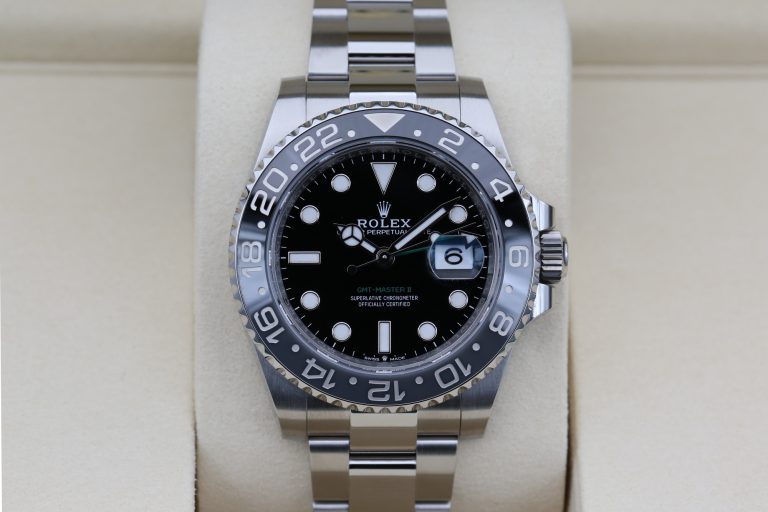
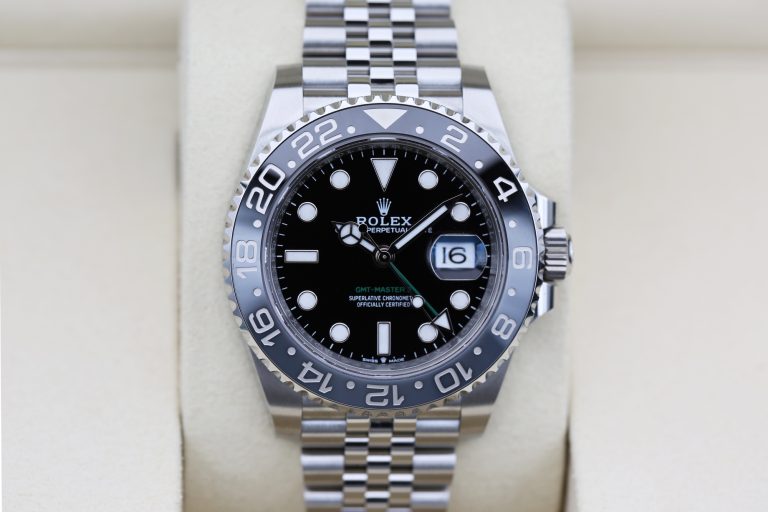
  • Rolex GMT-Master II, Particularly the “Pepsi” bezel model (ref. 126710BLRO) is on Sam’s radar. This red-and-blue GMT is an absolute classic for travelers and has a huge fan following. Introduced in stainless steel in 2018 (bringing back the beloved Pepsi colorway on steel), it quickly commanded hefty premiums over retail. Over a 6-year span, the GMT “Pepsi” has indeed appreciated, one analysis noted roughly a 26% rise in value from 2019 to 2025 for this model. While not as dramatic as the Daytona’s spike, that steady climb reinforces Sam’s belief that popular GMTs are safe harbors for value. The Pepsi’s appeal is timeless and Rolex may discontinue or tweak it in the future, which could further boost collectible value. Even now, amid a cooler market, the GMT-Master II remains a sought-after piece among collectors, exemplifying how a functional tool watch can double as an appreciating asset.


  • Rolex Submariner, The Submariner is another model Sam would consider, especially special variants or staple references. He caveats “to a degree” because not every Submariner is a guaranteed win, the specific reference and configuration matter. For example, the now-discontinued Submariner 116610LV “Hulk” (green dial/bezel) became highly collectible; it saw about +45% value increase in six years, partly due to its discontinuation in 2020 and iconic design. In contrast, a much pricier white-gold Submariner like the ref. 126619LB (blue bezel) comes with different economics: its retail price is extremely high (over $48k in 2025) and on the secondary market it actually trades below retail (around $32.5k as of August 2025). That’s roughly a 32% drop from new for the white-gold Sub, reflecting how precious metal versions often depreciate more initially. Sam notes these nuances, he prefers the stainless steel Subs (e.g. classic Date or No-Date Submariners) which have broader demand and a lower price point, making their value more “liquid” and stable. Indeed, steel Subs are relatively easy to resell and have steadily risen in price long-term (while showing only moderate volatility).

    The key is that core Rolex sports models like the Submariner are so recognized that there’s always a buyer at the right price. Sam feels confident that buying a Sub today and wearing it for years won’t hurt his wallet when it’s time to sell, the Submariner’s timeless appeal and continued popularity see to that.


Why Rolex? In Sam’s opinion Rolex sports watches tick all the boxes, global brand prestige, active collector communities, limited supply relative to demand and a history of price increases (both by the brand and in resale). Even industry data supports this view, Rolex is consistently named the leader in resale performance, with demand far outpacing supply for most stainless-steel models. It’s telling that the global luxury watch market views Rolex as a bellwether; across the board, Rolex models are known for “robust value retention” and often act as the entry point for people treating watches as investments. Sam also believes now is an interesting time to buy (more on that later), as Rolex prices have stabilised at lower levels after the 2022 spike. He’s effectively shopping the dip on icons that likely won’t be getting any cheaper.

Audemars Piguet: The Royal Oak’s Allure

Outside of Rolex, Sam’s eyes light up when discussing Audemars Piguet’s Royal Oak. The Royal Oak is a flagship model that changed the industry in 1972 as a luxury steel sports watch and in recent years it’s become a hype-driven collectible. Sam is cautious here, prices for certain Royal Oaks soared to unsustainable highs during the recent market bubble, but he still sees strong long-term value in specific references like the Royal Oak 15400 and 15500 (the 41mm stainless steel automatic models). These were the modern iterations of the classic Royal Oak design and both have now been discontinued (the 15400 ended in 2019, replaced by 15500 which itself was succeeded by a new ref. 15510). Discontinuation often creates a supply squeeze in the collector market, which can prop up prices for years. 

Value appreciation of select Patek Philippe and Audemars Piguet models over six years (2019–2025). The Audemars Piguet Royal Oak 15500ST in stainless steel (right) rose about +81% in market price, reflecting how sought-after discontinued modern sports watches can be. Patek Philippe’s Nautilus (left) and even dressy Calatrava (center) also show notable gains. The Royal Oak’s popularity means even relatively recent models can perform like investments. For example, the Royal Oak 15500ST (steel, time-only) was introduced in 2019 at around €22,000; by 2025, its price on the secondary market hit roughly €40,000, an ~81% increase in six years. That surge was driven by the Royal Oak craze (fueled by social media and limited supply) and the fact that the 15500ST had a short production run. Royal Oak 15400ST, its predecessor from 2012-2018, also appreciated significantly and remains in demand for collectors who want the classic 41mm Royal Oak without paying current model prices. Sam likes these references because they represent the entry point into the Royal Oak world, iconic design, steel case/bracelet (which tends to hold value better than gold) and comparatively “reasonable” prices (at least versus ultra-rare Royal Oak variants or the jumbo 15202). However, Sam is aware of the volatility: the Royal Oak market experienced a big spike through early 2022 and then a correction. Prices for many Royal Oaks (especially the blue-dial “Jumbo” 15202 or Openworked models) dropped from their peak highs. But much like Rolex, the new baseline is still higher than five years ago. By mid-2023, for instance, the Royal Oak indices had stabilized well above pre-2020 levels. Sam’s strategy with AP is to buy after the hype has cooled. Now that prices have come off their peak, a solid Royal Oak bought today and held should resume modest appreciation as the brand continues to thrive. Importantly, Audemars Piguet tightly controls Royal Oak production and demand from wealthy collectors (especially in Asia and the Middle East) remains strong. In the luxury watch market overall, AP’s Royal Oak is repeatedly cited as a model with “heritage brand” value and high desirability. All this gives Sam confidence that a Royal Oak in the safe will be a good store of value, if not a source of long-term profit. In summary, Audemars Piguet’s Royal Oak represents the kind of modern grail watch that, in Sam’s opinion, is worth the outlay for a serious collector. You get an iconic Genta design and top-tier watchmaking and historically if you held a steel Royal Oak for 5+ years, you’ve likely seen notable appreciation on top of enjoying a very exclusive watch. Sam’s picks: the 15400ST and 15500ST in stainless steel, clean, no-fuss Royal Oaks that any collector recognizes and wants. Their track record (as shown by that ~80% jump since 2019) speaks to why they’re considered “investment-worthy” pieces in today’s market.

Patek Philippe: Nautilus 5712 and the Value of Patience

No discussion of watch investments is complete without Patek Philippe, and Sam is no stranger to this holy trinity brand. Patek’s sport models, particularly the Nautilus, have become legendary for skyrocketing in value due to extremely limited supply. Sam’s approach, however, is measured. He’s not chasing the hottest new release at inflated prices; instead, he looks for a sensible entry point into a prized model. His example: the Patek Philippe Nautilus 5712 in stainless steel. Why the 5712? This Nautilus variant (which features a moonphase, date and power reserve subdials on its blue dial) is slightly less famous than the uber-hyped Nautilus 5711, but it shares the same coveted design DNA. The 5712/1A was introduced in 2006 and has had a long production run. Sam specifically mentions looking at 2012–2015 production pieces for the 5712 in steel. The rationale is that older examples can be acquired at a “better price point” than late-model ones, without being affected by the surge in brand-new retail prices or recent hype dips. In other words, if you buy a 5-10 year old Nautilus 5712, you’re paying a secondary-market price that has already corrected from any peaks and you’re not paying the premium of a unworn piece fresh from Patek. It’s a more conservative entry into Nautilus ownership that still gives you the upside if the model continues to rise over time. And indeed, the Nautilus 5712 has shown tremendous long-term gains. Looking at market data: In 2012, a steel 5712 was around £19,000; by early 2018 about £22,000, fairly modest growth. Then the sport-watch craze hit: by Jan 2022, the 5712 spiked to around £90,000, even peaking over £128k during the height of the frenzy. After the bubble burst in 2022, prices fell a lot, now (mid-2025) it trades around £70,000. That is still roughly a 65% appreciation over five years, outperforming even broader Patek market indexes. The takeaway for Sam: anyone who bought a 5712 five+ years ago is still well in the green, despite the rollercoaster. This reinforces his belief that time horizon is everything, Patek Nautilus owners who are patient have been rewarded handsomely, whereas those who chased the peak in 2022 got burned in the short term. Sam’s choice of a 2012-2015 Nautilus 5712 is essentially trying to buy near the “bottom” of the post-hype dip. Around those production years, the prices are somewhat stabilized and not carrying the new-model premium. Also, by 2012 the Nautilus was still pricey but not yet the speculative asset it became by 2021. In essence, Sam is applying a value-investor mindset: buy an excellent asset when it’s out of the limelight. He notes that new retail prices on Patek sport models have climbed and can create a dip in older models’ relative value, a savvy buyer can capitalize on that. Moreover, being an “entry-level” Nautilus (in the sense that it’s easier to obtain than a brand-new one from an AD), the 5712 steel is a gateway for many collectors, ensuring persistent demand in the secondary market. Patek Philippe’s reputation for exclusivity and craftsmanship underpins all this, as a brand, it’s often said you never actually own a Patek, you merely look after it for the next generation. That sentiment hints at value retention; people trust Patek to endure. Even industry forecasts highlight that Patek Philippe is a favorite among collectors, offering heirloom quality watches that are often appreciated. Sam’s pick, the Nautilus 5712, certainly fits that bill. It’s worth noting Patek’s other models can be investment-worthy too. For example, Patek’s Nautilus 5711 in precious metal showed an astronomical +122% increase (the rose gold 5711R from 2019 to 2025) and even a vintage Calatrava ref. 2526 gained ~38% in that period (being a historically important model), see the image above. Sam isn’t specifically targeting those, but he recognises that limited or significant Pateks tend to do well over time. The 5712 in steel is simply his sweet spot for combining relative affordability (in the context of Patek) with strong upside. In summary, Sam would invest in a Patek Nautilus 5712 for the long haul, confident that in 5-7 years it will at least hold its value, if not appreciate further as Nautilus models become ever more scarce. Plus, he gets to enjoy one of the most beautiful luxury sports watches in the world in the meantime, not a bad perk for a “value retainer” asset.

Is Now a Good Time to Buy? Sam’s Market Outlook

A pressing question for anyone considering watch investments today: Is it a good time to buy a Rolex (or AP, or Patek) right now? Sam’s answer is an emphatic “Yes” and not just because he’s in the business of selling them. He genuinely observes that prices for many sought after models are at a low, stable point and have been for about a year. The wild spikes we saw during the COVID era boom are gone, but so are the drastic declines, the market has found its floor. For instance, across the board, prices have corrected from their 2022 peaks by some percentage (Rolex sports models dropped perhaps 20–30% from all-time highs, on average). But those prices are now holding steady and even ticking up gradually. We won’t likely ever return to pre-2020 “bargain” prices on models like Daytona or Nautilus, too many new collectors entered the market in the last few years and brands have increased retail prices as well, but the exuberance has cooled to rational levels. Sam compares it to a bubble that popped: “We’re not going to get pre-COVID prices again, nor those crazy COVID spike prices, but from here it’s a reasonable upward trajectory,” he suggests. In his view, the next 5–7 years will bring gradual price increases for the heavy-hitter models. This aligns with wider market research: the global luxury watch market is projected to grow steadily (~5.84% CAGR) through 2030, indicating strong underlying demand and a healthy industry outlook. Luxury watches continue to hold cultural and economic significance and many buyers (especially younger ones) now see them as investment assets or alternatives to traditional investments. It’s also notable that pre owned luxury watches are gaining popularity as a segment. This trend benefits dealers like Kettle Club and by extension collectors like Sam, because it means liquidity in the market. A vibrant secondary market ensures that when Sam wants to cash out of a piece, there are platforms and buyers ready. In fact Rolex recently even expanded its Certified Pre Owned program to include newer models, a move which signals that the brand acknowledges the importance of the resale market. A more robust and transparent secondary market generally supports stable or rising prices for desirable references. That said, Sam always cautions that watches aren’t a risk-free investment. External factors can shake things up. For example geopolitical or trade events can impact prices, a recent headline saw U.S. import tariffs on Swiss watches causing a notable dip in a major retailer’s stock. In August 2025 a new 39% tariff on Swiss imports was imposed in the U.S. leading Watches of Switzerland to drop ~7% in share price overnight. Swiss watch exports to the U.S. also momentarily dipped in response. This illustrates that macroeconomic policies and currency fluctuations can create short term volatility even in the luxury watch sector. However such shocks tend to be temporary in Sam’s experience, the fundamental desire for Rolexes, Pateks, APs, etc., doesn’t vanish because of a tariff or a recession, serious collectors simply adjust their strategies. In fact periods of uncertainty often separate the speculators from the true enthusiasts, potentially making the market healthier. Sam’s long term, hold oriented approach is essentially built to weather these storms. By the time he’s thinking of selling (years down the line), the effects of a one time tariff or a brief economic slump are usually blunted.

Sam believes now is an opportune moment to buy quality watches if you have the capital and the passion. The market has done its correcting and is on solid ground. Many coveted models are the cheapest they’ve been in recent memory (relative to their recent peak) and yet the long run growth story remains intact. The overall luxury watch market is growing, new high net worth individuals are emerging globally who want these timepieces and brands are maintaining their exclusivity. For someone like Sam and indeed for Kettle Club’s clientele this environment is ideal to pick up “investment grade” watches at fair prices. Just remember, the goal isn’t quick profit but steady appreciation and value preservation, with the joy of ownership along the way. As Sam frames it, buying a Rolex now is like buying into a 7-year plan, don’t expect doubling your money in a year, but do expect that in a half decade or so, you’ll likely be glad you bought when you did.

Final Thoughts

Sam’s approach to watch investing is a blend of passion, prudence and patience. He puts money into watches he truly admires, iconic sports models from Rolex, AP, Patek, with the confidence that these pieces will hold or gain value as the years go by. It’s an opinionated strategy, shaped by experience and supported by market data, but of course not a guarantee. The key takeaways from Sam’s strategy: stick to renowned models with proven demand, think long-term (5+ years horizon) and buy at sensible prices (ideally when the hype cools). By doing so, one can assemble a collection that is both enjoyable and financially resilient. Above all, Sam and the Kettle Club team stress that this is a guide and personal perspective. Every collector should do their homework, ensure authenticity, condition and fair pricing when purchasing. Watches can be a rewarding alternative asset, but they should first and foremost bring you joy. If values go up over time, that’s the icing on the cake. In our view, Sam’s picks, steel Rolex sports, AP Royal Oaks and Patek Nautilus 5712, exemplify the kind of watches that have historically done well as investments while being phenomenal pieces to own. It’s hard to argue with a strategy that lets you wear a grail watch today and potentially profit from it years later. That’s the magic of this hobby: steel and gold tickers on your wrist that might just beat inflation and give the stock market a run for its money, all while looking downright cool. And if you’re considering taking a page from Sam’s book, remember that Kettle Club’s collection features many of these models, curated with exactly this blend of enthusiasm and asset-savvy mindset. Happy collecting! Sources:

  • Le Nouveau Réveil, “Rolex Submariner Date 126619LB: Price, performance and market evolution” (Mila Lazri, Aug 3, 2025)
  • Chrono24, “From 0 to 60: The Rolex Daytona” (Market overview, 2023)


  • Debonar Watches, “Which Are The Best Watches for Investment in 2025?” (Bruna M. Guaccio, Mar 17, 2025)
  • WatchCharts, Market Price Analysis (retrieved Aug 2025)
  • Mordor Intelligence via openPR, “Luxury Watch Market to Grow at 5.84% CAGR Through 2030” (Press release, Jul 31, 2025)
  • Investing.com, “Watches of Switzerland down 7% as Trump tariffs threaten U.S. sales” (Navamya Acharya, Aug 1, 2025)


Citations

Balancing Risk with a Diverse Luxury Watch Inventory

Luxury watch dealers like Kettle Club carry a broad range of timepieces, from rugged sports models to elegant dress watches as a strategy to balance risk in their stock holdings. In this blog post we explore the different groups of watches (sports, high end, entry level, dress and more) what defines each category and how carrying a mix of these helps mitigate the risks of holding valuable watch inventory. We’ll also highlight examples from Kettle Club’s stock and discuss how they fit into these categories. This educational overview not only showcases Kettle Club’s diverse collection but also provides insight into why such diversity benefits both the business and its clientele.

Balancing Risk in Luxury Watch Stock

Holding a large inventory of luxury watches comes with inherent market risk. Watch values can fluctuate based on trends, economic conditions and collector demand. Recently the secondary watch market experienced a boom between 2020 and 2022 followed by a correction. Even blue chip brands like Rolex saw prices pull back (Rolex resale prices fell about 8% in 2023 after the peak) as the market normalised from a speculative bubble. However over the long term, luxury watches have shown remarkable stability. In fact one study found that the high end watch market has “the lowest volatility of any asset class” and low correlation with stocks, many quality watches tend to hold or appreciate in value over time.

For a dealer the key to managing risk is diversification of stock. Different categories of watches can perform differently under various market conditions. By offering everything from entry level models to grail worthy high end pieces and from sporty tool watches to classic dress watches, Kettle Club ensures that a downturn in one segment is offset by steady interest in another. This balanced inventory caters to a wide range of customers (from novice buyers to seasoned collectors) and helps keep the business resilient. Below we compare each watch group and examine what characterises them along with examples from Kettle Club’s collection to illustrate how a diverse selection mitigates risk.

Sports Watch Models

A Rolex Submariner “Hulk” (green dial and bezel) exemplifies a sports watch with its robust steel construction, rotating dive bezel and high water resistance, built for durability in active use. Sports watches are built for performance and ruggedness. Traditionally, a “sports watch” refers to any watch designed for athletic or outdoor activities, they are typically larger in size (often 40 to 45 mm cases) and engineered to withstand shocks, water and tough conditions. Hallmarks of sports models include features like high water resistance, luminous dials for visibility, screw down crowns and often specialised functions, for example, diving watches have rotating bezels to time dives and chronographs have stopwatch complications. The design of sports watches prioritises legibility and resilience, dials usually have bold, easy to read markers and robust hands, while materials like stainless steel (and sometimes titanium or ceramic) are chosen for strength.

In contrast to dress pieces, sports watches tend to have a more casual, tool-like aesthetic, but they can still be luxury items. For instance, the Audemars Piguet Royal Oak and Patek Philippe Nautilus are considered sports watches (originally designed as durable steel sport models) that also qualify as high end luxury icons. Within Kettle Club’s stock, there are plenty of quintessential sports models. Examples include the Rolex Submariner (such as the green “Hulk” Submariner ref. 116610LV) noted for its 300 m water resistance and dive time bezel and the Rolex GMT Master II (like the 2024 “Bruce Wayne” ref. 126710GRNR or the green/black “Sprite” ref. 126720VTNR) which features a dual timezone bezel for travelers. The Rolex Daytona chronographs (e.g. ref. 116520 or ref. 116503) are sports watches born from auto racing, equipped with tachymeter scales to measure speed. Other pure sports tools in stock include the Rolex Sea Dweller and Submariner references from the 1970s to 2010s (built for diving), the Rolex Explorer II (a rugged adventurer’s watch with a 24 hour hand) and dive oriented pieces like the Panerai Luminor PAM00614 (47 mm case, designed for Italian Navy divers).

Sports models are currently among the most popular and liquid watches in the market, which generally lowers the risk of holding them in inventory. They appeal to a broad collector base and often have waitlists at retail, especially in the case of Rolex. This strong demand means well known sports references tend to hold value or appreciate steadily over time. For example, steel Rolex sports watches saw a surge in secondary market prices during the recent boom (at one point, “we’ve never seen steel sports models run hotter” according to industry observers) and while those prices have since cooled, the long term trajectory for icons like the Submariner or Daytona has been upward. Even the Rolex Submariner Date (a classic sports dive watch) experienced strong collector demand and price growth over 15 years. From a risk standpoint, having a healthy share of sports models means Kettle Club’s stock includes many “blue chip” pieces that are easier to sell if needed. These watches versatility, a Submariner or GMT can be worn daily, not just for sports, adds to their broad appeal.

Higher End Watch Models

The Patek Philippe Nautilus (ref. 5980/1A shown here) is a high end sports luxury watch. Its iconic design and limited production have driven high collector demand, but values can fluctuate with market trends. Higher end watches refer to the top tier of luxury timepieces, often from prestigious haute horlogerie brands or flagship models. These watches typically command very high prices (tens of thousands of pounds and up) due to a combination of factors, exceptional craftsmanship, complicated movements, precious materials, brand prestige and scarcity. Patek Philippe, Audemars Piguet and Rolex’s rare or precious metal models are examples in this category. The level of finishing and skill in these watches is extraordinary, for instance, Rolex famously spends about a year to make a single watch, involving hundreds of precision operations and Patek Philippe’s Grand Complications or limited models are crafted in very small numbers. Such meticulous craftsmanship and limited supply contribute to high values and the status associated with these pieces.

Kettle Club’s inventory showcases several high end models. Notably, the Patek Philippe Nautilus 5980/1A (a stainless steel Nautilus with chronograph function) is listed around £78,995, this iconic Gérald Genta designed sports watch has been one of the most sought after pieces in recent years, especially after Patek discontinued some Nautilus models, causing prices to skyrocket. Similarly, the Audemars Piguet Royal Oak 15202ST “Jumbo” (39 mm, blue dial) at ~£40,000 is a grail watch for many collectors; it’s the quintessential AP Royal Oak model, valued for its heritage and slim automatic movement. Other examples include Patek’s Golden Ellipse 5738P (a dressy 40 mm platinum watch, ~£38,000) which represents high end elegance and rarity and limited or special Rolex models like the Rolex Day Date 40 in Everose gold with a black Ombré dial (ref. 228235 “2025 Oscars” edition) priced around £45,500. Even certain modern Rolex sports references can be considered high end due to market value, for example, the Rolex Daytona “John Mayer” Edition (green dial yellow gold Daytona, ref. 116508) is offered by Kettle Club at about £58,500, reflecting how collectible and prized that model has become.

The risk profile for high end models is a bit different from mainstream pieces. On one hand, top tier watches have shown strong long term value retention, they’re sometimes viewed as investments or “alternative assets.” A study of 15 years of data noted that luxury watches (particularly at the high end) have low volatility and tend to appreciate, often outpacing stocks. For instance, many sought after Patek and AP models have dramatically increased in price over the past decade. On the other hand, these models can be subject to hype cycles and short term swings. When the market peaked in 2021 to 2022, values for pieces like the Nautilus and Royal Oak spiked to unprecedented levels and later subsided as the frenzy cooled. That means dealers holding these at the peak could face a value dip. However, by stocking a variety of high end watches (sports luxury icons, classic dress pieces, etc.), Kettle Club spreads out the exposure. high end Rolexes (e.g. gold Day Dates) often behave differently than, say, high end Pateks in the market, each has its own collector base. Diversification even within the high end segment is key. Moreover, carrying these aspirational watches benefits the business beyond immediate profit, they draw in passionate collectors and enhance Kettle Club’s reputation as a source for truly special timepieces.

Entry Level Luxury Models

Entry level luxury watches are those that serve as a gateway into the world of high end timepieces, typically the more affordable models from renowned brands or pieces priced at the lower end of the luxury spectrum. These watches combine prestige and quality with a (relatively) accessible price point, making them popular among new collectors or those looking for value. In practice, “entry level” can include brands like Longines, Oris, or TAG Heuer, but even within top brands like Rolex or Omega, certain simple steel models are considered entry level for that brand. For example, the Rolex Oyster Perpetual (a time only steel watch) is often cited as an exceptional entry level luxury watch due to its premium quality and classic design. At Kettle Club, entry level pieces include models like the Cartier Tank Française 25mm (~£2,950, which offers Cartier’s heritage and elegance in a smaller quartz watch ideal for first time buyers, or the 34 to 36 mm Rolex Datejust models from the 1980s to 90s that can be found in the £4k to £7k range. The Rolex Oyster Perpetual 36mm and 41mm references (such as ref. 126000 in various dial colors, around £8k to £11k) also fall into this category, they’re straightforward, durable Rolex watches without additional complications and they mark an attainable entry point to the brand.

What categorizes a watch as “entry level” is not just price, but also often a simpler feature set and wide appeal. These watches usually have time only or time and date functions, come in steel or other non precious metals and are part of the core collection for a brand (not limited editions). They are the kind of models a newcomer might buy as their first luxury watch. The appeal of entry level models is their versatility and value proposition, they carry esteemed brand names and solid craftsmanship without the hefty price of complications or precious metals. For Kettle Club, having a range of entry level options is important, it attracts a broad customer base and ensures there are always affordable luxury choices available. This balances risk because these pieces tend to move steadily; there are always buyers entering the market looking for a sub £10k watch, for instance.

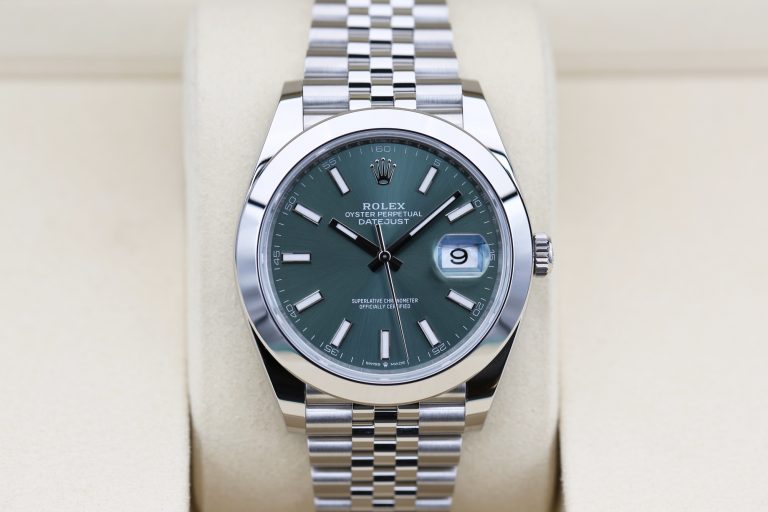
From a risk perspective, entry level watches might not shoot up in value overnight, but they also rarely crash, they experience steady demand. In fact, some have proven to be excellent long term performers. A great example is the Rolex Datejust (a watch often considered a classic everyday or dress watch and priced accessibly compared to sport models). The Datejust was the most traded watch model in one analysis from 2010 to 2025, with its average resale price climbing over 600% in that period. Even after the market cooled in 2022, the Datejust’s value only dipped around 14% from its peak, maintaining significant gains overall. As Bob’s Watches CEO Paul Altieri noted, this broad appeal and steady rise might surprise those “who think dress watches are never as exciting as sports models,” yet the data shows an enduring demand. The takeaway is that entry level icons, be it a Datejust, an Omega Seamaster, or a Cartier Tank, can be a reliable segment. By stocking these, Kettle Club benefits from more predictable sales and lower per item investment, which together reduce the financial risk of inventory.

Dress Watches

The Cartier Tank Française is a quintessential dress watch, defined by its elegant rectangular case, Roman numeral dial and slim profile, a design meant to complement formal attire. Dress watches are all about elegance, simplicity and refinement. Traditionally, a dress watch is a timepiece one wears with formal or business attire, it’s meant to slip discreetly under a shirt cuff and accentuate an outfit without dominating it. The classic dress watch design is characterized by a thin case (often under ~10 mm thick) with a modest diameter (typically 36 to 40 mm for men’s watches), a clean dial (minimal complications, usually just hours and minutes, maybe a date or small seconds subdial) and often precious metal construction or at least polished finishing for a luxurious look. Dials are usually free of clutter; they may feature simple hour markers (often roman numerals or delicate indices) and elegant hands. Many dress pieces come on leather straps (alligator is common), though some, like the Cartier Tank shown above, integrate metal bracelets while still maintaining a dressy style. The idea is a watch that serves as a tasteful accessory to a suit or tuxedo, rather than a bulky tool watch.

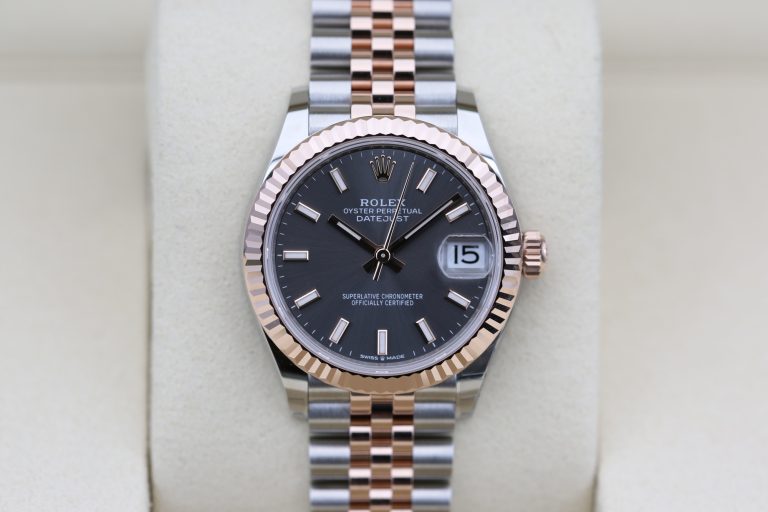
Within Kettle Club’s offerings, you can find several examples of the dress watch category. Patek Philippe’s Golden Ellipse 5738P stands out, its unusual oval case shape and blue sunburst dial exude a quiet luxury and in platinum it’s the kind of heirloom dress watch connoisseurs adore. Another example is the Rolex Day Date (“President”), especially models in precious metals with classic dials. While the Day Date has the practical day and date complications, it’s historically a dressy statement piece worn by many leaders and celebrities. Kettle Club’s listing of a Rolex Day Date 40 with a black ombré dial (an apparently special edition tied to the Oscars) in Everose gold is a prime dressy model, 40 mm in size, lavish and formal in appearance. Traditional Cartier models like the Tank and Santos (the Santos is technically a pilot watch origin but modern interpretations in steel/gold with Roman numeral dials can be very dressy) also fall in this group. And of course, various Rolex Datejust models, especially those with diamonds or two tone metals or smaller case sizes (31 mm, 36 mm), serve as versatile dress watches for both men and women.

Dress watches may not currently enjoy the same feeding frenzy as sport models in the resale market, but they remain cornerstones of a balanced collection. Their value lies in timeless design rather than hype. Many dress pieces actually fly under the radar and can be relative bargains on the secondary market (which is precisely why the appreciation of the Datejust surprised some, as noted earlier). For Kettle Club, carrying dress watches means appealing to enthusiasts who appreciate classic style or need something for formal occasions, not every customer is chasing the hottest steel sports model. In terms of inventory risk, dress watches provide stability. Because they aren’t typically subject to volatile speculative spikes, their prices are more steady over time. A Patek Calatrava or a Cartier Tank will likely hold its value decently, but more importantly, they broaden the shop’s appeal. They attract a different segment of buyers, perhaps those more interested in tradition and aesthetics than in following the latest trend. By having both sporty and dressy pieces, Kettle Club ensures it can serve customers for every occasion, a collector can get their high end sports chronograph and also pick up a refined dress watch from the same dealer. This one stop diversity enhances customer loyalty and spreads sales across categories, which is a healthy way to mitigate risk.

Other Watch Categories and Their Roles

In addition to the broad groups above, there are other ways to classify watches, often by function or style and Kettle Club’s stock touches these areas as well. It’s worth noting how some of these sub categories overlap with the main groups ;

  • Diver’s Watches, These are a subset of sports watches specifically built for underwater use. They feature high depth ratings, unidirectional rotating bezels to time dives and luminous indices. Examples include the Rolex Submariner and Sea Dweller and the Panerai Luminor. These pieces appeal to both actual divers and those who enjoy the robust look. Diver’s watches have been extremely popular (the Submariner is a universal classic) and tend to hold value well due to that popularity.
  • Pilot and GMT Watches, Originally designed for aviation or travel, these watches often have high legibility and complications like a GMT hand for a second timezone. The Rolex GMT Master II (the “Rootbeer” ref. 126711CHNR, the “Batman/Batgirl” and “Sprite” variants, etc.) and the Patek Philippe Calatrava Pilot Travel Time (ref. 5524G, which Kettle Club had listed) fall in this category. They often cross into sports watch territory because of their tool origins. These models are currently in demand as well, since travel themed watches have a broad appeal to globetrotters and professionals.
  • Chronographs, Watches with stopwatch functions are beloved by enthusiasts for their mechanical complexity and sporty look. The Rolex Daytona is a prime example (a chronograph that is also a flagship sports model). Others include the Omega Speedmaster (famous “Moonwatch”, an iconic chronograph), interestingly, Kettle Club’s dress watch blog even spotlighted a Speedmaster as an “affordable dress watch” option, showing that context can redefine a watch’s category. Chronographs often fetch high interest; vintage Daytona chronographs, for instance, are among the most collectible watches ever. Including chronographs in inventory is important as they attract a segment of collectors who appreciate that function.
  • Vintage Watches, Vintage pieces (typically those over 20 to 30 years old) can be dress or sports, but they form a special category because their value is influenced by collectibility, rarity and condition. In the stock list above, we see vintage items like a Rolex Submariner ref. 5513 from 1984 and ref. 1680 from 1978, or a Rolex Datejust 16233 from the 1990s. Vintage watches can be riskier to hold (their condition and originality hugely affect value and the buyer pool is more specialized), but they can also yield high rewards if they appreciate due to rarity. Kettle Club appears to have a few vintage classics in the mix, which is smart for appealing to vintage aficionados.
  • Women’s Watches / Smaller Models, Some watches in the list are explicitly ladies’ or mid size models (e.g., the Rolex Datejust 28mm refs. 279171, 279174, Cartier Panthère 30mm, etc.). Having a range of sizes and styles for different genders broadens the market. Women’s luxury watch demand has been growing and certain models (like midsize sports watches or diamond set dress watches) can be quite sought after. These typically align with the dress or casual category and help ensure inventory isn’t solely geared towards large men’s sport pieces.

It’s clear that these categories are not mutually exclusive, a single watch can fall into several groups. For instance, an Audemars Piguet Royal Oak is both a high end watch and a sports watch (and also arguably a dressy piece in a suit, given its elegance). A Rolex Datejust can be seen as an entry level option, a dress watch and a highly traded stable asset all at once. By understanding these overlapping categories, Kettle Club can curate a collection that covers all bases. For the blog reader or watch collector, knowing what defines each type of watch helps in appreciating why a well rounded collection (or inventory) is valuable. Features like chronograph sub dials, rotating bezels, GMT hands, or ultra thin dress cases each serve different purposes and attract different enthusiasts. Kettle Club’s diversified stock, which includes examples of all the above, is a testament to covering the full spectrum of collector interests, this breadth is a form of risk management in itself.

Benefits of a Diversified Inventory (and Why It Matters)

For a watch retailer and for collectors alike, the old adage “don’t put all your eggs in one basket” holds true. By comparing each watch group, we see that every category has its own strengths and market behavior. Sports models enjoy high demand and liquidity, high end pieces bring prestige and potential big gains, entry level watches offer broad accessibility and steady turnover and dress watches provide timeless appeal and stability. Kettle Club’s strategy of maintaining a wide ranging inventory means that a slump in one area (say, a temporary dip in sports watch prices) can be counterbalanced by sales in others. This not only reduces financial risk but also ensures continuous engagement, there’s always something for every customer’s taste and budget.

From a blogging perspective, discussing these categories and the concept of risk management through diversification greatly benefits the readership. It educates clients and enthusiasts about how the watch market works and demonstrates Kettle Club’s expertise in navigating it. Such transparency and knowledge sharing can enhance the trust and credibility in the Kettle Club brand. Readers come away with a better understanding of what categorises a watch as a sports, dress, or high end model and they gain insight into why Kettle Club curates the collection the way it does. For the blog, this kind of content serves not just as a showcase of inventory but as a value added guide for watch lovers, positioning the blog (and by extension, Kettle Club) as a thought leader in the space.

The diverse stock at Kettle Club isn’t just about having many watches, it’s a deliberate approach to balance risk and reward. We recommend that collectors similarly consider diversity in building their personal collections, mixing iconic sports pieces with a dress watch or two, perhaps an investment grade high end model alongside reliable everyday ones. This approach can lead to a collection that is both enjoyable and resilient to market swings. For Kettle Club, continuing to compare and highlight different watch groups in their blog will underscore how their breadth of selection sets them apart. It reassures customers that whether you’re after a robust Rolex tool watch or an elegant Patek dress watch, Kettle Club likely has it and that they understand the nuances of each. In the ever evolving watch market, such a well balanced portfolio of timepieces is a wise strategy for success, offering stability, opportunity and appeal all at once.

Ultimately, the lesson is clear, in luxury watches, as in investing, diversification is the name of the game and Kettle Club’s stock exemplifies how covering “all the bases” can benefit both the business and its clientele. By appreciating the wide range of watch types and their roles, collectors can make more informed decisions and the Kettle Club team can continue to manage inventory risk while delighting enthusiasts with an encyclopedic selection of fine timepieces.

Sources;

  • Kettle Club, Luxury Watches Collection & Blog (for examples of watch models and category insights)kettleclub.co.uk
  • namokiMODS Watch Guide, Differences Between Dress and Sport Watches (design and feature distinctions)namokimods.comnamokimods.com
  • Business Insider, Pre owned Watch Data & Investment Analysis (market volatility and value trends)businessinsider.combusinessinsider.com
  • Watch Industry Reports, Market Peak and Correction (2020 to 2022)businessinsider.com (context on risk of holding stock during market swings)


Audemars Piguet: 150 Years of Watchmaking Mastery

At Kettle Club we’ve observed that Audemars Piguet has become a beacon of interest for collectors, especially as the brand celebrates its 150th anniversary. Audemars Piguet’s storied legacy, innovative watches and exclusivity place it in the highest echelons of Swiss watchmaking. But how did AP earn its prestige and how does it stack up against a household name like Rolex? In this in depth exploration we delve into AP’s history and iconic models, then compare these two luxury giants, highlighting their similarities, differences and why a collector might choose Audemars Piguet over Rolex (and vice versa).

History of Audemars Piguet

Founded in 1875 in the Swiss village of Le Brassus, Audemars Piguet was born from the partnership of two childhood friends, Jules-Louis Audemars and Edward-Auguste Piguet. From the outset, they split responsibilities, Audemars handled technical watchmaking and production, while Piguet managed sales and administration. Remarkably the company has remained independent and family owned ever since, now helmed by the founders’ fourth generation descendants. This continuity makes AP unique in a landscape where many rivals are part of large conglomerates.

In 1892 Audemars Piguet developed the world’s first minute repeating movement for a wristwatch. This minute repeater complication, which chimes the hours, quarters and minutes on demand was a bold technical achievement in an era dominated by pocket watches. It set the tone for AP’s pioneering spirit. Over the decades Audemars Piguet pushed boundaries with ultra thin calibres and complex mechanisms. For example AP introduced the first jump hour wristwatch in 1921 and the first self winding (automatic) tourbillon wristwatch in 1986, feats that cemented its reputation in haute horlogerie.

Another defining chapter in AP’s history came in 1972 with the launch of the Royal Oak. Designed by Gérald Genta, the Royal Oak fundamentally revolutionised the concept of the luxury sports watch. At a time when the Swiss watch industry was reeling from the Quartz Crisis, AP’s audacious decision was to craft a high-end sports watch in stainless steel, priced on par with gold watches. The Royal Oak’s now-famous features, an octagonal bezel secured by eight exposed screws, a textured “tapisserie” guilloché dial and an integrated steel bracelet, broke all the traditional rules of fine watch design. Initial skepticism gave way to success and the Royal Oak not only saved Audemars Piguet’s fortunes but also spawned an entire genre of luxury steel sports watches across the industry. The impact was tangible, AP’s workforce grew from just a few dozen to over 100 artisans after the Royal Oak’s debut, foreshadowing the brand’s rapid growth in the modern era.

Fast-forward to today, Audemars Piguet remains one of the world’s most respected watchmakers. It produces a relatively small number of pieces each year (tens of thousands, compared to Rolex’s nearly one million-plus), maintaining an emphasis on quality and exclusivity over volume. AP is often cited as part of the Swiss watchmaking “Holy Trinity”, alongside Patek Philippe and Vacheron Constantin, renowned for an unwavering commitment to craftsmanship and innovation. Even after 150 years, Audemars Piguet stays at the cutting edge: the company has experimented with creative collaborations (for instance, partnering with Marvel Comics to create heroic-themed limited editions) and works with cultural icons as brand ambassadors. Through it all, AP’s identity as a family led maison devoted to haute horlogerie has remained intact.


Iconic Audemars Piguet Watches

When enthusiasts hear “Audemars Piguet,” the first watch that comes to mind is invariably the Royal Oak. This flagship model, introduced in 1972, has achieved icon status in design and collector circles. The Royal Oak’s bold and distinctive features have become AP’s signature. Its octagonal bezel (inspired by a ship’s porthole) is secured by eight white-gold screws, creating a unique industrial elegance. The dial features the Grande Tapisserie pattern, a fine guilloché motif of interlocking tiny squares, which is painstakingly machined and gives the watch a rich visual texture. With a case and bracelet hand-finished to mix satin-brushed and polished surfaces, the Royal Oak was the first luxury watch to elevate stainless steel to an art form, proving that high horology isn’t reserved only for precious metals. Early Royal Oaks were ultra-thin as well, housing a movement only 3.05 mm thick, reflecting AP’s ongoing quest for technical elegance. Today, the Royal Oak collection has expanded to dozens of variations, from simple time-and-date models to complications like chronographs, perpetual calendars and tourbillons, yet all share that same unmistakable design DNA.

Audemars Piguet Royal Oak Perpetual Calendar in rose gold. The Royal Oak’s signature octagonal bezel and “Tapisserie” dial exemplify AP’s blend of avant-garde design and traditional craftsmanship. This high-complication model displays AP’s mastery in combining useful functions (like a perpetual calendar) with luxurious style.

Building on the Royal Oak’s success, Audemars Piguet launched the Royal Oak Offshore in 1993 as a beefed-up, sportier cousin. The Offshore took the Royal Oak’s design codes and made them more aggressive, larger case sizes, rubber seals and straps and a muscular aesthetic aimed at a younger generation and extreme sports enthusiasts. With its bold presence, the Offshore helped pioneer the trend for oversized luxury sports watches. Not stopping there, AP also introduced the Royal Oak Concept series in 2002. The Concept models are cutting-edge “laboratory” pieces where Audemars Piguet showcases futuristic materials, exotic complications (like highly complex tourbillons and even acoustic chiming innovations) and avant-garde designs that push the Royal Oak form to its limits. These Concept watches, often made in limited numbers, underline AP’s status as an innovator unafraid to experiment.

Outside of the Royal Oak family, Audemars Piguet has produced many other notable models, albeit in more niche circles. The Jules Audemars line (named after the co-founder) offered classic round dress watches with elegant complications. The Millenary collection introduced a distinctive oval case and off-centre dial, highlighting AP’s artistic side in modern watchmaking. In 2019, AP made waves with a completely new collection: Code 11.59. This was Audemars Piguet’s first major non-Royal Oak line in decades, aiming to reassert AP in the arena of contemporary dress watches. The Code 11.59 pieces feature round cases but with an embedded octagonal middle case (a subtle homage to the Royal Oak’s shape), intricate curved crystal profiles and a slew of new in-house movements. Initial reactions were mixed, but AP has continually refined the Code 11.59 designs and they now demonstrate the brand’s ability to blend modern design with mechanical excellence. From ultra-thin grand complications to robust sports chronographs, Audemars Piguet’s watch range showcases a mix of technical mastery and aesthetic daring, all underpinned by the meticulous hand-finishing that the brand is known for.

Audemars Piguet vs Rolex: Key Differences and Similarities

Both Audemars Piguet and Rolex stand at the pinnacle of Swiss luxury watchmaking, but they do so with very different philosophies. Comparing the two is a fascinating study in contrast. Below we break down the comparison into key aspects, from craftsmanship and design to technology, exclusivity and why each brand resonates with watch lovers.

Craftsmanship and Quality

One fundamental difference between AP and Rolex lies in how their watches are made and finished. Audemars Piguet is all about artisanal craftsmanship. With a much smaller annual production (around 50,000 pieces per year versus Rolex’s near 1 million), AP dedicates far more time to finishing each watch by hand. In fact, it’s been estimated that an AP watch might involve 30–100 watchmaker hours of labor, whereas a Rolex might involve 3–6 hours due to more industrialised processes. This is not to say Rolex lacks quality, far from it, but AP’s approach means that you’ll find fine decorative techniques in its watches that are usually reserved for the highest echelons of haute horlogerie. For instance, Audemars Piguet is celebrated for hand-finishing its movements with Côtes de Genève (Geneva stripes on bridges), perlage (circular graining on plates), anglage (hand-polished beveled edges) and other traditional embellishments. When you peer into the caseback of an AP (many of which have sapphire exhibition backs), it’s like viewing a tiny art gallery of mechanical craft. The dials and cases receive similar attention: the Royal Oak’s guilloché tapisserie dial is a perfect example of decorative craft meeting function and every bevel on the octagonal bezel is impeccably polished by hand. All of this gives Audemars Piguet watches a jewelled, intricate feel, they are as much hand-made masterpieces as they are timekeepers.

Rolex, in contrast, prides itself on precision manufacturing and robustness. Rolex watches are built to extremely high quality standards, but the processes are more automated and industrial, reflecting Rolex’s philosophy of making reliable watches in larger volumes without sacrificing excellence. Rolex uses advanced machinery and technology to achieve uniform quality. Notably, Rolex has its own foundry and formulates a proprietary high-grade steel alloy called 904L stainless steel (Oystersteel), which is harder and more corrosion-resistant than typical watch steels. This steel, along with Rolex’s patented Rolesor metal (a steel and gold hybrid construction for two-tone models), exemplifies the brand’s emphasis on durability and long-term wear. Every Rolex movement is assembled with great care (often by technicians with the aid of automation for certain tasks) and is tuned to meet or exceed chronometer accuracy standards. While Rolex movements generally lack the hand-finished decoration of AP’s, they are famous for being workhorses, robust, shock-resistant and capable of keeping excellent time over decades of use. In terms of craftsmanship, one might say Audemars Piguet focuses on artisanal finesse, whereas Rolex focuses on unassailable function. Both brands have unbelievable quality control; it’s just expressed differently. An AP is a functional piece of art, whereas a Rolex is often described as the ultimate functional tool watch and both descriptions are compliments in their own right.

Design Philosophy and Aesthetics

The design languages of Audemars Piguet and Rolex are markedly different, each appealing to different tastes. Audemars Piguet’s design ethos is avant-garde and bold. Historically, AP has not shied away from unconventional designs, the Royal Oak being the prime example of a disruptive design that became timeless. AP watches often feature eye-catching elements: openworked (skeleton) dials where you can see the movement’s inner workings, octagonal or otherwise non-round cases and high-complication displays that showcase technical prowess. Even AP’s dressier models (like some Code 11.59 editions) tend to include contemporary flairs, such as smoked fumé dials or complex case geometry. The brand’s willingness to push creative boundaries means that an Audemars Piguet on the wrist is a statement of individuality and appreciation for cutting-edge design. A collector drawn to AP often loves the intricate details, e.g. the “Mega Tapisserie” larger dial pattern on an Offshore, or the forged carbon cases AP introduced on some models and enjoys that AP designs can spark conversation. There is also an element of exclusivity in AP’s aesthetics: because they produce fewer watches and often introduce limited editions, owning an AP (especially a non-mainstream model) feels like owning a rare piece of modern art.

Rolex’s aesthetic, on the other hand, is rooted in timeless, classic design with a purpose. Rolex watches tend to have clean, traditional dial layouts and conservative case designs that have evolved only gradually over decades. The emphasis is on legibility, balance and enduring style rather than on being avant-garde. Signature Rolex touches, the iconic Mercedes-style hands on sport models, the Cyclops magnification lens over the date, the fluted gold bezel on a Datejust or Day-Date, the simple oyster bracelet, all contribute to a look that is instantly recognisable yet never ostentatious. Rolex sticks to round cases for essentially all its models (aside from the rare Cellini Prince of the past), reinforcing a consistent visual identity. Even when Rolex uses precious materials or gems, the designs remain tasteful and not overly ornate. The brand’s design consistency is such that a 1960s Rolex and a 2020s Rolex share a clear lineage of style. Many would say a Rolex is equally at home with a suit or with a T-shirt, in other words, the versatility of the design is key. By focusing on perfecting a core design (the Oyster case and bracelet concept, for instance), Rolex has achieved a very high level of refinement and understated elegance. People who choose Rolex often appreciate that the designs don’t go out of fashion; a Submariner or a Datejust looks as good today as it did half a century ago. In summary, Audemars Piguet appeals to those who enjoy bold, artistic watch designs that stand out, while Rolex appeals to those who favour a timeless, go-anywhere aesthetic that subtly exudes success and reliability.

Innovations and Complications vs. Practical Technology

Both AP and Rolex have rich legacies of innovation, but the types of innovation they pursue can differ significantly. Audemars Piguet’s innovations often lie in the realm of high horology, that is, pushing mechanical complexity and artistry. We’ve mentioned several already: AP pioneered complications like minute repeaters for wristwatches, jumping hours and the first automatic tourbillon. The brand has produced many Grande Complication watches that combine tourbillon, perpetual calendar and split-second chronograph functions into one, essentially creating portable masterpieces that showcase what mechanical watchmaking can do. Audemars Piguet is also known for developing ultra-thin movements; for example, its Calibre 2120/2121 (used in early Royal Oaks) was one of the thinnest full-rotor automatic movements in the world. In recent years, AP’s Royal Oak Concept line has featured experimental uses of materials (like alacrite and forged carbon) and advanced engineering such as novel shock absorption for movements and even concepts like the Supersonnerie, a minute repeater design that dramatically improves sound volume and clarity. These are the kinds of cutting-edge horological innovations that appeal to purists and collectors who admire watches as works of technical art. In essence, Audemars Piguet often treats the watch as a canvas for ingenuity: showing off intricate complications, high beat movements, or multi-barrel power reserves to extend power duration, etc. If you’re fascinated by what makes a mechanical watch internally interesting, AP offers plenty to explore.

Rolex’s innovations, by contrast, tend to focus on practicality, reliability and improving the real-world utility of their watches. Rolex has a storied history of technical firsts that are less about complication for complication’s sake and more about solving problems or enhancing durability. For example, Rolex invented the first truly waterproof watch case, the Oyster case in 1926, which set a new standard for water resistance in wristwatches. In 1931, Rolex introduced the Perpetual rotor, one of the first successful self-winding mechanisms for a wristwatch, eliminating the need to manually wind daily. In the 1950s and 60s, as tool watches came to the fore, Rolex was at the vanguard: they co-developed the helium escape valve for the Sea-Dweller in the 1960s (to help saturation divers safely use the watch during decompression). They also pioneered high-magnetism resistance with the Milgauss, high-depth water resistance with the Submariner and Deepsea and multiple time zone tracking with the GMT-Master. In modern times, Rolex focuses on incremental innovation: things like the Parachrom hairspring (an alloy that makes the watch movement more resistant to shocks and magnetic fields, or the Chronergy escapement (improving efficiency and power reserve in movements). Rolex does not produce elaborate complications like minute repeaters or tourbillons; in fact, Rolex’s most complex regular production watch is the Sky-Dweller, which is an annual calendar and GMT, relatively simple compared to AP’s grand comps. This is by design: Rolex prioritises features that keep their watches reliable under all conditions. So, while AP might wow you with a visible tourbillon whirring on the dial, Rolex impresses by making a watch that you can take from office to ocean and it just works. Both brands innovate, but AP’s innovations speak to the artistry and complexity of watchmaking, whereas Rolex’s innovations speak to usability and toughness in everyday life.

Production, Exclusivity and Collectibility

Production volume plays a huge role in the brand image of AP versus Rolex. Audemars Piguet produces far fewer watches annually than Rolex and this scarcity is part of AP’s allure. With only on the order of 40–50,000 watches made per year, AP simply isn’t a mass-market brand, they target connoisseurs and collectors. This limited supply means many Audemars Piguet models (especially popular ones like the Royal Oak “Jumbo” Extra-Thin or certain limited editions) can be very hard to obtain at retail. It’s not uncommon for AP’s boutique allocations to be fully spoken for by VIP clients. This strategy of intentional limited production creates an aura of exclusivity around Audemars Piguet. If you wear an AP, especially a rarer model, it’s quite likely you won’t run into another person with the same watch, an appealing thought for those who value uniqueness. Collectibility is accordingly high: certain AP references (for example, discontinued Royal Oak models or special collaborations like the AP x Marvel Black Panther edition) have shot up in value and are chased by enthusiasts worldwide. AP also nurtures collectibility by doing a lot of limited releases and special series (they even have an AP House concept for client experience, underlining a club-like exclusivity). Vintage AP pieces, though relatively niche compared to vintage Rolex, are prized by knowledgeable collectors, a vintage AP perpetual calendar or chronograph from mid-20th century might not be broadly famous, but within the community, they are grail-level watches due to how few were made.

Rolex, however, walks a different line: it produces a lot of watches (roughly a million per year by some estimates) but still manages to be perceived as exclusive. How? First, that volume is spread over many model lines and global demand is enormous, so certain desirable Rolex models are perpetually in short supply. A stainless steel Daytona or Submariner date, for instance, often has a waiting list despite Rolex’s production volume. Unlike AP, Rolex doesn’t typically number most limited editions (in fact, Rolex rarely acknowledges making limited editions at all, except unique pieces for charity auctions). Yet the collectibility of Rolex is legendary. Vintage Rolex sports models have an entire cottage industry of passionate collectors and auction prices for rare vintage Rolexes (Paul Newman Daytonas, Comex Submariners, MilSubs, etc.) can rival or exceed anything in the watch world. Modern Rolex models also tend to hold or increase in value if they are in high demand. Importantly, Rolex has achieved universal brand recognition, so the pool of potential collectors is vast, from seasoned horologists to casual buyers who just know “Rolex is the best.” This means almost any Rolex, especially sports models, have a very liquid secondary market. By contrast, AP’s secondary market is a bit more concentrated around its flagship models; for example, a Royal Oak will generally hold value or appreciate strongly (many current Royal Oaks trade well above retail), whereas some of AP’s dressier or less-known models might not have the same broad demand. That said, both AP and Rolex share the trait that many of their watches sell for a premium on the secondary market, a testament to how sought-after they are. In summary, Audemars Piguet offers built-in exclusivity through limited production and a smaller collector base, which can make owning an AP feel like being in a rarified club. Rolex offers ubiquitous prestige, it’s a watch that almost everyone recognises, yet owning the right reference still imparts a sense of achievement due to the difficulty of acquisition and the storied heritage behind it.

Brand Prestige and Why People Choose AP or Rolex

When it comes to overall brand prestige, both AP and Rolex rank extremely high, but in somewhat different ways. Audemars Piguet’s prestige is often strongest among serious watch enthusiasts (“watch geeks,” if you will). Because AP is part of the Holy Trinity of watchmaking and produces high-complication pieces, it commands respect for its technical and artistic achievements. Telling a fellow collector that you own an AP, especially a significant model like a Royal Oak “Jumbo” or a grand complication, signals that you have a deep appreciation for horology. AP is also seen as a bit more exclusive and fashion-forward, helped by its partnerships with famous athletes, artists and celebrities. For instance, icons like Jay-Z, LeBron James and Serena Williams have been associated with Audemars Piguet. These collaborations and endorsements give AP an image of creative luxury, a brand for those “in the know” who value artistry and are willing to step outside the mainstream. Many people choose Audemars Piguet because owning one feels like joining a tradition of connoisseurship; it’s a brand that friends who are collectors will deeply appreciate even if the general public might not notice the watch immediately. The flip side is that AP can sometimes fly under the radar, which for many owners is a plus. A Royal Oak isn’t as instantly recognised by the average person as a Rolex is, but someone versed in watches will definitely take notice. This lends Audemars Piguet a sort of insider prestige and a subtlety that appeals to those who want something more uncommon on their wrist.

Rolex’s prestige, in contrast, is truly universal. The brand’s name is virtually synonymous with success and luxury; you could go to nearly any country and the name “Rolex” is recognised and respected. Rolex has cultivated this status by over a century of relentless focus on quality, plus savvy marketing (Rolex has long been associated with explorers, sports champions, movie stars and world leaders). People often choose Rolex because it’s a proven symbol of achievement, whether it’s a retirement gift, a reward for a personal milestone, or a daily reminder of one’s success, a Rolex carries that connotation openly. Additionally, because Rolex designs are classic and not overly showy, they project success without being seen as gaudy. There’s a saying that “you never actually own a Patek Philippe, you merely take care of it for the next generation”, if we adapt that spirit, one might say you never truly regret buying a Rolex, because its value (both monetary and sentimental) endures so reliably. The broad service network and relatively easier maintenance of Rolex (given the large number of trained watchmakers who can service them) is another practical reason someone might choose Rolex for a long-term investment in a watch. In short, Rolex’s prestige is that of a status symbol that’s immediately understood, backed by the confidence that the watch will be precise and tough enough for any situation.

Importantly, there’s overlap too: both AP and Rolex owners share a love of fine watches and both brands adorn the wrists of the famous and accomplished. Neither is a “second tier” to the other in any objective way, it truly comes down to personal preference, taste and priorities.

Why Choose Audemars Piguet vs. Why Choose Rolex?

Ultimately, deciding between Audemars Piguet and Rolex is like choosing between two different philosophies of luxury watch. Here’s a quick breakdown of why a collector or buyer might lean towards one or the other:

                     Why Choose Audemars Piguet?

    • Exclusivity & Craftsmanship: You value the hand-finished details and artisanal quality that comes with AP’s limited production. Each AP feels truly special, with techniques like hand-polished movements and dials that showcase traditional craftsmanship.
    • Haute Horlogerie Heritage: You appreciate complications and watchmaking artistry. AP’s status in the Holy Trinity of watchmakers means you’re getting a piece of that high-horology legacy, whether it’s a historic complication or an innovative concept watch.
    • Avant-Garde Design: You prefer a bold or unique design that stands out from the crowd. The Royal Oak’s iconic look or the futuristic feel of AP’s concept pieces appeal to your creative side more than classic styles. Wearing an AP signals a connoisseur’s taste, it’s a functional piece of art on your wrist.
    • Collector’s Appeal: You enjoy the idea of owning a watch that not everyone can get. Limited editions, collaborations (like AP’s celebrity co-designed models) and relatively low numbers make AP watches highly collectible. There’s a certain thrill in hunting down an Audemars Piguet reference and knowing it’s a rarer find.

      Why Choose Rolex?

      • Reliability & Precision: You want a watch that is virtually worry free and can handle daily wear (and even abuse) while keeping superb time. Rolex’s movements are famed for their robustness and accuracy under all conditions. A Rolex can be serviced anywhere in the world and it’s built to last generations with minimal fuss.
      • Timeless Versatility: You gravitate towards classic design and all-purpose versatility. A Submariner can be worn with a diving wetsuit or a business suit and never look out of place. Rolex designs hardly ever go “out of style,” so you know your watch will be as elegant in 20 years as it is today.
      • Brand Prestige & Recognition: You value the cachet that comes with the Rolex name. The iconic crown logo and the word “ROLEX” on the dial are instantly recognised symbols of success. If you want a luxury watch that impresses virtually anyone at a glance, Rolex’s universal prestige is a major draw.
      • Value Retention & Investment: While both brands hold value well, Rolex has a track record as one of the safest buys in luxury watches. Many Rolex models appreciate over time or at least retain value and there is always a robust market if you decide to sell or trade. It’s a watch you can wear and enjoy daily, often without worrying about depreciation, in fact, some treat certain Rolex models as investments.

In the end comparing Audemars Piguet and Rolex is less about declaring a “winner” and more about understanding what speaks to you as a watch enthusiast. Audemars Piguet offers an experience of haute horlogerie, owning an AP means strapping on a slice of art, history and innovative engineering on your wrist, with an air of exclusivity and avant-garde flair. Rolex, meanwhile, represents the pinnacle of classic luxury, it’s the watch for all seasons, blending tradition, reliability and universal esteem in equal measure. Both brands share a commitment to excellence, just expressed through different avenues. Whether you find yourself enchanted by the intricate tapisserie dial of a Royal Oak or the ever‑steady tick of a Rolex Oyster Perpetual, you really cannot go wrong. The choice between Audemars Piguet and Rolex ultimately comes down to personal taste, your connection to each brand’s story and how you envision your horological journey. And if you’re lucky enough to eventually own one of each, you’ll enjoy the best of both worlds, one watch an avant-garde conversation piece, the other a timeless icon, each reminding you why Swiss watchmaking continues to captivate generation after generation.


Citations

https://www.bobswatches.com/rolex-blog/comparisons/rolex-vs-audemars-piguet-watches.html?srsltid=AfmBOorQ_Z6mGN3lKeKq7mrLKltuf7v3TKyoF9ZfYRicJCSof9XU6F2x#:~:text=craftsmanship%20%2C%20often%20incorporating%20rare,to%20both%20form%20and%20function

https://www.audemarspiguet.com/com/en/collections/royal-oak-collection.html#:~:text=Designed%20by%20G%C3%A9rald%20Genta%2C%20the,dial%2C%20and%20integrated%20bracelet

https://www.vogue.co.uk/bc/150-years-of-audemars-piguet-celebrating-trailblazing-time-and-exceptional-women#:~:text=One%20hundred%20and%20fifty%20years,and%20the%20pursuit%20of%20innovation

https://www.stanhopeinsurance.co.uk/blog/blog/history-of-audemars-piguet/#:~:text=Audemars%20Piguet%3A%20A%20family%20affair

https://www.bobswatches.com/rolex-blog/comparisons/rolex-vs-audemars-piguet-watches.html?srsltid=AfmBOorQ_Z6mGN3lKeKq7mrLKltuf7v3TKyoF9ZfYRicJCSof9XU6F2x#:~:text=audacious%20spirit%20of%20Jules,luxury%20sports%20watches%20in%201972

https://www.chrono24.com/magazine/audemars-piguet-vs-rolex-a-battle-of-two-behemoths-p_122004/#:~:text=In%20contrast%20to%20Rolex%E2%80%99s%20methods%2C,tale%20of%20two%20different%20styles

https://www.vogue.co.uk/bc/150-years-of-audemars-piguet-celebrating-trailblazing-time-and-exceptional-women#:~:text=AP%20counts%20a%20century%20and,technical%20exercises%3B%20they%20were%20bold

audemarspiguet.comaudemarspiguet.com

https://www.stanhopeinsurance.co.uk/blog/blog/history-of-audemars-piguet/#:~:text=When%20the%20company%20launched%20the,has%20over%202%2C000%20employees%20worldwide

Luxury Watches: The Timeless Allure and Value

Luxury watches are more than just timekeepers, they are cultural icons, feats of engineering and increasingly, investment assets. From underwater explorations to moon landings, iconic watches like the Rolex Submariner or Omega Speedmaster have woven themselves into our collective story. Their mechanical sophistication and craftsmanship command admiration, while secondary-market demand can deliver substantial financial returns. In fact, luxury watches have appreciated on average ~22.9% over the past five years. We explore the greatest models by region, Swiss, Japanese, American, French and German, detailing their specs, designs and retail vs. resale values to understand why collectors prize them.


Swiss Luxury Watches (Rolex, Patek, AP, Omega, etc.)

Switzerland reigns supreme in luxury watchmaking. Rolex leads with its iconic sports models. For example, the Rolex Submariner Date 126610LN (41mm steel case, Caliber 3235 automatic movement, 300m WR) is a diver’s tool and fashion statement. Its list price is about £9,700 in the UK, but high demand pushes resale prices near £12,000–£13,000. The Rolex Daytona chronograph (40mm, Cal. 4131 automatic) and GMT-Master II (40mm, two-tone ceramic bezel) also enjoy premium resale due to celebrity and collector popularity. Omega is famed for the Moonwatch. The Speedmaster Professional Moonwatch (42mm steel, Cal. 3861 manual chronograph, ~50m WR) retails ~£6,200 in the UK. Its NASA heritage (worn on Apollo missions) gives it immense cultural cachet. On the secondary market, a steel Hesalite model often trades near retail or slightly above. The Seamaster Diver 300M (42mm, Cal. 8800 automatic, 300m WR) is another Swiss classic, selling new for ~£4,000 and retaining ~80–90% of retail on resale due to its James Bond association. Patek Philippe creates some of the most sought-after pieces. The Nautilus ref. 5711/1A (40mm steel, Cal. 26‑330 S C auto, 120m WR) by Gerald Genta has become legendary. Retail was about $34,890 (≈£27,000) before discontinuation, but today average pre-owned prices exceed $90,000 (~£72,000), roughly 2.5× its original price. Likewise the Aquanaut and complicated Nautilus models command large premiums. Audemars Piguet also designed with Genta. The Royal Oak Selfwinding 15500ST (41mm steel, Cal. 4302 auto, 50m WR) has an octagonal bezel and tapisserie dial. Its retail is ~$27,800 (≈£21,700) and secondary around $35,900 (≈£28,000), reflecting ~30% premium. AP’s historic ultra-thin and complication models also enjoy collector demand. Other Swiss highlights include Cartier (e.g. Tank, Santos) and TAG Heuer (Carrera, Monaco), though these often trade at or slightly below retail. However, Cartier’s Santos and Tank watches have seen strong price gains recently as “luxury dress” models gain collector interest.


Japanese Luxury Watches (Seiko, Citizen, Grand Seiko)

Japan has delivered outstanding quality at a range of prices. Seiko is especially beloved. The entry-level Seiko 5 series (e.g. SNK809, ~37mm, 7S26 automatic) offers 30–50m WR for a few hundred pounds; they resell modestly, often below original price. For higher-end, Grand Seiko produces spring-drive and high-beat masterpieces. The Snowflake SBGA211 (41mm titanium, Cal. 9R65 Spring Drive, 100m WR) retails ~£6,000. Its precise 9R movement (with 72h power) and ceramic bezel have earned a cult following; resale is roughly at retail or slightly above for pristine models. Citizen pioneered quartz with the Eco-Drive and Casio popularised digital/G-Shock toughness (the MR-G line even costs over £2,000). These models are durable, but aside from premium lines, they are not typically bought for investment.


American Luxury Watches (Hamilton, Bulova, RGM)

American watchmaking’s heyday was pocket watch era, but today notable brands include Hamilton and Bulova (now Swiss/Japanese-owned). The Hamilton Khaki Field (38–42mm, Cal. H-10 auto) is a rugged classic (UK retail ~£600), holding value well for its price. The Art Deco Ventura (1957 electric watch) is iconic, though it uses quartz and is a niche collector’s piece. Bulova Accutron (Spaceview) is historic as the first electronic tuning fork watch; early models sell for £2–5k among vintage enthusiasts. Small American micro brands (e.g. RGM, Weiss) produce high-end mechanical watches in the USA. These are low-volume and collectible, but their market impact is limited compared to Swiss/Japanese giants.


French Luxury Watches (Cartier, Bell & Ross)

France’s top watch brand is Cartier. The Tank (rectangular case, various movements) and Santos (square case) date to early 20th century and are legendary for style. A Cartier Tank Solo (small model, quartz) sells ~£2,500 new; a steel Tank Louis (manual wind) might be ~£5,000. Resale for these tends to be 80–100% of retail, depending on metal and rarity. Another French brand is Bell & Ross, known for aviation-inspired designs (e.g. BR 01/03 instrument-style square watches). Their top models (BR-X1 chronograph, etc.) use Swiss movements and fetch around £5–10k retail, with modest resale.


German Luxury Watches (A. Lange & Söhne, NOMOS, Glashütte)

Germany’s finest comes from Glashütte. A. Lange & Söhne makes ultra-luxury pieces. The Lange 1 (38.5mm, manual Cal. L121.1, 30m WR) has a distinctive asymmetrical dial. Retail is ~$40k (£30k) for a new Lange 1 and resale remains very strong, often 90% of retail for pristine pieces due to limited supply and prestige. Other Lange models (Datograph chrono, Zeitwerk digital) command equally high prices. Glashütte Original and NOMOS also shine. A GO Senator (41mm, automatic) retails ~£5–10k, holding value well for a luxury German brand. The minimalist NOMOS Tangente (35–38mm, manual Cal. Alpha) is popular under £2k, but resale is minimal, more a design icon than an investment. Other German names like Sinn (tool watches) and Junghans (Max Bill series) are respected but less sought on secondary markets.


Market Comparison and Values Table

Model Movement Case Size Water Resistance Approx. Retail (GBP) Typical Resale (GBP)
Rolex Submariner 126610LN Cal. 3235 auto 41mm 300m ~£9,700 (steel) ~£12,000
Patek Nautilus 5711/1A Cal. 26‑330 S C auto

watchcharts.com

40mm 120m ~£27,000 (steel) ~£73,000
Audemars Piguet Royal Oak 15500ST Cal. 4302 auto

watchcharts.com

41mm 50m ~£21,700 (steel) ~£28,000
Omega Speedmaster Pro Cal. 3861 manual

chronomaster.co.uk

42mm 50m ~£6,200 ~£5,000
–6,000
Grand Seiko Snowflake SBGA211 Cal. 9R65 Spring Drive 41mm 100m ~£6,000 (titanium) ~£5,000
–6,000
Cartier Tank Solo Quartz (some auto) ~34×27mm (rectangular) 30m ~£2,500 (steel) ~£2,000
–2,300
Hamilton Khaki Field Cal. H-10 auto 38–42mm 100m ~£600 ~£400–500

(Values are approximate and vary with market. Sources: WatchCharts, dealer listings.)

A quick chart comparison of retail vs. secondary prices for select models highlights the premium on steel sports watches:

  • Rolex Submariner (41mm): Retail ~£9.7k; resale ~£12k (≈+25%).
  • Patek Nautilus (40mm): Retail ~£27k; resale ~£73k (≈+170%)
  • AP Royal Oak (41mm): Retail ~£21.7k; resale ~£28k (≈+30%)

These spreads show how limited supply and collector demand (especially for Nautilus) drive values well above new prices.


Market Dynamics and Investment Factors

The luxury watch market is driven by scarcity, heritage and style. Historically, steel sport models from top brands (Rolex steel sports, Patek Nautilus/Aquanaut, AP Royal Oak) have seen the steepest gains, often far exceeding inflation or stock indices. For example Audemars Piguet prices jumped +64.8% over 5 years and Patek +33.6%. This is partly due to fixed production and rising collector demand. However some models have cooled, secondary prices peaked around 2021 and have since stabilised or slightly softened.


Hollywood and athletes fuel hype for certain models (think Paul Newman Daytona or “Hulk” Submariner). Fashion trends (like “quiet luxury”) have also boosted watches with distinctive design (Cartier Santos, JLC Reverso). The “Dual Return” theory suggests owners enjoy both wrist use and investment return.

Key drivers include limited editions, metal (steel often outperforms gold for popular models) and provenance. Authenticity and condition are crucial. full sets (box/papers) earn top prices. Bear in mind, transaction costs, insurance and liquidity matter. As Chrono24 notes, while average watch values have risen ~22.9% over 5 years, not every watch is a winner, market hype can fade. Nonetheless, the long term trend remains positive for top tier names.


FAQs

Q: What is the most valuable Rolex model?

A: The record-holding Rolex is the “Paul Newman” Daytona (Ref. 6239) once owned by actor Paul Newman. In 2017 it sold at auction for a world-record $17.75 million. Among modern production, models like the Daytona Rainbow or platinum Daytona also fetch multi-hundred-thousand pounds, but no current model matches that vintage price.

Q: Which luxury watches retain their value best?

A: Generally, the steel sports models from Rolex, Patek Philippe and Audemars Piguet retain value best. Chrono24’s analysis shows AP (Royal Oak) prices soared +64.8% over 5 years, Patek +33.6% and Rolex +27.6%, far above many other brands. Cartier’s steel pieces (Santos, Tank) have also seen gains (+39.1%). In practice, limited-production or in-demand references (e.g. Rolex Submariner, GMT-Master II, Patek Nautilus) often trade at or above retail on the secondhand market.

Q: Are luxury watches a good investment?

A: Many experts agree that top-tier luxury watches can be good long-term investments, especially compared to general consumer goods. For example, the Chrono24 index showed a +22.85% overall gain for luxury watches in 5 years. That said, unlike stocks or gold, watches have higher transactional frictions and no guaranteed liquidity. Investors should focus on the “big three” brands and iconic steel models. As Balazs Ferenczi of Chrono24 notes, collectible models can command multiples of retail, offering a “double return”, aesthetic enjoyment plus financial appreciation


Q: What factors drive a watch’s resale value?

A: Key factors include brand prestige, model popularity, condition and rarity. The movement and materials matter too (in-house movements and precious metals often demand premiums). Complete documentation (box and papers) greatly increases value. Limited editions or watches with celebrity provenance tend to skyrocket (e.g. models worn in films or once-owned by famous individuals). Importantly, market demand fluctuates: global trends (e.g. “quiet luxury”) and collection trends (e.g. rising interest in Japanese or vintage pieces) can shift what sells best.

Q: Which luxury watches retain value best?

A: Luxury watches known to hold value include the Rolex Submariner, Daytona, GMT-Master II, Patek Philippe Nautilus and Aquanaut and Audemars Piguet Royal Oak. These models often trade at or above retail after being sold. Other good retainers include Cartier’s steel Santos/Tank and Rolex’s Day-Date in precious metals (particularly with rare dials). Limited-edition models and those with historical significance (like historic Omega Speedmasters) also perform well. Chrono24 reports that even among top brands, Audemars Piguet, Vacheron Constantin, Cartier and Omega saw strong value gains recently, indicating a broad strength among collectible watches. Sources: Authoritative market data and brand specifications were used to ensure accuracy of technical details and pricing trends.

Citations

Chrono24 long-term analysis reveals: These brands and models deliver best returns in the luxury watch market ,  Chrono24

https://about.chrono24.com/en/press/chrono24-long-term-analysis-reveals-these-brands-and-models-deliver-best-returns-in-the-luxury-watch-market

Omega Speedmaster Moonwatch Professional NWW 2137

https://www.chronomaster.co.uk/watches/omega-speedmaster-moonwatch-professional/

Omega Speedmaster Moonwatch Professional NWW 2137

https://www.chronomaster.co.uk/watches/omega-speedmaster-moonwatch-professional/

Rolex Submariner Stainless Steel 126610 | Stock 69954 | SwissWatchExpo

https://www.swisswatchexpo.com/watches/rolex-submariner-black-dial-ceramic-bezel-steel-mens-watch-126610-69954/?srsltid=AfmBOopHmIoeJ05xWZ17QkrF95TQchxSzJDpdZyLLAaGO0qNcZhGMacH

Rolex Submariner Prices as of July 2025 | WatchCharts

https://watchcharts.com/watches/brand/rolex/submariner

Omega Speedmaster Moonwatch Professional NWW 2137

https://www.chronomaster.co.uk/watches/omega-speedmaster-moonwatch-professional/

Patek Philippe Nautilus 5711 Stainless Steel 5711/1A Price as of July 2025 | WatchCharts

https://watchcharts.com/watch_model/22871-patek-philippe-nautilus-5711-stainless-steel-5711-1a/overview

Audemars Piguet Royal Oak 15500 Stainless Steel 15500ST Price as of July 2025 | WatchCharts

https://watchcharts.com/watch_model/22159-audemars-piguet-royal-oak-15500-stainless-steel-15500st/overview

Chrono24 long-term analysis reveals: These brands and models deliver best returns in the luxury watch market ,  Chrono24

https://about.chrono24.com/en/press/chrono24-long-term-analysis-reveals-these-brands-and-models-deliver-best-returns-in-the-luxury-watch-market

Chrono24 long-term analysis reveals: These brands and models deliver best returns in the luxury watch market ,  Chrono24

https://about.chrono24.com/en/press/chrono24-long-term-analysis-reveals-these-brands-and-models-deliver-best-returns-in-the-luxury-watch-market

Paul Newman’s ‘Paul Newman’ Rolex Daytona Sets World Record, Fetches $17.8 Million

https://www.phillips.com/article/18461746/paul-newmans-paul-newman-rolex-daytona-sets-record-fetches-17-dollars-8-cents-million

Rolex Land-Dweller: New Era of Integrated Sports Watches

Rolex has stunned the watch world with the introduction of the Rolex Oyster Perpetual Land‑Dweller, a completely new sports luxury model that marks the Crown’s boldest launch in decades. Unveiled at Watches & Wonders 2025, the Land Dweller brings Rolex into the coveted arena of integrated bracelet sports watches long dominated by rivals like Patek Philippe’s Nautilus and Audemars Piguet’s Royal Oak. This ground breaking watch combines cutting edge technical innovation including a revolutionary high frequency movement with vintage inspired design cues, all while carving out a unique identity within Rolex’s lineup. In this in depth review, we’ll explore the Land Dweller’s inspiration and heritage, its design and specifications, the advanced Calibre 7135 movement, how it compares to other luxury sport watches and what early reactions suggest about Rolex’s new direction. By the end you’ll see why the Land Dweller is already being hailed as a milestone release for Rolex and a potential future icon in its own right.

The Inspiration Behind the Name “Land‑Dweller”

With its evocative name, the Land Dweller joins Rolex’s exclusive “Dweller” family of watches alongside the storied Sea Dweller and Sky Dweller but charts its own course on terra firma. The Sea Dweller was built for the depths of the ocean and the Sky Dweller for globetrotting through time zones; the new Land Dweller conceptually stakes its claim to the ground we walk on. In practice, the Land Dweller is positioned as a bridge between Rolex’s classic dress models and its professional sport models. Unlike the highly specialized Sea  or Sky Dweller, the Land Dweller has no complication beyond a date. Rolex has categorized it within the “Classic” line (with Datejust and Day Date) rather than the Professional series. Yet, by dubbing it a Dweller, Rolex signals that this watch carries the robust spirit of its tool watches into a more elegant form. As one expert observed, the Land Dweller “blends the rugged DNA of the Explorer and Sea Dweller into something new” an everyday luxury sports watch that remains true to Rolex’s heritage of toughness, but in a refined package. The name is also a nod to Rolex history: it’s the third “Dweller”, completing a trilogy (sea, sky and land) and reinforcing that this model is designed for life’s every environment. In short, the Land Dweller’s moniker places it firmly in Rolex’s lineage of exploration watches while highlighting its role as the grounded counterpart to those high seas and high skies icons.

A Return to Integrated Design Roots in the 1970s

Part of what makes the Land Dweller so noteworthy is that it represents Rolex’s return to an integrated bracelet watch, a style the brand flirted with in the 1970s. In fact, Rolex itself acknowledges that the Land Dweller’s aesthetic “reinterprets the style of watches with integrated bracelets” and draws direct inspiration from two vintage models: the 1969 Rolex Quartz (ref. 5100) and a 1974 Datejust with an integrated bracelet. Those experimental models were precursors to the 1977 Oysterquartz, featuring angular cases and seamless metal bracelets in vogue at the time. The new Land Dweller can be seen as a spiritual successor to the Rolex Oysterquartz and the rare Datejust ref. 1630 carrying forward their design DNA but with thoroughly modern execution. Like those 1970s pieces, the Land Dweller eliminates the traditional separate lugs; instead, its barrel shaped Oyster case flows directly into the bracelet, creating a unified silhouette. This integrated approach immediately places the Land Dweller in the same category as legendary luxury sport watches designed by Gérald Genta in the ’70s, yet the watch remains unmistakably Rolex in character. In fact, one glance at the signature fluted bezel confirms the lineage Rolex hasn’t shied away from its past, even officially stating that the Land Dweller is inspired by these vintage models. By embracing this heritage and the integrated bracelet trend (albeit a bit late to the party), Rolex signals that it’s willing to evolve stylistically. The Land Dweller therefore represents both a modern new chapter and a respectful nod to Rolex’s own back catalog of innovative designs.

Integrated “Flat Jubilee” Bracelet and Redesigned Case

One of the first things you notice about the Land Dweller is its integrated five link bracelet, which Rolex calls the Flat Jubilee. This bracelet is specially designed for the Land Dweller as a contemporary reimagining of the classic Jubilee form. Unlike the traditional Jubilee (known for its rounded links), the Flat Jubilee features broad, flat topped links for a sleeker, more seamless look. The outer link surfaces align flush with the case, extending the watch’s lines in one continuous flow. In essence, the bracelet and case become one, giving the Land Dweller that coveted integrated profile where no separate end links interrupt the design. According to Rolex, the new bracelet’s links have a “distinctive flat surface: a unique feature among our metal bracelets.” Indeed, it’s the first time Rolex has created an entirely new bracelet architecture for a sports watch in decades.

The Oyster case itself has been completely redesigned to accommodate this integration. Gone are the protruding lugs of a Submariner or Datejust; instead the Land Dweller’s barrel shaped mid case features short, hidden attachment points where the bracelet mounts from underneath, preserving a smooth outline. Despite this new form, the case maintains Rolex’s famed solidity and proportions. The Land Dweller is offered in two case sizes 36 mm and 40 mm both crafted with the same attention to detail and exacting tolerances. Remarkably, case thickness is just 9.7 mm for both sizes, which is extremely slim by Rolex sport watch standards (a Datejust 41 is 12 mm thick, for comparison). This thin profile, combined with a relatively compact lug to lug span (about 43.5 mm on the 36mm and 46.5 mm on the 40mm), means the Land Dweller wears flat and comfortably on the wrist.

Rolex has applied an exquisite mix of finishes to the case and bracelet, elevating the Land Dweller’s look. The top surfaces of the mid case and outer bracelet links have a fine technical satin brush, while the case sides, the slightly raised center links and the beveled edges of the outer links are polished to a mirror shine. This alternating satin and polish continues seamlessly from the case through the bracelet, emphasizing the harmony of the design. Most striking are the polished chamfers along the top outer edges of the case and bracelet a treatment not seen on typical Rolex Oysters. These crisp chamfers catch the light and create a radiant “ribbon of light” circling the watch when viewed at certain angles. It’s a subtle detail beloved in the integrated sports watch genre (found on the likes of Royal Oaks and Nautilus) and now executed by Rolex to immaculate standard. In short, the Land Dweller’s case and bracelet finishing is a step above the utilitarian/tool aesthetics of Rolex’s past, adding visual refinement without sacrificing robustness.

Another notable element is the redesigned fluted bezel. The Land Dweller carries Rolex’s iconic fluted bezel design tying it aesthetically to models like the Datejust and Day Date but with a twist. The bezel is slightly slimmer in width than on those classics, yet paradoxically looks bolder due to having only 60 flutes instead of the usual 72. Each individual flute is therefore wider, giving the bezel a more pronounced, chunky appearance that stands out against the delicate dial details. This wide flute bezel is not just aesthetic; it’s a deliberate choice by Rolex to underscore the Land Dweller’s modern identity. (If you’ve ever thought something looked “different” about the bezel compared to a Datejust, that reduced flute count is the reason.) The fluted ring is crafted in 18 k white gold on the steel Rolesor models and in matching precious metal on the solid Everose gold and platinum versions. Rolex even offers an ultra luxe variant with a diamond set fluted bezel, where the flutes are replaced by trapeze cut diamonds for a glittering effect. Completing the case, the Land Dweller uses a concealed Crownclasp on its bracelet (another dressy touch borrowed from the Jubilee/President bracelet playbook) to maintain uninterrupted continuity around the wrist.

All these design choices place the Land Dweller firmly in the realm of the elegant sports watch. It looks at home paired with a suit or dress attire, yet it’s every bit as solid and functional as a sports model. With its integrated form, superb finishing and distinctive Rolex hallmarks (fluted bezel, Oyster case architecture), the Land Dweller achieves a rare balance: thoroughly modern and bold in style, yet unmistakably a Rolex in personality.

The Honeycomb Dial: A New Face with Classic Cues

Rolex has given the Land Dweller a dial like no other in its catalogue, a true standout feature that underscores this watch’s novelty. Both the 40 mm and 36 mm Land Dwellers feature a laser etched “honeycomb” dial motif, adding visual depth and technical flair. Upon close examination the dial is covered in a pattern of repeating hexagonal cells (hence the honeycomb nickname), with fine concentric grooves glinting between each cell. Rolex achieved this look by combining traditional finishing techniques with advanced laser etching. On the Intense White dial (available in the Rolesor and Everose models), a classic satin sunburst finish provides the base texture. For the Ice Blue dial (exclusive to the platinum model), a sunray finish is applied, in keeping with Rolex’s practice of reserving ice blue for platinum watches. Then using an in house fem to second laser process, Rolex cuts the precise honeycomb geometry into the dial surface and even etches those delicate circular lines within the grooves of the pattern. The result is mesmerising: the honeycomb cells catch the light differently as you rotate the watch and the subtle lustre of the tiny groove rings adds an almost holographic detail. This dial showcases Rolex’s mastery of both craftsmanship and technology blending old school artistry with high tech manufacturing in a way few dials ever have.

In terms of layout, the Land Dweller’s dial is both fresh and familiarly Rolex. It displays a simple time and date configuration with applied markers, but several design elements are unique to this model. Notably, the 6 and 9 o’clock Arabic numerals are rendered in an “open” style meaning the loops of those digits are not closed, a vintage inspired typographic touch seen on some mid century Rolex dials and reminiscent of Explorer and Air King numerals. These open 6 and 9 numerals are large and fully coated in luminous material for nighttime legibility. The remaining hour markers are faceted index batons that are filled with Rolex’s Chromalight luminous compound, which emits the signature blue glow. In fact, the hour markers on the Land Dweller are quite robust: Rolex notes that the luminescent material “extends to each end” of the indices, suggesting that rather than a thin strip of lume, each marker might be a solid luminous block or capped with a ceramic luminous piece. This ensures a bright uniform glow in the dark and a bold appearance in daylight. Some versions of the Land Dweller, specifically the non gem set ones, feature this full Chromalight display, whereas gem set dials may omit lume on the diamond markers. The handset is also model specific, the hour and minute hands are sleek and tapered, resembling those of the Oyster Perpetual line but sized to match the dial’s large markers and they too are filled with Chromalight. Even the second hand has a playful touch its counterweight is shaped like a tiny honeycomb cell, a subtle nod to the dial pattern that enthusiasts will appreciate.

All dial text is kept minimal and classic, the Rolex coronet and “Rolex Oyster Perpetual” are printed under 12 o’clock and “Land Dweller” and the depth rating (100m = 330ft) above 6 o’clock, along with the COSC “Superlative Chronometer” verbiage. A framed date window at 3 o’clock completes the dial, magnified by the Cyclops lens on the crystal. Interestingly, the inner bezel (rehault) carries a printed minute track that is slightly graduated (possibly to aid reading fractional seconds at 5 Hz) , another detail adding visual interest, as noted by early reviewers who found the dial “has a lot going on”. Yet despite the multiple textures and elements the dial remains symmetrical and highly legible. The white dial variant offers stark contrast with its black markers and numerals, while the ice blue dial on platinum provides an elegant, shimmering backdrop. In either color, the Land Dweller’s face manages to be distinctive and complex without losing clarity, a testament to Rolex’s design refinement. All in all, the honeycomb dial gives the Land Dweller a brand new identity at a glance, setting it apart from every other Rolex, yet the use of familiar features (the Cyclops, the Chromalight glow, the open font numerals historically seen on Explorers) roots it in Rolex tradition. It’s the perfect symbolic “face” for a watch that marries vintage inspiration with modern innovation.

Under the Hood: Calibre 7135 A New Era in Rolex Movements

Beneath its slim case, the Land Dweller carries a mechanical marvel: Rolex Calibre 7135, a self winding movement developed entirely new for this model. Rolex invested over seven years of R&D into the Land Dweller project and the majority of that went into creating this calibre from the ground up. The result is Rolex’s first new base movement in the post 32xx era and it’s absolutely packed with technical advancements that catapult Rolex into the forefront of movement innovation. According to Rolex, the Land Dweller’s development led to 32 patent applications in total, 18 of which are specific to the Land Dweller model. Of those, 16 patents pertain to the movement alone, especially focusing on the escapement and oscillator. This shows just how much of a leap forward Calibre 7135 represents for the brand. Rolex itself proclaims that this high frequency calibre “heralds a new era of watchmaking for Rolex.”. It’s not often that we hear such bold language from the famously conservative company, which underscores the significance of what’s inside the Land Dweller.

Calibre 7135 is a high beat 5 Hz movement, meaning it runs at 36,000 vibrations per hour a frequency Rolex has never used in a production watch until now. Most Rolex movements (and indeed most Swiss automatics) beat at 4 Hz (28,800 vph), but by increasing the rate by 25%, the 7135 can measure time more precisely (to 1/10th of a second) and can maintain better accuracy especially under motion. Higher frequency typically comes at the cost of greater energy consumption, but this is where the Cal.7135 truly shines: thanks to an ultra efficient new escapement and other optimizations, it achieves a robust power reserve of 66 hours despite the faster beat. That’s on par with Rolex’s 4 Hz calibres and impressive for any 5 Hz movement (many high beat chronometers struggle to top 50 hours). Rolex’s solution was to radically improve the energy transmission in the regulating organ which led to the invention of the Dynapulse escapement.

The Dynapulse Escapement Heart of the Innovation

The Dynapulse escapement is the star of Calibre 7135 and arguably the single most important technical innovation Rolex has unveiled in recent memory. It is a completely new escapement architecture, replacing the traditional Swiss lever escapement that Rolex has relied on for generations. In Rolex’s words, “the Dynapulse escapement is the most significant innovation in the regulating system” of the new calibre. This mechanism uses a sequential dual wheel impulse design that transmits energy to the balance in a “rolling motion” rather than the abrupt locking/unlocking of a lever. In essence, it’s a form of indirect impulse escapement with two escape wheels working in tandem a concept reminiscent of other high tech escapements (like Omega’s Co Axial or Grand Seiko’s Dual Impulse) but executed in Rolex’s own way. The advantages are manifold: far higher energy efficiency, reduced friction and no need for lubrication on the impulse surfaces. Rolex says the Dynapulse’s efficiency is “significantly superior to that of a standard mechanism.” By wasting less energy each tick, the escapement helps the watch run longer (hence the 66h power reserve at 5Hz) and maintain amplitude more consistently, which improves timekeeping precision over the entire power reserve.

Rolex has heavily leveraged advanced materials in this escapement. The escape wheels and other key components are made primarily of silicon (silicon oxide), making them extremely lightweight and virtually immune to magnetic fields. Silicon’s low mass and self lubricating property allow the twin escape wheels to interact with minimal friction and inertia. Additionally, Rolex has filed seven patents related just to the Dynapulse escapement’s design and function. This includes innovations in how the sequential impulse is delivered and how the geometry is optimized for reliability and shock resistance. The result is a game changing escapement that, while operating behind the scenes, gives the Land Dweller an edge in performance. Notably, despite being entirely new, the Dynapulse escapement beats at 36,000 vph with excellent stability and does so without increasing the movement’s thickness, a testament to Rolex’s engineering (the whole Cal.7135 fits in the slim 9.7mm case). For wearers, the benefit is a more consistent timekeeping (Rolex continues to guarantee ±2 seconds/day accuracy, but insiders suggest the 5Hz caliber could hold even tighter rates in practice) and longer intervals between maintenance, since the low friction silicon components should experience minimal wear.

High Tech Oscillator and Improved Durability

In concert with the escapement, Rolex also reinvented the oscillator (balance wheel, balance staff and hairspring) for this movement. The Calibre 7135 introduces a patented ceramic balance staff, the axle on which the balance wheel oscillates which is a first for Rolex. Crafted from a new, proprietary white ceramic material, this balance staff confers two big advantages: it’s impervious to magnetism and it significantly reduces pivot friction. Rolex actually had to sculpt this tiny component using laser technology because of the hardness and precision required. The ceramic staff is held in place by optimized Paraflex shock absorbers at both ends, giving the oscillator greater shock resistance in any position. Together, these features mean the watch’s timekeeping is less affected by drops or impacts a valuable quality for a daily wear sports watch.

The balance wheel itself is made of a special optimized brass alloy (another first for Rolex) chosen to enhance the overall magnetic resilience and weight distribution. And for the first time in a men’s Rolex, a Syloxi silicon hairspring is used in a mainstream model. Rolex had previously reserved its Syloxi (silicon) hairspring for a few ladies’ models and the high end Day Date 40, but now it takes center stage in the Land Dweller. The Syloxi hairspring, coupled with the 5 Hz frequency, ensures superb positional stability and resistance to temperature changes. At 5 Hz, the oscillator completes 10 half oscillations per second and by using silicon for the spring, Rolex ensures that the rate remains “intense and precise” without being thrown off by external perturbations. The higher beat rate also helps average out positional errors more quickly, further contributing to stability of rate. To put it simply, this is the most advanced and highest performing regulator Rolex has ever made, aiming to keep time as accurately as possible in real world conditions. Despite the faster tick, Rolex maintained its stringent Superlative Chronometer standard, with each movement certified not just by COSC but also cased up and tested in six positions and across temperature ranges. In fact, the oscillating weight of Cal.7135 is engraved “Chronometer Perpetual” and a bridge bears “Superlative Adjusted” as a point of pride in these heightened standards.

Finally, power delivery is handled via a newly optimized automatic winding system and mainspring setup. The bidirectional rotor is skeletonized and made of 18 k yellow gold, which adds a touch of luxury visible through the caseback. The movement architecture uses Rolex’s latest geartrain engineering to maximize torque efficiency from barrel to escapement. Thanks to the escapement’s savings and possibly a larger mainspring, Cal.7135 achieves its 66 hour reserve. Impressively, this means you could take the watch off Friday evening and it would still be running Monday morning. All the while, precision is better maintained at the tail end of the power reserve due to the escapement’s steady transmission. Of course, the movement carries all the usual Rolex hallmarks of durability: a free sprung balance with Microstella regulators, a traversing balance bridge for stability and automatic winding with a Perpetual rotor on jeweled bearings.

Exceptional Finishing and a Display Case Back

In a departure from longstanding tradition, Rolex has fitted the Land Dweller with a sapphire display case back, allowing owners to admire the new Calibre 7135 a treat Rolex has rarely offered on Oyster models. Through the transparent back, one can appreciate that Rolex also took this opportunity to upgrade its movement finishing and aesthetics. The bridges are decorated with Rolex Côtes de Genève, a proprietary take on Geneva stripes characterized by a thin polished groove between each striped band. This subtle detail catches the light and distinguishes Rolex’s finishing from standard côtes seen elsewhere. The mainplate features circular graining (perlage), the wheels have snailing and even the balance bridge has a curved satin finish. The partially skeletonized rotor in gold not only winds efficiently but adds visual heft and contrast as it swings. These artisanal finishes, while not as elaborate as haute horlogerie hand engraving, are a step up for Rolex and signal the brand’s intent to showcase its technical artistry. Tiny text on the movement even announces its pedigree: “Chronometer Perpetual” on the rotor and “Superlative Adjusted” on a bridge reinforcing that this movement exceeds chronometer standards.

Despite the open back, the Land Dweller maintains a rock solid water resistance of 100 m (330 ft), thanks to Rolex’s screw down Triplock crown and screw secured caseback. This is the same rating as a Submariner Date or GMT Master II, meaning the Land Dweller is more than capable of swimming, snorkeling and everyday rugged use even if its integrated bracelet design positions it as more of an all rounder than a dedicated diver. It’s worth noting that 100 m is also on par with Patek’s Nautilus (120 m) and better than the AP Royal Oak Jumbo (50 m), so Rolex did not compromise practicality for thinness. The crystal up front is sapphire (with anti reflective coating) and includes the magnifying Cyclops lens over the date, a signature feature that Rolex stuck with even on this new design.

Wearing the Land Dweller, one can feel the robustness of the build. The larger 40 mm version in Rolesor steel/gold has substantial weight due to the steel case and bracelet, while the 950 platinum version is outright hefty (platinum’s density is legendary). The 36 mm Everose gold model has a solid heft too, being all gold. Yet all versions balance well on the wrist thanks to the integrated bracelet’s drape. On the underside, the caseback is smoothly polished and slightly domed, sitting flush on the wrist. The new concealed clasp on the Flat Jubilee bracelet operates with a satisfying snap and maintains an unbroken bracelet pattern when closed. It includes the Easylink comfort extension (5 mm quick extension) for minor adjustments, a useful feature for warm days or active wear. Overall, the Land Dweller’s construction and finishing demonstrate Rolex’s relentless pursuit of quality, while the display back and upgraded movement decoration show a new willingness to let customers peek “behind the Crown.” It’s a contemporary Rolex through and through: technically overbuilt, luxuriously finished and built to last a lifetime.

Model Variations: Sizes, Materials and Pricing

Rolex launched the Land Dweller as a collection of multiple references 10 in total spanning two case sizes and three metal configurations. This breadth is unusual for a brand new model (indicative of Rolex’s confidence that the Land Dweller will be a major pillar going forward). Here’s a breakdown of the options available:

  • Land Dweller 36 in 18 kt Everose gold a warm rose gold version that comes standard with diamond hour markers and a gem set bezel on at least one reference. The Everose 36mm models feature the intense white honeycomb dial by default. One variant has a trapeze cut diamond set fluted bezel and baguette cut diamond hour markers for those who want maximum opulence. Even the “simpler” Everose 36 has diamonds: in one reference, the 11 hour markers (excluding the open 6 and 9) are brilliant cut diamonds set in gold. This 36mm gold model is the dressiest of the lineup and obviously aimed at collectors who appreciate gem set Rolexes. On the wrist, it exudes pure luxury, yet it still houses the same high tech movement and sporty 100m water resistance as its siblings.


  • Land Dweller 40 in White Rolesor (Oystersteel with 18 k white gold bezel) this is the stainless steel option, though technically Rolex calls it white Rolesor since the fluted bezel is white gold. The case and Flat Jubilee bracelet are in Oystersteel (904L stainless steel), giving the watch durability and a slightly more approachable price point. The dial on the steel/white gold model is the Intense White honeycomb, providing stark contrast with the black indices and numerals. This version, reference 127334, is arguably the flagship for most buyers combining precious metal touches with the versatility of steel. It is also the price “entry point” for the Land Dweller. The 40 mm Rolesor Land Dweller has a retail price of around £13,500 and the 36mm Rolesor (if it were offered) would be around £11,000. In fact, Rolex’s official price for the 40mm Land Dweller starts at £13,050 in the UK, which likely corresponds to this white Rolesor configuration on an Oystersteel bracelet. That pricing positions it above a Datejust 41 and below a gold Day Date, consistent with its middle ground status in the Rolex catalog.


  • Land Dweller 40 in 950 Platinum the top of the line variant, crafted entirely in Rolex’s proprietary platinum alloy (95% pure platinum). This reference 127336 is immediately identifiable by its ice blue dial with honeycomb pattern and sunray finish a colour exclusively used on platinum Rolex models as a subtle badge of exclusivity. The platinum Land Dweller comes on a matching platinum Flat Jubilee bracelet with polished edges and its fluted bezel is also platinum (Rolex’s first use of a fluted bezel in platinum was actually in 2022 on the Day Date 40; they bring that here as well). The look is monochromatic and absolutely stunning, with the ice blue dial and silvery white platinum giving a tonally rich yet understated elegance. Platinum is extremely hefty, so the watch has an impressive wrist presence in weight alone. For those who desire extra sparkle, Rolex offers a platinum variant with diamond embellishments: one reference features a diamond set bezel and diamond markers on the ice blue dial. That model is the most expensive of the lineup. The platinum Land Dweller 40 has an MSRP of £46,732 for the non gem version and goes well above £73,605 for the fully gem set reference. These prices reflect the material costs and the additional complexity of the movement finishing seen through the caseback.

Between these metals and sizes, Rolex has positioned the Land Dweller at a luxury price tier right between the Datejust and Day Date lines. For example, in steel/gold it’s significantly pricier than a steel Datejust 41 , due to the more complex case/bracelet and advanced movement. Meanwhile, it undercuts the Day Date (which is only in gold/platinum and starts over £29,000) by being available in steel and in a smaller size. It’s clear Rolex wants the Land Dweller to fill a niche for those seeking a high end, technically advanced Rolex without jumping all the way into precious metal only territory much like how the Sky Dweller occupies a niche as a complicated traveler’s watch below the Day Date. In this case, Land Dweller is an “elegant sports watch” offering above the Datejust and Oyster Perpetual, but below the ultra formal President watch. Collectors will also note that Rolex explicitly plans to expand the Land Dweller collection in the future with more dial colors, materials and possibly designs. This debut assortment is likely just the beginning; rumors already speculate about potential smooth bezel versions or complications down the line (though Rolex typically doesn’t add complications to an existing model family without launching a separate line).

In terms of availability, the Land Dweller is expected to be produced in relatively limited quantities at first, as is typical for hot new Rolex releases. Demand has already proven intense, the first publicly sold Land Dweller (a steel 40mm) went at auction for over £38,000, more than triple its retail price. All indications are that waitlists will be long for any version, with the stainless Rolesor being the most sought after by mainstream collectors due to its “reasonable” retail price and daily wear appeal. The Everose gold 36mm, with its diamonds and smaller size, may cater to a more niche audience (including women collectors and men who prefer a vintage sized look), but will still be snapped up quickly given overall production constraints. The platinum 40mm is naturally the rarest and will likely be allocated only to top clients it’s a halo piece that showcases what Rolex can do at the high end. If you’re lucky enough to get an allocation from an AD, expect to pay the retail prices mentioned; on the secondary market, early examples are already fetching 2–3 times list, a pattern reminiscent of the Nautilus or Daytona hype. Over time, if Rolex increases supply, premiums may settle, but as of mid 2025 the Land Dweller is firmly a “waitlist watch.”

On the Wrist: 36 mm vs 40 mm Proportions and Comfort

Rolex made an interesting decision to offer the Land Dweller in two sizes from the outset: a contemporary 40 mm and a more traditionally proportioned 36 mm. This mirrors the approach Rolex took with the Explorer in recent years (re introducing a 36mm alongside the 39/40mm) and speaks to a trend favoring smaller case options for those with slimmer wrists or vintage tastes. Having tried both Land Dweller sizes, our impression is that each has its own character and merits and your choice may simply come down to wrist size and style preference Rolex did an admirable job in making the two versions otherwise identical in quality and specs.

The 40 mm Land Dweller will feel instantly familiar to modern Rolex sport watch wearers. Its presence on the wrist is similar to a Submariner or GMT Master II in diameter, though the integrated bracelet and tonneau case shape make it wear a tad differently. Thanks to the short lug to lug (46.5 mm), the Land Dweller 40 sits centered and doesn’t overhang even on a 16.5 cm (6.5 inch) wrist. The thinness (9.7 mm) is a revelation it hugs the wrist closely, sliding easily under a shirt cuff, something bulkier Rolex divers often struggle with. One thing wearers of the 40 might notice is that due to the first bracelet links being a solid extension of the case shape, there can be a small gap between the bracelet and the wrist at the very edges if you have a flatter or smaller wrist. This is common in integrated bracelet designs; even some Royal Oak and Patek owners report a slight gap if the bracelet doesn’t drape immediately down. It’s a minor issue and largely dependent on wrist anatomy on an average to large wrist, the 40mm Land Dweller looks and feels superbly balanced. The weight in steel (with gold bezel) is around 150 grams, giving it a reassuring heft. The platinum version is much heavier, but the weight is evenly distributed by the broad bracelet so it still feels secure.

The 36 mm Land Dweller is a delightful surprise. On paper, some feared 36mm might be too small for an integrated sports watch (given many competing integrated watches are 39–41mm). In reality, the Land Dweller 36 wears with a classic ease and arguably ideal proportions for a more refined unisex look. The length lug to lug is only 43.5 mm, meaning this watch truly hugs smaller wrists. Even on an 18 cm (7+ inch) wrist, the 36mm does not look “too small” one of our editors with a large wrist actually found the 36mm incredibly comfortable and proportionate, the integrated design allowing the bracelet to pull straight down with no gap. In fact, the bracelet on the 36mm “rolls around the wrist” perfectly, recalling that effortless comfort of vintage 36mm Oysters that just wrap the arm. Visually, because the 36mm is essentially a scaled down replica of the 40mm (the dial design and bracelet link pattern are the same), all the textures and details appear in tighter concentration, which many feel adds to the elegance. For example, the fluted bezel still has 60 flutes, but being smaller in diameter, the flutes appear finer and less dominant than on the 40mm. Similarly, the honeycomb dial pattern is slightly smaller in scale, making it look a bit more subtle and delicate. Some have commented that the 40mm’s dial can feel busy with its expansive honeycomb, big numerals and wide open spaces between elements none of that is an issue on the 36, where the dial feels perfectly balanced and refined. The thickness remains 9.7 mm, which actually gives the 36mm a slightly thicker profile relative to its width (by ratio) than the ultra flat look of the 40mm. Even so, it is a very slender watch that retains a sporty feel due to the broad bracelet and bold dial. The Everose gold model’s heft is noticeable but not overbearing at this size and the 36mm steel/gold (if you encounter one) would be extremely comfortable daily.

In short, Rolex nailed both sizes. If you prefer a more modern statement and have >17cm wrist, the 40mm is likely the go to, delivering more wrist presence and matching the size of most current Rolex sports models. If you have a smaller wrist (<16cm) or simply love the restrained charm of a traditionally sized watch (and perhaps want something that could be considered unisex or a bit vintage flavored), the 36mm Land Dweller will likely be your pick. As one commentator noted, the Land Dweller 36 feels as “appropriate” for this design as the Explorer 36 does for explorers there’s just something inherently right about it. We also suspect collectors will gravitate to the 36mm because Rolex hasn’t offered a brand new steel 36mm men’s watch with such fanfare in a long time (aside from the Oyster Perpetual revival). Given current trends toward slightly smaller watches, Rolex’s dual size strategy here was wise: the 40mm caters to the established sport watch crowd, while the 36mm taps into the growing appreciation for compact, vintage like pieces.

Market Impact: Competing with Nautilus, Royal Oak and the Hype

By launching the Land Dweller, Rolex has unmistakably entered the fray of the high end integrated sports watch genre a market segment that in recent years has been defined by scarcity, hype and stratospheric resale values. Watches like the Patek Philippe Nautilus and Audemars Piguet Royal Oak have long waiting lists and trade for multiples of retail. Rolex’s own models were part of that frenzy (steel Daytona, Submariner “Hulk”, etc.), but Rolex until now did not offer an integrated bracelet design to directly rival the Genta designed icons. The Land Dweller changes that equation. As one industry expert noted, its integrated bracelet “looks like it’s meant to compete with rivals Patek Philippe and Audemars Piguet” and indeed Rolex finally has a product to pull some attention (and wallets) away from the Royal Oak and Nautilus craze.

At retail pricing, the Land Dweller is a relative bargain in this competitive set. The steel/gold 40mm Land Dweller at £13,050 is well below the retail price of a steel AP Royal Oak “Jumbo” (£27k) or a Patek sports watch (the Nautilus 5811 is over £44k in white gold; the discontinued steel 5711 was mid £22k range). Of course, Patek no longer sells a plain three hand steel Nautilus you’d have to consider something like the Aquanaut 5167 (£15.5k) or new Calatrava 24 hour (£42k) as alternatives. The point is, Rolex is offering its integrated sports watch at a price point within reach of a wider audience (at least in theory, if one could buy at MSRP). This has not been lost on collectors, who see the Land Dweller as tremendous value relative to the six figure prices of hyped up Royal Oaks/Nautili on the secondary market. It’s telling that the very first Land Dweller to hit the open market sold via an auction fetched £38,000, which is almost exactly the price of a Nautilus on the pre owned market and about three times its own list price. In other words, the market immediately “corrected” the Land Dweller to align more with its competition. Moving forward, Rolex’s production volume will heavily influence whether the Land Dweller remains a unicorn commanding huge premiums or becomes more accessible. Given Rolex’s immense manufacturing capability (far beyond Patek or AP’s), if they choose to produce the Land Dweller in large numbers, they could undercut the competition by sheer availability but Rolex is likely to keep it relatively scarce to preserve exclusivity.

In terms of design and specs comparison, the Land Dweller holds its own against the titans. Its finishing and bracelet quality are easily on par with the likes of Vacheron Constantin’s Overseas or IWC’s new Ingenieur both intended competitors and many find Rolex’s execution superior in robustness (the bracelet has no play or looseness and the clasp system is more advanced with micro adjust, which AP and Patek lack). The Land Dweller’s 100m water resistance and screw down crown actually beat the Royal Oak’s 50m and matches the Nautilus’s 120m, meaning you can be less precious about getting it wet. The 9.7mm thickness is admirably slim; while not ultra thin, it’s only 1.5mm thicker than AP’s Jumbo Extra Thin and about the same as a Nautilus, so on the wrist it certainly doesn’t feel chunky. And let’s not forget the movement: Rolex now has bragging rights to a technically advanced 5Hz escapement that arguably outperforms what’s in the Royal Oak or Nautilus (which use fine but conventional 4Hz movements). The Land Dweller’s calibre boasts longer power reserve and higher frequency than AP’s or Patek’s standard calibers, with anti magnetic silicon parts that Patek has but AP still doesn’t (in the Jumbo). From a pure horology standpoint, Rolex took a big leap that could “crush everything” in its path, as one commentator dramatically put it. Of course, AP and Patek have the advantage of finishing their movements to haute horlogerie levels (Geneva Seal hand finishing in Patek’s case), whereas Rolex’s approach is more industrial albeit high quality. But now that Rolex allows us to see the 7135 through a sapphire back, collectors can appreciate that it’s not far off in appearance from those competitors.

The broader market rivalry is also about capturing the cultural cachet. Royal Oak and Nautilus soared in popularity partly due to social media hype and celebrity visibility. Rolex is a king of celebrity placements too and we’ve already seen Roger Federer and Leonardo DiCaprio proudly wearing the Land Dweller during launch week. Federer, a long time Rolex ambassador, even teased the watch on his wrist at a pre release event and DiCaprio was spotted at CinemaCon 2025 rocking a steel Land Dweller 40 with his tuxedo. These sightings generated buzz and signaled that Rolex is pushing its new model heavily in the public eye (a somewhat new strategy for them, using high profile “wrist checks” to build hype). The Land Dweller was the talking point of Watches & Wonders, dominating watch headlines and social media for weeks. This kind of exposure will undoubtedly drive demand further and it shows Rolex isn’t ceding any ground to its competitors in the battle for the next “it watch.” As GQ put it, Rolex is “having more fun with its star piece this time around”, engaging in the kind of sleuth inducing celebrity placement that brands like Omega and Tudor have done to perfection. It’s a surefire way of generating hype and the fact that Rolex is doing it with the Land Dweller indicates how strategically important this model is for them.

Reception and Future Outlook

Enthusiast reactions to the Rolex Land Dweller have been passionate and, in many cases, polarised. This is perhaps expected whenever Rolex introduces something truly new recall the mixed initial reception of the Sky Dweller or even the Milgauss. On one hand, many collectors and media voices have heaped praise on the Land Dweller’s technical achievements and welcomed Rolex’s break from conservatism. The watch has been called “Rolex’s most significant model in decades” and a “fresh evolution of the Rolex tool watch legacy”. The general sentiment among supporters is that Rolex managed to deliver on both innovation and design: the movement is genuinely cutting edge and the integrated aesthetic puts Rolex in direct competition with the hottest luxury sport models of today. The Land Dweller is also being lauded for its versatility it can plausibly be one’s only Rolex, equally at home in casual or formal settings, which gives it broad appeal.

On the other hand, some in the watch community have voiced criticism or reservation, particularly about the design’s complexity. Common critiques focus on the dial’s busyness the combination of the honeycomb texture, the mix of Arabic numerals and indices, the fluted bezel and the multi link bracelet all together is a lot for the eyes to take in. As one reviewer candidly put it, “this watch has a lot of textures” and the 40mm version can feel a bit overwhelming visually. Those who prefer the pared back tool aesthetic of a Submariner or the minimalist purity of a Royal Oak might find the Land Dweller fussy. It’s a bold, even polarizing design and Rolex knew this the company’s CEO Jean Frederic Dufour reportedly acknowledged that the watch might divide opinions but that it was time for Rolex to “open new horizons” stylistically (echoing their marketing tagline). Indeed, Business Insider noted the Land Dweller was a “polarizing” drop from the brand according to one expert, precisely because it ventures into a style territory new for Rolex. There were also the usual naysayers who, sight unseen, dismissed it as Rolex “jumping on the integrated bandwagon” or joked about the April 1st launch date (yes, it was introduced on April Fools’ Day, but it’s no prank!). However, as more people see the watch in person, many initial skeptics are warming up to it a common phenomenon with Rolex releases.

Looking ahead, the future prospects for the Land Dweller seem extremely promising. Rolex has signaled that the Land Dweller is here to stay and will expand in the coming years. We can reasonably expect new dial colors (imagine a black dial or a rich blue dial variant) and perhaps different material combinations. A smooth bezel variant is one possibility that enthusiasts have already speculated about Monochrome’s editor mused about being “curious to see what a Land Dweller with a smooth bezel could look like”. Given Rolex’s love of incremental variations, they might very well introduce a smooth bezel or even a satin brushed bezel option in the future, which could tone down the flash for those who prefer a stealthier look. Complications are less likely in the short term; Rolex tends to develop specific models for specific complications (e.g., GMTs for dual time, Daytonas for chronographs). But never say never a few years down the line, perhaps a Land Dweller Chronograph could theoretically appear (though it would encroach on Daytona territory), or maybe an annual calendar Land Dweller (which would effectively merge it with Sky Dweller’s functionality). For now, Rolex will likely focus on making the Land Dweller a commercial success as a three hander date watch.

The impact on Rolex’s brand image is another important factor. The successful launch of the Land Dweller positions Rolex as an innovator and trendsetter rather than a follower. It shows that Rolex can not only master the latest technologies (silicon, high frequency, novel escapements) but also break out of its design comfort zone without losing its identity. This watch could very well start a new collecting era similar to how the Daytona or Submariner cemented their legendary status over decades, the Land Dweller might be seen as the start of Rolex’s “third millennium” design language. If the secondary market enthusiasm and celebrity endorsements are any indication, the Land Dweller is on track to become a highly coveted model that could spawn its own lore and nicknames (who knows, maybe we’ll hear “Terra” or “LD40” in collector circles soon). It’s telling that even some Patek and AP collectors have expressed interest in adding a Land Dweller to their rotation, something few would have said about a Datejust or Submariner which are more common.

In summary, the Rolex Land Dweller has made a dramatic entrance, with equal parts innovation and controversy and it has unquestionably achieved Rolex’s goal of heralding a “bold new era”. As production ramps up and more enthusiasts get their hands on it, we expect the initial debates to settle and for the Land Dweller to secure its place as a core model in Rolex’s portfolio. The combination of Rolex’s engineering prowess (16 patents in the movement!), its design heritage (integrated case harking back to ’70s classics) and modern luxury appeal (platinum models, gem set options, display backs) make the Land Dweller a watch that truly caters to collectors and practical wearers alike. It represents Rolex at its best: respecting tradition while embracing innovation. For those fortunate enough to own one, it may indeed feel like owning a piece of Rolex history in the making.

FAQs about the Rolex Land Dweller

Q: What is the Rolex Land Dweller and how does it fit into Rolex’s lineup?

A: The Land Dweller is Rolex’s newest model (launched 2025) and it represents the brand’s first integrated bracelet sports watch. It joins the Sea Dweller and Sky Dweller in the “Dweller” family, but unlike those specialized models (diver and dual time annual calendar, respectively), the Land Dweller is a time and date luxury sports watch with an emphasis on elegant design and cutting edge mechanics. Rolex positions it in the Classic series, between the Datejust and Day Date in prestige. Think of it as a higher end alternative to the Datejust, with a sportier integrated look and advanced movement, but more dressy/luxurious than the Submariner or Explorer. The name “Land Dweller” signifies it’s meant for everyday wear on land completing the trio of Sea (water), Sky (air) and Land.

Q: Why is the Rolex Land Dweller considered such a big deal among watch enthusiasts?

A: For several reasons. First, Rolex rarely introduces completely new collections this is the first new sports model line in over a decade (since the Sky Dweller in 2012 and the first new design in decades apart from 2023’s dressy 1908). Second, it incorporates major technical innovations: the Calibre 7135 movement with the Dynapulse escapement is a revolutionary development featuring 16 patents and a 5 Hz high beat rate. This makes it Rolex’s most advanced movement, improving accuracy and power reserve. Third, the design with its integrated Flat Jubilee bracelet and honeycomb dial breaks the mold of traditional Rolex styling, putting the brand in direct competition with iconic luxury sports watches (like Patek Philippe Nautilus, AP Royal Oak) for the first time. All of this together means the Land Dweller isn’t just another Rolex update; it’s a bold statement that the company is entering new territory both technically and aesthetically. Collectors see it as a milestone watch inaugurating Rolex’s future direction.

Q: What are the key technical features of the Rolex Land Dweller’s new movement?

A: The Land Dweller is powered by the in house Rolex Calibre 7135, which introduces several key features:

  • Dynapulse Escapement: A patented dual wheel silicon escapement that replaces the traditional lever, resulting in 30% greater energy efficiency and very low friction. This innovation (protected by 7 patents) allows the movement to beat at 5 Hz frequency while still achieving a long 66 hour power reserve. It also makes the movement highly resistant to magnetism and wear (no lubrication needed on the silicon impulse surfaces).


  • 5 Hz High Frequency: The balance beats at 36,000 vph (5 Hz), a first for Rolex. This higher frequency improves timekeeping precision (the watch can measure 1/10th seconds) and stability of rate. Rolex still certifies it to ±2 sec/day, but the consistency is expected to be top notch even as the mainspring winds down.


  • Silicon & Ceramic Oscillator: It uses a Syloxi silicon hairspring (for anti magnetic performance) and a white ceramic balance staff (another first for Rolex) which reduces pivot friction and can’t be magnetized. The balance staff is held by improved Paraflex shock absorbers on both ends, making the watch very shock resistant. The balance wheel is made of a new optimized brass alloy and is free sprung with Microstella regulators as usual.


  • 66 Hour Power Reserve: Despite the high beat, the movement stores about 66 hours of running autonomy. This is achieved via the efficiency of the escapement and a well optimized barrel. Essentially, it’ll easily last a weekend off the wrist.


  • Exhibition Finish: The calibre is visible through a sapphire caseback (rare for Rolex). It features a skeletonized 18k gold rotor and custom Rolex Côtes de Genève striping, plus engravings like “Chronometer Perpetual” on the rotor, highlighting its chronometer status.

All told, Cal. 7135 is a huge leap forward for Rolex’s engineering it’s more efficient, faster and more technically advanced than any of their previous movements.

Q: What versions of the Rolex Land Dweller are available and what are their prices?

A: Rolex offers the Land Dweller in two sizes (36 mm and 40 mm) and a few metal configurations:

  • Land Dweller 40 in White Rolesor: Stainless steel case and bracelet with an 18k white gold fluted bezel, intense white honeycomb dial. This is the “steel” model (ref. 127334) and the most accessible. It retails for about £13,050 to £17,350. That’s the starting price for the Land Dweller line.


  • Land Dweller 40 in Platinum: 950 platinum case and bracelet, ice blue honeycomb dial (sunray finish), platinum fluted bezel. Reference 127336. It’s much more expensive, retail around £56,000. There is also an option with a diamond set bezel and diamond hour markers on platinum which goes even higher (well into six figures).


  • Land Dweller 36 in Everose Gold: 18k Everose (rose) gold case and bracelet, intense white honeycomb dial. Comes by default with diamond hour markers and one reference has a factory diamond set fluted bezel (trapeze cut diamonds). This model is also at the high end; pricing is around the mid £41,800 for the non diamond version and significantly more for the fully gem set version. (Rolex hasn’t publicly listed the gem set price, but expect £55k+).

Notably, at launch Rolex did not show a plain steel (all steel) version nor a yellow gold version. The steel model always has a white gold bezel (Rolesor) which is typical for Rolex fluted bezels. The 36mm was shown only in solid Everose with diamonds, positioning it as a luxury piece (possibly unisex, given the size). We anticipate Rolex may add more variants in the future, such as a 36mm Rolesor or other dial colors. But initially, those three configurations above are the main ones.

In terms of availability, all versions are highly sought after. The steel/white gold 40mm will have the longest waitlists since it’s the least expensive and very popular; the platinum 40mm and gold 36mm are boutique level pieces likely allocated to top clients. If buying at an authorized dealer, expect a wait or strict allocation; on the secondary market, the steel is trading for around £40,300 (as of mid 2025) due to demand far outstripping supply.

Q: How does the Rolex Land Dweller compare to other luxury integrated sports watches like the AP Royal Oak or Patek Nautilus?

A: The Land Dweller is Rolex’s answer to those famed models and it holds up extremely well by objective measures:

  • Design: All are integrated bracelet designs. The Royal Oak has a very angular, industrial look with an octagonal bezel; the Nautilus has its porthole shape and horizontal dial embossing. The Land Dweller takes a more classical Rolex approach it has a round Oyster case with a fluted bezel (a Rolex signature) and an intricate honeycomb dial. It’s arguably more ornate in detailing than the relatively minimalist AP/Patek. Which design is “better” is subjective. The Land Dweller looks unmistakably a Rolex (which is a plus for brand fans) and a bit flashier; the Royal Oak/Nautilus are a touch more under the radar in design (if not in recognition).


  • Size & Comfort: The Land Dweller comes in 40mm and 36mm; Royal Oak “Jumbo” is 39mm (very thin) and most Nautilus are 40mm. On the wrist, the Rolex 40mm is a similar presence to a 40mm Nautilus, though slightly thicker (9.7mm vs 8.5mm for a Nautilus). The Rolex’s caseback is well contoured and it has superior water resistance (100m vs 120m for Nautilus vs 50m for classic Royal Oak). The integrated Jubilee style bracelet of the Rolex is extremely comfortable and has a hidden clasp with easy link extension advantages over AP/Patek bracelets which lack micro adjust. So in terms of daily wear comfort and ruggedness, the Rolex might actually win out. It’s certainly a watch you can swim with and not worry.


  • Movement: Rolex’s Cal.7135 is technologically more advanced than the Royal Oak 7121 or Nautilus 26 330 SC. It’s higher beat (5Hz vs 4Hz), has longer power reserve (66h vs 45h) and features the innovative escapement and silicon components. The AP and Patek movements are thinner and beautifully hand finished, but neither AP nor Patek use a silicon escapement in those models (Patek uses a Spiromax silicon hairspring, AP uses a conventional Spron alloy spring). So for pure specs, the Rolex movement is arguably more robust and cutting edge, whereas AP/Patek might appeal to purists for their fine finishing. One could say the Land Dweller is more about engineering, the Royal Oak/Nautilus movements are more about artistry.


  • Pricing: At retail, Rolex is significantly more affordable. £13,000–£57,000 covers all Land-Dweller models. Royal Oak Jumbos start at around £24,000+ and the Nautilus, if it were available in steel, would be £24,000+, but current models in precious metals retail for £48,000–£80,000. However, due to high demand, these are rarely obtainable at retail. On the secondary market, steel Nautilus and Royal Oak models often exceed £80,000–£100,000. The Land-Dweller is also commanding a premium second hand (with steel versions reaching £40,000–£50,000), but if Rolex increases production, it could become the more attainable option among the three.


  • Aesthetics & Brand: Some say the Land Dweller is a bit less versatile style wise because of its very decorative dial and Rolex branding it’s instantly recognizable and maybe not as “stealth wealth” as a Nautilus. That said, Rolex has arguably stronger brand cachet globally; wearing a Rolex (especially a new hot model) makes a certain statement. AP and Patek are more niche in recognition but highly esteemed among enthusiasts. So it depends on what you value.

In summary, the Land Dweller is absolutely on the same playing field as those watches in quality and desirability. It actually surpasses them in technical innovation and everyday durability. Where it differs is in design language Rolex went with its own vibe (fluted bezel, detailed dial) versus imitating Genta tropes. If you love Rolex’s aesthetic and want a cutting edge integrated watch, the Land Dweller is the answer. If you prefer the historical designs of AP/Patek, those remain great but you’ll pay dearly for the privilege. Many collectors are excited that Rolex has entered this chat, as it adds a compelling option to the integrated sports watch category.

Q: Is the Rolex Land Dweller a limited edition or hard to get? What’s the availability like?

A: The Land Dweller is not a numbered limited edition it’s a regular production Rolex model but it is produced in limited quantities (especially initially) and is extremely hard to obtain at authorized dealers. Rolex boutiques received very few pieces upon launch and demand is through the roof due to the novelty and hype. Essentially, it’s waitlisted everywhere. The first pieces have mostly gone to VIP clients and many countries haven’t even received all variants yet (for example, the Everose 36 might trickle out after the steel 40s, etc.). So in practice, it behaves like a limited edition in that you cannot simply buy one unless you have top purchase history or get very lucky in the allocation lottery.

Grey market and auction results show the Land Dweller selling at 2x–3x its retail price (e.g. one sold for £37.5k vs £13.5k retail). This implies that until supply ramps up, it will command a significant premium and be scarce in the wild. Over time, Rolex will likely increase production (especially of the steel Rolesor model) to meet some of the demand, but Rolex also carefully controls supply to maintain exclusivity. So we expect it to remain relatively scarce at ADs for at least a couple of years.

In short: It’s definitely hard to get. If you’re keen to own one, get on a dealer list as soon as possible, be patient and ensure your interest is known. Alternatively, be prepared to pay above MSRP in the secondary market if you want it immediately. The Land Dweller is currently one of the hottest watches on the market, comparable to how difficult it is to score a steel Daytona or a Nautilus. The situation may ease slightly with time, but given Rolex’s broad appeal, this model could stay allocation controlled for the foreseeable future.

Q: Does the Rolex Land Dweller have luminescent hands/markers? How is the legibility in low light?

A: Yes Chromalight luminescence is a feature of the Land Dweller (except possibly on certain diamond encrusted variants). The dial is designed for excellent low light legibility. It has large open 6 and 9 numerals and index hour markers that are filled with Rolex’s proprietary Chromalight luminous material, which glows blue in the dark. In fact, Rolex extended the lume to span the full length of each index marker for a more intense glow. The hour and minute hands are also Chromalight filled. In practice, the Land Dweller lights up very brightly in darkness, comparable to a Submariner or other sport Rolex it’s easy to read the time at night.

Additionally, the seconds hand has a lumed counterweight (shaped like a honeycomb cell) which is a fun touch but not critical for reading time. The Chromalight “blue” glow is known for its longevity through the night. Early reports from owners indicate the Land Dweller’s larger lumed surfaces (especially those big numerals) make it exceptionally legible in low light you can glance at it on a bedside table at 3am and still see the time. So despite being a more dressy sports watch, Rolex did not skimp on lume. The only versions that might differ are those with diamond hour markers (since a baguette diamond obviously can’t glow) those will rely on glowing hands and perhaps tiny pips of lume, so they’ll be a bit less readable in the dark. But the core steel and platinum models have full lume and perform excellently in that regard.

Q: What’s the significance of the display case back? Do all Land Dweller models have it?

A: The sapphire display case back on the Land Dweller is a significant move for Rolex because virtually all other Rolex Oyster models have solid steel or gold casebacks (for toughness and tradition). Prior to 2023, Rolex had almost never put a transparent caseback on a production sports watch, the only exceptions were some Cellini Prince models and the new platinum Daytona 2023. So giving the Land Dweller a sapphire caseback is a deliberate choice to highlight the new movement’s beauty and importance. It also aligns Rolex with the norm in the luxury segment (AP, Patek, etc., usually have display backs to showcase their movements).

Yes, all Land Dweller variants come with the transparent sapphire caseback, regardless of size or material. This means even the 36mm gold model has it, as well as the 40mm steel and platinum models. Through it, you can admire the Cal.7135, including the decorated bridges, gold rotor and the unique purple hue of the silicon escape wheels if you look closely. Rolex making this standard on the Land Dweller suggests they view Cal.7135 as something to show off and it adds a bit of theater for the owner when you take the watch off.

Practically speaking, the display back doesn’t reduce water resistance (still 100m waterproof). It is slightly more prone to scratches (sapphire can scratch if something very hard like a diamond scores it), but in normal use it should stay clear. One thing to note: Rolex engraved text around the edge of the movement (not on the sapphire itself) rather than on the caseback, so the rear view is very clean, just the exhibition of the movement with no obstructing text or holograms. For many Rolex fans, this is a welcome change, as we finally get to see the mechanics in action the smoothly sweeping 5Hz seconds hand is nice, but seeing that escapement tick 10 beats per second through the back is even nicer!

Q: Will the Rolex Land Dweller hold its value or be a good investment piece?

A: While no one can guarantee future values, the Land Dweller has many hallmarks of a Rolex that will retain or appreciate in value. It’s the first of its kind (a debut model with unique tech), it’s in very high demand with limited supply and it carries both Rolex’s brand strength and genuine innovation which serious collectors value. Currently, if you’re able to buy at retail, it’s almost certainly worth significantly more on the secondary market immediately, which indicates strong value retention in the short term.

Longer term, much depends on how many Rolex produces and how tastes evolve. However, consider past releases: models like the Sky Dweller (initially polarising) ended up increasing in value and those were far more niche in complication and size. The Land Dweller appeals to a broader base and inaugurates Rolex’s presence in a lucrative category; that suggests Rolex will nurture it and keep improving it, which usually bodes well for the model’s collectability. The fact that it’s technologically significant (with the new escapement and movement) gives it a sort of “first edition” cachet that many collectors appreciate historically, think of how the first Daytona with in house movement, or the first Sub with ceramic bezel, are now sought after as reference points. The Land Dweller is literally a milestone Rolex, so that tends to translate into long term desirability.

Of course, if Rolex eventually floods the market with them (less likely, given their general strategy), then premiums could diminish. But even then, it’s hard to imagine a scenario where Land Dwellers trade below their retail price. More likely, they will follow a curve similar to the stainless Daytona: always above retail, with fluctuations based on overall market health. If you’re buying one to enjoy, you can do so with confidence that it’s a solid store of value in the watch world. And if you’re lucky enough to get an early production piece, it could even become collectible for being part of the first batch of this new era. In summary, while we don’t give financial advice, the Land Dweller looks poised to be one of Rolex’s future classics and thus a relatively safe bet in terms of holding value, assuming normal care and market conditions.


Data sources;

https://www.businessinsider.com/rolex-patek-philippe-vacheron-constantin-new-products-watches-event-2025-4


https://monochrome-watches.com/rolex-land-dweller-collection-review-specs-price/


https://www.gq-magazine.co.uk/article/leonardo-dicaprio-rolex-land-dweller-2025


https://www.rolex.com/en-us/watches/land-dweller


https://www.rolex.com/en-us/watches/land-dweller/features


https://www.rolex.com/en-us/watches/land-dweller/m127336-0001


The Best Rolex Sports Watches

Investing in a Rolex sports watch means owning a piece of horological history that blends enduring luxury with robust performance. Rolex’s “sports” or professional models have a legendary track record for holding or appreciating in value, thanks to their iconic designs, technical innovations and limited availability. In this comprehensive guide, we highlight both vintage classics and current production stars of the Rolex sports lineup, each a wise choice for the discerning collector investor. We’ll dive into detailed historical backgrounds, technical specifications (movement caliber, case dimensions, materials, water resistance) and the distinctive features or nicknames that make each model special. Whether you’re drawn to a 1960s Submariner or a modern Sky Dweller, these are among the best Rolex sports watches to consider investing in right now.

Rolex Submariner Ref. 1680 (Vintage “Red” Submariner, 1967–1979)

A vintage Rolex Submariner Ref. 1680 showing its classic black dial with luminous markers and the distinctive Cyclops magnifier over the date. Early models featured “Submariner” printed in red, inspiring the nickname “Red Sub.”

The Submariner 1680 holds a special place in Rolex lore as the first Submariner to feature a date complication, a significant innovation when it debuted in the late 1960s Produced approximately from 1967 to 1979, the ref. 1680 introduced the now familiar date window with Cyclops magnification lens on the crystal. Early editions up to about 1975 had the word “Submariner” printed in red on the dial, earning them the coveted “Red Submariner” nickname, while later ones like the 1978 example switched to all white text (sometimes called “White Sub”). This vintage Submariner is not only historically important but also highly sought after by collectors for these dial variations.

Technical Specs: The ref. 1680 maintains the classic Submariner case of the era, 40 mm stainless steel with a bi directional 60 minute timing bezel (black aluminium insert) for diving. It was one of the last Submariners to use an acrylic crystal (featuring the Cyclops) before sapphire was introduced in later models. Inside ticks the Rolex Caliber 1575 (a date equipped version of the 1570 movement), a 26 jewel automatic workhorse beating at 19,800 vph and offering a ~48 hour power reserve. Notably, the 1680 lacks a quickset date (you must roll the hands to change the date), as the quickset feature wasn’t added until the 1980s. The watch is rated for 200 meters (660 feet) of water resistance, which was standard for Submariners of its time. Other hallmarks include the Triplock screw down crown for waterproofness and the classic Oyster bracelet.

Distinctive Features & Collectability: Besides being the first date Sub, the 1680 is famous for its “Top Hat” acrylic crystal, which rises tall from the case and the aforementioned red dial text on early models. It was also the last Submariner reference to feature a bidirectional bezel, later Subs adopted the safer unidirectional bezel to comply with diving safety standards. Collectors love the 1680 for its patina potential: over decades, the tritium lume often ages to a creamy hue and the aluminium bezel inserts can fade to charming grey/blue tones. All these vintage nuances give each 1680 a unique character. With its historical significance and limited supply of well preserved pieces, the Submariner 1680 (especially Red Sub variants) is considered one of the most investment worthy vintage Rolex sports models. It effortlessly combines the nostalgia of a bygone era with the enduring appeal of the Submariner name.

Rolex Submariner Ref. 5513 (Vintage No Date Submariner, 1962–1989)

The Rolex Submariner Ref. 5513 is an icon of simplicity, a no date black dial Submariner. Long production run and military and movie connections (James Bond wore similar models) add to its legend.

For purists who love the clean symmetry of a no date dial, the Rolex Submariner 5513 is the quintessential vintage Submariner. Introduced in 1962, the 5513 enjoyed an impressive production run until 1989. It was Rolex’s workhorse non chronometer Submariner, marketed as the slightly more affordable sibling to the COSC certified Submariner 5512. Over nearly three decades, the 5513 underwent subtle evolutions but kept its core design consistent, a testament to the timelessness of the Submariner formula.

Historical Background: Early 5513s from the 1960s featured glossy gilt letter dials and even pointed crown guard cases (in the very beginning), but by the late 1960s Rolex transitioned the 5513 to matte black dials with white printed text for better legibility. The version from the mid 1970s through the 1980s, like the 1984 model, typically has a matte black dial with tritium luminous markers (which age to a creamy patina) and white surrounding metal rings on the hour plots introduced around 1983–84 (Rolex began adding white gold surrounds to Submariner dials in the early 1980s for a more upscale look). Throughout its life, the 5513 famously kept the dial text minimal, just two lines above 6 o’clock (depth rating and “Submariner”), since it wasn’t chronometer certified. Despite (or because of) this simplicity, the 5513 has become highly collectible. Notably, certain rare dial variations like the early “Bart Simpson” dial (with a coronet resembling the cartoon character’s hair) are avidly sought by collectors. The 5513 even has military lore: the British Royal Navy issued a modified version of the 5513 (known as the “MilSub”) in the 1970s, with sword hands and fixed bars, those pieces are exceedingly rare and valuable.

Technical Specs: The Submariner 5513 shares the same 40 mm stainless steel case as its date siblings of the era, with the classic Submariner lines, rotating 60 minute aluminum bezel and an acrylic crystal (no Cyclops since no date). Water resistance was rated at 200 meters (660 feet), suitable for serious diving. Inside, the 5513 was powered by robust Rolex calibers like the Cal. 1530 and later Cal. 1520, 17 or 19 jewel automatic movements running at 18,000 vph (later 19,800 vph). These movements were not officially COSC tested in the 5513, but in practice they were very accurate and reliable. The bracelet is the Oyster with folding clasp and the crown uses Rolex’s Twinlock system in this era.

What Makes it Special: The 5513’s enduring design and its appearances in pop culture have cemented its status. It’s famously known as the model that accompanied James Bond (played by Roger Moore) in films like Live and Let Die (albeit fitted with some movie gadgetry). Collectors love the 5513 for its uncluttered dial, many feel a no date Submariner offers the purest, most balanced Submariner aesthetic. Its long production means there are variations for every taste, from shiny gilt dials to the later white gold index versions. Yet, excellent condition 5513s are becoming harder to find and values have been climbing steadily. If you’re looking for a vintage Rolex sports watch investment that encapsulates the essence of Rolex tool watches, the Submariner 5513 is a top contender. It’s a wearable classic whose design DNA still lives on in today’s no date Subs and its historical significance (as one of the last acrylic crystal Subs and last with 200m rating) adds investment allure.

Rolex Submariner Ref. 126613LB “Bluesy” (Two Tone Submariner, Modern 41 mm)

The modern Submariner “Bluesy” Ref. 126613LB in Oystersteel and 18k gold, with a vibrant sunburst blue dial and matching blue Cerachrom bezel. This current model (41 mm case) carries on a beloved two tone Submariner tradition.

Not all investment worthy Rolex sports watches are decades old, some current models have such strong demand and heritage that they become instant classics. The Submariner 126613LB, nicknamed “Bluesy” for its signature blue dial and bezel, is one such watch. The term “Bluesy” has long been used by collectors to refer to Rolex’s two tone (steel and gold) Submariners with blue dials, a style first seen in the 1980s and carried forward to today. The reference 126613LB, introduced in 2020, is the latest incarnation, featuring the upgraded 41 mm case size and new generation movement while staying true to that classic blue and gold look.

Design & Features: The Bluesy immediately catches the eye with its royal blue sunburst dial and matching blue Cerachrom ceramic bezel insert. The case is Oystersteel (904L stainless steel) with 18k yellow gold on the bezel, crown and center links of the Oyster bracelet, Rolex’s hallmark Rolesor two tone construction. At 41 mm in diameter, it wears slightly larger than the previous 40 mm Submariners, partly due to subtly slimmer lugs that give a refined profile. The dial features large luminescent hour markers and hands with Rolex’s Chromalight blue lume for superior low light visibility. A date window at 3 o’clock with Cyclops magnifier is present and the text on the dial proudly spells out the Superlative Chronometer status. Water resistance is 300 meters (1,000 feet), as the modern Submariner line has been rated since the late 1970s (an improvement over the vintage 200m). The screw down Triplock crown and a unidirectional locking diving bezel are of course standard, making the Bluesy fully capable as a dive instrument. The blue ceramic bezel is particularly valued by collectors for its scratch resistant, fade proof properties, it will keep that rich blue hue for decades, unlike the aluminum inserts of old which could fade.

Movement: Inside the 126613LB beats Rolex’s state of the art Caliber 3235. This in house automatic movement features Rolex’s Chronergy escapement and Parachrom hairspring, offering enhanced precision and shock resistance. It carries a hefty 70 hour power reserve, a notable upgrade from the 48 hours of the previous generation. Cal. 3235 is a COSC certified chronometer and further tested by Rolex to +2/ 2 seconds per day accuracy (the “Superlative Chronometer” standard). It’s a date equipped movement with a convenient quickset date function and hacking seconds for precise time setting. In short, the Bluesy’s technical heart is as impressive as its outward appearance.

Why It’s an Investment: Two tone Submariners have always held a special charm, bridging sporty and dressy. The “Bluesy” nickname itself speaks to the affection collectors have for this model. The 126613LB is the current model, but it’s often waitlisted at dealers, high demand and relatively lower production in steel/gold make it scarce. Historically, blue two tone Subs like the earlier ref. 16613 and 116613 appreciated well once out of production. The 126613LB continues that lineage and given Rolex’s habit of incremental changes, this reference is likely to be produced for some years but will always be instantly recognizable and desirable. Its value is backed not only by precious metal content but by its status as an icon: the Blue Submariner is arguably one of the most recognized luxury sport watches, symbolizing success and taste. If purchased at a fair market price, the Bluesy stands to hold its value strongly, with potential upticks whenever Rolex makes any changes (for instance, if they ever discontinue the sunburst dial or alter the case size again). Plus, it’s a watch you can enjoy daily, rugged enough for the ocean, yet luxurious enough to peek out from a cuff at a black tie event. For many, the Bluesy Submariner is the perfect modern Rolex sports watch that does it all, making it a smart investment you can wear with pride.

Rolex Daytona Ref. 116508 “John Mayer” (Yellow Gold Green Dial Daytona)

The Rolex Daytona Ref. 116508 in 18k yellow gold with the famous green dial, nicknamed the “John Mayer Daytona.” Its vivid dial and all gold case/bracelet make it a standout modern collectible.

When watch aficionados talk about modern Rolex models that skyrocketed in value, the Daytona ref. 116508 with green dial is often top of the list. This 18k yellow gold Cosmograph Daytona wasn’t initially given a catchy name by Rolex, but collectors dubbed it the “John Mayer” Daytona after the musician (and noted watch collector) John Mayer publicly praised and showcased it, an endorsement that sent demand through the roof. Beyond the celebrity connection, this reference’s appeal lies in its striking aesthetics, investment potential and the evergreen popularity of the Daytona model.

Historical Context: The ref. 116508 is part of the Daytona line introduced in 2016 (it’s the yellow gold version on an Oyster bracelet, with sibling models in white and rose gold, etc.). It continued Rolex’s use of the in house Caliber 4130 chronograph movement introduced in 2000. Initially, the green dial variant was somewhat under the radar compared to steel Daytonas, but that changed dramatically around 2019–2020 when John Mayer’s discussion of the watch’s beauty and rarity (in a Hodinkee video) caused a surge of interest. Collectors realized Rolex doesn’t often pair a gold case with a rich sunburst green dial, making it special, green is also Rolex’s signature color, often used for anniversary models. Prices in the secondary market jumped and it gained grail status. In essence, the “John Mayer” Daytona has already become a modern legend. (Rolex has since updated the Daytona lineup in 2023, but the green dial variant in yellow gold remains highly coveted and it’s speculated that it may return or continue in the new 126508 reference.)

Technical Details: The Daytona 116508 is a 40 mm watch crafted entirely from 18k yellow gold, case, bezel, screw down pushers and Oyster bracelet are all solid gold. It features a glossy green dial with sunburst finish, contrasted by gold applied hour markers and hands and three sub dials with gold rings. The color combination is both vibrant and elegant, in some light the dial appears olive or dark green, in others a brighter Kelly green. Protecting the dial is a scratch resistant sapphire crystal. The fixed bezel is engraved with a tachymeter scale (also in gold), used for calculating speeds, which is central to the Daytona’s racing heritage. The watch has screw down chronograph pushers and a Triplock crown, ensuring a water resistance of 100 meters, enough for swimming, though most will never get this beauty near water. Inside, the Rolex Caliber 4130 automatic chronograph movement provides roughly 72 hours of power reserve and a smooth 28,800 vph beat. Cal. 4130 is revered for its vertical clutch and column wheel mechanism, delivering precise stopwatch function and durability. It’s a COSC certified chronometer as well, underscoring Rolex’s commitment to accuracy even in their complex movements.

Collectability & Investment: Several factors make the John Mayer Daytona a compelling investment. First, it’s a Daytona, Rolex’s flagship chronograph that traditionally appreciates well (vintage Daytonas are among the most expensive Rolexes at auction). Second, the green dial is relatively rare and was not heavily supplied; many Daytonas in gold have black or champagne dials, so this green variant stands out. Third, the Mayer connection and the narrative around it add provenance in the eyes of collectors. As an example of its cachet: after the Mayer video buzz, this reference saw asking prices double and even triple from retail, as enthusiasts scrambled to find one. While market prices can fluctuate, the long term trajectory for a distinctive model like this is promising, especially now that Rolex has transitioned to a new reference (in 2023, Rolex updated the Daytona to ref. 126508 for the yellow gold model, possibly making 116508 the last of the previous generation). With or without the hype, it’s objectively a stunning watch and one of the few all gold Rolex sports watches with a green dial, which gives it a touch of future classic status. If you acquired one at a decent price, it’s likely to remain a sought after piece. Moreover, it embodies what many collectors desire: precious metal heft, the racing pedigree of the Daytona and a dash of unique color. Wearing it is as much a statement as storing it, a prime example of an investment grade modern Rolex that you can actually enjoy on the wrist.

Rolex Daytona Ref. 126519LN “Ghost” (White Gold Oysterflex Daytona, 2023)

The Rolex Daytona Ref. 126519LN nicknamed “Ghost”, crafted in 18k white gold on a black Oysterflex strap, with a sleek matte silver (steel colored) dial and black sub dials. The monochromatic look gives it a stealthy, “ghostly” charm.

One of the hottest new generation Daytona models making waves is the Rolex Daytona 126519LN, often referred to by enthusiasts as the “Ghost” Daytona. Unveiled in 2023 as part of Rolex’s refresh of the Daytona line, this model earned its nickname due to its subtle low contrast color scheme, a silvery grey (almost ghostly) dial with black registers, paired with a black Cerachrom ceramic bezel. It’s also the first white gold Daytona of the new series and it continues the trend of pairing precious metal cases with Rolex’s sporty Oysterflex rubber infused bracelet for a modern, casual luxe feel.

Design & Aesthetics: The nickname “Ghost” perfectly captures the look of this watch. The dial is a light grey/silver tone with a satin finish and it features black sub dials (at 3, 6, 9 o’clock) that give a “reverse panda” style contrast. The hour markers and hands are white gold and filled with Chromalight lume for legibility. Because the grey of the dial is muted and the sub dial borders are also dark, the overall effect is a monochrome palette, nothing loud, just cool and under the radar. Collectors love this stealth wealth vibe, which is how the “Ghost” moniker came about (its stealthy, low contrast design gives it a ghostly appearance). The case is 18k white gold (40 mm), but thanks to Rolex’s superior finishing, it could be mistaken for stainless steel to the untrained eye, again adding to its subtlety. However, connoisseurs know it’s precious metal when they feel the weight. The bezel is a black Cerachrom ceramic bezel with engraved tachymeter scale, identical in function to other modern Daytonas but offering scratch proof durability and a contemporary look. This reference comes on a black Oysterflex strap, which is Rolex’s innovative rubber strap with a metal blade inside for resilience. The Oysterflex and the screw down crown/pushers together give the Ghost Daytona a water resistance of 100 meters, just like its bracelet counterparts. The Oysterflex strap, combined with the lighter feel of ceramic and the sleek dial, make this one of the most comfortable and casually wearable Daytonas, despite being a gold watch.

Movement & Upgrades: The 126519LN belongs to the new 2023 Daytona generation, which Rolex equipped with the updated Caliber 4131 (an evolution of the 4130). The Cal. 4131 retains the rock solid chronograph architecture (vertical clutch, column wheel) but introduces subtle improvements and a new rotor design. Like its predecessor, it has approximately 72 hour power reserve and runs at 28,800 vph, with Rolex’s Parachrom hairspring and Paraflex shock absorbers for reliability. One noticeable change in the new Daytona series is the addition of a small Rolex coronet logo between “Swiss” and “Made” at 6 o’clock on the dial, signifying the new movement inside and indeed the Ghost 126519LN has this. The movement is of course chronometer certified and further tested to ±2 sec/day by Rolex, guaranteeing top tier accuracy. Functionally, you get the full chronograph with central seconds hand, a 30 minute counter and 12 hour counter, plus running seconds and the ability to stop seconds for precise time setting.

Collector Appeal: The “Ghost” Daytona quickly became one of the most talked about releases of 2023. Why? Rolex Daytona models on Oysterflex (rubber strap) were already popular in their previous iterations (like the yellow gold “Panda” dial or rose gold “Everose” models). This new white gold version with a novel dial color is seen as the dressiest Oysterflex Daytona yet. The combination of white metal, grey dial and black accents is reminiscent of some vintage exotic dial chronos but executed in a thoroughly modern way. Early feedback from enthusiasts was extremely positive, many find it stunning in person, with the grey dial sometimes picking up different tones in various lighting. As a result, demand is very high and waitlists are long. From an investment standpoint, the Ghost Daytona has several factors in its favor: it’s a precious metal model (generally lower production than steel), it has a catchy nickname/story which often helps desirability and it’s part of the 60th anniversary Daytona release which adds a bit of historical significance. Moreover, Rolex tends to keep certain dial options only for a limited period; if the Ghost dial were ever discontinued, expect values to jump. Even now, secondary market prices reflect a hefty premium, indicating collectors are betting on its future. In summary, the 126519LN “Ghost” Daytona is a future classic in the making, blending modern tech with an understated cool factor that few sports watches achieve. For those lucky enough to get one, it’s a jewel in any Rolex sports watch collection and likely a savvy investment piece moving forward.

Rolex Daytona Ref. 16520 “Zenith” (Vintage Steel Daytona, 1988–2000)

A Rolex Daytona Ref. 16520 in stainless steel with black dial. This “Zenith Daytona” introduced automatic winding to the Daytona line and has become a highly collectible vintage model, with features like the engraved steel bezel and El Primero based movement.

No list of investment grade Rolex sports watches would be complete without a vintage Daytona and among those, the Daytona ref. 16520 holds a special status. Often called the “Zenith Daytona”, the 16520 was the first Rolex Daytona to have an automatic movement (whereas earlier Daytonas were manual wind) and it utilized a modified Zenith El Primero chronograph caliber. Produced from 1988 to 2000, this model ignited the modern Daytona craze and laid the groundwork for the current in house models. Today, the 16520 is cherished for its relatively limited production run, its transitional tech and the myriad dial variations that emerged over the 12 year span.

Historical Significance: By the late 1980s, Rolex realized the era of manual chronographs was over and introduced the ref. 16520 at Baselworld 1988. It was a radical update: a larger 40 mm case (previous Daytona cases were ~37 mm), modern sapphire crystal instead of acrylic and an automatic high beat movement, all contributing to a much more contemporary watch. This change was massively successful; the Daytona went from a slow seller in its manual era to one of Rolex’s most in demand models virtually overnight. In the 1990s, waitlists for the steel Daytona 16520 stretched for years and it became a symbol of exclusivity and success. Notably, Rolex’s choice of movement was a heavily reworked Zenith El Primero caliber 4030, they modified over 50% of the parts, slowing the frequency from 36,000 to 28,800 vph and removing the date function, among other tweaks. This movement was renamed Rolex Cal. 4030 and was chronometer certified, marking the first time a Daytona had a COSC certified movement. The “Zenith” moniker comes from this pedigree. Collectors also identify sub era dial variations in 16520s: early ones had what’s called “Floating” dials (with a small gap in text) or the “Patrizzi” dial in mid 90s black versions (where the sub dial rings turned brown over time). The example from 2001 would be among the last produced (as Rolex phased in the new in house caliber Daytona 116520 in 2000). By that time, the 16520 had a fully refined design and is sometimes called the “Series 4” Zenith Daytona, characterized by features like luminova lume (after 1998) and other slight updates.

Technical Specs: The Daytona 16520 is 40 mm in stainless steel, with a screw down caseback and screw down crown/pushers giving it a water resistance of 100 meters, making it practical for daily wear. It sports a fixed stainless steel bezel engraved with a tachymeter scale (units per hour up to 200) for timing speeds. The bezel on the 16520 has a distinct look with its engraved numerals filled in black paint (in contrast, modern ceramic bezels are all one color). The crystal is sapphire, a first for Daytonas, offering scratch resistance. On the dial, you’ll typically find an upper inscription of “Superlative Chronometer Officially Certified”, another first for the Daytona line, reflecting the COSC certification Rolex achieved with the Zenith based caliber. The movement, Rolex Caliber 4030, has 31 jewels and a roughly 52 hour power reserve. It features a column wheel and horizontal clutch chronograph mechanism derived from Zenith’s famous El Primero, known for its reliability and performance. Rolex’s modifications, such as reducing the beat to 28,800, were aimed at improving long term wear and service intervals. The chronograph registers include a 30 minute counter, 12 hour counter and running seconds. The 16520 also introduced a hacking seconds feature (the earlier manual Daytonas did not hack).

Why It’s Coveted: As the bridge between vintage and modern Daytonas, the 16520 checks many boxes: it has the allure of a pre in house era Rolex, the intrigue of an outsourced movement that Rolex elevated and relative rarity (produced for 12 years, whereas the in house 116520 ran for 16 years and vintage manuals for 25 years in various forms). Already, certain references of 16520 fetch very high prices, for instance, ones with the “Patrizzi” dial (where the black dial’s white sub dial rings naturally aged to brown), or the early “Floating Cosmograph” text dials, or examples retailed by Tiffany & Co., etc., are extremely collectible. But even a standard late model 16520 like a 2001 black dial is a prime collectible: it represents the last of the Zenith movement Rolexes. Collectors foresee that as more time passes, the cachet of owning a Zenith Daytona will only grow. It’s also worth noting that many consider the aesthetics of the 16520 to be particularly beautiful, the sub dials have an attractive spacing and font, the 5 lines of text balance the dial and the polished steel bezel gives a dressier feel compared to modern ceramic bezels. Owning a 16520 is owning a piece of Rolex’s turning point in history. Prices have been on an upward trend and given that these watches are now 20 30+ years old, finding one in excellent condition with original box and papers can significantly add to value. For investment, the 16520 is a blue chip vintage Rolex sports watch, its desirability is international and it appeals both to those who love its story and those who appreciate its use as a daily wearer. In summary, the Zenith Daytona combines scarcity, significance and style, making it one of the best Rolex sports models you could invest in.

Rolex Sky Dweller Ref. 326934 (Stainless Steel Annual Calendar GMT, 2017–Present)

The Rolex Sky Dweller Ref. 326934 in stainless steel with white gold bezel (shown here on a Jubilee bracelet, black dial). It uniquely displays an off center 24h ring for a second time zone and uses windows by each hour marker to indicate the month, making it Rolex’s only annual calendar watch.

Rounding out our list is a watch that showcases Rolex’s cutting edge technical prowess: the Rolex Sky Dweller 326934. Unlike the other sports watches here, the Sky Dweller is a relatively new introduction (first launched in 2012, with the steel 326934 variant coming in 2017) and it stands apart as the most complicated Rolex in regular production. It combines two highly practical functions, an annual calendar and a dual time zone (GMT), all managed through an ingenious interface. While the Sky Dweller might not have the multi decade vintage history yet, its complexity, usefulness and limited availability have quickly made it a top choice for collectors and investors looking for something beyond the usual Rolex fare.

What is the Sky Dweller?: In Rolex’s lineup, sports models usually mean Submariners, GMTs, Daytonas, etc., but the Sky Dweller, though often on leather or dressier bracelets, is indeed part of the Oyster professional family (reflected by its Oyster case and decent water resistance). The ref. 326934 specifically is the stainless steel version with an 18k white gold fluted bezel, Rolex calls this combination “White Rolesor”. When introduced, the steel Sky Dweller instantly garnered waitlists because it offered a (relatively) accessible way to get the high complications that previously were only in precious metal Sky Dwellers. The watch’s design is distinctive: a 42 mm case, making it one of the largest Rolex models, with a dial that features an off center rotating 24 hour disc for home time and rectangular month indicator windows at the periphery of each hour marker (January at 1 o’clock, Feb at 2, etc.). The date is shown at 3 o’clock and the central hands show local time. Amazingly, all these functions are set simply by using the crown in conjunction with the rotating Ring Command bezel, a fluted bezel that you can twist to different positions to select which function to adjust. This intuitive system is a Rolex patented marvel and gives the Sky Dweller a clean look (no multitude of pushers or correctors on the case).

Technical Brilliance, Caliber 9001: Driving the Sky Dweller is the Rolex Caliber 9001, an in house movement that is one of Rolex’s most complex ever, comprising hundreds of components to manage the calendar and GMT. It is an annual calendar, which Rolex markets under the name “Saros” (named after the astronomical cycle). An annual calendar knows the lengths of months, it will automatically differentiate between 30  and 31 day months, meaning you only need to adjust it once a year at the transition from February to March. The month is indicated by a red marker that appears in one of the 12 dial windows (for example, if the marker at 8 o’clock is coloured, it’s August). The Cal. 9001’s ingenuity is that the month indicators are all driven by the annual calendar mechanism internally, yet visually they’re extremely subtle on the dial. The movement has 40 jewels, a frequency of 28,800 vph and a healthy 72 hour power reserve thanks to Rolex’s efficient design. It’s COSC certified and then tested by Rolex to +2/ 2 sec/day as per usual. Despite the complexity, the Sky Dweller is built tough: the 326934 has an Oyster case that’s water resistant to 100 meters, aided by a Twinlock screw down crown. The 18k white gold fluted bezel isn’t just aesthetic; its different rotation positions (there are three) engage different setting modes in the movement. For example, one position lets you adjust just the date and month, another sets the local time hour hand and another sets the reference time (24h disc) and minutes. It’s a mechanical feat that this system is reliable and user friendly, a quick read of the manual and you can remember it. On the wrist, the Sky Dweller 326934 in steel often comes with either the sporty Oyster bracelet or the dressier Jubilee bracelet (Rolex began offering Jubilee on the Sky Dweller after 2021). The model we’re referencing has a black dial, which gives a nice contrast with the white text and off center ring. Blue and white dial options also exist and are equally popular.

Investment Perspective: The Sky Dweller 326934 represents modern Rolex collectability. Initially, some weren’t sure how a complicated Rolex would be received, but it’s now clear the Sky Dweller is a hit. Its uniqueness as Rolex’s only annual calendar (and one of the few high complications Rolex has ever made, aside from vintage moonphase references) means it will always have a special place in the lineup. Furthermore, steel Rolex models with complications (think about the Daytonas, or GMTs) have historically been excellent investments. The Sky Dweller was produced in steel for only a few years before Rolex subtly updated it (in 2023, Rolex replaced 326934 with a new ref. 336934, mainly a movement update). That makes the 326934 a finite production run, which is good for collectability. Even while in production, the steel Sky Dweller was relatively hard to obtain, Rolex presumably focused more on precious metal variants for higher profit, making the steel ones scarcer. For example, retail was around $15k, but secondary prices were often higher due to demand. As an investment, one can analogize the Sky Dweller to the GMT Master or Daytona when they first came out, now those are staples. A few decades down the line, the Sky Dweller might be viewed as a trailblazer for Rolex’s venture into annual calendars and early steel examples could command a premium for being the first of their kind. From a practical standpoint, owners also love the Sky Dweller for travel, you get both timezones at a glance and the calendar, making it a fantastic high end travel watch. In a collection, it stands out; where Submariners and Daytonas are common sights, a Sky Dweller signals that the wearer appreciates something more technically sophisticated. All these factors contribute to strong value retention and likely appreciation over time. In short, the Rolex 326934 Sky Dweller is an investment in Rolex innovation, a watch that proves Rolex can do complex functionality without straying from its core identity of robustness and luxury. It’s already joining the pantheon of great Rolex sports watches, with the added bragging rights of being the most complex among them.


Rolex sports models occupy a revered space, they are watches originally built for exploration, racing, diving and adventuring that have become symbols of success and wise investments. The references we’ve highlighted, from the vintage Submariner 1680 and 5513, to the iconic Daytona “Zenith” 16520, to current stars like the Bluesy Submariner, John Mayer Daytona, Ghost Daytona and Sky Dweller, each represent the pinnacle of Rolex’s blend of form and function. They offer a mix of compelling history, technical innovation, scarcity and enduring popularity.

Choosing “the best” Rolex sports watch to invest in ultimately depends on your personal taste and collecting goals. Vintage pieces like the Red Submariner 1680 or Zenith Daytona 16520 come with the cachet of history and proven track records at auctions. Modern pieces like the Sky Dweller or John Mayer Daytona demonstrate how certain contemporary Rolex watches have an immediate and passionate following, making them potential future classics. All the models discussed are considered highly collectible and have shown strong value trajectories, yet they’re also immensely enjoyable to wear, embodying that Rolex ethos of robust luxury.

As always with investing in watches, condition, provenance (boxes, papers, service history) and buying from a reputable source are key factors to consider. The market for Rolex sports watches can be competitive, but it has also historically been rewarding; these watches often appreciate or at least hold value while you savor them on the wrist. Moreover, they are relatively liquid assets in the global watch market. Whether you’re a seasoned collector or a newcomer looking for a first “investment watch,” the references above are all wise choices. They represent not just financial worth, but a connection to the adventurous spirit and technical excellence that Rolex has cultivated for over half a century.

Rolex sports watches tick the right boxes for investment: brand prestige, limited supply vs. high demand, timeless designs and mechanical reliability. The specific models we’ve profiled are particularly noteworthy in 2025’s market. Yet beyond investment potential, they each tell a story, of a dive in the tropics, a race at Daytona, a pilot’s journey, or a globetrotter’s diary. Owning one is participating in that story. And if past trends are any indicator, these Rolex sports watches will continue to be treasured heirlooms and astute investments for years to come, truly earning their title as the best to invest in right now.

FAQs about Rolex Sports Watches

Q: What exactly is a “Rolex sports watch”?

A: “Rolex sports watch” typically refers to the brand’s Professional series models, those originally designed for specific tool or sporting purposes. This includes lines like the Submariner (diving), Daytona (auto racing), GMT Master (pilots/travel), Explorer (mountaineering), Sea Dweller/Deepsea (saturation diving), Yacht Master (sailing), Sky Dweller (travel/annual calendar) and Milgauss/Air King (scientific and aviation roots). These watches usually have features like higher water resistance, rotatable bezels or additional complications (chronograph, dual time) and robust cases. They differ from Rolex “Classic” watches (like the Datejust or Day Date) which are more dress oriented. Sports Rolexes are favoured by collectors for their blend of utility and iconic style and many have earned nicknames and legendary status (e.g., Submariner is the James Bond watch, the Daytona “Paul Newman”, etc.). Importantly for investment, Rolex sports models are produced in relatively controlled quantities and often have waitlists, which can drive secondary market value up.

Q: Why are vintage Rolex sports models so valuable compared to newer ones?

A: Vintage Rolex sports models have the allure of rarity and historical significance. Over time, many older references (like a 1960s Submariner or 1970s Daytona) have become scarce, especially in original condition, because only so many were made and surviving examples are fewer (some have been lost, damaged, or heavily modified). Vintage pieces also often exhibit unique aging characteristics, such as “tropical” dials (faded to brown), patina on lume, or faded bezels, which make each piece one of a kind. Collectors place a premium on these features and on owning a watch with decades of history. Additionally, certain vintage models mark important milestones or firsts for Rolex (for instance, the Submariner 1680 was the first date Submariner, the Daytona 16520 was the first automatic Daytona, etc., which we discussed above). This historical importance increases collectibility and value. In contrast, newer models, while technologically superior, are produced in larger numbers and haven’t had time to develop that historical cachet (some exceptions apply, like limited editions or very sought after new models). That said, many modern Rolex sports watches do trade above retail as well, it’s just that the ceiling for vintage can be much higher due to the factors mentioned.

Q: Are current Rolex sports watches a good investment, or should one only focus on vintage?

A: Both current and vintage Rolex sports watches can be good investments, but they operate on different timelines and dynamics.

Current models (those in production now or recently discontinued) have the advantage of being new, you can often get them with full warranty and you don’t have to worry about wear and tear or unknown service history. Some current models are so in demand that they already sell for above retail (e.g., stainless steel Daytona or certain Submariners). Investing in these is often about buying at retail (if you’re lucky via an authorised dealer) and seeing immediate market appreciation, or buying on the secondary market with the bet that as Rolex inevitably updates or discontinues models, yours will rise in value. Many collectors who bought “Hulk” Submariners (green Sub 116610LV) or GMT “Pepsi” 126710BLRO at retail, for example, have seen their watches increase in price after those models were discontinued or became hard to get.

Vintage models, on the other hand, rely on long term value appreciation; many have already increased dramatically over the past decades. They can still go up, but factors like condition rarity (e.g., a vintage Daytona with original box/papers will fetch a premium) play a huge role. For a new investor, a strategy could be: start with a current iconic model (like a Submariner or GMT) because it’s easier to source and very liquid, then gradually move into vintage as you learn more and possibly want to diversify your collection. Both categories have shown to at least hold value well historically. Just remember, with current models you might have to wait for the right buying opportunity and with vintage, you must do diligent homework or buy from trusted dealers to ensure authenticity and quality.

Q: What should I look for when investing in a Rolex sports watch?

A: Whether vintage or modern, there are a few key considerations for ensuring you make a sound investment:
1) Authenticity: Rolex is one of the most counterfeited brands, so ensure the watch (and any included papers) are authentic. Buying from a reputable source like a well known watch dealer or the Rolex boutique itself is prudent.

2) Condition: Especially for vintage pieces, condition is king. Original dial, original bezel insert, etc., drive value up. A vintage watch that’s been overly polished or has replacement parts will be less valuable than one in original, honest condition (even if worn). For modern watches, complete sets (box and papers) and unpolished condition help value.

3) Rarity: Not all Rolex references are equal, some had smaller production runs or unique variants. For example, among Sea Dwellers, a “Double Red” 1665 is rarer than a later “Great White” 1665. Within a reference, certain dial types might be rare (the “underline” Submariner dials of the 60s, the “Sigma” dials, etc.). Understanding these nuances can help you target more investment worthy pieces.

4) Demand and Icon status: Generally, the most iconic models (Submariner, Daytona, GMT) have the broadest demand, making them easier to resell at good prices. That said, sometimes a less mainstream model can be a sleeper (e.g., the Explorer II ref. 1655 “Freccione” was undervalued years ago but has since shot up as collectors appreciated its quirkiness). 5) Service history: A well maintained watch can be more reliable. However, with vintage, an overly recent Rolex service might mean some parts were swapped, collectors often prefer original over perfectly serviced. Ask for service history; if none, be mentally prepared to service the watch (factor in that cost).

6) Market research: Check recent auction results or dealer prices for the model you’re interested in. Price trends can inform whether it’s a good time to buy. Also, be aware of macro factors, e.g., in times of economic downturn, very high end watch prices might soften, which could be good buying opportunities. In summary, do your homework, possibly consult with experts or watch forums and buy the seller (i.e., choose a trustworthy source). If you buy a quality example of a popular Rolex sports reference at a fair price, it’s hard to go wrong in the long run.

Q: How often should I service a Rolex sports watch and does servicing affect its value?

A: Rolex generally recommends servicing every ~10 years for modern watches, or more frequently if the watch is not performing correctly. For a regularly worn sports model, 7 10 year intervals are a good rule of thumb. Servicing ensures the movement stays in top shape, oils are replenished, worn parts replaced, water resistance renewed with fresh gaskets, etc. For modern Rolexes, servicing (especially by Rolex or an authorised watchmaker) typically maintains value and having service documentation can even be a selling point (it shows the watch was cared for). However, with vintage Rolexes, service is a double edged sword regarding value: mechanically, yes, you want it running well. But cosmetically, you must be very careful. A routine service can turn into a value killer if, say, Rolex insists on replacing a vintage dial or hands with new luminova service parts, that can dramatically reduce collector value (collectors want the original tritium dial/hands, even if aged). Similarly, a polished case can diminish crisp lug lines that collectors appreciate. The best approach for vintage is often to seek out a specialist watchmaker who understands the mandate to “do no harm” to the watch’s originality. You can request that no cosmetic parts be changed without permission. Some collectors even avoid sending vintage pieces to Rolex service centers to avoid any unwanted part swaps. As for water resistance, many vintage owners simply avoid water altogether, since keeping an old watch perfectly sealed is not always feasible. In terms of value, a sympathetically serviced movement is good (a buyer likes to know the watch runs well), but try to retain original parts. If original parts (like a faded bezel or crazed dial) are replaced, keep the old ones, they are often valuable and can be reunited with the watch. In summary: service your Rolex sports watch periodically to keep it healthy, but for investments, ensure servicing is done in a way that preserves originality. A well maintained watch will last for generations and that longevity is part of what makes Rolex sports watches such strong investments to begin with.

Sources & footnotes

  1. bobswatches.com
  2. everestbands.com
  3. kettleclub.co.uk
  4. investmentwatches.com
  5. watchguys.com
  6. rolex.com
  7. newsroom.rolex.com
  8. timeandwatches.com
  9. luxuriantconcierge.com
  10. rubberb.com
  11. blackbird-watchmanual.com

Rolex Condition Grading, its a Kettle Club Obsession

In the world of luxury watches condition isn’t just a detail it’s everything. At Kettle Club we believe in total transparency when it comes to assessing, valuing and presenting pre owned Rolex watches. Whether you’re investing in your first Rolex or refining a seasoned collection, understanding condition grading is essential. That’s why we’ve developed a meticulous, professional and industry aligned grading system that informs every Rolex we sell.


The Evolution of Rolex Grading

Rolex has long been revered for its precision, craftsmanship, and timeless appeal. But as the global demand for pre owned Rolex watches surged over the past two decades, so did the need for a consistent, reliable method of evaluating their condition.

In the early days condition was largely judged on aesthetics and timekeeping, a polished case, a ticking movement and a service history. But today grading goes far beyond surface level assessments. It requires horological knowledge, technical testing and a deep understanding of Rolex’s production eras, parts authenticity and material evolution.

At Kettle Club we combine expert human insight with digital precision. Each watch undergoes a comprehensive inspection process because a 30 year old Submariner with original patina may be more valuable than a polished one that’s lost its character.


Why Rolex Condition Grading Matters

Market Value: The difference between a “very good” and “excellent” condition watch can represent thousands of pounds in value. Originality, surface wear, polishing history and component replacement can all affect a watch market price and long term appreciation.

Buyer Confidence: A clearly defined grading scale gives buyers the knowledge they need to make informed decisions. When purchasing a high value item like a Rolex, buyers deserve clarity not guesswork.

Seller Transparency: For sellers, accurate grading ensures their watch is valued fairly. It sets realistic expectations while protecting the integrity of the market.


Kettle Club Grading Scale

Below are some visual examples used for illustrative purposes only.

Rolex

UNWORN

  • In mint, factory fresh condition
  • Never worn, may include original stickers or tags
  • Full set preferred: box, papers, accessories


LIKE NEW

  • No visible wear to the case or bracelet
  • Professionally polished if needed
  • All functions operate perfectly
  • Looks virtually identical to an unworn piece


VERY GOOD

  • Light wear from occasional use
  • Minor hairline marks or bezel scuffs possible
  • May have been lightly polished
  • Original parts throughout


GOOD

  • Moderate wear visible on case or bracelet
  • Light scratches or marks on bezel and clasp
  • Fully functional, professionally inspected
  • May show signs of age or minor part replacement


FAIR

  • Heavy wear, dents or scratches present
  • May contain Rolex replacement “service” parts.
  • Still operational but may require servicing
  • Ideal for restoration or entry level collectors


VINTAGE (30+ Years)

  • Condition varies widely based on age and originality
  • Evaluated with a focus on authenticity and historical integrity
  • Patina, aging and part changes are considered within context

What We Examine When Grading

1. Material & Surface Condition
We assess the case, bracelet, bezel and clasp for scratches, dents, polishing or loss of original lines. Gold, steel, platinum and ceramic are each evaluated by material specific standards.

2. Dial & Hands
We look for dial condition, lume degradation, discoloration, fading and potential refinishing. Original dials and handsets add value even with patina.

3. Movement Health
All watches undergo timing tests, amplitude checks, power reserve verification and function testing. If service is needed we note it and adjust the grading accordingly.

4. Crystal & Crown
We check for scratches, chips and correct logo placement on sapphire crystals. Crowns are tested for threading, waterproofing and setting functionality.

5. Water Resistance (if applicable)
Where appropriate, we conduct pressure tests to confirm waterproof seals, especially on sports models.

6. Service History
A documented service history (especially from Rolex authorised centres) adds value. We review whether the movement has been serviced, cleaned or oiled.


Our Grading Process

Step 1: Authentication
Using serial numbers, movement engraving, reference checks and in house databases we verify that every Rolex is 100% genuine.

Step 2: Functional Testing
We test movement accuracy, complications (chronograph, GMT, date), power reserve and winding performance.

Step 3: Cosmetic Evaluation
Under magnification we inspect all visible components including dial condition, bracelet stretch, lug sharpness and surface marks.

Step 4: Photography & Documentation
Each watch is professionally photographed and fully documented, including service history, provenance and any modifications.

Step 5: Grading Report
A final grade is assigned by our specialists, combining objective testing with expert judgment.


Care Tips Based on Condition Grade

Like New / Unworn:

  • Avoid polishing to preserve original finish
  • Store in original box or a dry watch safe
  • Service only when needed, as per Rolex service interval (approx. every 10 years)

Very Good / Good:

  • Clean gently with a microfiber cloth after wear
  • Have seals tested annually for waterproof models
  • Avoid excessive polishing to maintain case lines and value

Fair / Vintage:

  • Avoid water exposure unless resealed
  • Keep servicing records and retain original parts if replaced
  • Consult an expert before restoration, some wear adds value

FAQs: Rolex Condition Grading

Q: Can a watch be graded ‘Very Good’ even if it’s been polished?
A: Yes, if polishing was done professionally and didn’t compromise case geometry, a watch can still be classed as Very Good or higher.

Q: Does a missing box or papers affect the grade?
A: No. Condition grading is based on the watch itself. However, box and papers can increase the value, even if they don’t influence the grade.

Q: How does bracelet stretch affect grading?
A: Bracelet stretch is considered in both cosmetic and structural evaluation. Excessive stretch may move a watch into the “Good” or “Fair” category.

Q: Are replacement parts acceptable?
A: Only genuine Rolex parts are acceptable. If a part has been replaced with an original Rolex component, it does not necessarily lower the grade, but it will be noted.

Q: Do you pressure test every watch?
A: We test water resistance on all watches where appropriate, especially on Submariners, GMTs and other Oyster cased models. For vintage watches, we advise caution.


Why Choose Kettle Club

Every Rolex we sell has been thoroughly evaluated to meet the highest standards of accuracy, authenticity and presentation. Our condition grading system isn’t just about labels, it’s about trust, transparency and helping our customers buy with confidence.

Whether you’re buying or selling, our team of experts is here to guide you every step of the way.

Rolex Daytona Is The Ultimate of Pre Owned Rolex Watches

The Rolex Cosmograph Daytona stands atop the pantheon of second hand luxury watch icons as one of the best pre owned rolex watches. Beloved by collectors, first time buyers and luxury enthusiasts, the Daytona’s allure in the pre owned market is unparalleled. This chronograph isn’t just another pre owned Rolex, it’s a legend born on the racetrack and elevated to a modern status symbol. In the secondary market for pre owned luxury watches, the Daytona commands prices that often far exceed its original retail value, underscoring its immense demand and value. (For instance, a current stainless steel Daytona that retailed around $13k has traded for roughly double on the open market) Whether you’re chasing a vintage grail or seeking a savvy investment, here’s why the Rolex Daytona reigns supreme among second hand Rolex watches, and how it compares to other famed Rolex models like the Submariner, GMT Master II, Datejust, and Day Date.

Vintage Daytonas: Collectibility and Value for Seasoned Collectors

Seasoned collectors often crown the Daytona as the ultimate trophy in their collections. One reason is the vintage Daytona’s rarity and sky high auction values. Consider Paul Newman’s personal Daytona (reference 6239), an iconic variant with the famed “exotic” dial. In 2017, Newman’s own Daytona sold for almost $17.8 million, setting a record as the most expensive watch ever auctioned. This jaw dropping result solidified what collectors long knew: a rare Daytona is a blue chip collectible. Early Daytona references from the 1960s and 70s (the manual-wind models with acrylic crystals) had limited production runs and quirky dial variations, making them exceedingly scarce today. The once ignored “Paul Newman” dials with their art deco numerals and contrasting subdials are now among the most collectible Daytona watches on the planet, precisely because so few were made and even fewer survived with original parts.

Even relatively newer vintage Daytonas have shown remarkable appreciation. The second generation of Daytonas (1988 – 2000) powered by Zenith movements, such as the Rolex Daytona ref. 16520 enjoy cult status and escalating values. These models were produced for just a dozen years and are only now edging into “vintage” territory, yet many already trade hands for tens of thousands of dollars and continue to climb. In fact, because they’re discontinued and scarce, they not only hold great value but often grow in value over time. At Kettle Club, collectors can find prime examples like the Rolex Daytona ref. 16520 in pristine pre owned condition, a chance to own a piece of Rolex history that is increasingly hard to source. (It’s no coincidence that as these pieces age into true vintage, experts anticipate their values will keep rising alongside the first generation models’ performance.)

Why does the Daytona inspire such fanaticism among collectors? A big factor is racing heritage and celebrity association. The model was named after the Daytona racetrack in 1963 and initially struggled to find an audience, until Hollywood legend and racing driver Paul Newman famously started wearing one. Newman’s endorsement flipped the script: suddenly the “unpopular” chronograph became the hot watch to own, spawning the “Paul Newman” nickname for those exotic dials. Today, owning a vintage Daytona (especially a Newman era piece) is like holding a slice of pop culture and motorsport lore on your wrist. Combine that provenance with the hard facts of limited supply and you get the perfect recipe for collectibility. No other Rolex model has quite reached the Daytona’s level in vintage auctions, not even the Submariner or GMT, which is why many seasoned collectors consider the Daytona the holy grail of second hand luxury watches.

Why First Time Buyers Choose Pre Owned Daytonas

For those entering the Rolex market for the first time, the Daytona presents an intriguing paradox: it’s harder to get new, yet smarter to buy pre owned. The Rolex Daytona is notorious for its years long waitlists at authorised dealers, a byproduct of Rolex’s deliberately limited production and overwhelming demand. In fact, retailers rarely display a Daytona in the case; nearly every incoming piece is pre sold to a client who’s been waiting (often multiple years) for “the call”. The few lucky buyers who obtain a new Daytona at retail pay about £11,600, far below market value. Everyone else faces either an indefinite wait or the secondary market, where that same watch might cost twice the retail price if you want it immediately.

It’s no surprise, then, that many first time buyers turn to pre owned Daytonas as the practical route. As one industry expert put it, “If you want to buy a Rolex Daytona, your best bet is the secondary market”. By going pre owned, you skip the queue and can own this exclusive chronograph right now, admittedly at a premium, but one that is often justified by the Daytona’s value retention. The trade off for paying above retail is twofold: instant gratification and a watch that historically holds (or increases) its value. The Daytona is not a depreciating asset in the conventional sense; it’s closer to an investment piece. Even pre owned Daytona prices have shown an upward trajectory over the years. For example, the stainless steel Daytona 116500LN “Panda” (with white dial and black ceramic bezel) has appreciated roughly 35% in value since 2020, significantly outpacing the growth of many other Rolex sport models. This strong secondary market ROI gives newcomers confidence that buying a Daytona isn’t just splurging on a luxury toy, but potentially parking money in a resilient asset.

Another advantage of opting for a pre owned Daytona is the greater selection and accessibility of models. Rolex updates its models slowly; if you’re after a discontinued reference or a specific dial/bezel combination, the secondary market is often the only place to find it. Want the previous generation Daytona with a steel bezel (ref. 116520) or a birth year Zenith movement model? The pre owned market is your playground. As the team at Kettle Club notes, buying second hand lets you access “models that may be limited or sold out in the retail market”, including rare or discontinued Daytonas. In other words, the secondary route opens the door to the entire Daytona lineage, not just the current release.

Crucially, first time buyers in 2025 are entering a market where pre owned luxury watches are more attractive than ever. The explosive price boom of 2020 – 2022 has levelled off to a stable plateau, making it a sensible time to buy. Unlike paying over list for a brand new watch that might dip in value during a market correction, a fairly priced pre owned Daytona has already proven its market demand. Icons like the Daytona, Submariner, and GMT Master II continue to enjoy high demand with “little depreciation risk” compared to dressier models. And thanks to Rolex’s own recent moves (such as expanding production and even introducing a certified pre owned program), buyers have more confidence and avenues than before. Still, demand far outpaces supply for key models like the Daytona, so the secondary market remains the best (and often only) viable route for enthusiasts who refuse to wait. If you’re a first time Rolex buyer looking at investment potential and instant access, a pre owned Daytona from a trusted dealer like Kettle Club offers the ideal solution: authenticity guaranteed, a current year warranty for peace of mind, and a chance to own the most sought after Rolex without delay. (Check out our current Rolex Daytona 116500LN “Panda” listing at Kettle Club, a stellar example of a nearly new Daytona you can purchase immediately, complete with box and papers.)

Design, Prestige, and Versatility: The Daytona as a Lifestyle Icon

Beyond numbers and investment logic, the Daytona captivates on style and prestige alone. This watch was born as a tool for racing drivers, with its tachymeter bezel to measure speed and chronograph to time laps, yet it evolved into a universal symbol of success and good taste. The Daytona’s design balances sportiness and elegance: a robust 40mm Oyster case, screw down pushers, the trio of sub dials, and a myriad of dial options (from classic black or white to exotic meteorite or vivid rainbow gem set). It’s a watch that signals “I appreciate heritage and fine engineering” without saying a word. The versatility is remarkable; a stainless steel Daytona can be your daily driver with jeans or a suit, while gold and platinum Daytonas with luxurious dials can anchor the most formal attire. Few other watches transition from the racetrack to the boardroom as effortlessly as the Daytona.

The model’s prestige factor is amplified by its exclusivity. Simply put, wearing a Rolex Daytona means you’re wearing a watch that not everyone can get. It’s a conversation starter and a statement piece. In the world of luxury timepieces, the Daytona is widely regarded as a status symbol, a fact acknowledged even by watch industry veterans. What makes a watch a true status symbol? A “magic combination of exclusivity, enduring design, and premium quality,” as one publication notes and the Daytona checks all those boxes. Rolex has deliberately reinforced the Daytona’s elite image by crafting ultra luxurious variants in 18k gold, 950 platinum, and with diamond or sapphire set bezels. Even so, it’s telling that even the steel Daytona models are worn as status symbols by collectors, celebrities, and the world’s rich and famous. From Hollywood A listers to top athletes and business moguls, many have been spotted with a Daytona on their wrist often the glossy white dial “Panda” or the black dial “Newman” homage further cementing its image as a watch of achievers. The Daytona’s lack of availability (and the lengths one must go to obtain it) has made it a bona fide statement of exclusivity in any circle.

Importantly, the Daytona carries an aura of legacy and celebrity that few watches can match. We’ve already mentioned Paul Newman’s role in its lore, but consider modern examples: racing legend Sir Jackie Stewart famously sports a gold Daytona, while contemporary entertainers and collectors like John Mayer have publicly praised and acquired multiple Daytonas, fuelling enthusiasm among fans. The Daytona also has the unique cachet of being linked to motorsport’s glamour (winners of the Daytona 24 race receive one, for instance). Wearing one hints at that racing DNA and adventurous spirit. Yet, thanks to its refined proportions and Rolex’s signature polish, the Daytona never looks out of place at a black tie event or a weekend brunch. Its design, heritage, and cultural cachet make it more than a watch, it’s a lifestyle piece that signifies both luxury and an appreciation for speed and performance. In the realm of pre owned luxury watches, this blend of technical pedigree and social prestige makes the Daytona a standout choice for those who value both form and function.

How the Daytona Stacks Up Against Other Rolex Models

Rolex’s catalog is full of legendary models, each with its own devoted following. At Kettle Club, you’ll find everything from Submariners to GMT Masters to elegant Datejusts and Day Dates. How does the Daytona compare to these stalwarts, especially in the pre owned market? Let’s take a quick look at the key models (and we’ve linked some examples from our inventory for you to explore):

  • Rolex Submariner: The Submariner is perhaps Rolex’s most recognised model, the iconic dive watch known for its black bezel and dial (or vibrant green in the “Hulk”/“Starbucks” editions). In terms of popularity, a Submariner Date like the Rolex Submariner 126610LV “Starbucks” (green bezel, 41mm) is certainly high in demand, and it holds its value well on the second hand market. In fact, the latest Submariner reference 126610LV has seen about a 28% five year price appreciation on the secondary market, impressive for any watch. However, the Daytona’s preowned appreciation (as noted, ~35% in a similar period) outpaces the Sub, reflecting the Daytona’s more constrained supply and feverish demand. Submariners are easier to obtain new than Daytonas and generally more abundant pre owned, which means prices, while strong, aren’t as steep as Daytona prices. For collectors, the Submariner offers classic style and superb dive functionality, but if you crave the thrill of a truly hard to get Rolex, the Daytona wins on exclusivity. (That said, special Submariner variants, like discontinued Kermit, Hulk, or vintage red Submariners, can also be very collectible, and we have some in stock for the dive watch enthusiasts!)

  • Rolex GMT Master II: The GMT Master II is another legendary sports Rolex, originally designed for pilots and travel. Its defining feature is the two tone rotating 24h bezel for a second time zone, think Pepsi (red/blue), Batman (black/blue), and newer combinations like the Sprite (green/black). A model like our Rolex GMT Master II 126710BLNR “Batman” (black and blue bezel on Oyster bracelet) offers a compelling alternative to the Daytona, especially for those who value the GMT’s practical dual time functionality and distinctive look. Pre owned GMTs, particularly the steel sports versions, also command premiums over retail (the Batman and its Jubilee bracelet sibling nicknamed “Batgirl” both trade above list). However, GMTs are typically a notch below Daytonas in secondary price levels, for instance, a steel Batman might be in the mid £12k range pre owned, whereas a steel Daytona often sits significantly higher. The GMT’s broader availability (Rolex produces a bit more GMTs and offers them in different steel and two tone variants) means waitlists can be shorter than for a Daytona. Still, models like the “Pepsi” GMT 126710BLRO and the left handed “Sprite” 126720VTNR are highly sought after, reflecting strong interest. In short, the GMT Master II is a superstar in its own right, especially for travelers and those who love its colorful bezels, but the Daytona edges it out as a pure investment and status piece in the pre owned arena. (Of course, if dual time zones speak to you, a GMT from our collection might be your perfect pick, it’s all about personal preference!)

  • Rolex Datejust: The Datejust is the classic Rolex dress watch, the epitome of timeless elegance and everyday luxury. In production since 1945, it’s known for its date window and Cyclops lens, and comes in myriad combinations of metals, dial colors, and sizes. Pre owned Datejusts are among the most accessible Rolex watches, there are simply more of them out there, and many can be acquired at very reasonable prices relative to their retail. For example, we have modern Rolex Datejust 41 models like the reference 126300 (including popular dial options like the green Roman “Wimbledon” dial) in the £8k–£10k range pre owned, well below any Daytona. For a first time Rolex buyer focused on budget or a versatile dress piece, a second hand Datejust is a fantastic choice. It won’t appreciate in value as dramatically as a Daytona or Sub (nor is it likely to sell above retail in most cases), but its value holding is solid and it offers wide selection. The Datejust’s strength is its versatility and availability: you can find one that perfectly suits your style, from a steel 36mm vintage piece to a two tone 41mm with diamond markers. Compared to the Daytona, the Datejust is far easier to obtain (you can usually walk into a dealer and find some configuration, or pick from dozens on the pre owned market). It doesn’t carry the “sport watch hype” premium, which actually makes it a savvy buy if you simply want a gorgeous Rolex on your wrist without the frenzy. In sum, the Daytona might be king of excitement and resale value, but the Datejust quietly rules as the understated hero for many Rolex fans, and our inventory is well stocked with Datejust options if that’s more your speed.

  • Rolex Day Date: Known as the “President” watch (thanks to both its Presidential bracelet and its association with global leaders and celebrities), the Day Date is Rolex’s flagship dress model, exclusively crafted in precious metals. When new, Day Date 40 models in gold or platinum often retail higher than a Daytona, yet on the pre owned market, certain Day Dates can be surprisingly attainable. Why? In part because gold watches have their own market dynamics, and the Day Date isn’t produced in artificially low numbers like the Daytona. That said, iconic references like the Rolex Day Date 228235 in rose gold with the Olive green dial (60th anniversary model) are immensely popular and hold their value well, we have one from 2024 in stock, a truly stunning piece. The Day Date offers a different kind of prestige: whereas the Daytona is sporty and elusive, the Day Date is ostentatiously luxurious, with its day of week display arc at 12 o’clock and status as Rolex’s pinnacle dress watch. On the secondary market, a modern Day Date will often sell around or a bit below its retail price (depending on condition/reference), meaning depreciation is mild, but not typically an appreciator like the steel Daytona. The exception might be exotic dial or limited production Day Dates which can spike in collectibility (for example, certain Stella dials or hard stone dials from vintage models). When comparing the two, think of it this way: Day Date is the watch you wear to show you’ve “made it,” whereas the Daytona is the watch you hunt for to show you’re “in the know.” Many of our clients eventually own both, a gold Day Date for formal affairs and a Daytona for weekends and social events. Both are ultimate status watches, but they appeal in different ways. If you crave complications and the thrill of the chase, the Daytona wins. If you prefer classic 18k gold elegance and immediate gravitas, the Day Date might call your name. (Feel free to explore our Day Date collection to see the variety, from classic champagne dial models to the latest olive and blue dials!)

In all these comparisons, one thing is clear: Rolex’s sport models (Daytona, Submariner, GMT) tend to dominate the investment conversation, and the Daytona dominates even among those. The secondary market data backs it up, the Daytona commands the highest premium and has seen the steepest appreciation in recent years. But every model has its strengths, and often the “king” of watches simply comes down to which one sings to you. The good news is that at Kettle Club we have a curated selection of all these icons, so you can compare them side by side. and maybe even build a collection that includes each of Rolex’s greatest hits.

The Enduring Popularity of the Daytona in 2025

As we navigate 2025, the Rolex Daytona’s popularity shows no signs of fading. If anything, the watch has further cemented its legend. Recent market trends illustrate that while the overall secondary watch market has stabilised after the frenzy of previous years, the Daytona remains a hot commodity with firm prices. In early 2025, analysts noted that Rolex secondary values saw their first uptick after a gentle 2024 dip, with the Daytona leading the rebound in many cases. And when Rolex updated the Daytona for its 60th anniversary (introducing slight design tweaks and a new movement), it only reignited interest. both in the new models and the previous generation, as collectors scramble to acquire any and all variants of this cosmograph chronograph.

Another factor driving the Daytona’s enduring appeal is the broader acceptance of pre owned luxury watches. Buying “second hand” is no longer taboo; it’s savvy. Enthusiasts recognise that a well maintained pre owned piece can be as good as new, and sometimes even more desirable if it’s a reference you can’t buy at retail. With major brands (including Rolex) now legitimising the certified pre owned market, more buyers feel confident exploring watches like the Daytona via reputable dealers. This means the pool of Daytona hunters has grown, keeping demand high. And let’s not forget the power of celebrity and social media, a single sighting of a Daytona on a superstar’s wrist can send waves of new buyers searching for that model. The watch’s celebrity appeal and status symbol reputation continue to be reinforced in pop culture, which in turn fuels the pre owned market as fans seek to emulate that look of success.

All told, “the Daytona is king” is not just a catchy phrase, it’s borne out by facts. It’s the Rolex that has it all: history, style, performance, scarcity, investment merit, and a devoted fanbase across generations. Whether you’re drawn by its racing heritage, its modern day exclusivity, or simply its stunning aesthetics, the Daytona delivers in spades. And importantly, many of its advantages are best realised in the pre owned market: that’s where you find the vintage treasures, skip the wait for current models, and potentially snag a piece that appreciates in value as you enjoy it.

Ready to find your own Rolex Daytona or another luxury watch? Be it your first foray into high end timepieces or the next jewel of your collection, we invite you to explore Kettle Club’s curated Rolex catalog. Our selection of pre owned Rolex watches (from second hand Daytonas to Submariners, GMTs, Datejusts and more) is constantly updated, thoroughly vetted for authenticity, and prepared to meet the highest expectations. The Daytona may be king, but there’s a throne for every taste in the world of horology and our expert staff is here to help you discover the perfect watch. Browse Kettle Club’s Rolex collection today, and let your journey toward owning “the king of pre owned Rolex watches” begin.

Rolex Daytona: Citations & Sources

  1. Bob’s Watches – Rolex Daytona History
    A detailed overview of the Daytona’s evolution, from its inception to modern iterations.
    bobswatches.com

  2. Watchfinder – Buyer’s Guide to the Rolex Daytona
    Insights into different Daytona models and their features.
    watchfinder.co.uk

  3. WatchCharts – Rolex Daytona Prices as of June 2025
    Current market prices for various Daytona models.
    watchcharts.com

  4. Love Luxury – Rolex Daytona Buying Guide
    Tips and considerations for prospective Daytona buyers.
    loveluxury.co.uk

  5. Luxbrokers – Rolex Daytona Price List
    A comprehensive price list and market analysis for Daytona models.
    luxbrokers.co.uk

  6. IFL Watches – The History of the Rolex Daytona
    An exploration of the Daytona’s origins and its association with motorsports.
    iflwatches.com

  7. Millenary Watches – Complete List of Rolex Daytona Models
    A catalog of Daytona reference numbers and their specifications.
    millenarywatches.com

  8. WatchGuys – Rolex Daytona Prices: Pre-Owned Market
    Updated pre-owned market prices for Daytona watches.
    watchguys.com

  9. Chrono Hunter – A Complete History of the Rolex Daytona
    A narrative on the Daytona’s journey to becoming an iconic timepiece.
    chronohunter.com

  10. Bob’s Watches – Rolex Daytona Ultimate Buying Guide
    An in-depth guide covering various aspects of purchasing a Daytona.
    bobswatches.com

  11. G&G Timepieces – How Much is a Rolex Daytona?
    Pricing insights and market trends for the Daytona.
    gandgtimepieces.com

  12. SwissWatchExpo – The History of the Rolex Daytona
    Chronicles the Daytona’s development and its role in motorsports.
    swisswatchexpo.com

  13. SwissWatchExpo – 10 Most Popular Rolex Daytona Models
    Highlights the most sought-after Daytona models in the market.
    swisswatchexpo.com

  14. GQ Magazine – This Rolex Daytona is Worth £25k
    Discusses the value and allure of specific Daytona models.
    gq-magazine.co.uk

  15. Hodinkee – Understanding the Rolex (Non-Paul Newman) Daytona
    An analysis of the Daytona’s design and its variations.
    hodinkee.com

  16. LBJ Watches – Ultimate Guide to the Rolex Oysterflex Daytona
    Features and models of the Oysterflex Daytona.
    lbjwatches.co.uk

  17. WatchPro – Chrono Hunter Sees Rolex Prices Rising
    Reports on the rising prices of Rolex watches, including the Daytona.
    watchpro.com

  18. 41Watch – Complete History of the Rolex Daytona
    A retrospective on the Daytona’s historical milestones.
    41watch.com

  19. LBJ Watches – All You Need to Know About The Rolex Daytona
    Comprehensive information on the Daytona’s features and configurations.
    lbjwatches.co.uk

  20. Debonar Watches – The Legendary Rolex Daytona
    Explores the Daytona’s legacy and its impact on watch enthusiasts.
    debonarwatches.com

  21. Time of Swiss – The Ultimate Guide to Rolex Daytona Watches
    Insights into the Daytona’s history, features, and collector’s perspectives.
    timeofswiss.com

  22. Watch Exchange London – Rolex Daytona Pricing
    Details on the pricing and market demand for the Daytona.
    watchexchangelondon.co.uk

  23. SwissWatchTrader – The History of The Rolex Daytona
    An overview of the Daytona’s significance in watchmaking.
    swisswatchtrader.co.uk

  24. Love Luxury – What Makes the Rolex Daytona So Special?
    An exploration of the Daytona’s unique features and appeal.
    loveluxury.co.uk

  25. WatchPro – Rolex Daytona Prices Rise By 10,000%
    Analyses the dramatic increase in Daytona prices over time.
    watchpro.com

  26. Daily Watch Magazine – Rolex Daytona: A Quick History
    Summarises the key historical developments of the Daytona.
    magazine.dailywatch.co

  27. Watch Exchange London – Rolex Daytona Basics
    Covers the fundamental aspects of the Daytona’s design and functionality.
    watchexchangelondon.co.uk

  28. WatchCharts – Rolex Prices as of June 2025
    Provides updated pricing information for Rolex models, including the Daytona.
    watchcharts.com

  29. GQ – The Rolex Daytona Buying Guide: How (and Where) to Get One in 2025
    Guidance on purchasing a Daytona in the current market.
    gq.com

Are Rolex Watches a Good Investment in 2025?

Rolex remains unmatched in the ability to combine heritage with craftsmanship and investment potential.

In 2025 more collectors and investors are turning to Rolex. Not just for prestige but for financial returns. But are Rolex watches really a good investment? Which models offer the best value growth? And why do some cost more than a new car? At Kettle Club we live and breathe the watch market daily and in this guide we’ll break down everything you need to know about investing in Rolex this year.

Why are Rolex watches expensive?

Rolex watches aren’t just accessories… they are engineering masterpieces made from precision, tradition and marketing expertise.

Here’s why they command such high price tags…

Craftsmanship & Materials

Every Rolex is built in house using the highest grade materials. Rolex’s exclusive Oystersteel a high-grade 904L stainless steel offers greater corrosion resistance and an unmatched sheen. Their gold is smelted in-house, and every movement is handmade and chronometer-certified for extraordinary accuracy.

Heritage & Reputation

With over 100 years of horological history, Rolex has earned its place as the gold standard in luxury watches. Models like the Submariner and Daytona stand as icons of horological heritage worn by icons from Steve McQueen to Paul Newman. This enhances both its cultural prestige and long term value.

Exclusivity & Demand

Rolex carefully control production to create scarcity within the market. Authorised dealers often have multi year waitlists for popular models, inflating grey market values. A £10,500 Daytona can fetch over £20,000 on the secondary market.

Marketing & Cultural Influence

Rolex isn’t just a watch brand it’s a status symbol. Its presence in films, sports sponsorships and high society cements its desirability across the globe.

Are Rolex Watches a Good Investment in 2025?

Yes but with important nuances. A Rolex can be a solid appreciating asset, especially in the post pandemic luxury market where tangible status driven goods continue to outperform.

Here’s why…

Steady Long Term Appreciation

According to market data from WatchCharts and Chrono24, key Rolex models have appreciated at an average annual rate of 7 to15% over the past decade. Some like the Daytona have surged even higher.

Durability as a Value Holder

Unlike crypto or stocks, a Rolex is a physical asset you can enjoy while it grows in value. Thanks to Rolex’s world class engineering these watches last generations.

Global Resale Liquidity

There is a consistent international market for Rolex. You can sell a GMT-Master II in London, Hong Kong, or Miami and get top market value.

Safe Haven Asset

In uncertain economies, demand for Rolexes remains strong. They serve as a hedge against inflation and currency instability. Much like gold they are portable wealth.

The Best Rolex Models to Invest in 2025

  1. Rolex Submariner No Date (Ref. 124060)
    With its clean symmetrical design and lack of date complication this Submariner is a purist’s dream. Its simplicity appeals to collectors and its iconic status ensures steady secondary market interest. This reference often avoids the extreme spikes seen in the Date models offering steadier year on year appreciation.
  2. Rolex GMT-Master II Batman (Ref. 126710BLNR)
    The black and blue bezel nicknamed “Batman” is one of the most recognisable Rolex designs of the modern era. Since its return on the Jubilee bracelet the watch has maintained high demand globally. Limited availability at retail has made this a secondary market staple.
  3. Rolex Daytona Panda (Ref. 116500LN)
    Arguably the most hyped Rolex of the last decade. The Panda layout combined with the Cerachrom bezel and Daytona heritage which makes this watch highly collectible. It has been known to fetch up to double the retail price at its peak.
  4. Rolex Day-Date Olive Dial (Ref. 228239)
    Offered in white gold this Day Date features a unique olive green dial previously seen only in platinum models. Its rarity, Presidential bracelet, and sophisticated aesthetic make it a favourite among elite collectors.
  5. Rolex Datejust Wimbledon Dial (Ref. 126300 / 126234)
    Recognised by its Roman numeral hour markers in green, the Wimbledon dial has strong UK and global appeal. Steel variations have seen consistent demand with relatively low depreciation making them a solid entry level investment.
  6. Rolex Sea-Dweller Deepsea (Ref. 126660)
    Designed to withstand the pressures of extreme diving depths the Deepsea bold profile and niche appeal create steady collector interest. Models with the D-Blue James Cameron dial have especially good resale performance.
  7. Rolex Explorer II (Ref. 226570 – Black or White Dial)
    Sporty, functional, and practical, the 42mm Explorer II is a tool watch icon. Its dual time-zone functionality and sturdy case design make it a traveller’s favourite. As steel sports Rolexes remain in high demand, the Explorer II holds its own.
  8. Rolex Oyster Perpetual 41 (Ref. 134300 – Pistachio Dial)
    This unique pastel green dial variant was discontinued shortly after its release, sparking huge collector interest. Much like the Stella dials of the past, the OP Pistachio is fast becoming a future classic.
  9. Rolex Sky-Dweller (Ref. 326938 – Champagne Dial)
    As Rolex’s most complex model, the Sky-Dweller blends sportiness and luxury. In full yellow gold, this reference carries weight literally and financially. It’s ideal for those seeking complication, prestige and bold wrist presence.
  10. Rolex Daytona (Ref. 116506 – Ice Blue Dial)
    Crafted in platinum and featuring the signature ice blue dial this Daytona is one of Rolex’s ultimate prestige pieces. Strong demand in Asia and the Middle East continues to push values up making it a strong long term hold.
  11. Rolex Day-Date 36 (Ref. 128238 – Green Ombre Dial)
    This model fuses a classic case size with one of the most striking dials in the Day Date lineup. The ombre fade from green to black creates depth and allure. Its gold case only adds to the luxury value.
  12. Rolex Yacht-Master 37 (Ref. 268621 – Chocolate Dial)
    Everose Rolesor (a combination of rose gold and steel) gives this model an elegant warmth. It’s ideal for smaller wrists and is increasingly sought after for its aesthetic versatility.
  13. Rolex Oyster Perpetual 39 (Ref. 114300 – Black Dial)
    Now discontinued the 39mm OP has carved a niche with collectors seeking simplicity and symmetry. Demand has spiked since Rolex eliminated this size from the OP lineup in 2020.
  14. Rolex Datejust 31 (Ref. 178240 – Pink Dial)
    This model balances elegance with investment appeal. As demand grows for smaller watches, especially among women and collectors of vintage styled pieces its value continues to rise.
  15. Rolex Datejust 26 (Ref. 69173 – Champagne Diamond Dial)
    Vintage Rolexes with diamond set dials offer significant value. This 26mm size may be modest by modern standards but it boasts timeless elegance and entry level affordability.
  16. Rolex Explorer 40 (Ref. 224270 – Black Dial)
    A recent expansion of the Explorer line this 40mm model hits the sweet spot between modern and vintage design cues. Its larger size appeals to today’s buyers and the Explorer heritage keeps it in demand.

Kettle Club Rolex models to consider in 2025

15 standout Rolex watches currently in stock at Kettle Club that that we believe offer strong investment potential. Each of these has been selected not just for its condition but for factors like collector demand, rarity, production status, historical price trends and cultural impact.

1. Rolex Daytona Panda (Ref. 116500LN – 2020) – £22,500
A staple in any serious collection. The white dial with black sub dials has earned the nickname Panda and its popularity has only grown since its 2016 release. Market trends consistently show a premium over retail and auction records reveal long term investor confidence in this iconic chronograph.

2. Rolex Submariner “Hulk” (Ref. 116610LV – 2017) – £14,900
Discontinued in 2020 the Hulk has already demonstrated one of the sharpest upticks in resale value. With its distinctive green dial and Cerachrom bezel this reference is prized for its individuality. It’s increasingly rare in mint condition making it a strong asset for future appreciation.

3. Rolex GMT-Master II “Batman” (Ref. 116710BLNR – 2017) – £10,995
The original Batman on the Oyster bracelet is no longer produced. Its appeal lies in its cult like following and the collectability of first generation ceramic bezel GMTs. This reference has already proven its mettle in the secondary market showing growth even during correction periods.

4. Rolex Day-Date 40 Olive Dial (Ref. 228235 – 2024) – £41,500
Rolex flagship model in white gold with a sunburst olive dial has caught global attention. Limited availability and prestige positioning make this a premium investment with historic value performance. It’s also been spotted on numerous celebrities further boosting its cachet.

5. Rolex Explorer II (Ref. 216570 – 2019) – £8,250
Collectors are rediscovering this reference due to its larger 42mm case pre 2021 dial markers and historical role as an adventurer’s tool. Often considered undervalued, it’s beginning to see a steady climb as older Explorer models gain attention.

6. Rolex GMT-Master II “Bruce Wayne” (Ref. 126710GRNR – 2025) – £16,500
One of the newest references, combining black and grey Cerachrom bezels. Early indicators suggest this piece is gaining traction among those priced out of Batman and Pepsi models. Its clean, modern aesthetic has helped create demand.

7. Rolex Daytona Ice Blue (Ref. 116506 – 2022) – £78,500
The platinum Daytona is as rare as it is revered. Ice blue dials are reserved only for platinum Rolex models, giving this reference status among collectors. Strong auction performance and international demand cement its status as a long term hold.

8. Rolex Datejust 41 Wimbledon (Ref. 126300 – 2025) – £8,895
Named after the iconic tennis championship this reference features a Roman numeral dial with green accents. The Wimbledon dial has seen increasing interest in both domestic and international markets, often fetching above retail on resale.

9. Rolex Yacht-Master (Ref. 16622 – 2006) – £7,850
Features a platinum bezel and Rhodium dial offering an entry into precious metal Rolex watches at a fraction of Daytona or Day Date prices. With more collectors seeking less conventional models, the Yacht-Master’s value has seen renewed interest.

10. Rolex Day-Date 36 (Ref. 18238 – 1990) – £15,350
Vintage Presidents are increasingly sought after, particularly unpolished models with original dials. This reference in yellow gold is a textbook example of a historically performing Rolex with a premium legacy and limited availability.

11. Rolex GMT-Master II “Rootbeer” (Ref. 126715CHNR – 2022) – £30,500
Crafted in Everose gold with a bi-colour bezel, this watch merges luxury with tool-watch DNA. Rootbeer models have seen a strong upswing in demand, particularly as collectors look to two-tone and full-gold pieces for standout appeal.

12. Rolex Submariner “Starbucks” (Ref. 126610LV – 2024) – £11,995
Nicknamed for its green and black contrast, this newer Submariner has already made its mark. With improved proportions and enhanced movement, it’s expected to follow in the Hulk’s footsteps as a sought-after collector’s piece.

13. Rolex Oyster Perpetual 41 Green (Ref. 124300 – 2024) – £7,850
Vibrant coloured OPs were one of Rolex’s most successful recent moves. This green dial variant was produced in limited numbers with secondary market prices already trending upwards. Perfect blend of affordability and investment potential.

14. Rolex Sea-Dweller (Ref. 126603 – 2019) – £9,995
Unusual for blending gold with a professional diver’s watch, this Sea-Dweller makes a bold statement. With strong presence, 1,220m water resistance, and limited production, it’s a niche collector’s favourite.

15. Rolex Datejust 36 (Ref. 126233 – 2023) – £10,750
Two-tone watches are back in style, and the Datejust 36 is Rolex’s most versatile platform. This model’s understated elegance and updated movement mean it’s already seeing appreciation in collector circles.

Non-Rolex Watches with Investment Potential

Although Rolex leads the market, a few other luxury brands have proven investment-worthy due to heritage, exclusivity, and craftsmanship:

1. Audemars Piguet Royal Oak Chronograph (Ref. 26320ST – Black Dial)
The Royal Oak remains a grail for collectors and the 41mm chronograph reference offers both everyday wearability and elite status. Supply is limited, and demand consistently exceeds availability.

2. Bvlgari Octo Finissimo (Ref. 103297 – Black Dial)
At just 5.15mm thick, the Octo Finissimo breaks records. Its ultra-slim profile and Italian design make it a darling among modern collectors. The watch has already won multiple horological awards.

3. Tag Heuer Carrera 39 (Ref. CBS2216 – Silver Dial)
Inspired by vintage Heuer designs this Carrera captures the spirit of mid century racing watches. While not always investment-grade, the growing demand for heritage-driven reissues makes it a rising contender.

Final Thoughts

In 2025 Rolex remains one of the safest and most aspirational places to park your money. As long as demand continues to outpace supply prices are likely to trend upwards. Whether you’re a seasoned collector or buying your first luxury watch Rolex is a powerful blend of status, engineering and smart investing.

At Kettle Club we specialise in sourcing rare and high performance Rolexes. With insider market knowledge transparent pricing, and meticulous authenticity checks,we make watch investing simple and rewarding.

Explore our latest Rolex arrivals or contact us for tailored investment advice today.

Pre-Owned Rolex vs. New Rolex: Pros and Cons for Buyers

In the realm of luxury timepieces, Rolex stands as a symbol of prestige, precision, and timeless elegance. Whether you are a seasoned collector or a first-time buyer, the decision to purchase a new or pre-owned Rolex can be a significant one. Each option comes with distinct advantages and disadvantages, and understanding these can help you make an informed choice that aligns with your values and preferences. In this comprehensive guide, we will explore the pros and cons of both pre-owned Rolex and new Rolex watches, with a focus on the unique benefits of opting for a pre-owned timepiece.

Buying a New Rolex

Purchasing a new Rolex is an exhilarating experience, often associated with the thrill of owning a pristine piece of craftsmanship. Here’s what you can expect from buying new:

Pros of Buying a New Rolex

Mint Condition: A new Rolex watch is delivered in impeccable condition, fresh from the manufacturer. There’s something really satisfying about unboxing a brand-new watch, complete with the factory finish and untouched by anyone else.

Warranty and Support: New Rolex watches come with a manufacturer’s warranty, providing peace of mind and assurance of quality and durability. This guarantees repairs or replacements in the unlikely event of defects.

Latest Models and Innovations: When buying new, you have access to the latest models featuring state-of-the-art technology and design enhancements. This includes the latest movements, materials, and design features.

Retail Experience: The experience of purchasing a new Rolex from an authorised dealer is filled with luxury and exclusivity. The personalised service and expertise offered at these outlets enhance the overall experience, making it memorable.

Cons of Buying a New Rolex

Higher Price: New Rolex watches can come with a hefty price tag, often significantly higher than their pre-owned counterparts. The premium for buying new may not always be justified, especially if you’re seeking value for money.

Limited Availability: Due to high demand, there is often a waiting list for the most popular models. This can be frustrating for those eager to own a specific watch without delay.

Depreciation: Like many newly purchased items, a new Rolex may experience initial depreciation. While Rolex watches generally hold value well, the first few years can see a slight decrease in worth.

Buying a Pre-Owned Rolex

While a new Rolex offers pristine condition and manufacturer backing, a pre-owned Rolex brings its own set of advantages. For many discerning buyers, the allure of pre-owned lies in its access to history, sustainability, and rarity.

Pros of Buying a Pre-Owned Rolex

Access to Rare and Discontinued Models: One of the most significant benefits of purchasing a pre-owned Rolex is the opportunity to own rare and discontinued models. Whether you’re seeking a vintage Daytona or a discontinued Submariner, the pre-owned market offers a treasure trove of unique finds that are simply unavailable in retail stores.

Value for Money: Pre-owned Rolex watches often provide better value for money. The initial depreciation has already occurred, meaning you can purchase a timepiece at a price closer to its true market value. This can also present an investment opportunity, as some models appreciate over time.

Sustainability: Purchasing pre-owned is an environmentally conscious choice. By opting for a pre-owned timepiece, you’re contributing to the circular economy, reducing the demand for new manufacturing, and lessening your carbon footprint.

Historical Value: Many pre-owned Rolex watches come with rich histories, adding depth and character to your collection. Owning a watch that has been part of significant events or owned by notable individuals adds a narrative that enriches your connection to the piece.

Immediate Availability: Unlike new models, which may require waiting periods, pre-owned watches are available immediately. This means you can find the exact model you desire and begin enjoying it without delay.

Cons of Buying a Pre-Owned Rolex

Condition Variability: A pre-owned watch may show signs of wear, depending on its age and previous ownership. It’s essential to carefully evaluate the condition and ensure that any wear aligns with your expectations.

Limited Warranty: While many reputable sellers offer their own warranties, these may not match the comprehensive coverage of a manufacturer’s warranty. It’s crucial to understand the terms and conditions of any warranty provided.

Authenticity Concerns: The pre-owned market can sometimes include counterfeit watches. Buyers must exercise due diligence, purchasing only from reputable dealers who provide authentication and transparent information.

Making the Decision: Pre-Owned or New?

Choosing between a pre-owned and a new Rolex ultimately comes down to personal preferences, priorities, and values. Here are some key considerations to guide your decision:

Investment Versus Experience: If your primary focus is investment and value retention, pre-owned watches provide unique opportunities. If, however, the experience of purchasing new and accessing the latest advancements is a priority, new models may appeal more.

Access to Rarity: For those seeking specific models, particularly rare or discontinued, the pre-owned market is unparalleled in its offerings.

Sustainability: Buyers with a focus on sustainability and environmental impact may find comfort in the circular economy aspect of pre-owned watches.

Budget Considerations: Pre-owned watches generally offer more competitive pricing, making them an attractive option for those seeking luxury without the associated costs of brand-new models.

Choose Kettle Club for Your Rolex Purchase

At Kettle Club, we specialise in offering an exquisite selection of both pre-owned and new Rolex watches. Our commitment to authenticity, quality, and customer satisfaction ensures that you receive a timepiece that not only meets but exceeds your expectations.

For those leaning towards the unique benefits of pre-owned watches, our collection boasts rare finds and meticulously authenticated pieces. Our expert team is here to provide personalised service, guiding you through our offerings to help you find the perfect Rolex.