
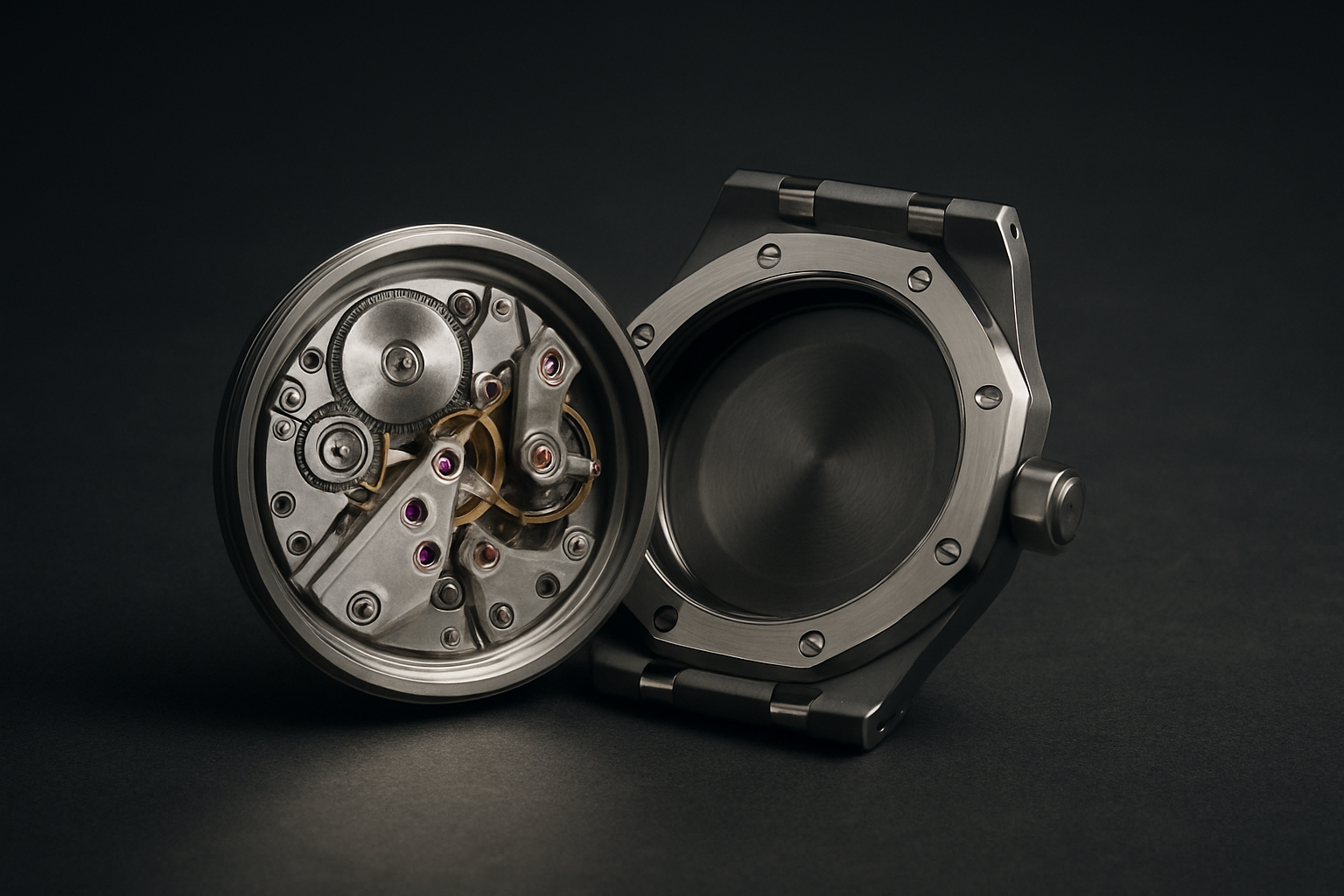
The designers you never see on the dial
Audemars Piguet sits in that rare space where design decisions become culture. The brand’s Audemars Piguet history is often told through icons. Yet the real story is the people who argued over angles, bevels, dial texture, then signed nothing.
In 2026, collectors speak about Audemars Piguet watches as if they arrived fully formed. That’s flattering. It’s also wrong. There are briefs, prototypes, reworks, then more reworks.
At Kettle Club we sell pre-owned pieces across Rolex, Cartier, Omega, Santos, GMT-Master II, Submariner, Yacht-Master, Datejust 41, plus plenty of Royal Oak. The questions we get on Audemars Piguet are rarely about the calibre first. They start with design. They always do.
Audemars Piguet designers and the reality of the studio
The internet loves the lone genius myth. Watch design is closer to film production. Someone has the vision. Then a dozen specialists turn it into something you can wear daily.
Audemars Piguet itself talks about design as part of its wider savoir-faire. It frames aesthetics and mechanics as one discipline. That matches what we see when a case shape dictates everything from gasket geometry to bracelet articulation. (audemarspiguet.com)
Modern Audemars Piguet designers don’t sit apart from engineering. The brand even publishes conversations that include movement designers, case designers, product directors, and conception leads. That’s the reality behind the marketing images. (audemarspiguet.com)
The brief, the codes, the arguments
Every successful model at Audemars Piguet has a few non-negotiables. Proportions must read correctly from across a room. Finishing must stand up under harsh light. The watch must feel expensive before it’s even running.
Those rules sound simple. They create fights. A one millimetre change can wreck a silhouette. A dial texture can kill legibility. Audemars Piguet designers earn their keep in those details.
In our experience, around 60% of first serious buyer enquiries in 2026 mention the bracelet first. They ask about taper, comfort, then clasp feel. That’s pure design feedback. It’s not a movement conversation yet.
Why some names become folklore
Some designers become public. Most never do. Gérald Genta is the obvious exception for Audemars Piguet. Emmanuel Gueit is another. Both became attached to watches that shifted the whole luxury sports category.
It’s still worth remembering the teams around them. Case construction, dial making, finishing, serial production. None of it happens on a sketchpad.
The Royal Oak blueprint inside Audemars Piguet
If you want the DNA of modern Audemars Piguet, you start with the Royal Oak. It’s the reference point for how the brand treats steel like precious metal. (audemarspiguet.com)
Even the brand’s own innovation timeline credits Gérald Genta with the original design. It also highlights the integrated bracelet, octagonal bezel, and “Tapisserie” dial as core codes. (audemarspiguet.com)
By 2026, the wild thing is not that it looks sporty. The wild thing is that it still looks modern. Plenty of supposed icons from other maisons feel dated now. The Royal Oak has avoided that trap.
The overnight sketch that became a business model
Audemars Piguet’s own historical material describes a late afternoon phone call from managing director Georges Golay to Gérald Genta. The ask was blunt. Draw an unprecedented steel watch by the next morning. (apchronicles.audemarspiguet.com)
That story persists because it explains the energy of the design. It also explains why the watch reads like an engineering object. It doesn’t read like jewellery first.
In a UK retail context, that matters. Customers who buy Royal Oak often also own a Submariner or a Santos. They want a different sort of confidence. Audemars Piguet gives them that through industrial form.
Octagon talk that is really gasket talk
People call the bezel octagonal. Audemars Piguet’s own deep dives point out the bezel is more complex than that simple label. It’s a surface built to catch light in a controlled way. (apchronicles.audemarspiguet.com)
The visible screws are not decoration. They are part of the language of the case. The design reads as functional even when it’s obsessively finished.
One practical detail many buyers miss is screw alignment. On many Royal Oak references the screw heads stay aligned because the screw is fixed from one side. The “nut” side takes the torque. That’s design meeting assembly logic. (apchronicles.audemarspiguet.com)
Inside Audemars Piguet craftsmanship
Finishing is not a garnish at Audemars Piguet. It’s designed in from the first CAD draft. That’s why these watches photograph so well. It’s also why poor polishing destroys value fast.
The brand ties its craft back to the Vallée de Joux tradition. It anchors itself in Le Brassus. It also stresses continuity through family ownership and knowledge transfer. (audemarspiguet.com)
That background matters for buyers in 2026. Luxury buyers have seen enough shallow “heritage” stories elsewhere. Audemars Piguet can point to place as well as process. (museeatelier.audemarspiguet.com)
Brushing, bevels, then the hard bit
The strongest Royal Oak cases don’t look shiny. They look crisp. You see long straight brush lines. You see sharp polished bevels that don’t melt into the brushing.
That’s the part many pre-owned listings gloss over. A watch can be authentic. It can still be wrong for a collector if the case has been rounded off.
In our experience, buyers in 2026 ask for macro shots more than ever. They want bezel edges. They want bracelet shoulders. They want to spot over-polish before they commit.
The “Tapisserie” dial as controlled texture
The Royal Oak dial texture is not just a pattern. Audemars Piguet has published detailed background on its “guillochage Tapisserie” work and how the motif became an aesthetic code. (apchronicles.audemarspiguet.com)
For collectors, the dial does two jobs. It adds depth in flat light. It breaks reflections under stronger light. It also gives the hands a stage.
When clients say they love the “blue” on Audemars Piguet watches, they’re often reacting to texture more than pigment. Colour without structure looks cheap in real life. Texture fixes that.
Emmanuel Gueit, the Offshore, and the moment Audemars Piguet went louder
The Offshore is where Audemars Piguet proved it could break its own rules. It didn’t just scale the Royal Oak up. It pushed the whole look towards mass, impact, then wrist presence.
Multiple reputable sources credit Emmanuel Gueit as the designer behind the Royal Oak Offshore. Phillips has even profiled him directly in the context of the model. (phillips.com)
Gueit’s significance is simple. He took a refined design language then made it confrontational. Plenty of people hated it at first. The market then copied it for years.
“The Beast” nickname was not an accident
Audemars Piguet’s own Chronicles describe how the early reception ranged from cautious to offended. The watch picked up the nickname “the Beast”. Gérald Genta himself was not pleased. (apchronicles.audemarspiguet.com)
That tension is part of the appeal in 2026. The Offshore is a reminder that taste is not consensus. It’s a fight. Audemars Piguet let the argument play out on wrists.
In pre-owned conversations, Offshore buyers tend to know what they want. They don’t ask if it’s “too big”. They ask if it feels correct. That’s the sort of confidence the design demands.
Design that protects the movement without saying it
The Offshore reads as armoured. It also reads as engineered. That perception is valuable. It lets the wearer treat it as a daily watch even when it’s a luxury object.
There’s a reason the Offshore sits beside gold Yacht-Masters and ceramic Daytonas in modern collections. It scratches the same itch. It does it in the Audemars Piguet dialect.
When people ask us about “statement” watches in 2026, Offshore is still in the top tier of the conversation. Not every statement is tasteful. That’s fine.
Code 11.59 and new codes for Audemars Piguet collections
Code 11.59 has become the litmus test for whether someone actually likes Audemars Piguet design. It’s not a Royal Oak with a different strap. It’s its own architecture.
On the official product pages, Audemars Piguet describes the case as an octagonal middle integrated between a caseback and an extra-thin round bezel. It also calls out the double-curved sapphire crystal. (audemarspiguet.com)
That’s not marketing fluff. It’s the core visual trick. From above, the watch reads round. From the side, it reveals the octagon.
Case architecture you only notice in profile
The lugs are the most misunderstood part. Audemars Piguet describes them as stylised. The top is welded to the bezel. The bottom rests on the caseback in symmetry. (audemarspiguet.com)
In-hand, this gives the watch air. It stops the case looking like a single thick puck. It also makes the strap integration feel deliberate rather than adapted.
In 2026, we see more buyers warming to Code 11.59 because they have fatigue. They’ve seen too many integrated bracelet lookalikes. Audemars Piguet at least tried something harder.
Modern dial craft with named collaborators
Audemars Piguet also states that a “signature” embossed dial pattern for the collection was created with its design team in collaboration with Swiss guilloché craftsman Yann von Kaenel. (audemarspiguet.com)
That matters for collectors who care about authorship. It’s not only about a famous designer. It’s also about named craftspeople. That’s closer to how serious collectors think in 2026.
Royal Oak Concept and why Audemars Piguet needs a pressure valve
The Royal Oak Concept line exists for a reason. Every big brand needs a place to test ideas without breaking its core sellers. Audemars Piguet does that through radical case materials, openworked movements, then bold geometry.
In our shop conversations, Concept attracts a different buyer. They might own a Patek Philippe 5712R. They might wear an Oysterflex Daytona. They still want something that looks like engineering art.
Audemars Piguet also benefits from the halo effect. Even if you never buy a Concept watch, you see the brand as fearless. That keeps the Royal Oak from feeling safe.
Where pre-owned value becomes very specific
High complication and openworked dials polarise buyers. That’s exactly the point. The right buyer pays properly. The wrong buyer never calls again.
This is where Audemars Piguet craftsmanship becomes easier to explain in the real world. You can show hand bevels. You can show depth. You can show finishing that’s not there to please Instagram.
We keep it practical at Kettle Club. If a client asks for a “future classic”, we ask a harsher question. Do you actually want to wear it twice a week. If not, don’t buy it.
What Kettle Club sees on the pre-owned desk in 2026
Pre-owned Audemars Piguet is not a single market. It’s several markets stacked together. Royal Oak buyers want condition. Offshore buyers want presence. Concept buyers want finishing and narrative.
We also see a clear split between first-time buyers and deep collectors. First-time buyers ask for box and papers. Collectors ask about polishing history and service paperwork. Both are sensible. Both affect value.
If you want a quick feel for how we talk about these watches in-house, our short Royal Oak 15400 review video is a fair snapshot. It’s informal. It’s also honest about what makes the model addictive.
Verified current stock pricing
Below are a few Audemars Piguet pieces we have priced in the UK market at the moment. These are exact figures. They’re not “from” prices.
| Model | Our Price | Why buyers ask for it |
|---|---|---|
| Audemars Piguet 15510ST.OO.1320ST.01 Blue Royal Oak 41mm | £39,995 | Classic integrated steel. Dial colour and bracelet feel. |
| Audemars Piguet 15500ST.OO.1220ST.02 Grey Royal Oak 41mm | £31,995 | Understated dial tone. Strong daily wear option. |
| Audemars Piguet 25940OK.OO.D002CA.01 Grey Royal Oak Offshore | £24,000 | Offshore shape. Lived-in tool-luxury attitude. |
| Audemars Piguet 26265FO.OO.D002CR.01 Skeleton Royal Oak Concept Tourbillon Carbo | £97,500 | High complication. Openworked theatre for collectors. |
Condition is the hidden price tag
The sharp edges on Audemars Piguet cases are expensive to lose. Once metal is removed, it doesn’t come back. That’s why we’re cautious with “freshly polished” listings.
Bracelet fit is the other silent cost. Links should articulate smoothly. Screws should be clean. A bracelet that feels gritty can mean past water exposure or poor storage.
In 2026, we also see more buyers rejecting watches with vague service history. It’s not snobbery. It’s risk control.
What independents teach us about design and why Audemars Piguet still matters
Collectors often compare big brands with independents. It’s not always fair. It’s still useful. Independents can push finishing to extremes. They also operate with tiny production numbers.
We talk about that dynamic in our video on Recep Recepi as a hidden gem in watchmaking. The point is not to claim one is “better”. The point is to understand why scarcity and finishing move prices in the collector market.
Audemars Piguet operates at a different scale. Yet it borrows the same psychological levers. Craft must be visible. Design must be recognisable at ten paces. Supply stays tight enough to keep demand hot.
Design honesty versus hype
Some hype is earned. Some is not. The watches that survive hype cycles are the ones that still look right when the market cools.
Audemars Piguet has managed that because its core designs are coherent. Royal Oak is coherent. Offshore is coherent in its own louder way. Code 11.59 is coherent once you see it in profile.
Mild scepticism helps here. If you only love a watch because the internet tells you to, don’t buy it. Try it on. Walk outside. Look at it in grey daylight.
How to read design signatures on Audemars Piguet watches
If you’re buying pre-owned, learn to spot what’s meant to be sharp. Learn what’s meant to be soft. Audemars Piguet design is full of controlled contrast.
These checks come up in our in-store conversations in 2026. They also separate casual buyers from people who keep the watch long term.
- Bezel edges should look defined. Rounded corners often mean heavy polish.
- Bracelet brushing should look linear. Random swirl marks are a warning.
- Dial texture should show depth. Flat printing suggests damage or a replacement.
- Screw heads should look clean. Chewed slots can mean poor past work.
When you understand those basics, you start to see why Audemars Piguet designers obsess over transitions. A millimetre bevel can change the entire perceived quality.
The same is true across Audemars Piguet collections. A Royal Oak should look like a blade. A Code 11.59 should look like layered architecture. An Offshore should look like it could take a knock.
A practical buying view from the UK in 2026
Buying Audemars Piguet in the UK is about two things. Authenticity and condition. Everything else is secondary.
If you’re buying remotely, ask for specific images. Ask for straight-on dial shots. Ask for side profiles. Ask for clasp close-ups. If a seller refuses, move on.
If you plan to wear the watch near water, be disciplined. Water resistance is not a lifetime promise on any pre-owned piece. Pressure testing is cheap compared with a movement rebuild.
Servicing and expectations
High-end watch service is not quick. It shouldn’t be. A rushed service shows up later through dust, misaligned hands, then poor timekeeping.
We advise buyers to budget for ownership. That budget includes straps, possible link work, and periodic checks. It’s not glamorous. It’s how you keep an Audemars Piguet looking like an Audemars Piguet.
Buyers who do this tend to keep their watches longer. They also enjoy them more. That’s the whole point of collecting.
Frequently Asked Questions
Who designed the Royal Oak for Audemars Piguet?
Gérald Genta is widely credited as the designer of the Royal Oak. Audemars Piguet’s own material names him directly. (audemarspiguet.com)
Are Audemars Piguet designers still important today in 2026?
Yes. The design team shapes ergonomics, finishing choices, and the visual codes that protect resale value. Modern Audemars Piguet work also shows collaboration across design and technical roles. (audemarspiguet.com)
What makes Audemars Piguet craftsmanship stand out on the wrist?
It’s the contrast between brushing and polished bevels. It’s also the way dial texture adds depth in real light. These are deliberate design choices, not afterthoughts.
Why is the Royal Oak Offshore called “the Beast”?
The nickname reflects its bolder proportions and more aggressive feel compared with the Royal Oak. Audemars Piguet’s own Chronicles discuss the early reaction and the “Beast” label. (apchronicles.audemarspiguet.com)
Is Code 11.59 part of the main Audemars Piguet collections?
Yes. Code 11.59 is a core modern line with its own case architecture. Audemars Piguet describes its octagonal middle case, extra-thin round bezel, and double-curved sapphire crystal as key codes. (audemarspiguet.com)
What should I check when buying pre-owned Audemars Piguet watches?
Prioritise case sharpness, bracelet condition, screw integrity, and service history. Ask for clear macro photos. If something feels vague, treat it as a no.
Does Audemars Piguet still have a strong connection to Le Brassus in 2026?
Yes. The brand positions its heritage around Le Brassus in the Vallée de Joux. It also emphasises continuity of know-how. (audemarspiguet.com)
Watch it explained
This guide draws on the shop’s own videos — watch them here:
